


Table of Contents
«`html
You were just walking through a store, a parking lot, or someone’s property — and the next thing you know, you’re on the ground. Maybe the floor was wet with no warning sign. Maybe a broken step gave way. Maybe ice had been sitting in the entryway for hours and nobody bothered to deal with it. Whatever happened, you’re hurt, you’re angry, and you’re wondering if the property owner is going to be held responsible. The short answer? They might be. But slip and fall cases in New Mexico are not as simple as «I fell, so someone owes me money.» You have to prove a few specific things before you can recover anything — and that’s where a lot of people get tripped up (no pun intended). This guide breaks down exactly what you need to know about premises liability in New Mexico, what property owners are required to do, and how to give yourself the best shot at a real recovery.
What Is Premises Liability in New Mexico?
Premises liability is just the legal term for when a property owner is responsible for an injury that happened on their property. Slip and fall cases are the most common type of premises liability claim, but the same basic rules apply to injuries from broken stairs, falling objects, poor lighting, or any other unsafe condition on someone else’s property.
New Mexico does not have a single specific statute for slip and fall cases. Instead, these claims are built on common law negligence principles — meaning courts have developed the rules over time through actual cases. To win a premises liability claim in New Mexico, you have to prove four things:
- Duty: The property owner owed you a duty of care.
- Breach: They failed to meet that duty by allowing or creating a dangerous condition.
- Causation: That dangerous condition is what caused your injury.
- Damages: You actually suffered harm — medical bills, lost wages, pain, and so on.
All four of these have to connect. If any link in that chain is missing, the claim falls apart. Let’s walk through each one.
Who Does a Property Owner Owe a Duty To?
Not everyone who gets hurt on someone’s property is automatically owed the same level of care. New Mexico law — like most states — breaks visitors into categories, and the category you fall into determines how much protection you get.
Invitees
If you were invited onto a property for a business purpose — like shopping at a grocery store, eating at a restaurant, or visiting a medical office — you are an invitee. Property owners owe invitees the highest duty of care. That means they have to actively inspect the property, look for hazards, fix dangerous conditions in a reasonable amount of time, and warn you of anything they can’t immediately fix.
This is the category most slip and fall victims fall into, because most accidents happen at businesses.
Licensees
A licensee is someone who has permission to be on the property but isn’t there for a business purpose — like a social guest at a friend’s house. Property owners still owe licensees a duty of care, but it’s a lower bar. They need to warn of known dangers, but they don’t have to go hunting for hazards they don’t already know about.
Trespassers
Trespassers are on the property without permission. In general, property owners don’t owe trespassers a duty to warn about or fix hazards. However, they can’t intentionally hurt a trespasser, and there are important exceptions for children (called the «attractive nuisance» doctrine — think swimming pools or trampolines that could draw kids in).
The bottom line: if you were a customer, patient, tenant, or otherwise invited onto the property, you are almost certainly owed a reasonable duty of care. That duty is the foundation of your claim.
The Notice Requirement: The Hardest Part of Most Slip and Fall Cases
Here is the part that catches people off guard and kills more slip and fall cases than anything else: the notice requirement.
In New Mexico, a property owner cannot be held liable for a dangerous condition unless they actually knew about it — or they should have known about it. This is called actual or constructive notice, and proving it is often the key battleground in these cases.
Actual Notice
Actual notice means the property owner or their employees genuinely knew about the hazard. Maybe a customer told an employee about a spill and nothing was done. Maybe there are maintenance records showing the broken stair had been reported multiple times. Maybe there’s a text or email showing management was aware of a drainage problem. If you can show the owner or their staff knew about the problem and failed to fix it or warn you, you’ve got actual notice locked in.
Constructive Notice
Constructive notice is a little trickier, but it’s just as valid. It means the hazard existed long enough that the property owner should have discovered it through reasonable inspection and care. The classic example is a puddle of liquid on a grocery store floor. If it’s been there for 15 minutes, that’s probably enough time for a store employee to have noticed it during routine walk-throughs. If it’s only been there for 30 seconds, that’s a lot harder to argue.
Courts look at factors like:
- How long had the hazard been there?
- Was there any evidence it had been there a while (like a large dried ring around a spill)?
- How often did employees inspect or walk through that area?
- Was the dangerous condition something that regularly occurs in that location?
This is where evidence becomes absolutely critical. The sooner you start gathering it, the better your case will be.
What Evidence Do You Need in a Slip and Fall Case?
The evidence you collect — especially in the hours and days right after a slip and fall — can make or break your claim. Here’s what actually matters:
Photos and Video
If you are physically able, take photos of the scene right away. Get pictures of the hazard itself, the surrounding area, any missing warning signs, and your injuries. Then, push hard to get surveillance footage. Many businesses have cameras covering every inch of their property. That footage can show exactly how long a spill sat there, whether any employees walked past it without cleaning it up, and exactly what happened to you. The problem is that businesses often overwrite footage quickly — sometimes within 24 to 72 hours. If you wait too long, that evidence is gone forever.
Incident Reports
If you fell at a business, ask to file an incident report before you leave. Get a copy. This creates an official record that the fall happened, and it locks in the business’s own description of the scene at the time.
Witness Information
Did anyone see you fall? Did anyone see the hazard before you fell? Get their names and contact information. Eyewitness accounts can be powerful, especially when a business tries to claim the hazard didn’t exist or had just appeared moments before your fall.
Medical Records
See a doctor as soon as possible — even if you think you might be okay. Some injuries, like soft tissue damage or concussions, don’t always feel severe right away. Your medical records create the connection between the fall and your injuries. Without that link, the property owner’s insurance company will argue your injuries came from something else entirely.
Maintenance and Inspection Records
Your attorney can send what’s called a preservation letter (or in litigation, a discovery request) to force the property owner to hand over cleaning logs, maintenance records, and inspection schedules. These records can reveal a pattern of neglect — or show that the business never had a real inspection process at all.
How Comparative Fault Can Affect Your Slip and Fall Claim
Here is something the property owner’s insurance company will almost certainly argue: that the fall was partly or entirely your fault. Maybe they’ll say you were looking at your phone. Maybe they’ll say you were wearing inappropriate footwear. Maybe they’ll claim there was a warning sign you walked past.
Under New Mexico’s pure comparative negligence rule (NMSA 41-3A-1), your recovery is reduced by your percentage of fault — but it is not eliminated. New Mexico is one of the most plaintiff-friendly states in the country when it comes to comparative fault. Even if a jury decides you were 40% at fault for the fall, you can still recover 60% of your damages. Even if you were 80% at fault, you can recover 20%.
That said, insurance companies know this law and they will use the comparative fault argument to push your settlement down. Don’t be surprised if they come at you with claims that you were being careless. A good attorney knows how to counter these arguments with evidence.
What Damages Can You Recover?
If you prove your slip and fall claim, New Mexico law allows you to recover for all of the harm the fall caused you. That includes:
- Medical expenses: Emergency room bills, surgery, physical therapy, medications, future care if your injuries are long-term
- Lost wages: Time you missed at work while recovering, and future earning capacity if your injuries affect your ability to work
- Pain and suffering: The physical pain and emotional distress the injury caused you
- Loss of enjoyment of life: If you can no longer do things you used to love because of your injuries
- Permanent disability or disfigurement: If your injuries leave lasting effects on your body
There is no cap on damages in a regular premises liability case in New Mexico (unlike, say, medical malpractice, which has specific statutory caps under NMSA 41-5-6). That means the full value of your losses can be pursued.
How Long Do You Have to File a Slip and Fall Lawsuit in New Mexico?
Under NMSA 37-1-8, you have three years from the date of your accident to file a personal injury lawsuit. Miss that deadline and your case is gone — no matter how strong it was. Three years sounds like a lot of time, but it goes faster than you think, especially when you factor in how long it takes to gather evidence, document your damages, negotiate with insurance companies, and prepare for litigation if a fair settlement isn’t offered.
There is one important exception: if you were injured on government-owned property — a city building, a public school, a state-owned parking lot — the rules are different. Under NMSA 41-4-15, you only have two years to file, and you must give written notice to the government agency within 90 days of the incident. Missing that 90-day notice requirement can destroy an otherwise valid claim. If you were hurt on public property, call an attorney right away.
What If the Property Owner Claims There Was a Warning Sign?
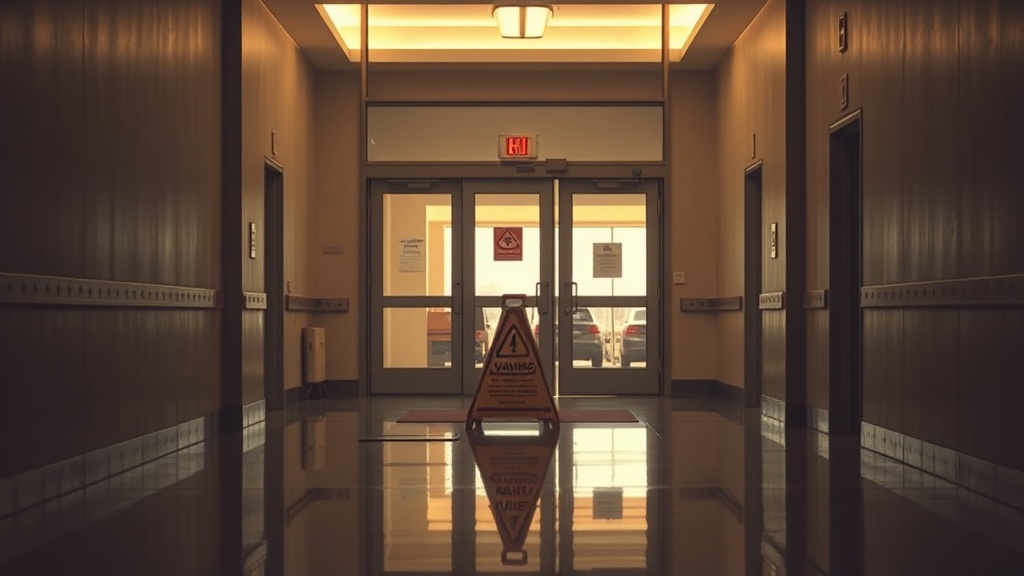
A wet floor sign does not automatically protect a business from liability. The question is whether the warning was actually adequate for the situation. A tiny cone in a huge, crowded area might not be enough. A sign that was placed after you fell rather than before doesn’t help them at all. And if the hazard is something that shouldn’t exist in the first place — like a structurally dangerous staircase — a sign doesn’t substitute for actually fixing the problem.
Insurance adjusters will sometimes try to use the existence of a warning sign as a magic shield to deny your claim. Don’t accept that at face value. The adequacy of the warning is a question of fact that a jury gets to decide.
Why You Should Talk to a Lawyer Before Talking to the Insurance Company
After a slip and fall, the property owner’s insurance company may contact you quickly. They will be friendly. They will seem like they want to help. They will likely ask you to give a recorded statement and might offer you a fast settlement. Do not do either of those things without talking to an attorney first.
The recorded statement will be used to find anything you say that can be twisted to minimize your claim. The fast settlement offer is almost always far less than what your case is actually worth — before you even know the full extent of your injuries.
The team at El Gringo Law handles slip and fall cases in Albuquerque and throughout New Mexico. They offer free case evaluations, work on a contingency basis (meaning you don’t pay anything unless they win), and have a team where most of our team speaks spanish — so you can discuss your case with a team where most of our team speaks spanish. Before you sign anything or give any statement to an insurance company, make that call.
Practical Steps to Take After a Slip and Fall in New Mexico
To summarize, here’s what you should do if you’ve been hurt in a slip and fall:
- Get medical attention immediately, even if you feel okay at first
- Take photos and video of the hazard, the scene, and your injuries right away
- File an incident report with the business or property owner and get a copy
- Get witness information — names and phone numbers
- Preserve your clothing and footwear from the day of the fall (don’t wash them)
- Write down everything you remember about what happened while it’s fresh
- Do not give a recorded statement to any insurance company without legal advice
- Contact El Gringo Law for a free case evaluation before you make any decisions
El Gringo Law Is Here to Help
Slip and fall cases are not simple. The notice requirement, the evidence gathering, the insurance company tactics, the comparative fault arguments — all of it adds up to a fight that’s hard to win on your own. The attorneys at El Gringo Law in Albuquerque have seen all of these tactics before, and they know how to build the kind of case that gets results. Whether your accident happened in a grocery store, a restaurant, an apartment complex, or anywhere else in New Mexico, El Gringo Law is ready to review your situation at no cost and no obligation.
You don’t pay anything unless they win. It’s that simple. Call today for your free case evaluation and find out what your case might actually be worth.
Frequently Asked Questions: Slip and Fall Claims in New Mexico
How long do I have to file a slip and fall lawsuit in New Mexico?
You have three years from the date of your accident under NMSA 37-1-8. If your fall happened on government property, the window is shorter — two years to file, and you must give written notice to the government agency within 90 days of the accident under NMSA 41-4-15. Don’t wait to find out which applies to you.
What does «notice» mean in a slip and fall case, and why does it matter?
Notice means the property owner knew — or should have known — about the dangerous condition that caused your fall. You can prove actual notice (they genuinely knew, like an employee walked past the spill) or constructive notice (the hazard existed long enough that a reasonable inspection would have caught it). Without proving notice, your claim will fail even if you were seriously injured.