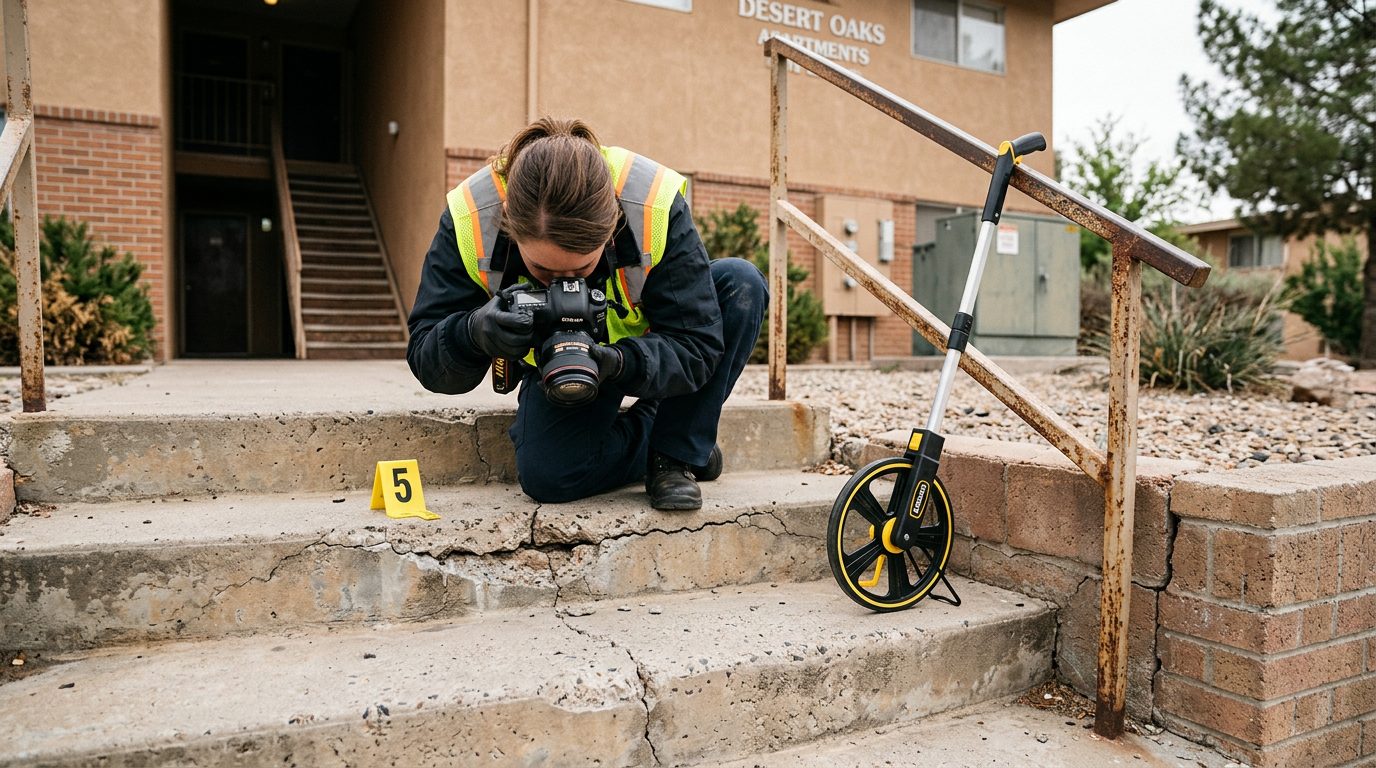
Premises Liability · New Mexico
Hurt on a Rental's Stairs? Talk With El Gringo Law
Stair falls can cause serious injuries. Learn how a New Mexico premises liability claim against a landlord may work, and get a free, confidential first consultation with no obligation to continue.
By Josh Wood · Published November 5, 2026
Can You Sue a Landlord for a Fall on Stairs in New Mexico?
Yes, you may be able to sue a landlord for a fall on stairs in New Mexico. A landlord may be liable when a stair hazard was known, or should have been known, and was not fixed. Whether your claim fits depends on the facts of your fall.
This type of claim falls under premises liability. Premises liability covers injuries caused by unsafe conditions on property that someone owns or controls. Stairs, handrails, lighting, and walkways at a rental can all be part of it.
New Mexico’s rule starts with a duty. Under the UJI 13-1318 slip and fall instruction, an owner or occupant owes a visitor the duty to exercise ordinary care to keep the premises safe for the visitor’s use.
Tenants, household members, guests, and other visitors can all be hurt on stairs a landlord controls. Whether you rent in Santa Fe, Las Cruces, or Farmington, the same basic New Mexico rules apply.
If a fall on a broken stair left you hurt at a rental, you don't have to sort out the landlord, the proof, and the deadline alone. Reach out and we'll talk it through with you. Talk it through with our team — the first consultation is free, confidential, and carries no obligation.
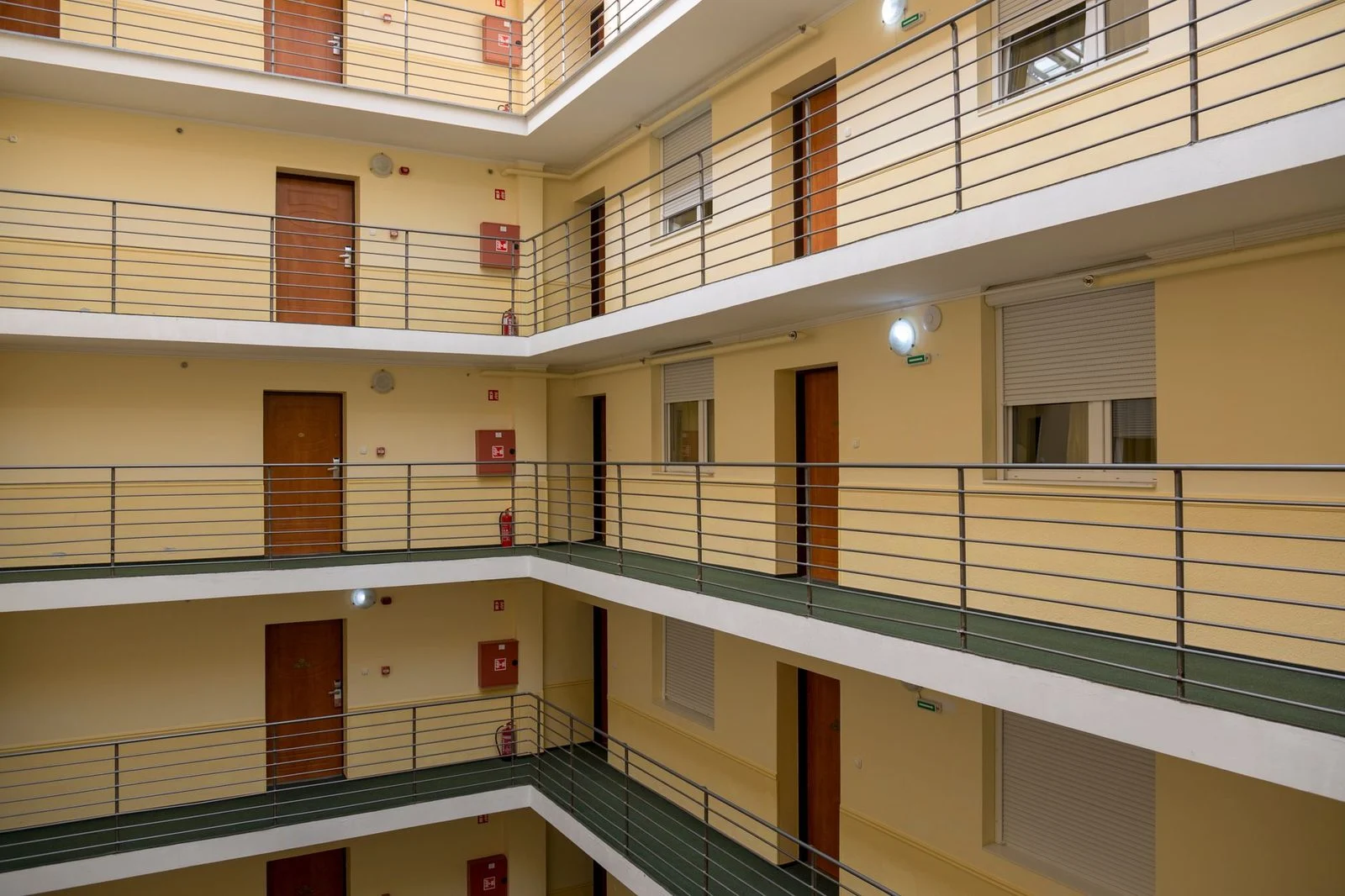
When a Landlord May Be Responsible for a Stair Fall
A landlord may be responsible when it fails to use ordinary care to keep stairs reasonably safe. The key question is usually what the landlord knew, or should have known, about the hazard.
The same instruction says an owner or occupant is charged with knowledge of any condition a reasonable inspection would have revealed. It is also charged with knowledge of a condition its own employees caused. So a landlord can’t simply say it never heard about a problem. The law also asks whether it should have found the problem.
Common stair hazards include:
- Loose or broken handrails
- Cracked, rotted, or uneven treads
- Missing or loose balusters
- Sagging or raised steps
- Burned-out stairwell lights
- Worn carpet or damaged stair edges
A repair request is often the clearest proof that the landlord had notice. A problem that a routine walk-through would have caught can also count. Stairs shared by several units, or stairs leading to a parking area or building entrance, can raise different questions about who controlled them than a single tenant’s private interior stairs.
What Proves the Landlord Was at Fault
Every premises liability case depends on its own facts. Start gathering proof as soon as it’s safe to do so.
- Photos and video of the stairs, the hazard, and the lighting
- Written repair requests, texts, emails, and tenant complaints
- Maintenance and inspection records, repair invoices, and any prior incident reports
- Witness names and contact details from neighbors, other tenants, or visitors
- Medical records that show the fall and the treatment that followed
Causation links the hazard to your harm. Under New Mexico law, a proximate cause (a cause that starts an unbroken chain leading to the injury) produces the injury, and the injury would not have happened without it. Herrera v. Quality Pontiac It doesn’t have to be the only cause.
Preserve evidence early. Try not to repair or throw away the stair or the broken part until it has been photographed and documented.
Landlord Defenses and New Mexico’s Comparative Fault Rule
Landlords often argue they didn’t know about the hazard, the stair was obvious, or the tenant was careless. New Mexico follows pure comparative negligence (shared fault), so your own fault reduces what you recover rather than barring it. Scott v. Rizzo
When both sides share fault, the jury totals your damages. It then sets percentages that add to 100 and reduces your damages by your own share. UJI 13-2218 comparative negligence instruction
An obvious hazard does not end the landlord’s duty by itself. The UJI 13-1309 committee commentary says the duty applies even where a dangerous condition is open and obvious.
When more than one party may be at fault, New Mexico generally applies several liability to each defendant, with listed exceptions. Under Section 41-3A-1 of the New Mexico Statutes, in any cause of action to which the doctrine of comparative fault applies, the doctrine imposing joint and several liability upon two or more wrongdoers whose conduct proximately caused an injury to any plaintiff is abolished except as otherwise provided hereafter.
Deadlines matter. New Mexico’s statute on injury to a person sets a three-year period, so waiting can cost you the claim. Under Section 37-1-8 of the New Mexico Statutes, actions must be brought against sureties on official bonds and on bonds of guardians, conservators, personal representatives and persons acting in a fiduciary capacity, within two years after the liability of the principal or the person for whom they are sureties is finally established or determined by a judgment or decree of the court, and for an injury to the person or reputation of any person, within three years.
What a Stair Fall Claim May Cover
A claim may seek compensation for the losses the injury caused. The amounts turn on the injury, the proof, and the particular facts of the case. Every case is different, and no outcome is predicted here.
Losses people often raise include:
- Medical care, from emergency visits to follow-up treatment
- Time away from work and lost pay
- Pain and reduced enjoyment of daily life
- Damaged personal items, such as a phone, glasses, or a mobility device
Keep a simple log. Save every bill, receipt, and pharmacy record. Write down each appointment, the mileage to it, and each day you missed work. Those records help show how the injury changed your life.
How the Process Works and What to Expect
Most stair fall claims move through the same basic stages. The timing varies, and each stage builds on the one before it.
- Initial review. We talk through how the fall happened, where it happened, and what injuries followed.
- Evidence gathering. We request repair and inspection records and help preserve the stair and related proof.
- Medical documentation. Your treatment records show the injury and how it has progressed.
- Insurance and demand. We look at the property’s insurance coverage and may send a written demand to the insurer.
- Negotiation or lawsuit. If the claim does not resolve, a lawsuit may be filed before the deadline and move through litigation.
Timing turns on your treatment and how the insurer responds. Your recovery and the insurer’s pace can both shape the calendar.
Not sure what your next step is?
Talk it through with our team — the first consultation is free, confidential, and carries no obligation.
Why Injured New Mexicans Contact El Gringo Law
El Gringo Law handles personal injury matters across New Mexico. Its practice areas include premises liability, car accidents, trucking accidents, negligent security, wrongful death, and catastrophic injuries.
The firm represents clients in Santa Fe, Rio Rancho, Las Cruces, Taos, Farmington, Bernalillo County, and Sandoval County.
Josh Wood is the responsible lawyer for this page. He is licensed in New Mexico and Arizona. Our team handles intake and case coordination. Our team members are support staff, not lawyers.
Questions People Ask About Landlord Stair Falls
Can you sue a landlord for a fall on stairs in New Mexico?
Yes, a landlord may be liable if a stair hazard was known or should have been known and was not fixed. The facts decide each case.
Can you sue a homeowner if you fall on their property?
A homeowner who owns or occupies the property can owe visitors the same duty of ordinary care.
Does an obvious hazard end the landlord’s duty?
Generally no. The committee commentary says the duty applies even where a dangerous condition is known or open and obvious, because a landowner must generally anticipate some degree of negligence by others. But no duty exists if the landowner lacks reason to know that an obviously dangerous condition poses an unreasonable risk of injury to a visitor, and the commentary notes the visitor’s own negligence may be unforeseeable as a matter of law.
How long do you have to file?
New Mexico’s statute on injury to a person generally sets three years. Talk with a lawyer early so evidence and deadlines stay on track.
What if I was partly at fault?
Under pure comparative negligence, your recovery is reduced by your share of fault, not barred.

Talk With El Gringo Law About Your Stair Fall
If a broken or dark stair at your rental left you hurt, you may be facing medical bills, missed work, and a landlord who hasn’t answered. Josh Wood, the responsible lawyer for this page, can review what happened with you. This is a free, confidential initial consultation with no obligation to continue.
Send the contact form or start a chat on the El Gringo Law contact page and tell us what happened on those stairs.
Act on your health first
Get medical care right away, even if your injuries seem minor. Keep photos of the stairs, the handrail, and the spot where you fell, and save any written messages with your landlord about the stairs.
Why Start With El Gringo Law
Free first consultation
Your first consultation is free, confidential, and comes with no obligation to continue.
Focus on personal injury
Our practice focuses on injury cases, including premises liability claims like falls on stairs and other hazards on someone else's property.
A team that answers you
Josh Wood is the responsible lawyer for this page. Our team, including support staff, helps you understand your options and the next steps.
Serving New Mexico
We represent people in Santa Fe, Rio Rancho, Las Cruces, Bernalillo County, Sandoval County, Taos, and Farmington.
What Helps Us Understand Your Fall
Photos and video
Pictures of the staircase, lighting, loose or worn treads, and handrails, taken as soon as you can safely do so.
Medical records
Records from the emergency room, your doctors, imaging, and any physical therapy, so we can see how the fall affected your health.
Lease and communications
Your rental agreement and any texts, emails, or repair requests about the stairs, including any reports you made to the landlord.
Witness information
Names and phone numbers of anyone who saw the fall or the condition of the stairs before or after it happened.