Premises Liability | New Mexico
Hurt at a Rental Property? Find Out Where You Stand
El Gringo Law represents people injured by unsafe conditions on someone else's property, including rental homes and apartments. Start with a free, confidential first consultation with no obligation to continue.
By Josh Wood · Published November 5, 2026
Can I Sue My Landlord for Injury in New Mexico?
Yes, a tenant or guest hurt on rental property may have a claim against the landlord when the landlord’s negligence caused the injury. Whether a claim exists depends on the facts: where the injury happened, who controlled that area, and what the landlord knew or should have known.
This area of law is called premises liability. It covers unsafe conditions on property, including injuries to tenants, people who live in the home, and invited guests. A property manager, an owner, or a maintenance company may each have a role, based on who controlled the area.
Injured residents and visitors in Santa Fe, Rio Rancho, Las Cruces, Bernalillo County, Sandoval County, Taos, and Farmington can contact El Gringo Law about these questions.
If a broken stair, a fire hazard, or an unsafe common area hurt you at your rental, you may have a claim, and our team can review your facts in a free, confidential consultation. Talk it through with our team — the first consultation is free, confidential, and carries no obligation.
What Does a Landlord Owe Tenants and Visitors?
Under New Mexico’s jury instructions, an owner owes a visitor a duty to use ordinary care to keep the premises safe. UJI 13-1309 NMRA states that duty.
Negligence claims follow a basic structure. A negligence claim generally requires a duty, a breach of that duty, and a breach that was a proximate cause and cause in fact of the damages.
This matters when a landlord claims it never knew about a loose railing.
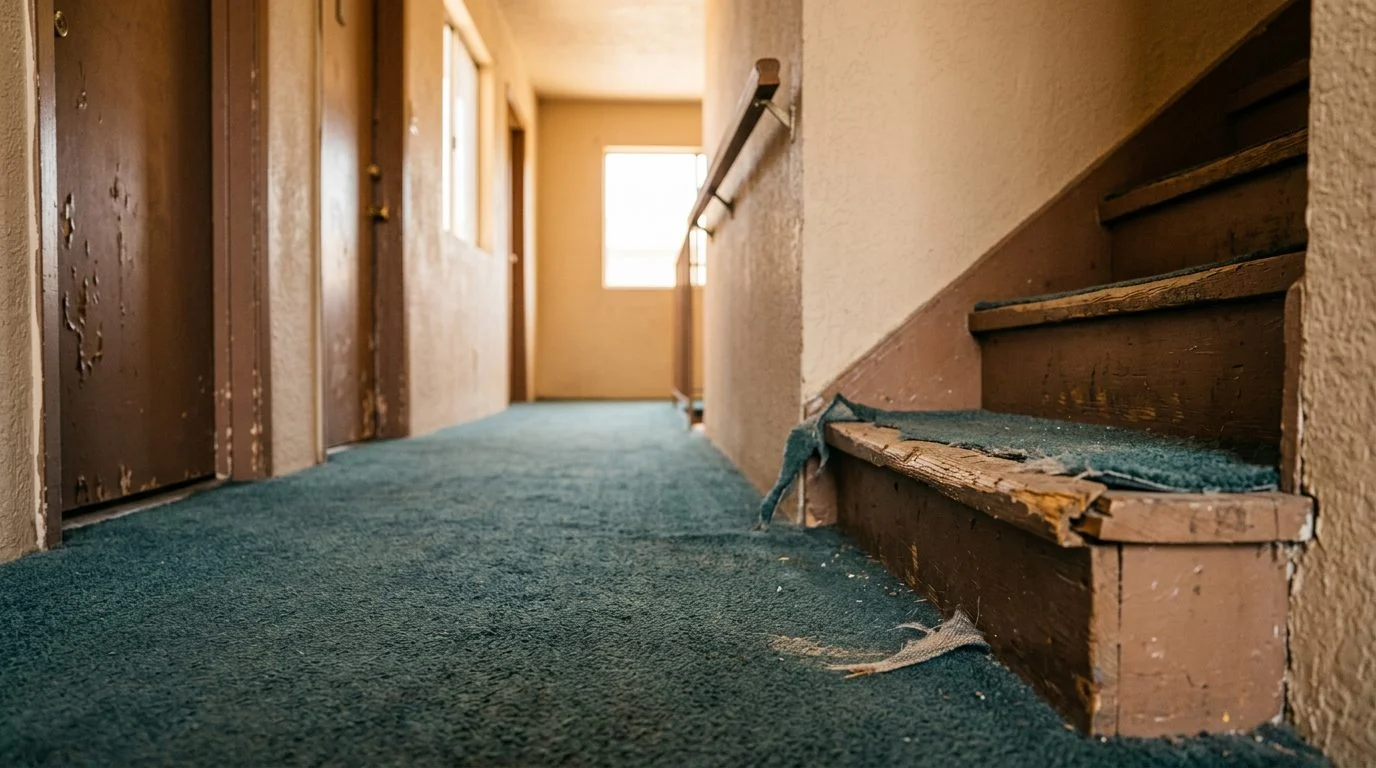
Repair requests and prior complaints can matter. A written request about a broken step can show what the landlord knew. Lease terms and repair history can show who controlled the area.
What Are Common Ways Tenants and Guests Get Hurt?
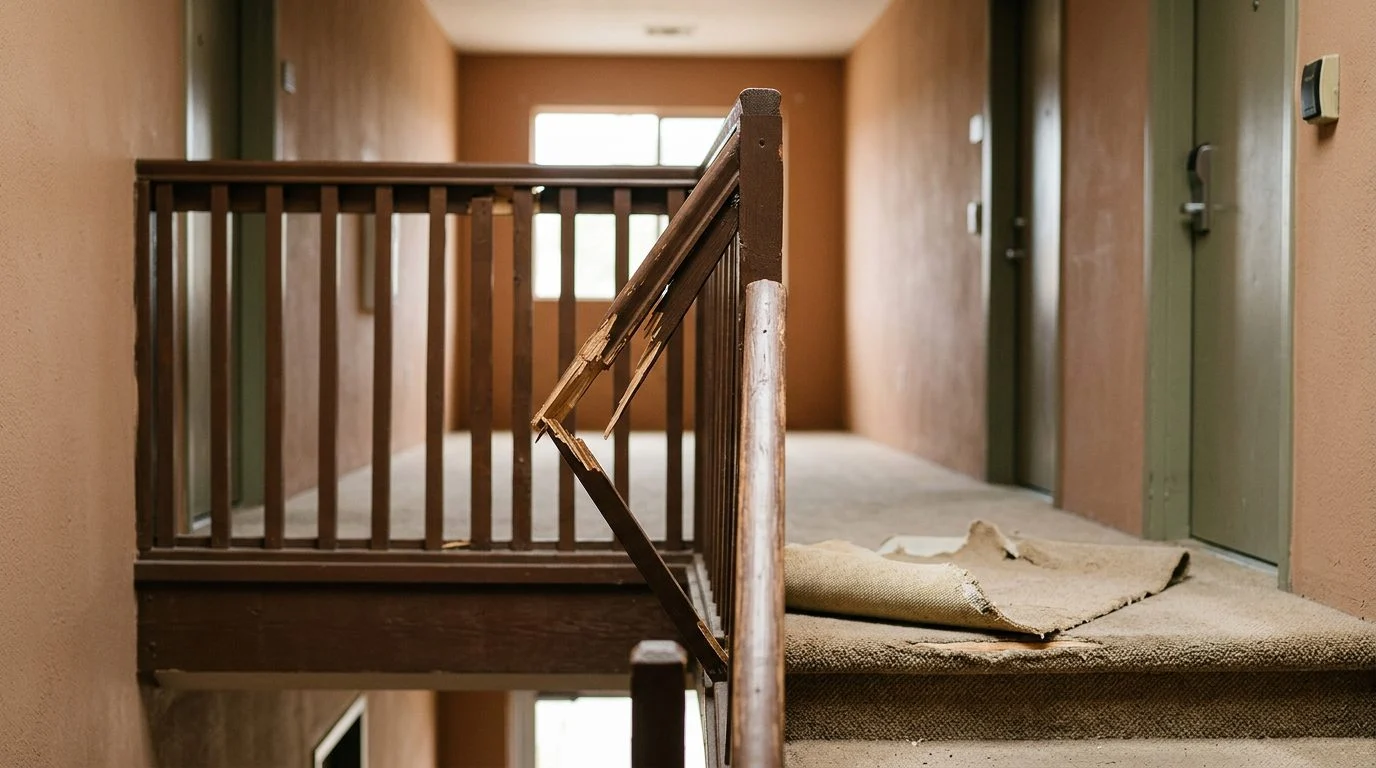
Common rental-property injuries include falls on broken stairs, loose railings, and damaged balconies or walkways. Slip and fall injuries also happen on ice, standing water, and poor lighting in parking lots, hallways, and shared areas.
Fires, faulty wiring, malfunctioning heating equipment, and scalding water heaters can cause burn injuries. These cases often involve serious medical care.
Negligent security claims involve assaults or other crimes in apartment complexes where lighting, locks, gates, or patrols were a factor. A landowner has a duty to use ordinary care to protect a visitor from harm caused by a third party’s foreseeable conduct, including criminal conduct. UJI 13-1320 NMRA states this.
Some injuries are catastrophic, involve spinal cord damage, or result in amputation. These claims often need a careful review of medical records and future care needs. A fatal injury on rental property may lead to a wrongful death claim.
What Are the Deadlines for a Landlord Injury Claim?
New Mexico’s statute of limitations sets a three-year limit for an injury to the person. Under Section 37-1-8 of the New Mexico statutes, an action for an injury to the person must be brought within three years. Wrongful death claims have their own three-year limit under NMSA 1978, § 41-2-2, which runs from the date of death.
Claims against government landlords move faster. The Tort Claims Act requires a written notice stating the time, place, and circumstances of the injury. Without it, a suit generally cannot go forward unless the government entity had actual notice.
Under NMSA § 41-4-15, actions against a governmental entity or a public employee for torts are forever barred unless commenced within two years after the date of occurrence resulting in loss, injury or death, except that a minor under the full age of seven years has until his ninth birthday to file. Under NMSA 1978, § 41-4-6, immunity does not apply to bodily injury, wrongful death or property damage caused by the negligence of public employees acting within the scope of their duties in operating or maintaining any building, public park, machinery, equipment or furnishings.
Preserve photos, the lease, repair requests, incident reports, and medical records early. Waiting can make the facts harder to prove.
How Is Fault Divided in a New Mexico Injury Claim?
New Mexico uses pure comparative negligence. Under New Mexico’s comparative fault rules, shared fault does not necessarily end a claim. The award can be reduced by that person’s share of fault.
Several liability also matters. Under NMSA § 41-3A-1, in causes of action to which comparative fault and several liability apply, a defendant who establishes that another’s fault is a proximate cause of the plaintiff’s injury is liable only for the portion of the total damages equal to the ratio of its own fault to the total fault attributed to all persons, including plaintiffs, defendants and persons not party to the action. Fault can be assigned to people who are not parties to the lawsuit.
Landlords often argue the injured person was partly responsible. That argument turns on the facts: where the person walked, what warnings existed, and whether the danger was clear.
Injury claims can seek money for medical bills, lost income, and pain and suffering. The value of a claim turns on the medical records and the evidence. Every case is different, and no one can promise a particular outcome.
How Does a Landlord Injury Claim Work Step by Step?
A landlord injury claim usually moves through five stages, beginning with a consultation. Each stage builds on the evidence from the one before.
- Consultation. Review what happened, where, and what records you already have.
- Evidence. Gather photos, witness names, the lease, maintenance requests, incident reports, and medical treatment records.
- Investigation. Look at the property condition, the repair history, and who controlled the area.
- Claim and negotiation. Present the claim to the responsible insurer or party.
- Lawsuit if needed. If a fair resolution is not reached, a lawsuit may be filed in the right New Mexico court.
Timing varies from case to case. Our team explains the next step at each stage so you know what to expect.
Not sure what your next step is?
Talk it through with our team — the first consultation is free, confidential, and carries no obligation.
Why Work With El Gringo Law on Your Landlord Injury Claim?
El Gringo Law represents people hurt in New Mexico. Most of its work involves car accident victims. The firm also handles premises liability, negligent security, wrongful death, catastrophic injury, spinal cord injury, amputation, and burn injury matters.
Josh Wood is the lawyer responsible for this page. He is licensed in New Mexico and Arizona. Our team supports the firm’s lawyers with intake, records, and client communication.
You can reach the firm by calling, submitting the contact form, or starting a chat. Our team will confirm the details of your situation before discussing next steps.
Frequently Asked Questions About Suing a Landlord for Injury
Can a tenant sue a landlord for a broken stair?
Written repair requests can help show what the landlord knew.
Can a guest sue a landlord for an injury?
Invited visitors may have a claim in some situations, based on the facts of the visit and the condition involved.
How long do I have to file?
For an injury to the person, New Mexico’s limit is three years. Claims against government landlords can also have a ninety-day notice requirement and a two-year filing limit.
Do I need to notify the landlord first?
Written notice and preserved evidence can help. For government landlords, written notice has its own short deadline.
Is the consultation free?
Yes. The initial consultation is free, confidential, and without obligation to continue (consulta inicial gratuita, confidencial y sin compromiso).
Talk to El Gringo Law About Your Landlord Injury
If a broken stair, a fire hazard, or an unsafe common area hurt you at your rental, send us the details. Use the contact form, call the firm, or start a chat so we can review what happened.
Responsible lawyer: Josh Wood, El Gringo Law, elgringolaw.com.
What to expect when you reach out
Free first consultation
Your initial consultation is free, confidential, and carries no obligation to continue.
Talk to us your way
Call the firm or send a message through our contact form or chat, whichever is easier for you.
Review what happened
We listen to how the injury occurred and look at the records, photos, and repair requests you have.
Support for you and your family
Josh Wood and our team explain the process in plain language and answer your questions as they come up.
Keep your records
Take photos of the hazard, save any texts or written repair requests, and keep copies of medical visits and bills. Seeing a doctor promptly also helps document your injuries. Evidence can be harder to gather as time passes.
Conditions that can lead to rental property injuries
Stairs and railings
Loose, broken, or missing handrails, rotted steps, and uneven stairways are common sources of falls.
Walkways and parking areas
Icy steps, cracked pavement, and poorly lit paths can cause serious trips and falls.
Structural and appliance problems
Collapsing decks, faulty balconies, and damaged fixtures or appliances sometimes cause injuries.
Hazards left unrepaired
Problems that were reported and not fixed can raise questions about what the property owner knew.