Premises Liability | New Mexico
Hurt on Someone Else's Property? Talk With a New Mexico Premises Liability Lawyer
El Gringo Law represents people injured in falls and other accidents on property they did not own or control, for clients in Santa Fe, Rio Rancho, Las Cruces and across New Mexico. Your free, confidential first consultation comes with no obligation to continue.
By Josh Wood · Published October 31, 2026
Premises liability is a personal injury claim for harm caused by an unsafe condition on property that someone else owns or controls. In New Mexico, an owner or occupant must use ordinary care to keep its property safe for visitors. This guide explains how these claims work, who can bring one, which hazards come up in these cases, and which deadlines matter. It also covers serious injuries and the insurance calls that often follow. Every situation is different, so use this page as a starting point.
What Premises Liability Means in New Mexico
Premises liability is a claim against the person who owns or controls a property when an unsafe condition there causes injury. The main question is whether that person failed to use reasonable care. A negligence claim generally needs a duty owed to the injured person, a breach of that duty, and a breach that caused the harm.
In a premises case, the duty comes from the owner’s relationship to the person on the property. New Mexico’s jury instruction describes that duty as ordinary care.
Premises claims differ from car accident claims. A car accident claim usually centers on how a driver operated a vehicle. A premises claim centers on the condition of a place and what the owner knew or should have known about it. Some cases involve both, such as a crash in a parking lot that was never cleared of ice. For a deeper definition, read what is a premises liability case.
If you were hurt on a store floor, icy stairs, or an apartment walkway, you may have a claim, and you don't have to deal with insurer calls alone. Reach out to El Gringo Law. Talk it through with our team — the first consultation is free, confidential, and carries no obligation.
Who Can Bring a Premises Liability Claim
A person hurt on another’s property may have a premises claim when the owner or occupant failed to use the ordinary care owed to that person’s status on the property, such as a visitor. New Mexico’s jury instruction calls the injured person a visitor, and it applies the ordinary-care duty to visitors. The duty generally applies even when the danger is visible, but the instruction should not be given if the trial court determines that the visitor’s negligence was unforeseeable as a matter of law, which is discussed below.
When a property hazard causes a death, New Mexico’s wrongful death statute works differently. Under NMSA § 41-2-1, when a person’s death is caused by the wrongful act, neglect or default of another, although such death shall have been caused under such circumstances as amount in law to a felony, and that act, neglect or default is such as would, had death not ensued, have entitled the injured person to maintain an action and recover damages, the person or corporation who would have been liable shall be liable to an action for damages, notwithstanding the death of the person injured. Families facing a death after a fall, fire, or unsafe security should understand that link from the start.
How duty and breach are framed in these cases is covered in what is the negligence law in New Mexico.
Common Hazards: Slips, Falls, Ice, and Stairs
Many premises claims begin with a slip, trip, or fall. The hazard is often something ordinary that was not fixed, marked, or cleaned up in time. Common examples include:
- Wet floors with no warning sign, spills left in aisles, and freshly mopped floors.
- Ice and snow on walkways, parking lots, and building entrances.
- Broken, uneven, or poorly lit stairs, steps, and handrails.
- Cracked sidewalks, loose tile, torn carpet, and raised thresholds.
Visible danger is not an automatic defense. New Mexico’s instruction says the owner’s duty applies whether or not a dangerous condition is obvious, as stated in UJI 13-1309 NMRA. The committee commentary explains that a landowner must generally expect some carelessness from people who encounter even a known danger, citing Klopp v. Wackenhut Corp.
Many people assume that a visible puddle or icy step means the owner is off the hook. That is not how the instruction reads. The owner’s knowledge and its response to the hazard still matter.
Stores, Apartments, and Other Commercial Property Hazards
Stores, restaurants, hotels, and apartment complexes raise the same core question: did the owner or occupant use ordinary care? The answer depends on the setting and the facts. Each setting has its own common hazards.
In retail stores, the risks often include falling merchandise, overloaded high shelves, cords across aisles, and blocked exits. Restaurants may have wet floors near drink stations or unmarked steps near dining areas. Hotels and entertainment venues can have pool decks, stairs, and railings that need regular upkeep.
Apartment complexes raise their own concerns. Broken stairwells, loose balcony railings, and poorly lit common areas can all cause serious falls. Maintenance and inspection records often drive the proof. New Mexico’s instruction says an owner is charged with knowledge of conditions a reasonable inspection would have revealed, and of conditions the owner or its employees caused, under UJI 13-1318 NMRA.
Negligent Security and Crime on the Property
A negligent security claim argues that the owner failed to protect people from crime it should have expected. It is a premises claim, and it focuses on criminal acts by someone other than the owner. New Mexico’s commentary says a landowner must use ordinary care to protect visitors from harm caused by the foreseeable conduct of a third party, including criminal conduct. See UJI 13-1320 NMRA, which cites Reichert v. Atler.
The same commentary explains that the owner’s failure to protect visitors may be compared to the attacker’s conduct under New Mexico’s comparative fault system. That comparison matters. The defense may point to the attacker, and the case often turns on what the owner should have done to prevent the harm.
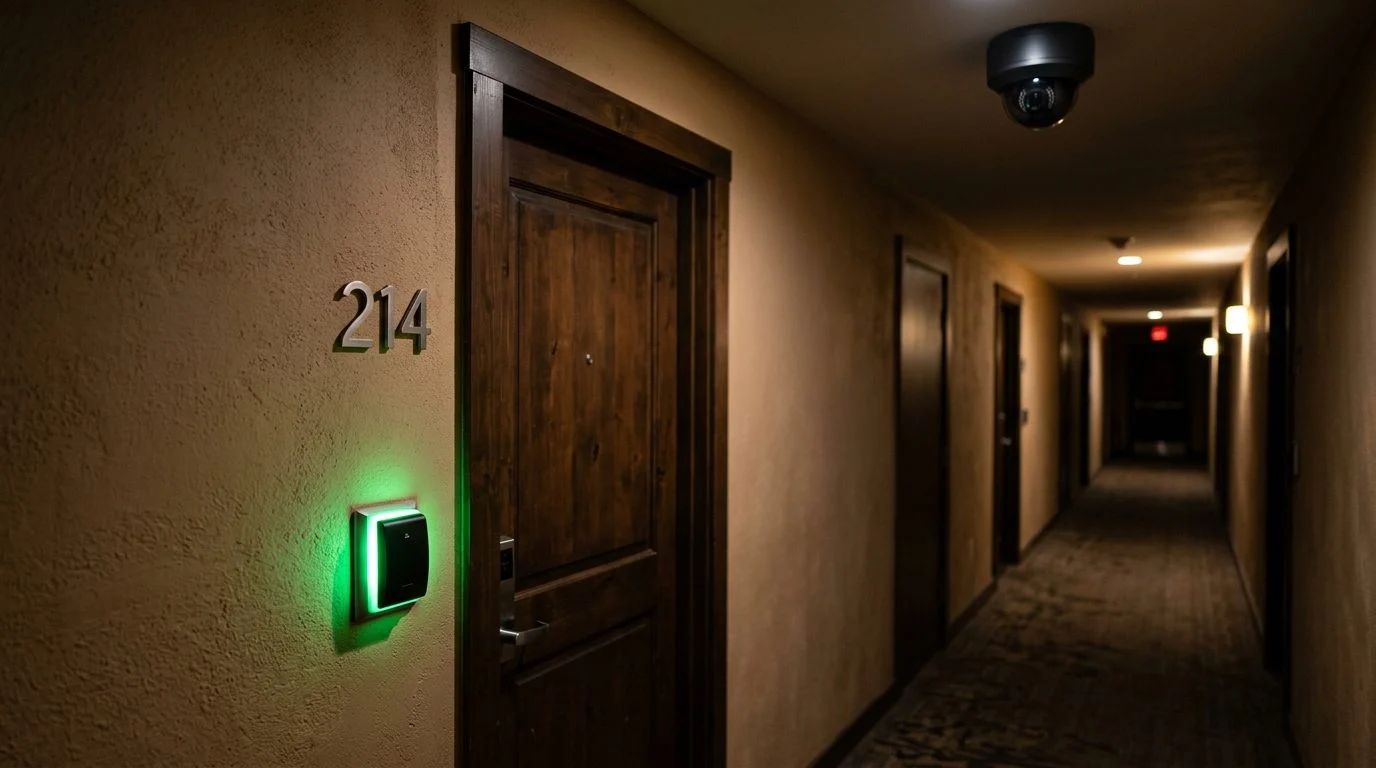
Common settings include parking garages, apartment complexes, hotels, bars, and poorly lit lots. Factors that can matter include prior incidents on the property, lighting, locks, cameras, guards, and control of access. The word “foreseeable” is central. Public data can help show what crime was reported in an area.
Proving the Owner Knew or Should Have Known
An owner is responsible for a hazard it knew about or would have found through a reasonable inspection. Lawyers call the first idea actual notice. The second is constructive notice. Constructive notice comes from the instruction in UJI 13-1318 NMRA, which charges the owner with knowledge of any condition on the premises of which it would have had knowledge had it made a reasonable inspection of the premises, or which it caused itself or through its employees.
Actual notice can be simple. Constructive notice asks whether a reasonable inspection would have revealed the hazard. The owner is also charged with knowledge of a hazard its own people created.
Open and obvious hazards are not an automatic defense. The commentary to UJI 13-1309 says a court may decide a visitor’s negligence was unforeseeable as a matter of law, and then the duty instruction should not be given.
Useful evidence includes photographs, incident reports, video, maintenance logs, and witness names. Photos taken soon after a fall show the condition before it is cleaned or repaired. Video can be overwritten, so early requests to preserve it can matter.
Not sure what your next step is?
Talk it through with our team — the first consultation is free, confidential, and carries no obligation.
Comparative Fault and Shared Blame
New Mexico uses comparative fault, so your own share of fault reduces your damages rather than automatically ending your claim. The jury instruction explains how the reduction works under UJI 13-2218 NMRA.
Under that instruction, the jury first finds total damages. It then assigns percentages of fault that add up to 100%. Finally, it reduces the damages by the injured person’s percentage. For illustration only, if total damages were $100,000 and the jury assigned 20% fault to the injured person, the award would drop by $20,000.
Insurers and property owners often argue shared fault. Common arguments include footwear, distraction from a phone, ignored warning signs, or walking into a closed area. Early statements and photos can shape these arguments. For the full framework, see what is the negligence law in New Mexico.
Time Limits, Insurance Claims, and Evidence
For an injury to a person, New Mexico sets a three-year limit. Under NMSA § 37-1-8, an action for an injury to the person or reputation of any person must be brought within three years. Exceptions can apply, so the date matters from the start.
An insurer for the property owner may contact you early. It may ask for a recorded statement or offer a quick payment. New Mexico’s unfair claims practices statute prohibits certain insurer conduct when it is committed knowingly or with such frequency as to indicate a general business practice. Under NMSA § 59A-16-20, which applies to insurers’ handling of insureds’ claims, the listed practices are unfair and deceptive when knowingly committed or performed with such frequency as to indicate a general business practice, and one listed practice is failing to make a good-faith attempt to effectuate prompt, fair and equitable settlements of an insured’s claims in which liability has become reasonably clear.
Practical records help. Keep medical treatment records, photos of the scene, witness names, the incident report number, and a written timeline of events.
How long do I have to file a claim?
For an injury to the person or reputation of any person, NMSA § 37-1-8 requires that the action be brought within three years. A wrongful death action must be brought within three years after the date of death under NMSA 1978, § 41-2-2.
Does partial fault end my claim?
Your share of fault reduces the damages a jury awards you, as UJI 13-2218 NMRA explains. It is not treated as a complete bar in the instruction’s math.
What about a recorded statement?
An adjuster may ask for one early. Writing down what you remember about the fall, the date, and the witnesses can help you stay accurate.
Serious Injuries from Premises Accidents
Premises accidents can cause catastrophic injuries, spinal cord injuries, burn injuries, amputations, and wrongful death. These injuries often bring long-term medical needs, lost work, and major changes at home. El Gringo Law’s practice areas include each of these injury types.
Causation is often the key issue in serious cases. A proximate cause is one that, in a natural and continuous sequence, produces the injury, and without which the injury would not have occurred.
Premises settings can produce these injuries in specific ways. A fall down unlit stairs or through a failed balcony railing can damage the spine. Faulty appliances, electrical hazards, or unsafe equipment can cause burns. Machinery on commercial property can cause amputations. A hazard or unsafe security that leads to a death can support a wrongful death claim.
Your Free Consultation
El Gringo Law offers a free initial consultation that is confidential and carries no obligation to continue. Bring the date of the incident, photos, medical notes, and any letters from an insurer. Those items give the consultation a clear starting point.
Keep track of what you have and what you remember. Clear records make the first conversation more useful, whatever you decide next.
Talk With El Gringo Law About Your Property Injury
If you were hurt on a store floor, on icy stairs, or in an apartment common area, you may have a claim. The insurer’s calls can start quickly, and the decisions about reports and evidence can feel urgent. Josh Wood is the lawyer responsible for this page.
Every case is different, and past results do not mean a similar outcome. If you want to talk through your situation, you can reach El Gringo Law through the contact page.
How We Approach Premises Liability Cases
Careful Review of the Incident
We look at how the injury happened, where it happened, and what records exist, such as incident reports, photographs and maintenance history.
Focus on the Property Owner's Responsibility
Our team examines who owned, managed or controlled the property and what steps were taken to keep it reasonably safe.
Attorneys Who Work Together on Your Case
Josh Wood and the lawyers at El Gringo Law share case work so your matter has consistent attention from start to finish.
Respectful Support Through Recovery
We understand that injuries affect your health, work and family, and we keep you informed about your case in plain language.
Before You Speak With an Insurance Adjuster
Property insurers may contact you soon after an injury. Consider speaking with a lawyer before giving a recorded statement or signing any release, and keep copies of medical bills, photos and any notes about what happened.
Common Premises Hazards We Handle
Slip and Fall Injuries
Wet floors, spilled liquids, uneven flooring and unmarked changes in level can cause serious falls.
Stairs, Railings and Walkways
Broken stairs, loose handrails, cracked pavement and poorly maintained walkways are frequent causes of injury.
Poor Lighting and Hidden Dangers
Dim parking areas, missing warning signs and concealed hazards can lead to accidents that were hard to see coming.
Inadequate Security
Some injuries happen when property owners fail to provide reasonable security, which can overlap with our negligent security practice.