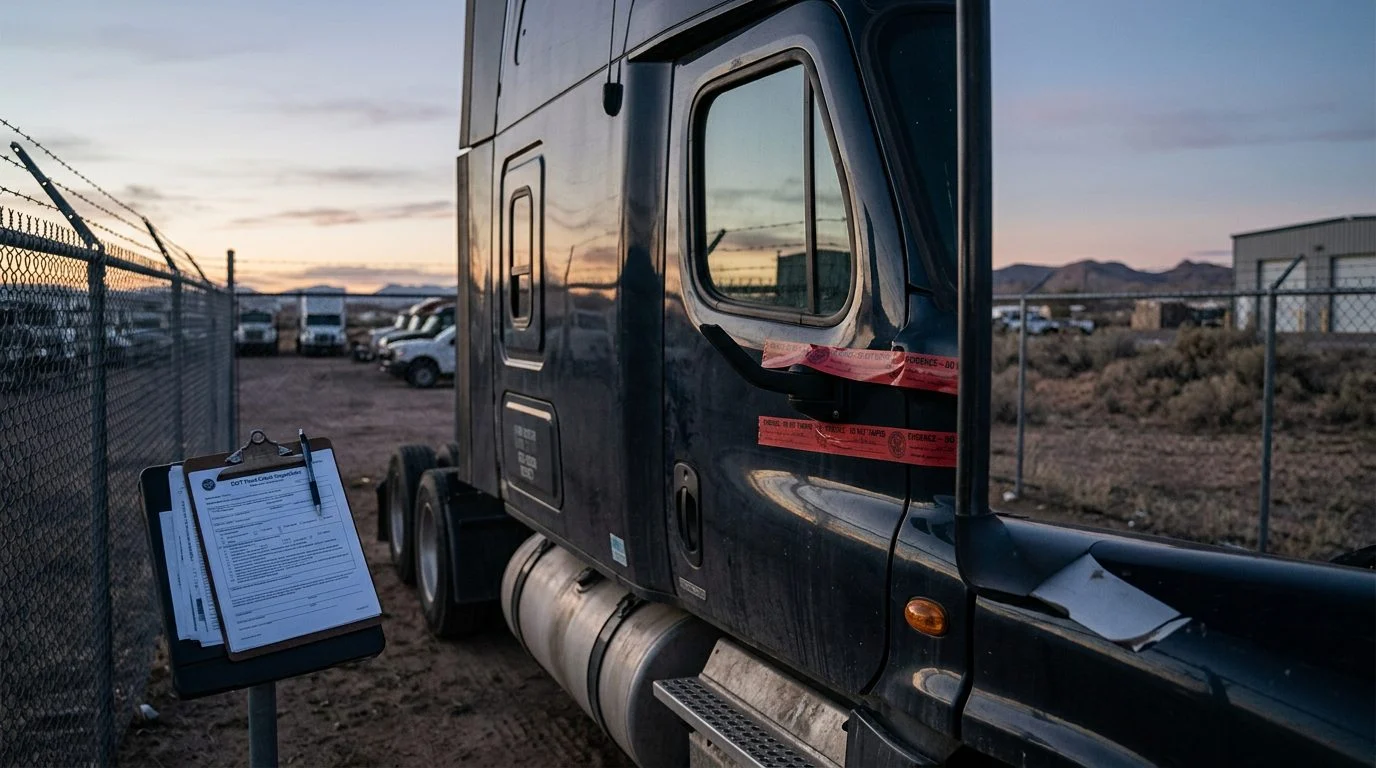
Trucking Accidents · New Mexico
Hurt in a Semi Crash? Find Out Whether You Can Sue the Trucking Company
El Gringo Law represents people injured in car and trucking accidents across New Mexico. Your first consultation is free, confidential, and comes with no obligation to continue.
By Josh Wood · Published October 29, 2026
Can I sue the trucking company after an accident in New Mexico? Often, yes. In many truck crashes, the injured person can bring a claim against the trucking company as well as the driver. The company’s own records often shape who answers for the harm.
El Gringo Law represents people hurt in car and trucking accidents across New Mexico, including Santa Fe, Rio Rancho, Las Cruces, Bernalillo County, Sandoval County, Taos, and Farmington.
Can You Sue a Trucking Company After a New Mexico Crash?
Often, yes. A claim can name the trucking company when its own conduct, or the conduct of a driver working for it, caused the crash. Whether a particular company is liable depends on the facts of the crash, the driver’s job at the time, and the records.
Parties that may be named include:
- The driver, for careless driving.
- The carrier that employed or dispatched the driver.
- A company that leased or owned the truck.
- A maintenance contractor that serviced it.
- A cargo loader whose work caused the load to shift.
- In some cases, a parts maker.
Employers answer for workers acting within the scope of their jobs. A company can also face its own claim for negligent hiring, retention, or supervision. That claim doesn’t require the driver to be on the job when the crash happened. The job question still matters. New Mexico’s general rule is that an employer isn’t vicariously liable for an employee’s negligent use of a personal vehicle on the way to or from work (Lessard v. Coronado Paint).
If a commercial truck crash left you with medical bills and insurer calls, you may have a claim against the trucking company, and our team can review it with you. Talk it through with our team — the first consultation is free, confidential, and carries no obligation.
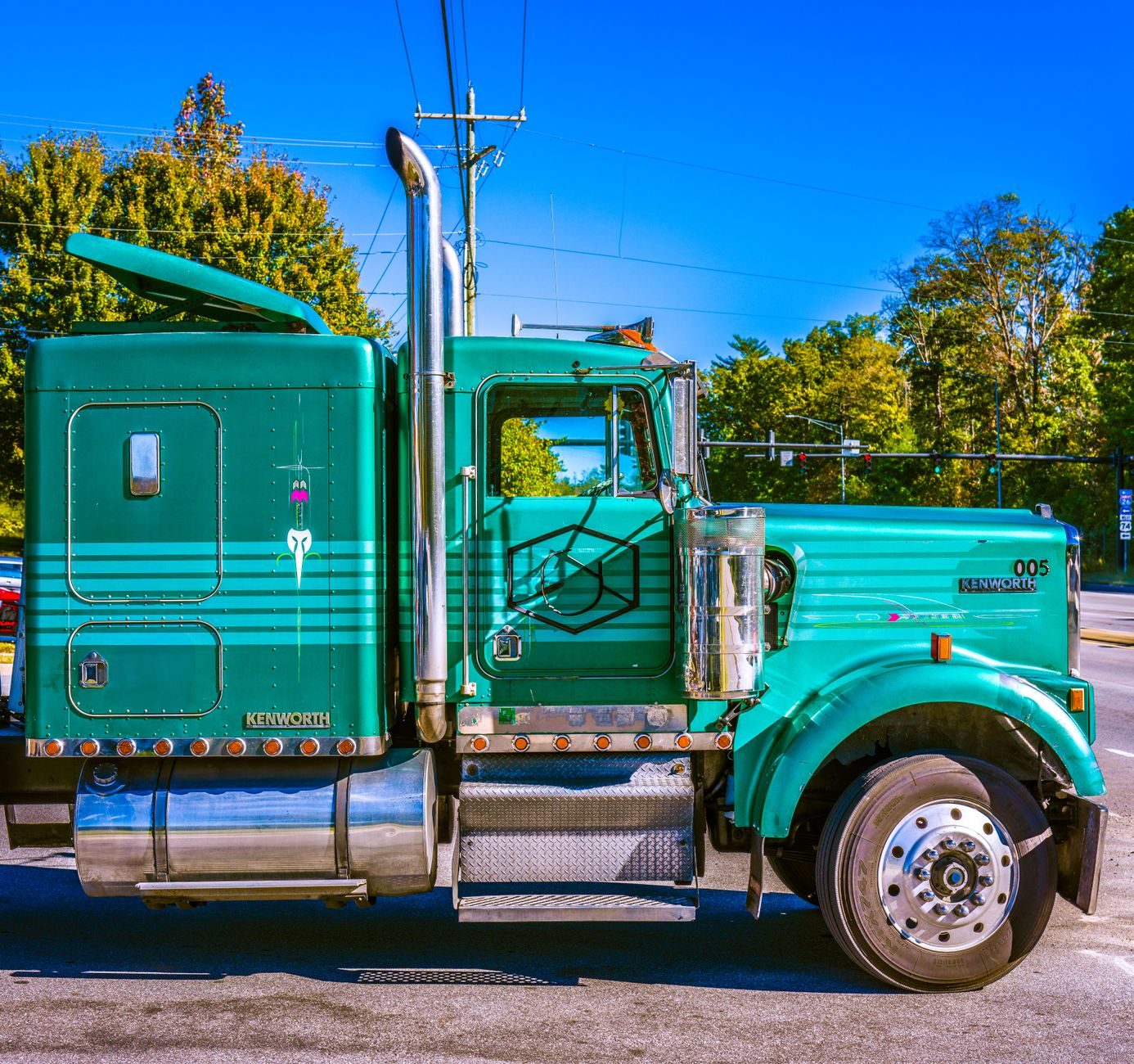
What Trucking Company Failures Can Support a Claim?
Failures in driving hours, maintenance, hiring, and testing can support a claim. Federal rules set standards for several of these, and the company’s records show whether it met them.
- Driving hours. A driver must take 10 consecutive hours off before driving. A driver can’t drive after a 14-hour period that starts when they come on duty. Driving time in that period is capped at 11 hours (49 CFR § 395.3).
- Falsified logs. Electronic logging devices record duty status. No driver or carrier may make a false report about it (49 CFR § 395.8).
- Maintenance. Carriers must systematically inspect and repair vehicles, and keep records of that work (49 CFR § 396.3).
- Hiring and driving habits. Driver files, prior violations, and testing records can show what the company knew. Overloaded cargo, speeding, and distracted driving also matter. Dashcam or telematics data may show them.
Time matters. Under 49 CFR 396.3(c), maintenance records must be kept for one year where the vehicle is housed or maintained, and for six months after the vehicle leaves the carrier’s control. Early written requests to preserve evidence protect your claim.
What Are the New Mexico Deadlines and Fault Rules?
Deadlines for filing an injury claim in New Mexico can depend on the facts of each case, and exceptions may apply. Wrongful death claims also run three years.
- Wrongful death. The three years run from the date of death (NMSA 1978, § 41-2-2).
Missing a deadline can end your claim, so act early.
New Mexico follows pure comparative negligence (shared fault). An injured person isn’t totally barred from recovery for being partly at fault (Scott v. Rizzo). Their recovery is reduced by their share of fault. Insurers often test fault early. Think carefully before you give a recorded statement to an adjuster.
When more than one party is at fault, each defendant generally pays only its own share, with exceptions. One party being vicariously liable for another is one example.
What Can a Trucking Claim Recover?
A trucking claim can seek economic losses and non-economic losses. Economic losses are money costs. Non-economic losses are harms to daily life.
- Economic: medical bills past and future, lost wages and earning capacity, property damage, and other out-of-pocket costs.
- Non-economic: pain and suffering, emotional distress, and loss of enjoyment of life.
- Catastrophic injuries: spinal cord injuries, amputations, and burns often need long-term cost evidence, such as future care needs.
- Family loss: loss of consortium damages belong to a person in a close relationship with the injured person, not to the injured person or the estate (Thompson v. City of Albuquerque).
No one can predict a dollar value from the crash description alone. A first settlement offer isn’t automatically fair, so review it once the medical picture is clearer. New Mexico also limits suits against an at-fault driver’s insurer for unfair claim practices. Those may be filed only after the underlying negligence case ends with a judicial finding of fault against the insured (Hovet v. Allstate).
How Does a Trucking Claim Work, and What Does It Cost to Start?
A trucking claim usually moves from a first consultation to evidence requests, negotiation, and, if needed, a lawsuit.
- First consultation. Your first consultation is free, confidential, and carries no obligation to continue. Bring the crash facts, your medical status, and any insurer contact.
- Evidence requests. The firm can ask the carrier in writing to keep logs, dispatch records, dashcam video, and maintenance files before they are overwritten.
- Investigation. Police reports, medical records, photos, and witness statements are gathered. Reconstruction is used when the facts call for it.
- Demand and negotiation. A demand goes to the trucking company’s insurer.
- Lawsuit, if needed. If a fair resolution isn’t reached, a suit is filed. Discovery, mediation, and possibly trial can follow. Timing varies, and the firm explains the expected steps for your case.
Costs. The first consultation with El Gringo Law is free, confidential and comes with no obligation to continue. Review that agreement before you sign.
Why Work With El Gringo Law on a Trucking Claim?
El Gringo Law handles car accidents, trucking accidents, and related injury claims, including wrongful death, burn injuries, spinal cord injuries, and amputations. Josh Wood is the responsible lawyer for this page. He is licensed in New Mexico and Arizona.
Our team sends evidence requests and tracks deadlines, because logs and maintenance files have set keeping periods. Every case is different, and past outcomes do not predict yours.
Not sure what your next step is?
Talk it through with our team — the first consultation is free, confidential, and carries no obligation.
Frequently Asked Questions About Suing a Trucking Company in New Mexico
Can I sue the trucking company after an accident in New Mexico if I was partly at fault?
Often, yes. New Mexico reduces your recovery by your share of fault instead of barring it entirely.
Do I need a police report?
A report helps, but it isn’t the only proof. Photos, medical records, and witness statements also matter.
Do I have to accept the insurer’s first offer?
No. You can review any offer before you respond.
Does a truck accident claim always go to trial?
No. Many claims resolve through negotiation, and a lawsuit is filed when needed to protect the claim.
Can a family sue after a fatal truck crash?
New Mexico’s wrongful death statute sets a three-year limit that starts on the date of death. Families should keep that date in mind.
Talk to El Gringo Law About Your Truck Crash Claim
If a commercial truck crash left you with medical bills, lost pay, and calls from an insurer, you may have a claim against the trucking company. Send your details through the contact form or start a chat, and our team can review the facts with you.
Responsible lawyer: Josh Wood, El Gringo Law. Website: elgringolaw.com.
How we approach a trucking crash claim
We review the crash record
We look at the police report, photos, medical records, and witness statements to understand how the crash happened.
We look at everyone involved
Trucking crashes can involve the driver, the trucking company, and other parties. We examine who was involved and what role each played.
We plan around your injuries
Serious injuries often require careful medical documentation. We help you understand what information matters for your case.
You get plain-language answers
We explain your options clearly and at a pace that works for you, so you can decide your next step with confidence.
Keep your records from the crash
Save photos, medical bills, repair estimates, and any paperwork from the crash. Write down what you remember while it is still fresh. Bring these items to your consultation.
Common questions about trucking crash claims
Can I still sue if I was partly at fault?
Partial fault raises specific questions under New Mexico law. Bring the facts of your crash to a consultation and we will talk through how they apply.
Who can be responsible for a truck crash?
Trucking crashes can involve the driver, the trucking company, and other parties. We look at who was involved and what caused the collision.
Is a police report enough proof?
A police report helps, but it is not the only proof. Photos, medical records, and witness statements also matter.
What happens at a consultation?
You tell us what happened and we listen. The first consultation is free, confidential, and carries no obligation to continue.