Burn Injuries | New Mexico
Burned in an Accident? Here's What to Do Next
Burn injuries can affect your health, your work and your finances for a long time. Learn the practical steps to take now, and talk with El Gringo Law about your situation.
By Josh Wood · Published November 2, 2026
If you or a family member has a third-degree burn from a crash, fire, or assault, the next few steps matter. Get medical care first, protect your evidence, and watch New Mexico’s deadlines. Burn injuries can change daily life fast, so this guide covers each step in order.
What a Third-Degree Burn Means
A third-degree burn is a full-thickness burn. It destroys the entire depth of the skin. First-degree burns affect only the outer skin. Second-degree burns, also called partial-thickness burns, reach deeper layers but leave some skin behind.
A third-degree burn may look white, leathery, brown, or charred. Nerve damage can make the area feel less painful than you expect. That can fool people into thinking the injury is minor.
A minor burn can sometimes be handled at home. A third-degree burn cannot. It needs prompt professional medical evaluation. The American Burn Association explains how burns are counted and tracked in its burn incidence fact sheet.
The medical severity documented early often shapes how the rest of the case is described. That is why the first medical record matters so much.
If a crash, fire, or assault left you or someone you love with a serious burn, our team can talk through what happened and what it may mean for you. Talk it through with our team — the first consultation is free, confidential, and carries no obligation.
Step One: Get Emergency Medical Care and Follow the Treatment Plan
Seek emergency care right away, and follow the treatment plan you are given. Burn center referrals, wound care, skin grafting, and follow-up visits all become part of your medical record.
Keep every discharge summary, prescription, appointment reminder, and bill. Tell providers exactly how the burn happened. Ask them to write that cause in your chart.
Keep a simple daily journal. Note your pain, sleep, movement, and any missed work. Small details add up over weeks and months.
Gaps in treatment can make it harder to show the full picture of an injury. Going to every scheduled visit protects your health and your records.
Step Two: Preserve Evidence of How the Burn Happened
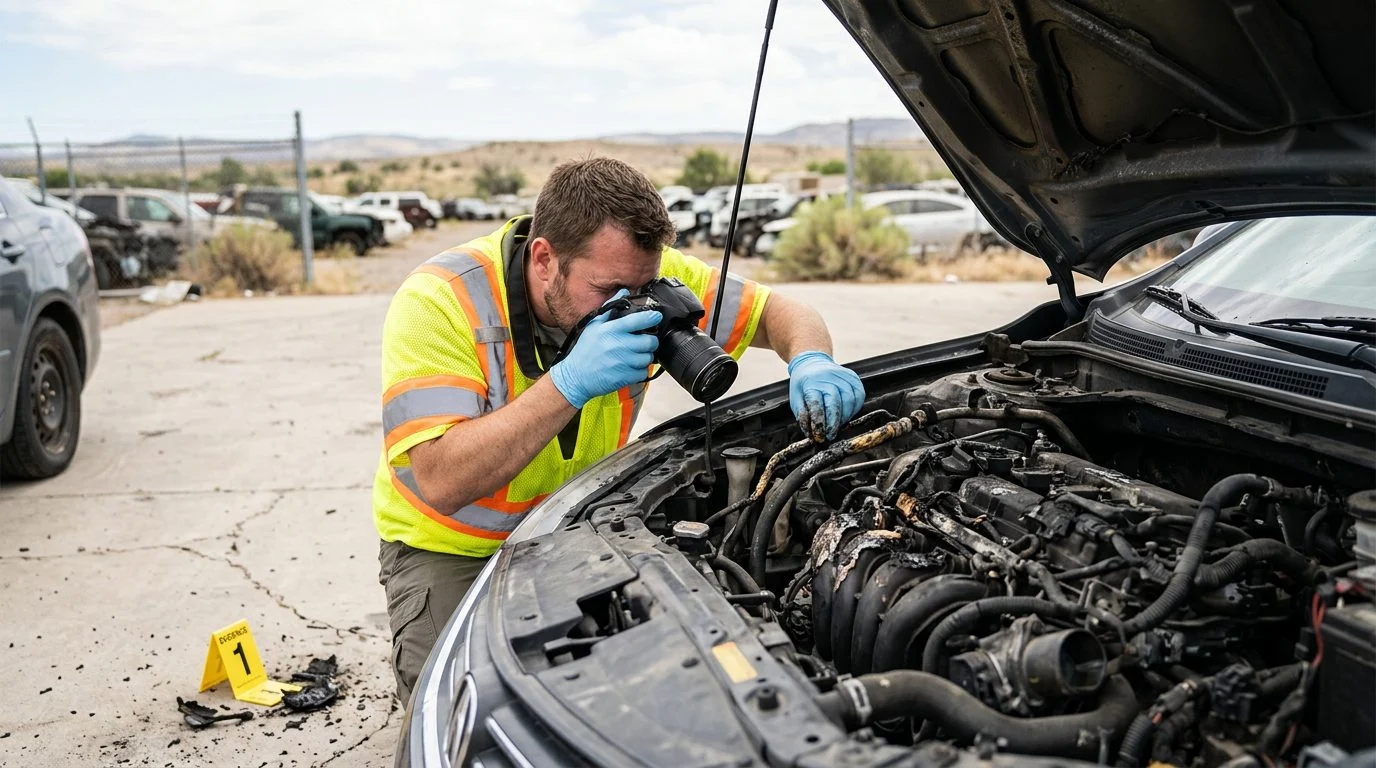
Start saving evidence as soon as it is safe. Photograph the scene, the vehicle, the equipment, or the property where the burn happened. Photograph your injuries over time, because healing changes how they look.
Save damaged clothing and items. Keep texts, emails, and messages that describe the incident. Write down witness names and phone numbers while memories are fresh.
Request copies of police, fire department, or incident reports, and write down each report number. In New Mexico, accident reports have limits. The law says that no accident report shall be used as evidence in any trial, except as the statute provides. That is one reason your own records and photos matter.
Who May Be Responsible for a Burn Injury
Responsibility depends on how the burn happened. Several types of incidents can lead to burn claims. The facts of each incident decide who may be responsible.
Car accidents and trucking accidents can cause fire or fuel-related burns after a collision. Premises liability covers fires, scalding, or explosions caused by unsafe conditions on property an owner or manager controls.
Negligent security may apply when weak safety measures helped an assault that caused a burn. Wrongful death may apply if a burn is fatal.
A negligence claim generally requires a duty, a breach of that duty, and a breach that was a proximate cause of the harm. The Herrera v. Quality Pontiac decision explains that proximate cause need not be the only or nearest cause.
For property cases, New Mexico’s jury instruction says an owner must use ordinary care to keep premises safe for visitors. The UJI 13-1309 commentary notes this duty can apply even when a danger is known or obvious.
Dealing With Insurance Companies and Recorded Statements
You can ask an insurance adjuster for time to gather your records before you give a recorded statement. Be accurate about your medical history. Avoid guessing about how the burn happened.
Keep copies of every letter, claim number, and settlement offer. Do not sign medical release forms or accept a payment until you understand what it covers.
New Mexico has a special rule for injured patients. For fifteen days after the occurrence, a person whose interest is adverse to the injured patient may not negotiate a settlement or seek a general release. Under NMSA § 41-1-1, a person whose interest is or may become adverse to an injured person who is under the care of a person licensed to practice the healing arts, or confined to a hospital or sanitarium as a patient, may not, within fifteen days from the date of the occurrence causing the injury, negotiate a settlement, seek a general release of liability, or obtain a statement from that injured person for those purposes. That statute also says a settlement or release is void unless the injured party acknowledges it before a notary who has no adverse interest.
What a Burn Injury Claim May Include
A burn injury claim may seek money for losses tied to the injury. Losses often fall into a few groups. Your medical record and bills will show the details.
Medical bills can include emergency care, burn center treatment, grafts, and rehabilitation. Lost wages and reduced ability to earn income in the future may also be part of a claim.
Future medical care, scar revision, and long-term treatment may apply if your medical record supports them. Pain, emotional distress, and the effect of scarring on daily life can also be part of the picture.
Documentation makes these losses easier to explain. Save bills, pay stubs, and notes about missed work from the start.
Not sure what your next step is?
Talk it through with our team — the first consultation is free, confidential, and carries no obligation.
New Mexico Deadlines and Fault Rules
New Mexico generally gives three years to bring an action for an injury to the person. Under Section 37-1-8 of the New Mexico Statutes, an action for an injury to the person must be brought within three years.
Wrongful-death actions must be brought within three years after the cause of action accrues (NMSA 1978, § 41-2-2 — three years from the date of death). Under NMSA § 41-2-2, the cause of action accrues as of the date of death.
Claims against a government entity or public employee follow shorter rules. Under NMSA § 41-4-16, a written notice stating the time, place and circumstances of the loss or injury is generally due within ninety days after an occurrence giving rise to a claim for which immunity has been waived under the Tort Claims Act. The time the injured person is incapacitated by reason of injury, not exceeding ninety days, does not count toward the period for giving notice. Separately, a suit may proceed where the governmental entity had actual notice of the occurrence. For a wrongful-death claim, the required notice may be presented by, or on behalf of, the personal representative of the deceased person or any person claiming benefits of the proceeds of a wrongful death action, or the consular officer of a foreign country of which the deceased was a citizen, within six months after the date of the occurrence of the injury which resulted in the death. Under NMSA § 41-4-15, actions against a governmental entity or a public employee for torts are forever barred unless commenced within two years after the date of occurrence resulting in loss, injury or death, except that a minor under the full age of seven years has until his ninth birthday in which to file. Burns on public property can trigger these rules.
On fault, New Mexico follows pure comparative negligence. In New Mexico, a plaintiff suing in negligence can still recover damages even when partly at fault. The plaintiff’s own share of fault reduces the damages by that percentage, but it never bars recovery.
Which deadline applies depends on the facts of your case. Early review helps make sure no deadline passes unnoticed.
What Happens at a First Consultation
A first consultation is a conversation about your burn, your treatment, and your records. It is a chance to explain what happened in your own words.
The initial consultation is free, confidential, and without obligation to continue.
Expect the conversation to cover the incident, the medical treatment so far, and the records you already have. Bring what you can. Helpful items include medical records, photos, the incident report number, and a list of bills and missed work.
You do not need every document before you call. Bring what you have, and note what is missing.
Talk With Our Team About Your Burn Injury
Caring for a burn survivor while making decisions about the next step is a heavy load. You do not have to sort out the legal side alone.
How long do I have to file a burn injury claim in New Mexico?
Generally three years for an injury to the person. Claims against government entities can have shorter notice and filing limits.
Does New Mexico reduce compensation if I was partly at fault?
New Mexico follows pure comparative negligence. A plaintiff is not totally barred because of their own negligence.
Is a third-degree burn the same as a second-degree burn?
No. A third-degree burn goes through the full depth of the skin, while a second-degree burn is partial-thickness.
Josh Wood is the responsible lawyer for the content of this page. He is licensed in New Mexico and Arizona. You can reach El Gringo Law through the contact page to talk about the facts of your burn injury.
How El Gringo Law can help
Free, confidential first consultation
Your first consultation is free, confidential and comes with no obligation to continue. Call or send us a message to start the conversation.
Plain-language answers
We explain your options in clear terms so you can decide what makes sense for your situation.
Focus on the whole picture
Burn injuries can involve medical treatment, scarring, lost income and emotional strain. We look at all of it with you.
A team that answers your questions
Our team supports you from your first call, and we keep you informed as your case moves forward.
Get medical care right away
Some burns look minor but cause serious damage underneath the skin. Seek medical evaluation promptly, and follow your providers' instructions. Your health comes first.
Steps to take after a burn injury
1. Get treated
Visit a doctor, urgent care or emergency room as soon as you can. Keep every appointment and follow your treatment plan.
2. Document the incident
Write down how the burn happened, where you were and who was there. Photograph the scene and your injuries as they heal.
3. Keep your records
Save medical bills, prescriptions, receipts and pay stubs. Track missed work and any daily tasks your injuries make difficult.
4. Talk with a lawyer
Share what happened with El Gringo Law. We will review your situation during a free, confidential first consultation with no obligation to continue.