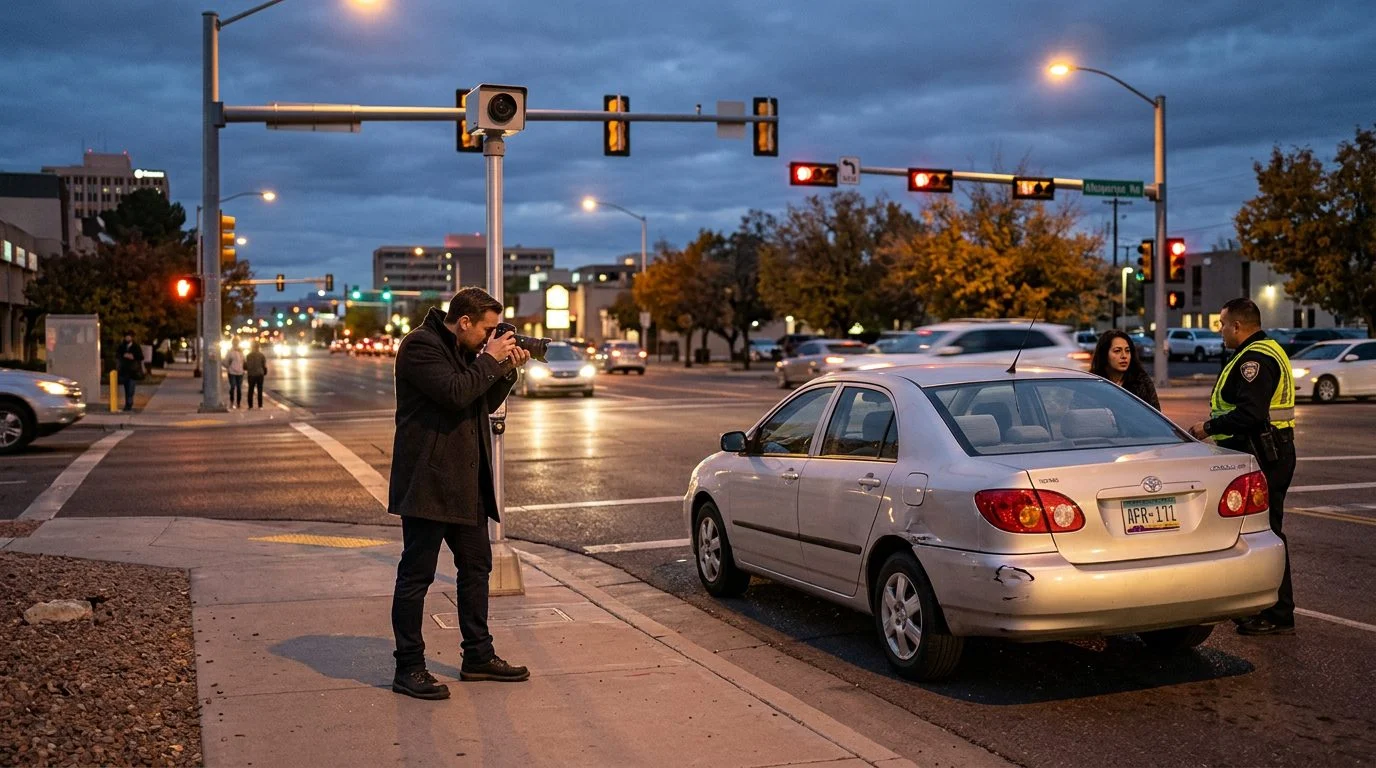
Car Accidents | New Mexico
Hurt in a Fender Bender? Learn How a New Mexico Claim Works
Josh Wood and our team at El Gringo Law explain when another driver's negligence can lead to a claim, and what to do next. Your first consultation is free, confidential, and comes with no obligation to continue.
By Josh Wood · Published November 7, 2026
Can someone sue for a fender bender? Yes. When another driver’s negligence causes injury or property damage, a claim can be brought, even after a minor crash. This page explains how New Mexico law looks at a low-speed collision, when the filing clocks run, and what to know before you answer an insurer.
Yes, a Fender Bender Can Lead to a Lawsuit, but the Bump Size Is Not the Test
A low-speed collision can support a lawsuit when another driver was negligent and that negligence caused real harm. (Herrera v. Quality Pontiac) Herrera v. Quality Pontiac describes this framework.
Every person has a duty to use ordinary care for the safety of others and their property (UJI 13-1604 NMRA). UJI 13-1604 NMRA reads: “Every person has a duty to exercise ordinary care for the safety of the person and the property of others. [Every person also has a duty to exercise ordinary care for the person’s own safety and the safety of their property.] USE NOTES The bracketed material is to be used only when the party seeking recovery has been charged with lack of ordinary care.” A breach happens when a driver falls short of that care, such as pulling out without looking.
Causation means the breach was a proximate cause of the harm. A proximate cause produces the injury in a natural and continuous sequence. It need not be the only cause (Herrera v. Quality Pontiac).
A small dent does not decide the case. A minor scrape can still lead to a neck injury, and a larger dent may cause no injury at all. The injuries and losses that follow matter most. For the broader picture, see our guide to car accident claims in New Mexico.
Not sure what your next step is?
Talk it through with our team — the first consultation is free, confidential, and carries no obligation.
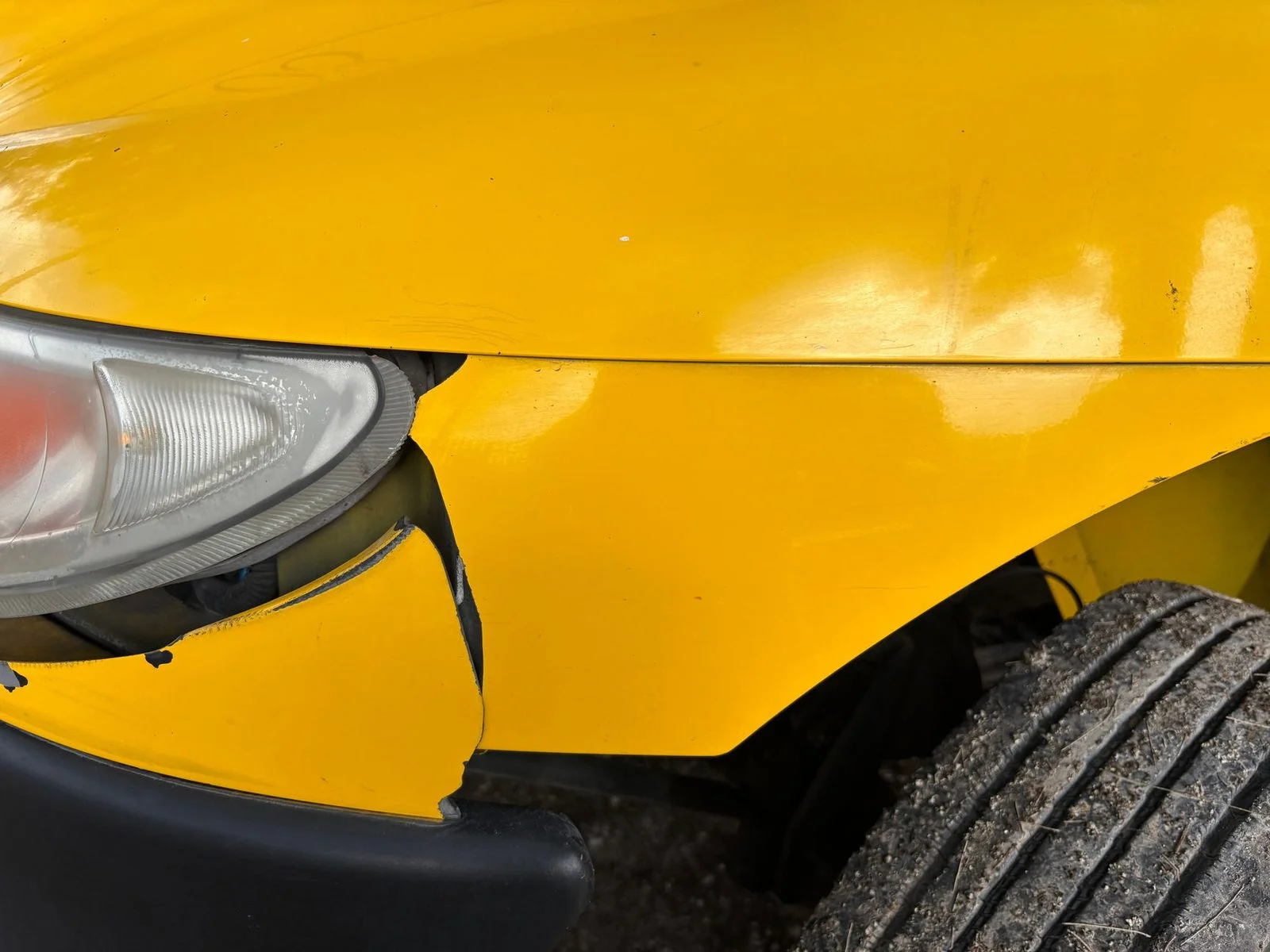
What Counts as a Fender Bender and Why Injuries Can Still Be Serious
A fender bender is usually a minor, low-speed collision. No single legal definition controls every claim.
Many people assume a crash that looks minor cannot cause lasting harm. That assumption can cost time. Pain, stiffness, and headaches may appear after the first hours or days. Early medical care creates a record of what happened, even when symptoms feel mild at the scene.
Passengers, pedestrians, cyclists, and rideshare passengers can all be hurt in low-speed impacts. Each person may have a claim of their own.
If your trip involved a rideshare vehicle, the insurance rules may differ. New Mexico sets minimum liability coverage for transportation network company drivers. The limits are higher while a driver is on a prearranged ride (NMSA § 65-7-8). For rideshare crashes in Albuquerque, see our rideshare crash page.
Who Can Sue Whom After a Minor Collision
Can someone sue for a fender bender? Yes. The injured person can bring a negligence claim against the driver whose carelessness caused the harm.
The reverse can also happen. The other driver may say you caused the crash. Claims can run in both directions, and fault can be shared.
If you receive a demand letter or court papers, do not set them aside. Court papers carry response deadlines. A lawyer can explain what the papers mean before you respond.
Insurance shapes how a claim gets handled. New Mexico sets minimum amounts of financial responsibility: $25,000 for one person’s injury or death in one accident, $50,000 total for two or more people (with each person subject to the $25,000 limit), and $10,000 for property damage; if the evidence is a surety bond or a cash deposit, the total amount shall be $60,000 (NMSA § 66-5-208). Those minimums may not cover a serious injury.
How New Mexico Fault Rules Affect a Fender Bender Claim
New Mexico reduces an injured person’s damages by their own share of fault. It does not bar the claim completely.
New Mexico adopted pure comparative negligence in Scott v. Rizzo. New Mexico uses pure comparative negligence (Scott v. Rizzo, 1981): an injured person’s own share of fault reduces the damages by that percentage, but it never bars recovery entirely, so even a person mostly at fault can recover the share caused by others. (Scott v. Rizzo)
Under the jury instruction, the jury totals the damages. It assigns percentages that add to 100%, then reduces the plaintiff’s damages by the plaintiff’s share (UJI 13-2218 NMRA).
When more than one party contributed in a cause of action to which the doctrine of comparative fault applies, NMSA § 41-3A-1 limits a defendant’s liability to its own share of fault, except where joint and several liability still applies, such as to intentional wrongdoers, vicarious liability, strictly liable product manufacturers, or situations with a sound basis in public policy. A defendant who shows another’s fault contributed is liable only for its own ratio of the total fault.
Fault is often disputed in low-speed crashes. Common questions include whether one driver stopped suddenly, whether the following driver was too close under NMSA § 66-7-318, and whether either driver was distracted.
Limited photos, conflicting statements, and no police citation can make proof harder. Gaps in medical treatment can be used to question the injury. Keep records and follow the care plan. If your crash happened in Bernalillo County, see our Bernalillo County page.
Filing Deadlines: How Long You Have to Sue in New Mexico
For injuries to a person, New Mexico gives three years to bring the action.
The personal injury period comes from NMSA § 37-1-8. It covers actions for an injury to the person or reputation of any person, within three years. The property period comes from NMSA § 37-1-4, which covers actions for injuries to property within four years.
Treat these as outer limits, not targets. Waiting can make evidence harder to collect. Photos, witness memories, and records change over time.
The two clocks are separate.
What You Can Recover: Vehicle Damage, Medical Costs, and Other Losses
In some cases they can include loss of value and rental expenses. Injury claims often include medical bills, future treatment needs, lost wages, and pain and suffering.
Coverage types differ. The Insurance Institute for Highway Safety explains how collision coverage, property-damage liability coverage, and injury coverage differ in auto crashes.
The value of a claim turns on documented medical care, bills, wages, proof of fault, and available insurance. Every case is different, so no general guide can forecast the value of one claim.
Be careful with releases. Under NMSA § 41-3-4, a release from an injured person to one tortfeasor does not discharge others unless the release says so. It does reduce the claim against them by the amount paid, or by a greater amount or proportion if the release provides that the total claim shall be reduced by more, if that is greater than the consideration paid.
Not sure what your next step is?
Talk it through with our team — the first consultation is free, confidential, and carries no obligation.
Talking With a Lawyer Before You Accept an Insurance Offer
Talk with a lawyer before you sign anything from an insurer.
A common moment comes a few days after a minor crash. An adjuster calls, offers a quick payment, or asks for a recorded statement while symptoms are still developing. Those early steps can shape the claim.
A free initial consultation lets a lawyer review the crash facts, medical records, insurance information, and filing deadlines. Your first consultation is free, confidential, and comes with no obligation to continue.
Josh Wood, a lawyer licensed in New Mexico and Arizona, is responsible for this page’s content. You can reach El Gringo Law through the contact form. Spanish-language consultation is available on request.
Common Questions
Can someone sue for a fender bender in New Mexico?
Yes, when another driver’s negligence caused injury or property damage, a claim can be brought.
How long do you have to sue after a fender bender?
New Mexico generally allows three years for personal injury and four years for property damage.
Can you sue if you were partly at fault?
Yes. Under pure comparative negligence, your damages are reduced by your share of fault, not barred.
How We Can Help After a Low-Speed Collision
Clear answers
We explain how a minor collision can still cause injury or property damage, and what questions to ask about your situation.
Organized records
We help you gather the police report, photos, repair estimates, and medical records that document what happened.
Insurance communication
We can help you decide how to respond to the other driver's insurance company so your claim is not weakened by a rushed statement.
Focus on your recovery
Our team handles the paperwork and follow-up so you can concentrate on your health and your daily life.
Don't Wait to Get Checked
Some injuries, such as whiplash, back pain, and concussions, can appear hours or days after a crash. Get a medical evaluation promptly and keep your records, even if the damage to your car looks minor.
Steps to Take After a Fender Bender
Check for injuries
Call 911 if anyone is hurt, and move to a safe location if you can. Accept medical care even if you feel fine at the scene.
Document the scene
Take photos of both vehicles, the road, traffic signs, and any visible injuries. Exchange names, insurance details, and contact information.
Get the police report
Ask the responding officer for the report number. The report records key facts about how the collision happened.
Talk to a lawyer before giving a recorded statement
Insurance adjusters may ask questions that affect your claim. Our team can advise you on how to respond while you focus on recovery.