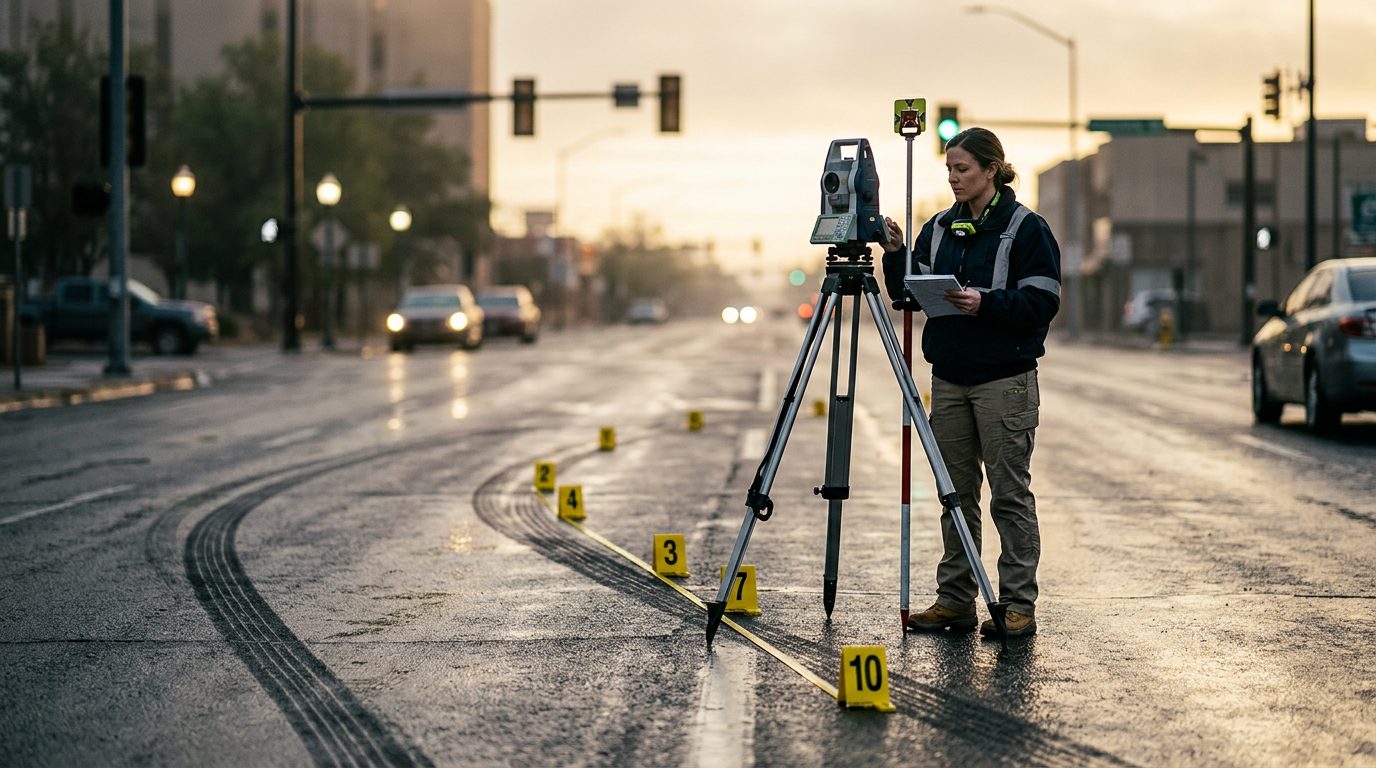
Negligent Security | Albuquerque, New Mexico
Hurt in an Attack at a Gas Station? Talk With Our Team
El Gringo Law represents people injured in attacks on gas station and convenience store property. Your first consultation is free, confidential, and comes with no obligation to continue.
By Josh Wood · Published October 26, 2026
A gas station attack lawyer in Albuquerque looks first at one question: did the property owner or operator fail to take reasonable steps against a danger it should have expected? If the answer may be yes, a negligent security claim could apply, even when a separate person carried out the attack. This page explains how that claim works in New Mexico, what it can cover, and what the process looks like after you call.
What Is a Gas Station or Convenience Store Attack Claim?
A gas station or convenience store attack claim is a negligent security claim against the property owner or operator. Negligent security means the owner or operator did not use reasonable care to protect people on the property from crime that was foreseeable.
New Mexico law says a landowner must use ordinary care to protect a visitor from harm caused by a third party’s conduct, including criminal conduct. See the New Mexico jury instruction 13-1320 on this duty.
The property owner or operator may also share responsibility if its failure to protect visitors was part of the chain of events. The jury can weigh that failure against the attacker’s conduct.
Who may bring a claim? When someone dies, the claim is brought by the personal representative of the deceased person, under the NMSA 1978, § 41-2-3 wrongful death statute.
If you are caring for someone hurt at a counter or outside a store, you may have a claim, and our team can talk through the facts with you. Talk it through with our team — the first consultation is free, confidential, and carries no obligation.
When May a Property Owner or Operator Be Responsible?
A property owner or operator may be responsible when it knew or should have known of a crime risk and did not take reasonable steps against it. Courts look at the facts of each location, so the details matter.
Common facts include:
- Prior crimes, complaints, or incidents at the same location
- Lighting in the lot, at the pumps, and at the entrance
- Whether cameras worked and were watched or recorded
- Door, entry, and cash-handling controls
- Staffing during late hours
- Whether security matched the known risk
Late hours, isolated lots, and cash handling can all affect what was foreseeable.
A negligence claim generally requires a duty, a breach of that duty, and a breach that caused the harm. Proximate cause means a cause that, in a natural and continuous sequence, produces the injury. See Herrera v. Quality Pontiac.
Early evidence is often the most important. That includes police reports, incident reports, witness names, and surveillance video. Some systems record over video on a schedule, so early requests matter. New Mexico also recognizes liability for intentionally destroying evidence, as described in Torres v. El Paso Electric.
What Can a Claim Cover?
A claim may seek payment for losses the attack caused, such as medical costs, lost income, and pain and suffering. Each loss needs proof, so records matter as much as the story.
- Medical care: emergency treatment, surgery, rehabilitation, and ongoing care
- Lost income: missed work and reduced ability to earn in the future
- Pain and suffering: physical pain and loss of enjoyment of life
Serious injuries such as spinal cord injuries, amputations, burn injuries, and other catastrophic injuries often bring long-term medical needs. Those needs take time to document.
In a fatal attack, New Mexico’s wrongful death statute looks at the financial loss to surviving family members. The jury also considers the circumstances of the wrongful act. Someone in a close relationship with the injured or deceased person may have a separate loss of consortium claim, as explained in Thompson v. City of Albuquerque.
Your own share of fault reduces what you recover but does not bar recovery. Under Section 41-3A-1, when several liability applies, a defendant who establishes that the fault of another is a proximate cause of the plaintiff’s injury shall be liable only for that portion of the total dollar amount awarded as damages to the plaintiff that is equal to the ratio of such defendant’s fault to the total fault attributed to all persons, including plaintiffs, defendants and persons not party to the action, but the doctrine of joint and several liability still applies to any person who acted with the intention of inflicting injury or damage.
How Does the Process Work, Step by Step?
The process starts with a first consultation, then moves through investigation, damages documentation, and either a settlement or a lawsuit. Each step builds on the one before it.
- First consultation. We review what happened, where, and what injuries or losses resulted.
- Evidence. We request police reports, ask that video and security records be preserved, and look at the location’s security history.
- Medical and damages records. We gather treatment records and bills and document how the injury affects work and daily life.
- Demand and negotiation. The claim goes to the responsible parties and their insurers.
- Lawsuit, if needed. If a fair resolution is not reached, the case moves into filing, discovery, and pretrial steps.
Timing depends on the injuries, the evidence, and whether the claim settles or goes to court. Deadlines are set by statute. Under NMSA 1978, § 41-2-2, an action brought under that section and the preceding section must be brought within three years after the cause of action accrues, and the cause of action accrues as of the date of death (NMSA 1978, § 41-2-2 — three years from the date of death).
Why Work With El Gringo Law?
El Gringo Law represents people in New Mexico in negligent security, premises liability, wrongful death, car accidents, trucking accidents, sexual assault, catastrophic injuries, spinal cord injuries, amputations, and burn injuries. Josh Wood is the lawyer responsible for this page’s content. He is licensed in New Mexico and Arizona.
Our team supports the firm’s lawyers with intake, records requests, and client communication. You can ask who is working on your matter, and we will tell you.
The firm serves people in Albuquerque and Bernalillo County, Santa Fe, Rio Rancho, Sandoval County, Las Cruces, Taos, and Farmington.
Results from any past matter depend on that matter’s facts. Every case is different, and past results do not predict a similar outcome.
Common Questions About Gas Station and Convenience Store Attack Claims
Most questions come down to deadlines, who files, and what the first step costs. The short answers below cover the basics.
How long do I have to act?
Deadlines are set by statute and can be short, so early action protects your options.
What if a family member was killed?
New Mexico wrongful death claims are brought by the personal representative of the deceased person. Proceeds go to statutory beneficiaries.
Does my own fault end my claim?
No. Your share of fault reduces what you recover, but it does not bar recovery.
What does the first consultation cost?
The first consultation is free, confidential, and carries no obligation to continue.
Do I need a police report or video to call?
No. You can call without them, and the firm can request records after you reach out.
Not sure what your next step is?
Talk it through with our team — the first consultation is free, confidential, and carries no obligation.
Talk With Our Team About What Happened
If you were hurt at a counter or outside a store, or you are trying to understand what happened to someone you love, you do not have to face the next step alone. Our team can talk through the facts of the attack and whether a negligent security claim may apply.
You can call, use the contact form, or start a chat through elgringolaw.com. Josh Wood is the responsible lawyer for this page, and El Gringo Law is the firm behind it.
How We Approach Your Case
Focused on Property Safety
We look at whether the property owner took reasonable steps to protect customers, such as lighting, security staffing, and cameras.
Careful Review of the Facts
We gather police reports, surveillance footage, incident records, and medical documentation to understand what happened.
Support for Injured People and Families
We work with people who were hurt in an attack and with families when a loved one did not survive.
Clear, Regular Communication
Our team keeps you informed, answers your questions in plain language, and explains your options as your case moves forward.
Protect Your Health and Your Record
Get medical care right away, even if your injuries seem minor. If you can do so safely, report the attack to police and keep any photos, receipts, or notes about what happened. Talk with us before giving a recorded statement to the property owner or its insurance company.
Types of Claims We Handle
Negligent Security
Claims arising when a business's failure to provide reasonable security contributed to an assault or robbery on its property.
Premises Liability
Claims for injuries caused by dangerous conditions on property that the owner or operator controls.
Catastrophic and Life-Changing Injuries
Serious injuries that require long-term medical care, rehabilitation, or lasting changes to daily life.
Wrongful Death
Claims brought after a loved one dies in an attack or other incident on someone else's property.