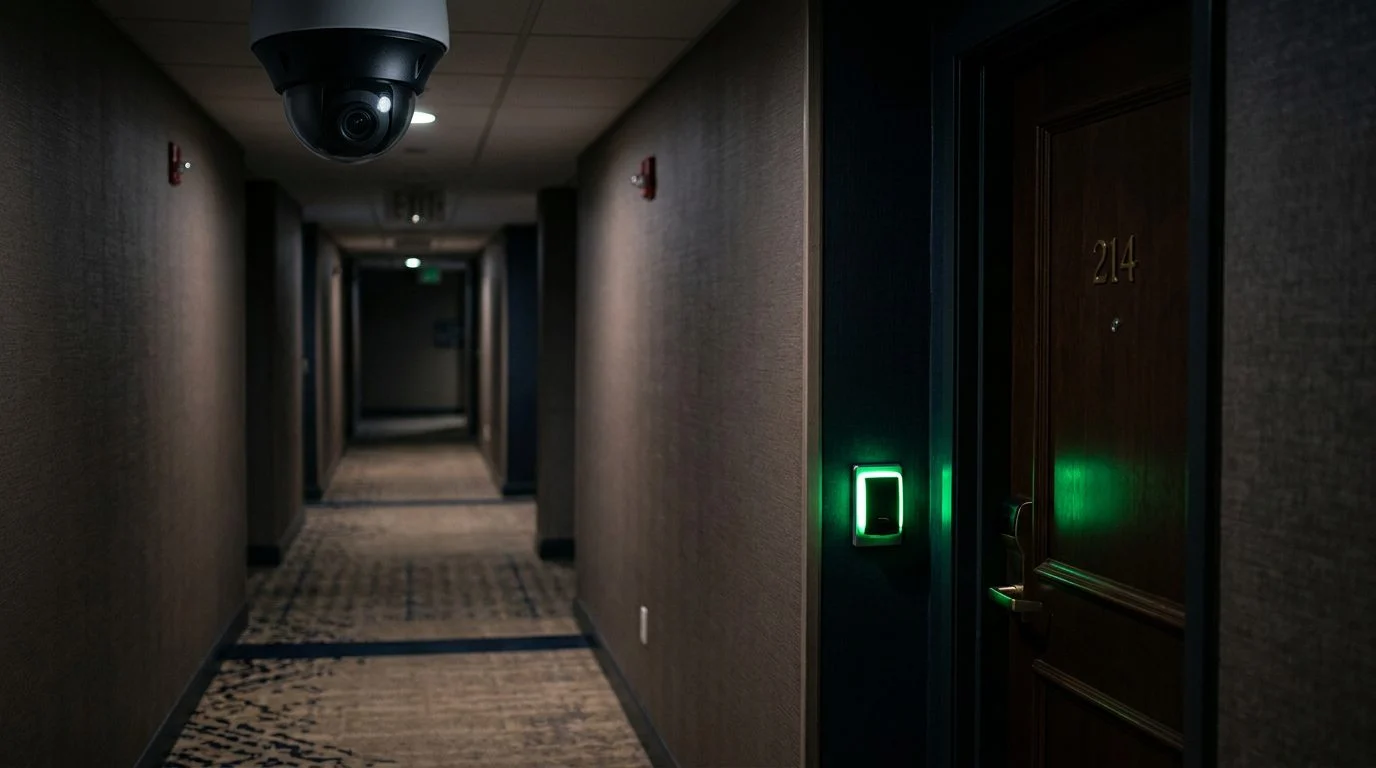
Negligent Security | Hotel and Motel Injuries | New Mexico
Assaulted at a Hotel in New Mexico? Find Out Whether the Property May Be Responsible
El Gringo Law represents people injured in hotels and motels across New Mexico, including Santa Fe, Bernalillo County, Rio Rancho, Las Cruces, Taos and Farmington. Start with a free, confidential consultation with no obligation to continue.
By Josh Wood · Published October 28, 2026
A hotel assault lawsuit in New Mexico is usually a negligent security claim. It asks whether the property protected guests from a harm it should have seen coming. The attacker may be the one who did the harm, but the property can be part of the case too. This page explains how these claims work, what evidence matters, and what to expect. Every incident turns on its own facts.
What a hotel or motel assault lawsuit is, and who it is for
It is a claim against the property, brought by people who were harmed there. The claim asks whether the property failed to take reasonable steps against a foreseeable crime.
- The injured person can sue the property owner or operator, not only the attacker.
- Assaults can happen in guest rooms, hallways, parking areas, pools, lobbies, and other common areas.
- Covered harms include sexual assault and attacks that cause catastrophic injury or death.
- Guests and visitors attacked on the property may bring a claim. An employee’s rights depend on who employed them and on other law.
Many people reading this are researching for a friend or relative. You don’t need every fact to ask a question. A civil claim is separate from any criminal case against the attacker, and it can move on its own timeline.
If you're still weighing whether a hotel assault lawsuit New Mexico claim fits your situation, our team can talk it through with you on your schedule. Talk it through with our team — the first consultation is free, confidential, and carries no obligation.
When a hotel can be held responsible: the negligent security question
A hotel can be held responsible when a crime was foreseeable and its security was not reasonable for that risk. New Mexico’s UJI 13-1320 NMRA commentary says a landowner must use ordinary care to protect visitors from harm caused by a third party’s foreseeable conduct. That conduct can be criminal. Related guidance in UJI 13-1309 NMRA says an owner must use ordinary care to keep the premises safe for visitors.
Foreseeability is the heart of these cases. Investigators often look at:
- prior similar crimes or complaints at the property
- police calls to the property
- known problems in the area
- warning signs the owner knew or should have known about
Security measures often reviewed include lighting, working locks, access control for rooms and garages, camera coverage, staffing and patrols, and how the property responded to earlier problems. The FBI Crime Data Explorer publishes agency-level reported crime data, which can help show local crime history. In general, a negligence claim needs a duty, a breach of that duty, and a breach that caused the harm, as Herrera v. Quality Pontiac explains.
Who can bring a claim after an assault at a hotel or motel?
The person who was harmed can bring a claim. In a death case, the claim is brought by the personal representative.
New Mexico law says a wrongful death action must be brought by and in the name of the deceased person’s personal representative, as NMSA 1978 § 41-2-3 provides. The law also sets how any judgment is distributed to surviving family members.
A single incident can involve more than one possible defendant. These can include the property owner, a management company, or a security contractor. Identifying each one is part of the early investigation.
If an employee was the attacker or failed to respond, New Mexico asks whether the employer knew or should have known the employee posed a risk. See UJI 13-1647 NMRA on negligent hiring, supervising, or retaining an employee. The right party and claim depend on the facts and the injuries involved.
What a claim can cover
A claim can seek payment for the losses the injury caused. The categories depend on the facts.
- Medical costs, past and future, including emergency care, surgery, counseling, and rehabilitation.
- Lost income and reduced ability to earn in the future.
- Pain, suffering, emotional distress, and loss of enjoyment of life.
- In serious cases, long-term care and disability, plus the lasting effects of spinal cord injury, amputation, or burns.
- In a death case, the losses the family has suffered, as New Mexico law allows.
Fault is compared among everyone involved. A jury can assign a percentage of fault to the injured person, each defendant, and certain non-parties, under UJI 13-2219 NMRA. Under NMSA § 41-3A-1, in causes of action to which several liability applies, a defendant who establishes that another’s fault is a proximate cause of the plaintiff’s injury is liable only for the portion of the damages equal to the ratio of its fault to the total fault attributed to all persons. Joint and several liability is abolished in comparative fault cases except as follows: it applies to people who acted with intent to inflict injury; to persons whose relationship makes one vicariously liable for the other’s acts, but only to that portion of the total liability attributed to those persons; to persons strictly liable for a defective product, but only to that portion of the total liability attributed to those persons; and to situations not otherwise covered that have a sound basis in public policy. Every case is different.
Not sure what your next step is?
Talk it through with our team — the first consultation is free, confidential, and carries no obligation.
Evidence that matters early
The most useful evidence shows what happened, when it happened, and what the property knew beforehand.
- Police and incident reports, and the report number.
- Medical records and photos of injuries, taken as soon as possible.
- Guest registration, room assignment, and check-in records.
- Security camera footage. Footage is often overwritten on a schedule, so send a written request to preserve it quickly.
- Prior complaints, police calls to the property, and other incident history.
- Witness names, texts, emails, and booking confirmations that show the timeline.
You don’t have to gather all of this alone. Our team can help request records and organize what you already have.
How the process works, step by step
Most claims move through the same basic stages, though timing varies.
- First contact: a confidential talk about what happened, who was hurt, and the medical care received.
- Investigation: preserving evidence, requesting records, and identifying the responsible parties.
- Evaluation: reviewing whether the facts support a negligent security claim, including strengths and weaknesses.
- Demand: the claim is presented to the property and its insurer before any lawsuit.
- Lawsuit if needed: filing, discovery, depositions, and expert review where the case calls for it.
Deadlines matter. Under NMSA § 37-1-8, actions for an injury to the person or reputation of any person must be brought within three years. Under NMSA § 41-2-2, an action instituted under this and the preceding section must be brought within three years after the cause of action accrues, and the cause of action accrues as of the date of death (NMSA 1978, § 41-2-2 — three years from the date of death). Filing deadlines are strict, so an early review matters. Timelines vary widely. They depend on the injuries, the evidence, and whether the case resolves before trial.
Why clients bring these cases to El Gringo Law
El Gringo Law handles the claim types on this page, and Josh Wood is the responsible lawyer for this content.
- Practice areas include negligent security, sexual assault, premises liability, wrongful death, catastrophic injuries, and spinal cord injuries.
- Josh Wood is licensed to practice in New Mexico and Arizona.
- The firm works with people across New Mexico, including those in Santa Fe, Rio Rancho, Las Cruces, Bernalillo County, Sandoval County, Taos, and Farmington.
The first consultation is free, confidential, and comes with no obligation to continue.
To reach the firm, call, submit the contact form at https://elgringolaw.com/contact/, or start a chat. Josh Wood is the responsible lawyer for this content.

Questions people ask before calling
A hotel or motel can be sued when a foreseeable assault was not met with reasonable security.
Can I sue a hotel if another guest assaulted me?
A claim can fit when the property knew or should have known about the risk and its security was not reasonable.
Can I sue a motel if the attacker was a stranger?
A stranger’s attack can still fit a negligent security claim when prior crime or known security gaps are part of the facts.
Can a family member sue after a death at a hotel?
The claim is brought by the personal representative, and New Mexico law sets who receives the proceeds.
Do I have to report the assault to police before calling a lawyer?
A police report creates an early record, and timing questions can come up in the first consultation.
What if I still don’t remember everything?
Medical and emotional recovery come first, and you can share what you know at your own pace.
If you’re still weighing whether a hotel assault lawsuit New Mexico claim fits your situation, our team can talk it through with you on your schedule.
Have questions about what happened?
Ask our team directly. The first conversation is free, confidential, and there is no obligation to continue.
How We Approach Hotel Security Cases
We Review the Facts
We look at what happened, where it happened, and what the property knew about security conditions before the attack.
We Focus on Premises Safety
Our practice includes negligent security and premises liability, so we understand how hotel and motel safety issues are investigated.
We Keep Your Recovery in View
Physical and emotional injuries matter. We help you think through the impact on your health, work and family.
You Speak With the Firm Directly
Josh Wood, a New Mexico lawyer with the firm, is responsible for the content of this page and for the matters we accept.
Your Health Comes First
Get medical care as soon as you can, even if your injuries seem minor. Keep records of your treatment, any police report numbers, and the names of people who saw what happened.
What to Bring to Your Free Consultation
Basic Details
Write down the hotel or motel name, address, room area, and the date and approximate time of the incident.
Medical Records
Bring discharge papers, bills, prescriptions and notes from doctors or counselors about your injuries.
Police and Incident Reports
Share any report numbers, photos, or messages with hotel staff about the incident or earlier security concerns.
Your Questions
Think about what worries you most. We will answer your questions honestly and explain what a review of your case involves.