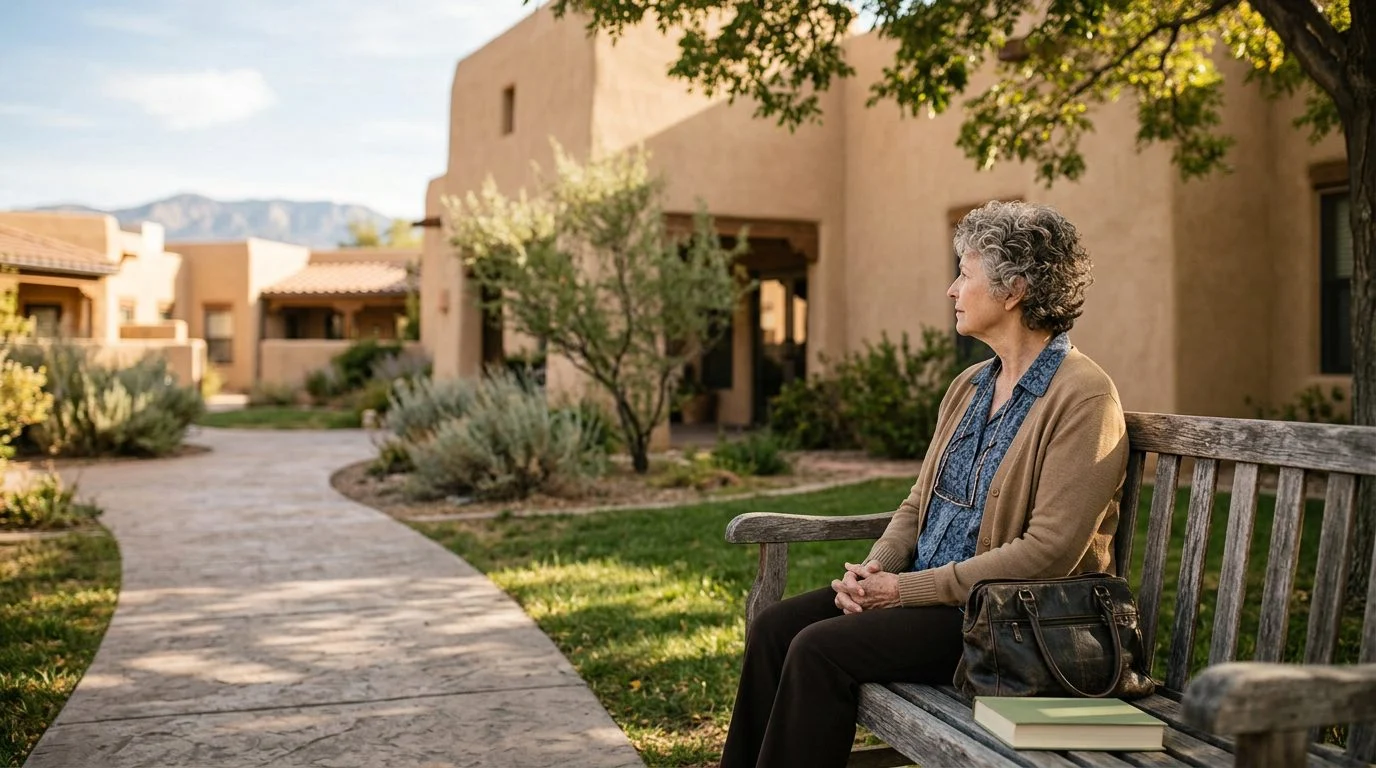
Sexual Assault | Bernalillo County, New Mexico
Sexual Abuse in a Nursing Home? Talk With El Gringo Law About Your Family's Next Steps
A loved one who was hurt by someone entrusted with their care deserves answers, privacy and a team that takes the time to listen.
By Josh Wood · Published November 10, 2026
If you think a resident in a nursing home or assisted living facility was sexually abused, you probably have questions coming fast. This page covers some questions people may have about a nursing home sexual abuse lawsuit in Albuquerque.
In short, a lawsuit can be brought when a resident was harmed and someone’s fault caused that harm. The claim may name the person who did it, the facility, or both. New Mexico also sets filing deadlines, so timing should come up early.
What Counts as Sexual Abuse in a Nursing Home or Assisted Living Facility?
Sexual abuse in a care setting is any unwanted sexual contact or conduct aimed at a resident. It can come from a staff member, another resident, or a visitor.
It can include touching during personal care, such as bathing, dressing, or toileting, when the resident did not agree or could not agree. It can also include sexual comments, exposure, or pressure the resident did not invite.
Many residents have dementia, trouble speaking, or fear of retaliation. That is one reason families often learn about abuse late. The broader legal framework is covered on our sexual assault lawsuit page.
If a loved one in a care facility may have been sexually abused, El Gringo Law can talk through the next steps with you, and you don't have to sort them out alone. Talk it through with our team — the first consultation is free, confidential, and carries no obligation.
Who Can Be Responsible When a Resident Is Sexually Abused?
A claim may name the person who committed the abuse, the facility, or both, depending on the facts. The answer depends on who did what, and what the facility knew or should have known.
There are two different kinds of responsibility. One is a claim against the person who carried out the abuse. The other is a claim that the facility failed to screen, supervise, or respond to a known risk.
When a claim targets a facility as the employer, New Mexico’s uniform jury instruction on negligence in hiring, supervising, or retaining an employee (UJI 13-1647 NMRA) places the burden on the plaintiff to prove that the defendant was the employee’s employer; that the defendant knew or should have known that hiring, retaining, or supervising that employee would create an unreasonable risk of injury to a group or class that includes the plaintiff; that the defendant failed to use ordinary care in hiring, retaining, or supervising the employee; and that this negligence was a cause of the plaintiff’s injury. Did the employer know or should have known the employee posed an unreasonable risk? Did it fail to use ordinary care? Did that failure cause the injury?
In F & T Co. v. Woods, the court described liability in New Mexico for negligent hiring or retention of an employee as turning on whether the employer knew or should have known, not solely on actual knowledge.
Fault can also be split among several people. Under New Mexico’s several liability statute (NMSA 1978, § 41-3A-1), each defendant is generally liable only for its own share of fault. Some exceptions remain, including for people who acted with intent to injure.
Each claim turns on its own facts, so the right defendants are a question to review early.
What Warning Signs Do Families Often Notice?
Common warning signs include sudden changes in mood, fear of one particular staff member, and new distress around bathing or dressing.
Physical signs matter too. Families may notice bruising, injuries to the genital or chest area, bleeding, or an unexplained infection. Any of these deserves a written record, even if the facility offers a simple explanation.
Withdrawal, poor sleep, or a new reluctance to be alone with one person can also appear. None of these changes proves abuse on its own. Taken together with other signs, they are worth writing down and raising early.
A resident’s silence does not mean nothing happened. A resident may be unable to speak clearly, may fear retaliation, or may tell an account that changes over time. Those facts do not mean abuse did not happen.
Write down what you saw, when you saw it, and what the resident said, in your own words. Dated notes made close to the time are easier to use later.
What Evidence Should a Family Protect Early?
The most useful evidence is often the facility’s own paperwork, paired with the family’s dated notes. Preserving both early helps keep the timeline clear.
Paperwork that often matters includes care plans, incident reports, staffing schedules, visitor logs, medication and treatment records, and grievance files. A family may not have these records. A lawyer may request them as part of a claim, because the facility holds most of them.
Keep the family’s own evidence too. That means dated notes, photographs of visible injuries, and saved messages with staff or the facility. Keep messages in their original form, with dates and times visible.
Two common mistakes can hurt a case. First, confronting the accused staff member can lead to changed stories or lost evidence. Second, cleaning the resident’s room or washing clothing before documenting it can remove proof. Document the room, belongings, and clothing before anyone cleans or moves them.
How Long Does a Family Have to File a Claim in New Mexico?
Under NMSA 1978, § 37-1-8, an action for an injury to the person or reputation of any person must be brought within three years. The same section sets a three-year period for an injury to the person or reputation of any person.
There are exceptions. Under NMSA 1978, § 37-1-10, minors and incapacitated persons get one year from the end of the incapacity to bring an action. Families of a resident with a legal incapacity should raise that question early.
Apart from § 37-1-10, which contains no discovery rule, New Mexico courts have in limited situations started the limitations period when an injury was discovered. In Roberts v. Southwest Community Health Services, the court held: “Thus, we hold that, in situations such as the instant case, the cause of action accrues when the plaintiff knows or with reasonable diligence should have known of the injury and its cause.”
Whether that rule fits a particular claim is a question to raise with El Gringo Law early. A missed deadline can keep a claim from being heard.
What Damages Can a Nursing Home Sexual Abuse Lawsuit Seek?
A lawsuit can seek compensation for the harm the resident suffered. In some cases, it can also cover losses a family member has.
A resident’s age, health, and existing conditions can shape how those losses are shown.
Family members may have their own claim. In Thompson v. City of Albuquerque (2017), the New Mexico Supreme Court said loss of consortium damages come from injury to someone in a sufficiently close relationship. Those damages belong to the claimant, not to the injured person.
Punitive damages are a separate question. Under UJI 13-1827, a jury may consider punitive damages only if the plaintiff should recover compensatory or nominal damages. It also must find the defendant’s conduct was malicious, willful, reckless, wanton, fraudulent, or in bad faith; where that conduct is an agent’s or employee’s, the employer may be liable if the agent or employee was acting within the scope of employment and had sufficient discretionary or policy-making authority to speak and act for the employer with regard to the conduct at issue, independently of higher authority, or on other grounds set out in UJI 13-1827.
Every case is different. Nothing on this page predicts how any particular matter will turn out.
Not sure what your next step is?
Talk it through with our team — the first consultation is free, confidential, and carries no obligation.
What Changes When the Abuse Happens Outside a Care Facility?
The setting affects who may be named and which records matter most. Sexual abuse can also happen in a school, a church, or another institution, and those cases involve different rules and defendants.
When a visitor or outsider harms a resident, the property owner’s duty can matter. New Mexico’s landowner duty instruction (UJI 13-1320) says a landowner must use ordinary care to protect a visitor against harm from a third party’s foreseeable conduct. That conduct can be innocent, negligent, intentionally tortious, or criminal.
The instruction’s commentary cites Reichert v. Atler (1994) for this rule. It also explains that the landowner’s failure to protect visitors may be compared with the third party’s conduct.
Our page on school and church sexual abuse claims in New Mexico covers that path in more detail.
What Happens in a First Conversation With El Gringo Law?
El Gringo Law offers a free first consultation. It is confidential, with no obligation to continue.
Bring the facility name, the resident’s condition, approximate dates, and any records the family already has. You don’t need a complete timeline. Describe what you know and what you’re unsure about.
From there, the conversation can cover timing questions and which records may be worth requesting. Josh Wood is the lawyer responsible for the content of this page. He is licensed in New Mexico and Arizona. Families can reach El Gringo Law by phone, through the firm’s contact form, or by starting a chat.
Deciding What to Do Next for Your Family
A family in this position often has to weigh timing, evidence, and the resident’s own wishes at the same time. Those choices can feel tangled.
The resident’s wishes matter, and so does their dignity and privacy. A family can talk with the resident calmly and without pressure, while still keeping dated notes.
Some deadlines and records can slip away while a family is still deciding. Raising those questions early keeps the options open.
Frequently Asked Questions
Can a nursing home be sued after a staff member sexually abused a resident?
A claim may name the facility, the staff member, or both, when the facts show fault.
What is the deadline for a nursing home sexual abuse lawsuit in New Mexico?
New Mexico’s general deadline for an injury to a person is three years under NMSA 1978, § 37-1-8, with exceptions such as the one for minors and incapacitated persons; claims against a state- or county-operated facility or a health care provider may follow different statutes, shorter limits, or notice requirements.
Can a family member bring their own claim?
In some cases, yes. New Mexico treats loss of consortium damages as belonging to the close family member making the claim.
A family that suspects a resident was abused faces hard choices, and you don’t have to make them alone. Use the contact form to describe what you know so far, and El Gringo Law can talk through your next step with you.
How El Gringo Law Can Help
Compassionate first conversation
Our team listens to your family's concerns and explains the situation in plain language, at your pace.
Confidential and no obligation
Your first consultation is free, confidential and comes with no obligation to continue.
Organized records
We help you gather the facility notes, medical records and other documents that matter in a case like this.
Contact on your terms
Call the firm, start a chat or submit a contact form, whichever feels most comfortable for you.
Your loved one's safety comes first
If someone is in immediate danger, call 911 right away. Ask the facility for a copy of any incident report, and keep a written record of what you have observed and when.
Steps Families Often Take Right Away
Secure your loved one
Make sure your family member is in a safe place and has access to medical care and emotional support.
Write down what you know
Record dates, names of staff involved, what your loved one told you and any changes in their behavior or health.
Keep every document
Save visit logs, billing statements, medical records, photos and messages connected to the facility.
Talk with our team
Share your concerns with El Gringo Law so we can explain the options and what information will help most.