Spinal Cord Injury · New Mexico
A Normal X-Ray Doesn't End the Question
Pain, numbness, or weakness after a crash can be real even when the first image looks clear. Here is how to think about it and what to bring to the conversation.
By Josh Wood · Published November 13, 2026
You were in a car crash, an x-ray came back normal, and you still hurt. Someone may have told you nothing was broken, yet your neck, back, or arm keeps telling you otherwise.
A normal x-ray after a car accident does not rule out a spinal cord injury in New Mexico. An x-ray mainly shows bones. Spinal cord injuries, disc problems, and nerve damage often need other tests and careful follow-up to find.
Why a Normal X-Ray Does Not End the Question
A normal x-ray checks bone alignment and fractures, so it can miss injuries to soft tissue and the spinal cord.
Think of an x-ray as a picture of the skeleton. It shows whether bones line up and whether any are broken. It does not show a bruised spinal cord, a stretched ligament, or a disc that has shifted out of place. A crash can injure those tissues even when no bone breaks. The sudden force of a collision can strain the neck and back in ways a bone picture doesn’t reveal.
Doctors read an x-ray as one piece of the medical picture. They weigh it against your symptoms, your physical exam, and any other tests. A normal film is useful information. It isn’t the final word on what happened inside your body.
If you were told nothing is broken and you still hurt, your pain is real and worth reporting. Keep a simple written log of what hurts, where, and when. That log helps your doctor and anyone reviewing your case later.
Which Imaging Tests Can Look at Soft Tissue and the Spinal Cord?
MRI is usually the test that shows discs, ligaments, and the spinal cord itself. A CT scan shows bone detail in greater depth.
A CT scan takes detailed cross-section images of the body. It shows bone more clearly than a standard x-ray does. It’s limited for soft tissue, so it may not show a disc or nerve problem well.
An MRI uses magnets and radio waves instead of x-rays. Its images show soft tissue in much more detail. Not every patient gets one right after a crash. The treating doctor chooses tests based on symptoms and the exam.
A myelogram is a different kind of study. The doctor injects contrast dye into the space around the spinal cord, then takes x-ray or CT images. The dye outlines the spinal canal and any pressure on it. Doctors order this test in some cases.
Which tests were ordered, and what they showed, goes into the medical chart. That chart is one of the central records in any injury claim. Follow-up visits and completed test results matter as much as the first scan.
Delayed Symptoms After a Car Accident: Why Timing Matters
Symptoms can appear hours or days after a crash, so a late start doesn’t automatically mean an injury is unrelated.
Adrenaline and shock can mask pain at the scene. Many people notice neck stiffness, headaches, or back pain the next morning. Others feel numbness, tingling, or weakness later that week. New pain that spreads down an arm or leg is one example of a symptom that changes over time.
Some symptoms call for prompt medical care. These include numbness, tingling, weakness, trouble walking, new bladder or bowel changes, and pain that keeps getting worse. Get checked promptly if any of these appear.
Tell the doctor about every symptom, even the minor ones. Each report becomes part of the record that connects symptoms to the crash. A long gap in treatment can make it harder to link later symptoms to the collision. Keep your appointments and follow the plan you’re given.
How Spinal Cord, Disc, and Nerve Injuries Differ
A spinal cord injury, a bulging disc, and nerve damage are different conditions, and each is documented in its own way.
The spinal cord is a bundle of nerve tissue that runs inside the spine. An injury there can affect movement, feeling, and bodily control below the spot of injury. A disc is the cushioning between spinal bones. When a disc bulges or herniates, it can press on nearby nerves. Nerve damage can also happen in the arms or legs, away from the spinal cord.
A bulging disc claim after a car accident depends on imaging findings, the treating doctor’s opinions, and how symptoms developed after the crash. The question often comes up whether a disc change was already there before the collision. Imaging and the timeline of symptoms help answer it.
Causation is the link between the crash and the injury. Under UJI 13-305 NMRA, a cause must be reasonably connected as a significant link to the injury. It need not be the only explanation. For the wider picture, read the New Mexico spinal cord injury lawyer page. The strength of any claim depends on the facts of the crash and the medical evidence.
How New Mexico Fault Rules Affect a Claim When Injury Is Disputed
New Mexico uses pure comparative negligence, so being partly at fault does not automatically end an injury claim.
Under Scott v. Rizzo, a plaintiff suing in negligence is no longer totally barred from recovery because of their own fault. Partial fault reduces the award. It doesn’t erase it. Under UJI 13-2218 NMRA, the total damages are found first. The percentages of fault must total 100%. The injured person’s share is then subtracted.
When more than one party may share fault, NMSA 1978, § 41-3A-1 generally makes each party liable only for its own share. The statute lists exceptions, including intentional harm, vicarious liability, and defective products.
Timing is a separate rule. New Mexico gives three years to bring an action for injury to a person, under NMSA 1978, § 37-1-8. Under NMSA 1978, § 37-1-13, filing the petition with the proper clerk’s office starts the action, where process is authorized by law to be issued upon that filing, provided it is filed with intent that process shall issue immediately thereupon, which intent is presumed unless the contrary appears. Insurers sometimes argue that symptoms without x-ray findings came from something else. Medical records help answer that.
What Damages May Be Part of a Spinal Cord or Catastrophic Injury Claim?
A claim can include economic losses, such as medical bills and lost pay, and non-economic losses, such as pain and loss of enjoyment.
Economic losses are costs you can count. They can include past and future medical bills, lost income, and a reduced ability to earn a living. In serious injuries, future needs may include attendant care, changes to a home, and medical equipment.
Non-economic losses are harder to put in numbers. They include pain, suffering, and loss of enjoyment of life. The value of any claim depends on the documented injury, the treatment, and the facts of the crash.
Family members may have their own claim. In New Mexico, loss of consortium is a claim to recover compensation for damage to certain relationships, and the family member must show that they had a mutually dependent relationship with the injured or deceased person. See Thompson v. City of Albuquerque. The jury instruction lists factors such as the duration of the relationship and whether the claimant and the injured or deceased person were members of the same household, under UJI 13-1810A NMRA. For a closer look at these categories, see spinal cord injury damages in New Mexico.
How Crash Evidence, Witnesses, and Medical Records Fit Together
Medical records and crash evidence work together, because the records connect the injury to the crash.
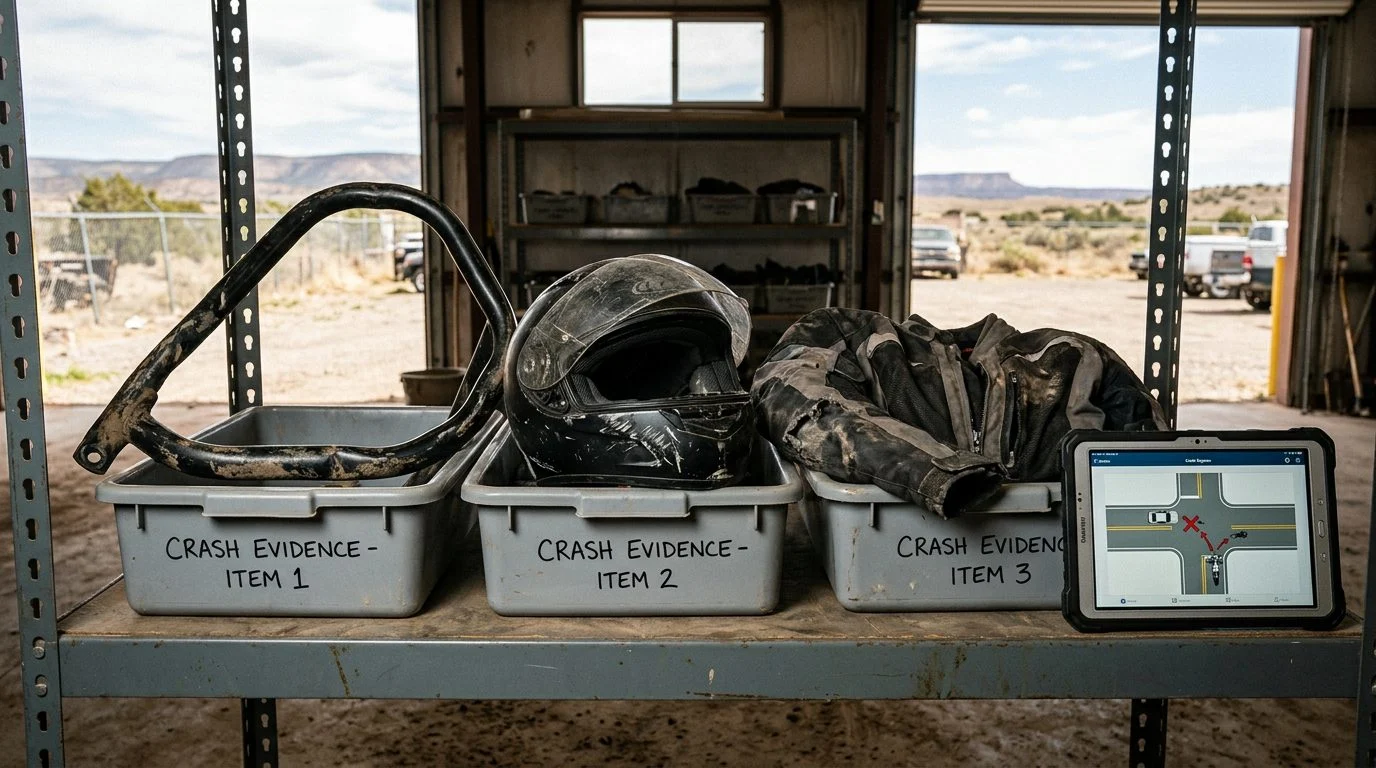
Police reports, photos of the vehicles, and witness statements can help show how the crash happened. Medical records show which injuries were found and when. Consistent records from the first visit onward make that link easier to follow.
In New Mexico, a cause does not have to be the only cause. New Mexico’s causation instruction (UJI 13-305) says an act or omission is a cause of injury if it contributes to bringing about the injury. Where the instruction’s bracketed language is used, the act or omission must also be unbroken by an independent intervening cause, and the injury must be one that would not have occurred without it. In every case, the act or omission must be reasonably connected as a significant link to the injury. See UJI 13-305 NMRA.
Medical bills, imaging results, and treatment plans usually come together over the months after a crash, as the medical picture becomes clearer. Keep copies of your records and bills. Write down the names of every provider you saw, the dates of your visits, and any missed work. These details are easy to lose and hard to rebuild later.
Frequently Asked Questions
Here are short answers to common questions people ask after a normal x-ray.
Can I still have a claim if my x-ray was normal?
Yes. A normal x-ray does not decide whether a soft tissue or spinal cord injury happened. MRI results, medical records, and treatment history can show more.
What are the chances of recovering from a spinal cord injury?
Recovery varies widely with the level and severity of the injury. Your treating doctors can speak to your own medical outlook.
What is the hardest injury to prove after a car accident?
Injuries without clear imaging findings, such as soft tissue and some nerve injuries, often depend most on careful medical records and consistent treatment.
How much compensation can I expect for a bulging disc?
The value of a claim depends on documented findings, treatment, and the facts of the crash, so it is set case by case.
What are delayed symptoms after a car accident?
Symptoms that appear hours or days after a crash, such as numbness, tingling, weakness, or new pain. Report them to a doctor promptly.

Talk With El Gringo Law About Your Situation
You can ask questions about your crash now, before you decide anything else.
A normal x-ray, ongoing pain, and a crash you didn’t choose can make the next step feel heavy. You don’t need every answer today. Josh Wood, licensed in New Mexico and Arizona, is the responsible lawyer for this page.
The initial consultation is free, confidential, and comes with no obligation to continue. In that conversation, you can describe your symptoms, the crash, and the paperwork you already have.
You can reach El Gringo Law by phone, through the contact form, or by starting a chat. Website: elgringolaw.com.
How El Gringo Law Works With You
Confidential from the first call
Your free first consultation is confidential and comes with no obligation to continue.
Your records in one place
We review imaging, medical records, and treatment history with you, including MRI results your doctors may order after a crash.
Reach us the way that works for you
Call, send a contact form, or start a chat. Spanish-speaking clients are welcome to ask for support in Spanish.
A team that stays with you
Our team, including the firm's lawyers and support staff, focuses on car accident and spinal cord injury cases across New Mexico.
Don't let a normal x-ray close the question
If numbness, weakness, or pain continues or gets worse, tell your doctor and keep every appointment. Keep a written log of symptoms and what you were doing when they started.
Symptoms Worth Reporting to Your Doctor
Tingling or numbness
Pins and needles, or areas that feel less sensitive, in the arms, hands, legs, or feet.
Weakness or heaviness
Trouble gripping, lifting, walking, or keeping your balance that was not there before the crash.
Lingering neck or back pain
Pain that persists days or weeks after the impact, even when you feel you can manage it.
Changes in bladder or bowel function
Any new change should be reported to a doctor right away, even if it seems minor.