Spinal Cord Injury Lawyer | New Mexico
Facing a Spinal Cord Injury? Talk With a New Mexico Lawyer Who Takes Your Case Seriously
El Gringo Law represents people hurt in car accidents, trucking crashes, and other serious incidents across New Mexico. Start with a free, confidential initial consultation, with no obligation to continue.
By Josh Wood · Published October 24, 2026
A spinal cord injury lawyer in New Mexico helps people hurt by someone else’s negligence seek compensation for their losses. Most of these claims begin with negotiation with insurers, and some move into a lawsuit. This guide explains how the claims work, who can bring them, what must be proven, and which deadlines apply. Every case turns on its own facts.
What a Spinal Cord Injury Claim Means in New Mexico
A spinal cord injury claim is a personal injury claim for harm to the spinal cord caused by someone else’s negligence or wrongful conduct. The spinal cord runs inside the spine and carries signals between the brain and the body. According to the NINDS spinal cord injury overview, the cord has three layers of protective tissue, and fluid around it helps cushion it against shock.
Most claims are resolved through negotiation. If talks do not resolve the claim, a lawsuit may be needed. Claims often arise from car accidents, trucking accidents, premises liability, negligent security, and other incidents. El Gringo Law handles these practice areas, along with wrongful death, catastrophic injuries, amputations, and burn injuries. For a crash-specific guide, read spinal cord injury car accidents in Albuquerque.
If a crash or fall has left you or someone you love with a spinal injury, you don't have to work out the next steps alone. Our team is ready to talk. Talk it through with our team — the first consultation is free, confidential, and carries no obligation.

Who Can Bring a Spinal Cord Injury Claim
The injured person can usually bring a claim for their own injuries. If the injury causes death, a wrongful death claim may be available to the family. Under NMSA § 41-2-1, a person who would have been liable had death not occurred can be sued for damages even though the injured person died.
A negligence claim has a few core parts. The injured person must show that the other party owed a duty of care, broke that duty by failing to use reasonable care, and caused harm. Herrera v. Quality Pontiac describes these steps in New Mexico. A cause does not have to be the only cause, the last cause, or the nearest one. It must still be reasonably connected as a significant link to the injury.
New Mexico also uses comparative fault. New Mexico adopted comparative negligence in Scott v. Rizzo. Under UJI 13-2218 NMRA, the fact finder sets each side’s percentage of fault, and the injured person’s damages are reduced by their own percentage. Partial fault does not erase the claim. That is why the facts of each crash or fall matter so much.
Common Causes of Spinal Cord Injuries
Spinal cord injuries can follow many kinds of incidents. The following situations can lead to a claim:
- Car and motorcycle crashes. Rear-end, intersection, and rollover collisions can all cause spinal injuries.
- Commercial truck crashes. Trucks are much heavier than passenger vehicles, so impacts can carry more force.
- Falls on unsafe premises. Broken stairs, damaged walkways, and other hazards can cause serious falls. Under UJI 13-1309 NMRA, a landowner owes a visitor a duty to use ordinary care to keep the premises safe.
- Assaults where security was lacking. Violence on a property can cause spinal injuries. A claim may exist when the owner or manager did not use ordinary care to protect a visitor against conditions that foreseeably pose an unreasonable risk of injury.
Crash data for New Mexico comes from the University of New Mexico Traffic Research Unit.
Recognizing a Spinal Cord Injury and Getting Medical Care
Get emergency medical care right away after any crash or fall that may have hurt the back or neck. Warning signs include numbness, tingling, weakness, and loss of bladder or bowel control. Loss of movement or feeling in the arms or legs is another sign. Tell the treating doctor about every symptom, even ones that seem minor.
Medical records matter a great deal. They show what symptoms were reported, when they began, and what the doctors found. Those records help connect the injury to the incident.
An injury can be complete or incomplete. A complete injury blocks all signals below the injury site. An incomplete injury leaves some signals passing through. The difference shapes both treatment and the claim, which is covered in our guide to incomplete vs complete spinal cord injury claims. The nerve regions also matter. According to NINDS, cervical nerves C1 to C7 control signals to the neck, shoulders, arms, hands, and diaphragm. Injuries between C1 and C4 can affect breathing. Thoracic nerves T1 to T12 control the chest muscles and many organs. Lumbar nerves L1 to L5 control the lower abdomen, back, buttocks, and parts of the legs.
Long-Term Consequences and Why a Life Care Plan Matters
A spinal cord injury can cause effects that last well beyond the first hospital stay. Paraplegia affects the lower body, and quadriplegia affects the arms, hands, and legs. Some people also face chronic pain, loss of independence, and bladder and bowel problems. These effects can require ongoing equipment, medication, therapy, or home changes. More detail on the medical side is available from NINDS.
A life care plan is a written plan. It lists future medical care, equipment, home modifications, and support services. Planners often work with medical and vocational professionals to build it. Its purpose is to record what the injured person may need over time, so future needs are not left out of the claim. Our page on a life care plan for spinal cord injuries in New Mexico explains the process in more detail.
How a Spinal Cord Injury Claim Is Built and Proven
A strong claim connects the injury to the crash or incident with records and testimony. The main evidence usually includes:
- Emergency and treatment records
- Imaging, such as MRI and CT scans
- Neurological evaluations
- Accident or incident reports, photos, and witness statements
Some injuries are harder to prove. Symptoms may develop over time, and imaging may not show the full extent of nerve damage. In those cases, treating providers can explain how the injury happened and why the symptoms fit it. Gaps in treatment can give the other side room to argue another cause.
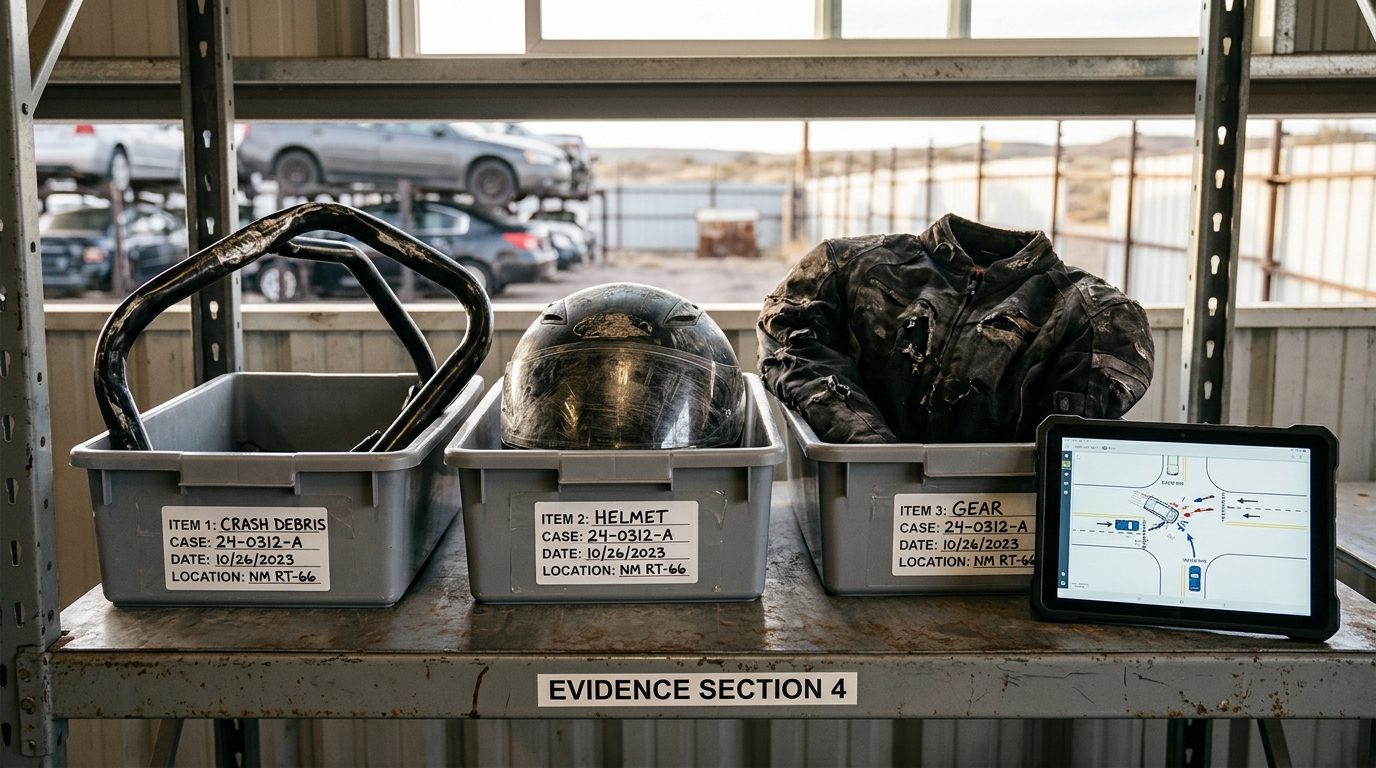
Early steps usually include preserving evidence, gathering records, and communicating with insurers. Photos, vehicle data, and video can be lost if no one secures them early. In trucking cases, responsibility can reach beyond the driver. For more on proof, read our guide to the hardest injuries to prove.
Not sure what your next step is?
Talk it through with our team — the first consultation is free, confidential, and carries no obligation.
What Drives the Value of a Spinal Cord Injury Lawsuit
The value of a claim depends on several factors. These include the severity of the injury, past and future medical costs, lost income and earning ability, pain and suffering, the level of fault, and available insurance. Each factor is tied to the facts of the case.
Fault can be divided among several parties. Under NMSA § 41-3A-1, a defendant that is severally liable pays only its own share of the total fault, if the defendant establishes that the fault of another is a proximate cause of the plaintiff’s injury. The statute lists exceptions, including some situations where joint and several liability still applies. That division can change how much a defendant pays.
No one can predict the value of a specific case. Every case is different, and past results do not ensure a similar outcome. For a closer look at amounts, see our guide to how much a spinal cord injury lawsuit may be worth and our page on truck accident settlements in New Mexico.
Time Limits and How Long a Spinal Cord Injury Case Takes
New Mexico sets filing deadlines, and missing one can end a claim. For an injury to a person, NMSA § 37-1-8 provides three years. Claims against a governmental entity or public employee have a shorter window. Under NMSA § 41-4-15, suit must be commenced within two years after the date of the occurrence resulting in loss, injury or death, except that a minor under the full age of seven years has until his ninth birthday to file.
Claims against government bodies also require written notice. Under NMSA § 41-4-16, notice is generally due within ninety days after the occurrence. For wrongful death claims against those bodies, the notice period is six months. Under the New Mexico wrongful death statute (NMSA § 41-2-2): “Every action instituted by virtue of the provisions of this and the preceding section [41-2-1 NMSA 1978] must be brought within three years after the cause of action accrues. The cause of action accrues as of the date of death.”
How long a case takes can vary. Timing often turns on medical stability, the complexity of the injury, the number of parties, and whether a lawsuit is needed. Our guide on how long a spinal cord injury case takes covers these stages.
How El Gringo Law Helps Injured People in New Mexico
El Gringo Law represents people injured in New Mexico. The firm handles car accidents, trucking accidents, premises liability, negligent security, wrongful death, sexual assault, catastrophic injuries, spinal cord injuries, amputations, and burn injuries. The firm serves people in Albuquerque, Bernalillo County, Sandoval County, Rio Rancho, Santa Fe, Las Cruces, Taos, and Farmington.
Josh Wood is the responsible lawyer for this page. He is licensed in New Mexico and Arizona. Our lawyers and team work with injured people on their claims. The firm’s approach is to listen first, explain the options in plain language, handle insurers and paperwork, and keep the client informed at each step.
Readers with a specific type of case can review these pages: truck accidents involving spinal cord injuries in New Mexico, car accident claims in Rio Rancho, premises liability in New Mexico, and negligent security in New Mexico.
Fees, Costs, and the Free Initial Consultation
The initial consultation is free, confidential, and carries no obligation to continue. In Spanish: consulta inicial gratuita, confidencial y sin compromiso.
The first consultation is free, confidential, and carries no obligation to continue. Your responsibility for costs is set out in the firm’s written agreement, which explains the terms before you decide.

Talk With Josh Wood’s Office About Your Spinal Cord Injury
If a crash, fall, or assault has left you or a family member with a spinal injury, you can reach out to talk through your options. Here are answers to common questions.
Can a spinal cord injury lawyer in New Mexico explain my options?
Yes. A lawyer can explain New Mexico’s rules, gather records, and deal with insurers on your behalf.
How long do I have to file a claim?
For an injury to a person, New Mexico generally gives three years under NMSA § 37-1-8. Claims against government bodies have shorter deadlines.
What if I was partly at fault?
New Mexico reduces damages by your percentage of fault. Partial fault does not by itself end the claim.
Can a family member bring a wrongful death claim?
A family member may be able to. Wrongful death claims in New Mexico have a three-year deadline that starts on the date of death (NMSA 1978, § 41-2-2 — three years from the date of death).
If you are dealing with the aftermath of a spinal injury, you don’t have to sort out the next steps alone. Share what happened with El Gringo Law through the contact page, by form or chat. Josh Wood is the responsible lawyer for this page.
How El Gringo Law Approaches Spinal Cord Injury Cases
Direct Attention to Your Situation
Spinal cord injuries change daily life for the injured person and the family around them. Our team takes time to understand your medical needs, your work, and your goals.
Organized Records and Evidence
We help gather medical records, accident reports, and other documentation that describe what happened and how the injury affects you.
Clear Communication
You will receive plain-language explanations of the steps ahead, so you can make informed decisions about your case.
Handling the Insurance Companies
Insurers and other parties often move quickly after a serious injury. We can deal with them on your behalf while you focus on recovery.
Before You Speak With an Insurer
Insurance adjusters may ask for a recorded statement soon after a crash. Before you give one, consider talking with a lawyer about what to say and what to avoid.
Steps to Take After a Spinal Cord Injury
Get Medical Care Right Away
Follow your doctors' recommendations and keep every appointment, test, and therapy record. Your health comes first.
Keep Your Records
Save hospital bills, imaging results, prescription receipts, and notes about pain, mobility, and daily limits.
Document the Scene and Witnesses
If you can, write down the date, location, weather, and names of anyone who saw what happened. Photos help too.
Call Us for a Free Consultation
Tell us what happened. We will review your situation with you in a confidential, no-obligation first meeting.