Spinal Cord Injury and Slip and Fall | New Mexico
Hurt in a Fall or a Spinal Cord Injury? Talk With a New Mexico Injury Lawyer
El Gringo Law represents people injured by serious accidents and by falls on property that was not kept safe. Your first consultation is free, confidential, and carries no obligation to continue.
By Josh Wood · Published October 27, 2026
Albuquerque Spinal Cord Injury Slip and Fall Lawyer
A spinal cord injury from a slip and fall can give you a legal claim against the property owner in New Mexico. That claim asks whether the owner, who owes a visitor the duty to exercise ordinary care to keep the premises safe for the visitor’s use, failed in that duty. This page explains how that works for falls in Albuquerque and nearby communities. It also covers what a claim can include and which deadlines matter most. If you need a spinal cord injury slip and fall lawyer, the basics below are a good place to start.
If a fall on someone else's property left you or a family member with a spinal injury, our team can talk through what comes next and which deadlines apply. Talk it through with our team — the first consultation is free, confidential, and carries no obligation.
What a Spinal Cord Injury From a Fall Means for You
A spinal cord injury damages the nerves that carry signals between the brain and the body. The NINDS spinal cord injury overview explains that the cord has three layers of protective tissue. Cerebrospinal fluid (CSF) surrounds it and cushions it against shock.
Where the injury happens matters. Nerves in the neck reach the arms, hands and diaphragm, which helps drive breathing. Lower nerves reach the chest, legs, feet and lower abdomen. An injury between C1 and C4 can stop breathing, according to the NINDS spinal cord injury overview.
A fall can cause this damage even when the person seems fine at first. Get medical care right away, even if the pain seems mild. Early records also show how the fall and the injury connect. This page is written for injured adults and for family members who handle care, paperwork and decisions for someone who cannot.
When a Slip and Fall Becomes a Premises Liability Claim
A slip and fall becomes a premises liability claim when the property owner or occupant failed to keep the property reasonably safe. New Mexico’s jury instruction says an owner or occupant owes a visitor “the duty to exercise ordinary care to keep the premises safe for the visitor’s use” (UJI 13-1318 NMRA).
A negligence claim generally needs a duty, a breach of that duty, a cause, and damages. The Herrera v. Quality Pontiac decision says the breach must be a proximate cause and cause in fact of the harm. In plain terms, the owner’s failure has to be a real reason the fall happened.
Knowledge matters too. The instruction treats an owner as knowing about conditions a reasonable inspection would have revealed. It also covers conditions the owner or its employees caused. So questions often turn on how long a hazard was there and whether anyone checked. The UJI 13-1309 commentary adds that the duty generally applies even when a danger is known or obvious, but no duty exists if the landowner lacks reason to know that an obviously dangerous condition poses an unreasonable risk of injury to a visitor (UJI 13-1309 NMRA).
Your own actions count too. New Mexico uses comparative negligence, which means a jury assigns a share of fault to each person involved (UJI 13-2219 NMRA). New Mexico adopted this rule in Scott v. Rizzo. Your recovery is reduced by your own share of fault.
Common Places and Causes of Serious Falls in Albuquerque
Serious falls happen in ordinary places. These include store floors, stairwells, parking structures, sidewalks, apartment complexes, and restaurant or event spaces. The cause is often something small that went unnoticed or unfixed. Examples include a spill, a loose rail, or a cracked walking surface.
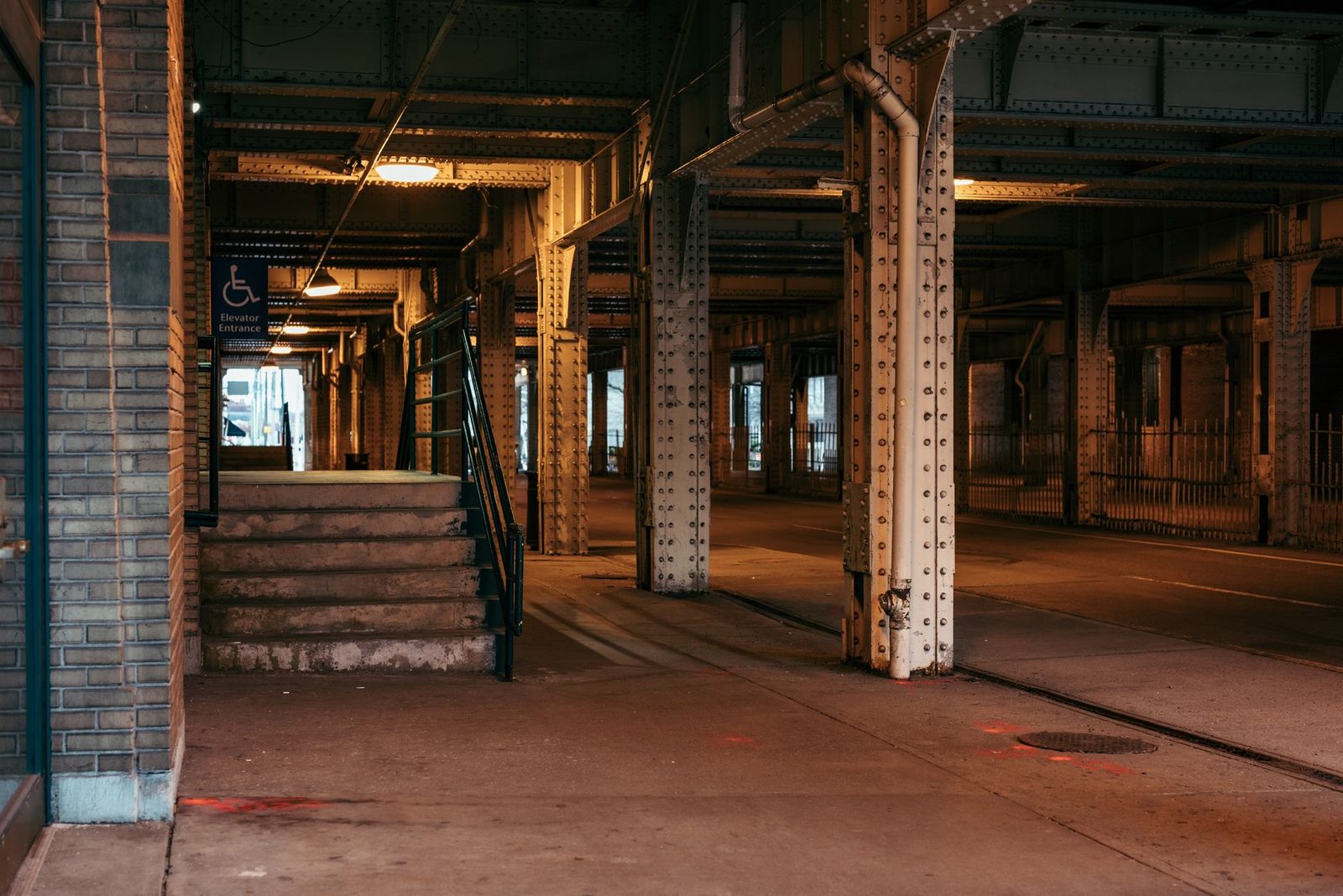
Picture a parking-structure stairwell at night. The light is dim, one handrail is loose, and a wet step has no warning sign. After a fall on that stair, the key questions are who controlled the stairwell, what they knew, and what they did about it.
Evidence fades fast. Photos of the scene and hazard help. So do witness names, incident reports and building or store video, which can be recorded over. New Mexico recognizes liability for intentional spoliation (destroying evidence). A lawsuit does not have to be filed first, according to Torres v. El Paso Electric.
Falls on public property, such as city sidewalks or county buildings, follow different rules. The deadlines section below covers them.
What a Claim Can Cover After a Spinal Cord Injury
Common categories include medical bills, surgery, hospital and rehabilitation care, medications, medical equipment, lost wages, and help at home.
Claims can also seek non-economic damages. These include pain, suffering and loss of enjoyment of life. They are harder to measure, and they depend on the facts of each case.
The value of a claim depends on how severe and lasting the injury is. It also depends on the medical evidence, the proof of fault, and the insurance available. Every case is different, and past results do not predict a similar outcome.
Family members can have rights too. Whenever the death of a person is caused by the wrongful act, neglect or default of another, and that act, neglect or default would have entitled the injured person to maintain an action and recover damages had death not ensued, the person or corporation that would have been liable shall be liable to an action for damages, notwithstanding the death of the person injured (NMSA § 41-2-1). A person in a close relationship with the injured person may also have a loss of consortium claim. That claim belongs to that person, not to the injured person or the estate (Thompson v. City of Albuquerque).
How the Process Works, Step by Step
The process usually begins with a conversation about the fall, the injury and the property owner.
- Free first consultation. Our first consultation is free, confidential, and carries no obligation to continue.
- Evidence requests. Letters can ask the owner and its insurer to keep video, maintenance logs, incident reports and cleaning records.
- Medical records. Our team gathers records and bills, so the link between the fall and the injury is documented.
- Investigation. We review the property’s conditions, prior complaints and inspection practices.
- Claim and negotiation. The claim goes to the owner or its insurer with supporting records. Negotiation follows.
- Lawsuit if needed. If a fair resolution is not reached, a lawsuit may be filed. That stage can include discovery, mediation or trial. Timing varies from case to case.
Not sure what your next step is?
Talk it through with our team — the first consultation is free, confidential, and carries no obligation.
Deadlines: Statute of Limitations and Government Notice
New Mexico generally gives three years to file an injury claim. Government property has a much shorter notice rule.
Under NMSA § 37-1-8, an action for an injury to the person or reputation of any person must be brought within three years. Exceptions can apply, so check the dates early.
If a city, county or state entity owns the property, the Tort Claims Act requires written notice. Under the Tort Claims Act, a person who claims damages from the state or a local public body must cause a written notice stating the time, place and circumstances of the loss or injury to be presented within ninety days after an occurrence giving rise to a claim for which immunity has been waived; for a wrongful death claim, the required notice may be presented by or on behalf of the personal representative of the deceased person, any person claiming benefits of the proceeds of a wrongful death action, or the consular officer of a foreign country of which the deceased was a citizen, within six months after the date of the occurrence of the injury which resulted in the death (NMSA § 41-4-16). The notice clock does not count time, up to ninety days, when the injury keeps the person from giving notice. A suit generally cannot proceed without notice, unless the government entity had actual notice of the occurrence. Actions against a governmental entity or a public employee for torts are forever barred unless commenced within two years after the date of occurrence resulting in loss, injury or death, except that a minor under the full age of seven years has until his ninth birthday to file (NMSA § 41-4-15).
Government buildings have their own rules. Under NMSA § 41-4-6, immunity does not apply to liability for damages resulting from bodily injury, wrongful death or property damage caused by the negligence of public employees while acting within the scope of their duties in the operation or maintenance of any building, public park, machinery, equipment or furnishings.
Delay can hurt even before a deadline passes, because evidence disappears. Contact the firm early so the notice question gets checked while evidence is still available.
Why Work With El Gringo Law on a Spinal Cord Injury Fall Claim
If you need a spinal cord injury slip and fall lawyer in Albuquerque, El Gringo Law represents injured people across New Mexico. Our work includes clients in Albuquerque, Bernalillo County and Sandoval County.
Josh Wood is the responsible lawyer for this page. He is licensed in New Mexico and Arizona. Our lawyers represent people hurt in car accidents, trucking accidents, premises liability falls, negligent security incidents, wrongful death cases, sexual assault, catastrophic injuries, spinal cord injuries, amputations and burn injuries.
Our team handles evidence requests, medical record coordination and client updates. Support staff are not lawyers. You can reach the firm through the website at elgringolaw.com.

Frequently Asked Questions About Spinal Cord Injury Slip and Fall Claims
Do I have to prove the owner knew about the hazard?
Often, the question is whether the owner knew or should have known. Knowledge can come from a reasonable inspection or from the owner’s own actions.
Can I still have a claim if I was partly at fault?
Yes. New Mexico’s comparative negligence rule reduces your recovery by your share of fault.
How long do I have to file?
For most injury claims, the general period is three years. Under the Tort Claims Act, a claim against the state or a local public body requires a written notice to the designated official within ninety days after the occurrence, stating the time, place and circumstances of the loss or injury, though the ninety days do not count time, up to ninety days, when the injury keeps the person from giving notice, and a wrongful death notice may be presented within six months after the occurrence of the injury that resulted in the death; no suit may be maintained unless that notice was given or the governmental entity had actual notice of the occurrence.
Do I need a doctor before I talk to a lawyer?
Medical care comes first for the injury itself. Early records help show how the fall caused the injury.
Can a family file a claim after a fatal fall?
Yes, New Mexico’s wrongful death statute can allow a claim. Under NMSA 1978, § 41-2-2, that action generally must be brought within three years after the date of death (NMSA 1978, § 41-2-2 — three years from the date of death).
If a fall on someone else’s property left you or a family member with a spinal injury, our team can talk through what comes next and which deadlines apply. Reach out through our contact form to start a conversation.
Why people contact El Gringo Law
Free first consultation
Your initial consultation is free, confidential, and carries no obligation to continue.
Confidential from the start
Share the details of your injury and what happened in a private conversation.
Focused on serious injuries
We handle spinal cord injuries, catastrophic injuries, and slip and fall cases on premises liability claims across New Mexico.
Our team is here to help
Our lawyers and staff take the time to explain your situation in plain language and answer your questions.
Get medical care first
If you have neck or back pain, numbness, tingling, weakness, or loss of movement after a fall or crash, get medical attention right away, even if symptoms seem mild. Prompt care protects your health and creates an important record of your injury.
How the process starts
1. Tell us what happened
Call, use the contact form, or start a chat. Describe the fall or accident and your injuries in your own words.
2. We review your situation
We listen to the facts, review what you share, and identify the questions that matter most for your case.
3. You decide the next step
There is no obligation to continue after your free, confidential consultation. We will explain your options so you can make an informed choice.