Spinal Cord Injuries | Albuquerque, New Mexico
Hurt by a wrong-way driver? Talk with an Albuquerque spinal cord injury lawyer.
A serious spinal injury changes daily life, work and family plans. Our team listens first and explains what your options may look like.
By Josh Wood · Published November 13, 2026
A wrong-way driver can cause a spinal cord injury that changes daily life in an instant. If that happened to you or someone you love in Albuquerque, you may have a personal injury claim against the people responsible. This page explains how these claims work in New Mexico, what they can cover, and the steps to take now.
What a Wrong-Way Driver Spinal Cord Injury Claim Is and Who It Is For
A wrong-way driver spinal cord injury claim seeks compensation from the people responsible for a crash that injured the spinal cord. A wrong-way driver is a vehicle traveling against the flow of traffic. These crashes can happen on divided highways and at ramps, where drivers meet oncoming traffic head on. Head-on impacts can carry a great deal of force.
Negligence is the legal idea at the center of most of these claims. New Mexico courts generally ask whether the defendant owed a duty, whether it failed to use reasonable care, and whether that failure caused the injury (Herrera v. Quality Pontiac).
This page is for injured drivers, passengers, and pedestrians. It is also for family members acting for someone who cannot yet make decisions. Our team handles car accidents, catastrophic injuries, and spinal cord injuries.
If a wrong-way driver left you or someone you love with a spinal cord injury, our team is ready to talk through your options with you. Talk it through with our team — the first consultation is free, confidential, and carries no obligation.

How Wrong-Way Crashes Cause Spinal Cord Injuries
Spinal cord injuries can happen when crash forces bend, twist, or compress the spine. In a head-on crash, the neck and back can be thrown in several directions in a moment. Passengers can also be thrown against the interior or pinned in the vehicle.
Symptoms do not always appear right away. Numbness, weakness, trouble walking, or changes in bladder or bowel control can show up hours or days later. Tell every medical provider when each symptom started. Those details become part of the record a claim depends on.
Each injury is different. Doctors describe the level of the injury and how much function remains. Those medical findings shape what a claim must prove and what future care may be needed. A spinal cord injury can also change how a person walks, works, and cares for family, and the claim must show those effects.
What Compensation May Include After a Spinal Cord Injury
Compensation in a spinal cord injury claim can cover medical costs, lost income, and other losses the records support. Losses commonly pursued fall into four groups.
- Medical care: emergency care, surgery, hospital stays, rehabilitation, medications, and future medical care.
- Lost income: wages missed during recovery and lost earning capacity if you cannot return to the same work.
- Daily life needs: home modifications, mobility equipment, in-home help, and rides to medical appointments.
- Pain and suffering: pain, suffering, and loss of enjoyment of life, which turn on the documentation in each case.
Family members may have their own claims.
Each claim turns on its own medical and factual record. A settlement amount cannot be predicted from general information.
Who May Be Responsible for a Wrong-Way Crash
The wrong-way driver is often the first party considered. Other parties may also share responsibility.
Impairment matters. New Mexico makes it unlawful to drive under the influence of intoxicating liquor. Under § 66-8-102(C)(1), a person may not drive a vehicle in this state if the person has an alcohol concentration of eight one hundredths or more in the blood or breath within three hours of driving, and that alcohol concentration results from alcohol consumed before or while driving; a lower limit of four one hundredths applies to commercial motor vehicles under subsection (C)(2).
Insurance can limit how much money is available. Under § 66-5-301, a policy’s uninsured motorist coverage includes underinsured motorist coverage for persons protected by the insured’s policy, unless the named insured exercises the right to reject it. An underinsured driver is one whose total bodily injury liability limits, across all policies applicable at the time of the accident, are less than your uninsured coverage limits. Identifying every policy that may apply early is part of the work.
New Mexico’s pattern jury instruction on comparative negligence, UJI 13-2218 NMRA, directs the jury to reduce the plaintiff’s total damages by the percentage of the plaintiff’s negligence, and it is used only when comparative negligence is an issue, the case goes to the jury on a general verdict without special interrogatories, and there is no apportionment of negligence among defendants or non-parties. New Mexico generally holds each defendant liable only for its own share of fault, except as provided in § 41-3A-1 for intentional wrongdoers, vicarious liability, strict product liability, and situations with a sound basis in public policy. Finding every responsible party early matters.
If a commercial truck was involved, federal hours-of-service rules for truck drivers are in 49 CFR Part 395.
Deadlines and Evidence to Protect Now
New Mexico generally allows three years to file a personal injury lawsuit for an injury to a person (§ 37-1-8). Other deadlines may apply depending on who was involved, so early review of timing matters.
- Crash report: a driver involved in an accident resulting in bodily injury or death, or total property damage of $500 or more, must forward a written report to the department of transportation within five days (§ 66-7-207).
- Evidence limits: New Mexico limits when a crash report can be used as evidence at trial (§ 66-7-213), so other records matter too.
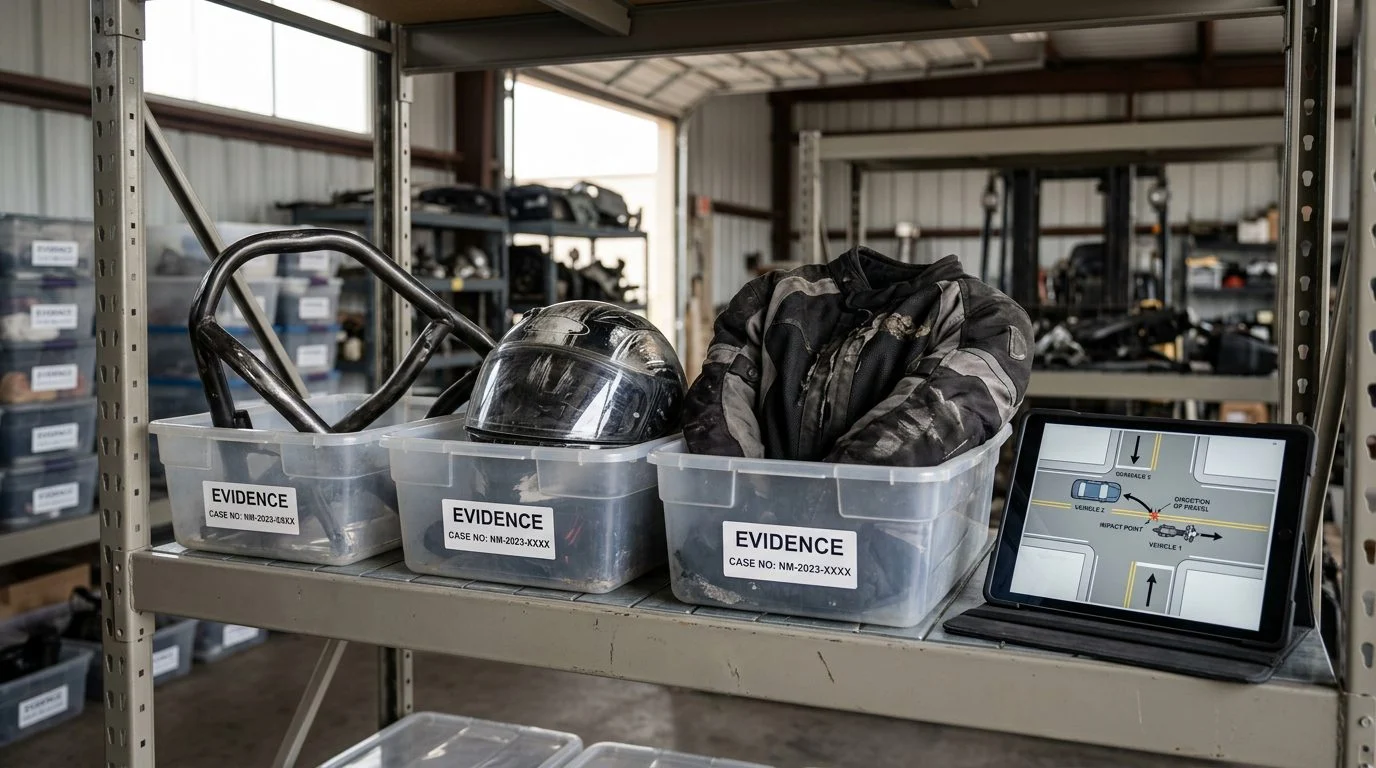
- Scene proof: photos of the scene and vehicles, and names of witnesses.
- Medical proof: every medical record, bill, and appointment, plus a symptom journal and every rehabilitation visit.
- Insurance papers: keep copies of everything you receive from insurers, and limit recorded statements until you’ve had a chance to review the request.
How a Spinal Cord Injury Claim Typically Unfolds
A typical claim moves from an initial consultation to investigation, medical documentation, negotiation, and, if needed, a lawsuit. Timing varies with recovery and the court’s schedule.
- Consultation: You share the crash facts, your medical status, and any insurance information you have.
- Investigation: The team gathers the crash report, medical records, and insurance details, and reviews vehicle data and scene evidence when available.
- Medical documentation: Treatment and recovery are recorded as they change. Recovery timelines vary, so records of each stage matter.
- Demand and negotiation: The claim is presented to insurers with supporting records.
- Lawsuit, if needed: If a fair resolution is not reached, a lawsuit may be filed.
Each stage has its own timing, so the plan may change as medical facts develop.
Not sure what your next step is?
Talk it through with our team — the first consultation is free, confidential, and carries no obligation.
Why Work With El Gringo Law on a Wrong-Way Crash Case
El Gringo Law represents people hurt in car accidents, trucking accidents, and catastrophic injuries, including spinal cord injuries.
Josh Wood is the responsible lawyer for this page. He is licensed in New Mexico and Arizona. Our lawyers and support staff handle these matters.
The firm works with clients in Albuquerque, Bernalillo County, Sandoval County, Rio Rancho, Santa Fe, Las Cruces, Taos, and Farmington.
To prepare, gather the crash report number, photos, insurance cards and policy details, a list of every provider you’ve seen, and any letters from insurers. Bring what you have, even if some pieces are missing.
Common Questions About Wrong-Way Driver Spinal Cord Injury Claims
Can I still have a claim if the wrong-way driver died?
Some claims still move forward when the driver has died, based on the crash facts and available insurance.
Should I accept a quick insurance offer?
Early offers may not account for future medical care, so review any offer before you respond.
What if my symptoms started days after the crash?
Symptoms that start later still matter. Tell every provider when each one began, so the timeline stays in your records.
Is the first consultation free?
The first consultation is free, confidential, and comes with no obligation to continue.

Talk With Someone About Your Crash Today
Facing a spinal cord injury while dealing with medical appointments, insurers, and deadlines is a lot to carry. If you’re ready to talk through what happened, reach out to El Gringo Law through the contact form or start a chat on our website.
Website: elgringolaw.com. Responsible lawyer: Josh Wood, licensed in New Mexico and Arizona.
How we approach your case
Start with a conversation
Call or send a message and a member of our team will respond to your questions about the crash and your injuries.
Organize the records
We help gather crash reports, medical records and bills so the full picture of your injury is clear.
Deal with the insurers
We handle communications with insurance companies so you can focus on your recovery.
Plain-language updates
We explain each step in plain English, and you decide how you want to move forward.
Before you sign anything
Insurance companies may send early settlement offers or ask for recorded statements. Those offers may not account for future medical care, so talk with a lawyer before you accept an offer or sign a release.
Ways we can help after a wrong-way crash
Investigating the crash
We look at how the wrong-way collision happened, including road conditions, signage and available evidence.
Medical and rehabilitation needs
Spinal cord injuries often require long-term care. We help you think through the medical and daily-living needs that may follow.
Family and financial concerns
We listen to how the injury affects your work, household and loved ones so those needs are part of the conversation.
Clear next steps
We explain what happens next in your case so you can make informed decisions about your future.