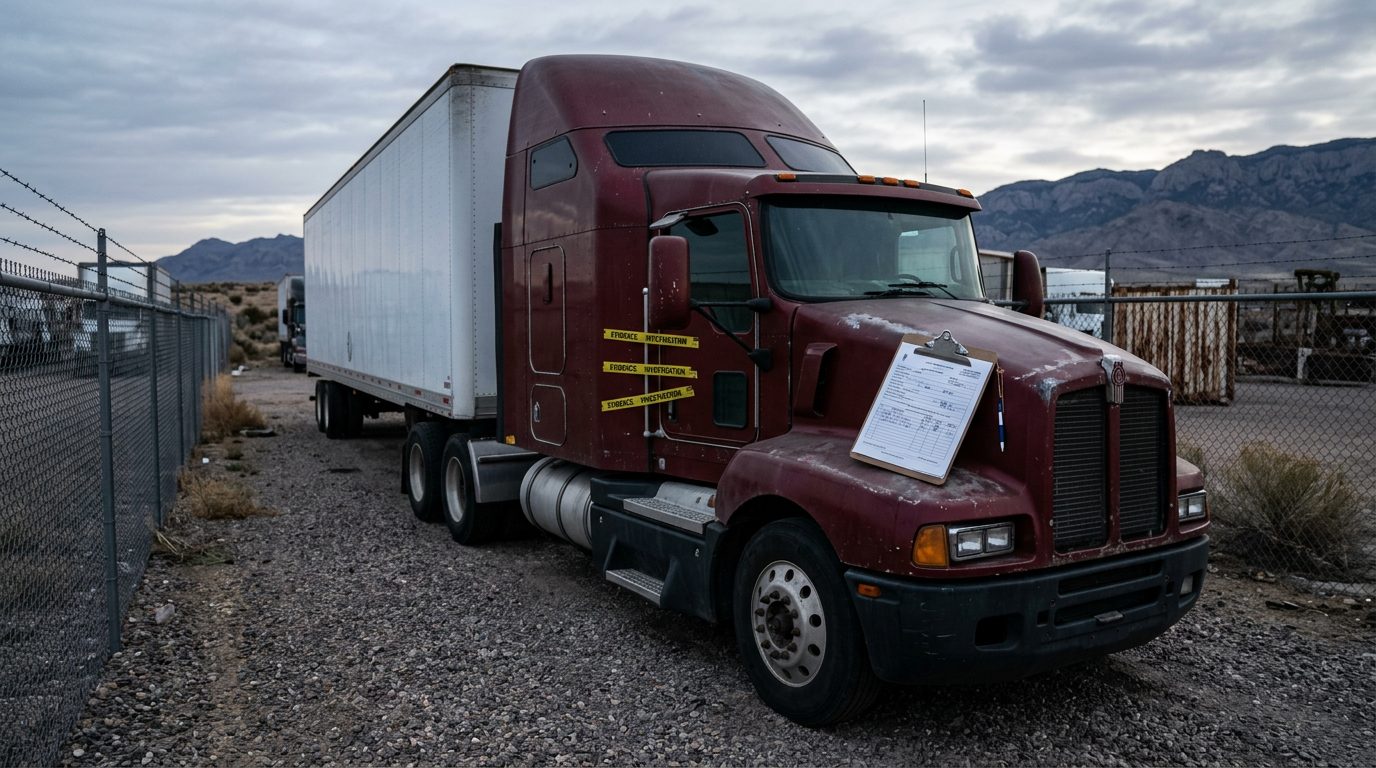
Hurt in a Trucking Accident in Bernalillo County? You Don't Have to Face the Trucking Company Alone.
El Gringo Law represents people injured in collisions with commercial trucks. Start with a free, confidential first consultation, with no obligation to continue.
By Josh Wood · Published October 24, 2026
Trucking Accidents Bernalillo County: What Injured People Need to Know
Trucking accidents in Bernalillo County usually involve more parties, more records, and more legal steps than a typical car crash. The main differences are the truck’s size, the companies behind it, and federal trucking rules that apply on top of ordinary traffic law. This guide explains those points for people hurt on I-25, I-40, NM 550, and other county roads.
If a commercial truck crash left you or someone you love hurt, you may have a claim, and our team can help you understand your next steps. Talk it through with our team — the first consultation is free, confidential, and carries no obligation.

How Trucking Accidents in Bernalillo County Differ From Other Car Crashes
A trucking accident differs from a car crash mainly because the truck is heavier and more than one company may share responsibility. A loaded commercial truck weighs far more than a passenger vehicle. When the two collide, the people in the car take most of the force. Impacts and rollovers involving trucks tend to cause more severe injuries.
Bernalillo County roads mix freight with daily traffic. I-25 and I-40 carry long-haul trucks through Albuquerque alongside commuters and local drivers. NM 550 carries traffic into and out of Bernalillo as well.
More than one party often has a role. The driver, the carrier that employs or contracts the driver, the cargo loader, and the maintenance provider each keep different records. Each may have its own insurer. Federal trucking rules also apply, so a truck claim usually needs a deeper records review than a basic car claim.
What Causes Truck Crashes: The Most Common Factors
Truck crashes commonly involve driver fatigue, distraction, speeding, following too closely, unsafe lane changes, and failure to adjust to weather or road conditions. Crashes often have more than one cause. Investigators look at the whole chain of events, not one moment.
Fatigue ties to hours on the road. Federal rules limit how long a driver may work and drive. Under 49 CFR § 395.3, a driver must take 10 consecutive hours off duty before driving. A driver may not drive after 14 consecutive hours following that break. Records of those hours can show whether a driver was rested.
Mechanical and loading problems matter too. Brake failure, tire blowouts, and cargo that shifted or was improperly secured can point to maintenance or loading parties. A common mistake is accepting the driver’s account as the full story. Records can add detail that a driver’s account leaves out.
Who May Be Responsible After a Truck Crash
More than one person or company may be responsible after a truck crash. That can include the driver, the trucking company, and others tied to the truck or its cargo. The driver may answer for choices like speed, hours on the road, or impairment. The carrier may answer for how it hired, trained, supervised, and dispatched that driver.
New Mexico recognizes claims for negligence in hiring, retaining, or supervising an employee. The injured person must show the defendant was the employee’s employer, knew or should have known the employee would create an unreasonable risk of injury to the injured person or to a group or class that includes the injured person, failed to use ordinary care in hiring, retaining, or supervising the employee, and that this negligence was a cause of the injury. See UJI 13-1647 NMRA. The commentary notes that this claim does not require the employee to be acting within the scope of work at the time of the crash.
Federal court law also matters.
Cargo loaders and maintenance providers may also be part of a claim. Responsibility depends on the facts of each crash, so the records decide much of the answer.
Evidence That Matters Most in a Bernalillo County Truck Crash Claim
The evidence that matters most includes the police crash report, scene photos, witness names, and the truck’s logs and maintenance records. Write down what you remember while it is fresh. Save every bill, letter, and insurance message you receive.
Ask for any dashcam or traffic camera footage early. Video from a truck or nearby camera can show the lane, speed, and signals before the crash.
Driver logs are key. Under 49 CFR § 395.8, a motor carrier must require each covered driver to record duty status for each 24-hour period. Electronic logging device data and dispatch messages can also show when the driver was working.
Testing rules matter too. Under 49 CFR § 382.303, as soon as practicable following an occurrence involving a commercial motor vehicle operating on a public road in commerce, each employer shall test for alcohol each of its surviving drivers who was performing safety-sensitive functions with respect to the vehicle, if the accident involved the loss of human life; or who receives a citation within 8 hours of the occurrence under State or local law for a moving traffic violation arising from the accident, if the accident involved bodily injury to any person who, as a result of the injury, immediately receives medical treatment away from the scene of the accident, or one or more motor vehicles incurring disabling damage as a result of the accident, requiring the motor vehicle to be transported away from the scene by a tow truck or other motor vehicle. If an alcohol test is not given within two hours, the employer must keep a record of why.
Timing matters. Trucking companies and insurers may act quickly to collect and control records. Early requests help protect the evidence that supports your claim.
New Mexico Laws and Deadlines That Shape a Truck Accident Claim
New Mexico generally gives three years to sue for injury to a person. For an injury to the person or reputation of any person, NMSA § 37-1-8 requires that actions be brought within three years; the same section sets a two-year period for suits against sureties on official bonds and on bonds of guardians, conservators, personal representatives and persons acting in a fiduciary capacity, counted from when the principal’s liability is finally established by a judgment or decree of the court. Exceptions can apply, so check the timing early.
For a wrongful death claim, NMSA 1978, § 41-2-2 requires the action within three years. The cause of action accrues as of the date of death.
Government defendants have shorter limits. If a governmental entity or a public employee is involved, NMSA § 41-4-15 requires suit within two years after the date of occurrence resulting in loss, injury or death, except that a minor under the full age of seven years shall have until his ninth birthday in which to file. The Tort Claims Act also requires written notice. Under NMSA § 41-4-16, written notice must be presented within ninety days after an occurrence giving rise to a claim for which immunity has been waived under the Tort Claims Act. The time for giving notice does not include the time, not exceeding ninety days, during which the injured person is incapacitated from giving the notice by reason of injury. Without notice, a suit against the governmental entity may not be maintained unless the entity had actual notice of the occurrence. For a Tort Claims Act wrongful death claim, notice may be presented within six months after the injury that caused the death.
New Mexico uses comparative negligence, adopted in Scott v. Rizzo in 1981. Under UJI 13-2218 NMRA, the total damages are reduced by the injured person’s percentage of fault, but this instruction is to be used only in cases where there is no apportionment of negligence among defendants or non-parties.
Not sure what your next step is?
Talk it through with our team — the first consultation is free, confidential, and carries no obligation.
What Injuries From a Truck Crash Can Involve
Serious truck crashes can cause catastrophic injuries, spinal cord injuries, amputations, and burn injuries. These are injury types this firm handles. Each one can change daily life and work for a long time.
Common losses include medical treatment costs, lost income, future care needs, and pain and suffering. Early medical documentation and following your treatment plan create the record a claim depends on.
When a truck crash causes a death through the wrongful act, neglect or default of another, NMSA § 41-2-1 provides that the person or corporation who would have been liable, if death had not ensued, is liable to an action for damages, where the act, neglect, or default is such as would, if death had not ensued, have entitled the party injured to maintain an action and recover damages in respect thereof.
A close family member may have a separate loss of consortium claim. In Thompson v. City of Albuquerque, the court explained that these damages belong to the family member, not the injured person or the estate.
What Happens at Your Free Consultation With El Gringo Law
Your first step is a free initial consultation. It is confidential and carries no obligation to continue. (Spanish: consulta inicial gratuita, confidencial y sin compromiso.)
During the call, we review the crash, your injuries, and any records you have. Josh Wood is the responsible lawyer for this page. He is licensed in New Mexico and Arizona. Our team handles intake and records requests, so you don’t have to chase paperwork alone.
The consultation helps you understand your options. You don’t need to decide to hire anyone during that conversation. Every case is different, and past results do not predict a similar outcome.
Talk With Josh Wood About Your Bernalillo County Truck Crash
If a commercial truck left you or a family member hurt in Bernalillo County, you may have a claim worth reviewing soon. Here are quick answers to common questions.
Can I still have a claim if I was partly at fault?
New Mexico uses comparative negligence. Your share of fault reduces the damages you can recover.
How long do I have to file?
For most injury claims, New Mexico’s statute sets three years. Claims against government entities have shorter limits.
Can a trucking company be held responsible for its driver?
A claim can be brought against an employer for negligent hiring, retention, or supervision. The facts of the hiring and supervision decide the outcome.
If a truck on I-25, I-40, or another Bernalillo County road left you hurt, reach out through the contact form or start a chat at elgringolaw.com. Tell our team what happened, and we will help you plan the next step with Josh Wood.
Why Start With El Gringo Law
Focused on Injury Claims
Our practice focuses on car accidents, trucking accidents, and other serious injury cases, so your matter receives attention from a team that handles these claims regularly.
Confidential Conversations
Tell us what happened in a private, confidential consultation. Sharing details with us does not commit you to hiring the firm.
Reach Us Your Way
Call the office, send a contact form, or start a chat. We respond to your request, and we never pressure you to take action.
Lawyers Who Answer Your Questions
Josh Wood, licensed in New Mexico and Arizona, is the responsible lawyer for this page. Our lawyers and support staff will explain each step of the process in plain language.
Steps to Consider After a Trucking Collision
Get Medical Care
Some injuries, including spinal and internal injuries, may not show symptoms right away. A medical evaluation protects your health and creates a record of your injuries.
Document the Scene
If you are able, photograph the vehicles, the road, the weather, and any visible injuries. Write down the names of drivers, witnesses, and the trucking company shown on the truck.
Keep Your Records
Save police reports, medical bills, repair estimates, and lost-wage records. Organized documents help a lawyer evaluate your situation.
Talk With a Lawyer Before Recorded Statements
Insurance adjusters may ask for recorded statements soon after a crash. Speaking with El Gringo Law first can help you understand what to share and what to hold back.
Don't Assume the Trucking Company Is on Your Side
Commercial carriers and their insurers often respond quickly after a crash, sometimes with offers before the full extent of your injuries is known. Talk with a lawyer before you sign anything or accept a payment.