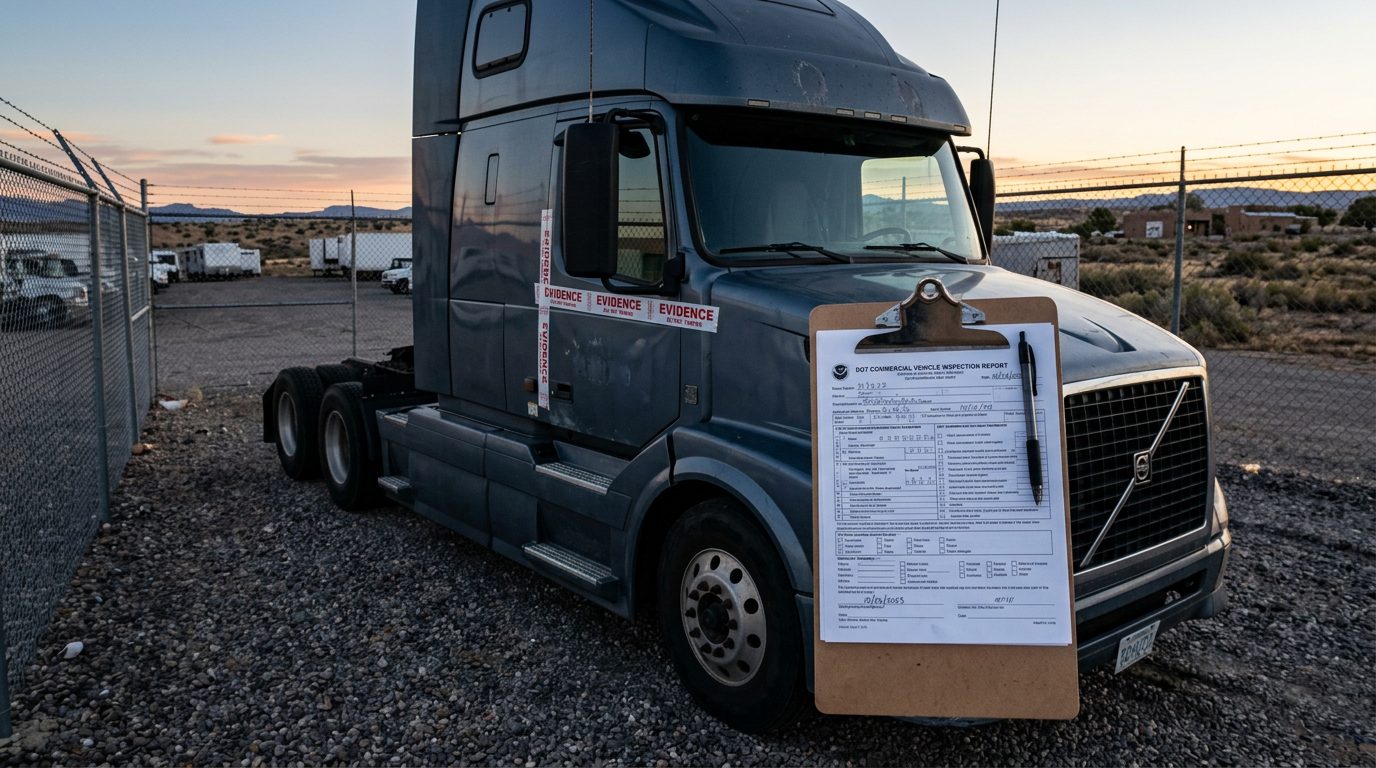
Trucking Accidents in Rio Rancho
Hurt in a Truck Crash? Find Out Who May Be Responsible
Trucking cases often involve more parties than a typical car crash. El Gringo Law looks at the driver, the carrier, and others whose conduct may have played a part. Your first consultation is free, confidential, and comes with no obligation to continue.
By Josh Wood · Published October 24, 2026
Trucking accidents in Rio Rancho often involve more than one driver. A semi-truck crash can connect the driver, the company that runs the truck, and other businesses to what went wrong. Who may be responsible turns on the facts, the records, and how quickly those records are kept. This guide explains those pieces for people hurt in a truck crash in Rio Rancho and Sandoval County, and for families who have lost a loved one.
Why Trucking Accidents in Rio Rancho Involve More Than One Party
A trucking accident can involve several people or companies that may share responsibility. A loaded commercial truck weighs far more than a passenger car. That extra weight changes stopping distances and the force of a crash.
Rio Rancho sits along I-25 and NM 528, where semi-trucks share lanes with commuters, school traffic, and delivery vans. When a truck is involved, the investigation looks beyond the driver. The trucking company, a business that leases the truck, a cargo loader, or a maintenance vendor may each be connected to the crash.
New Mexico generally limits each defendant to its own share of fault. This rule is called several liability. In cases where comparative fault applies, Section 41-3A-1 generally makes each defendant’s liability several. A defendant who shows that another person’s fault also caused the injury is liable only for the share of the damages that matches its own portion of the total fault, though joint and several liability still applies in listed situations, such as when someone acted with the intention of inflicting injury.
If a truck crash in Rio Rancho left you hurt or took someone you love, you may have a claim, and our team is ready to talk it through with you. Talk it through with our team — the first consultation is free, confidential, and carries no obligation.
Who Can Be Responsible After a Commercial Truck Crash
The driver, the employer or carrier, and others can each be responsible, based on what they did or failed to do. Each one has a different link to what went wrong.
The driver. Fatigue, distraction, speeding, impairment, and unsafe lane changes can all cause a crash. A crash can also have more than one cause. Under New Mexico law, a proximate cause does not have to be the only cause. New Mexico proximate cause rule
The employer or carrier. A company can face claims over how it hired, trained, and supervised its drivers. New Mexico’s jury instruction for this claim asks whether the employer knew or should have known the driver posed an unreasonable risk. It also asks whether the employer failed to use ordinary care and whether that failure caused the injury. New Mexico UJI 13-1647
The vehicle owner. New Mexico has allowed negligent entrustment claims. These focus on whether an owner gave a vehicle to a driver it knew or should have known was incompetent, and whether that incompetence caused the injury. DeMatteo v. Simon
A government vehicle. If a city, county, or state truck was involved, the rules change. Under the New Mexico Tort Claims Act, immunity can be waived for bodily injury caused by negligent public employees driving a motor vehicle within the scope of their duties. Under the Tort Claims Act, though, a person claiming damages from the state or a local public body must present a written notice stating the time, place and circumstances of the loss or injury within ninety days after the occurrence. The notice goes to the risk management division for claims against the state, the mayor for claims against a municipality, the school superintendent for claims against a school district, the county clerk for claims against a county, or the administrative head of any other local public body. A suit cannot be maintained without this notice unless the governmental entity had actual notice of the occurrence. The notice period does not count up to ninety days during which the injured person is incapacitated from giving notice by reason of injury. For a wrongful death claim, notice may be presented by, or on behalf of, the personal representative of the deceased person, any person claiming benefits of the proceeds of a wrongful death action, or the consular officer of a foreign country of which the deceased was a citizen, within six months after the date of the occurrence of the injury that resulted in the death. If the person who died had already presented a notice that would have been sufficient had he lived, no additional notice is needed (NMSA § 41-4-16). NMSA 1978 § 41-4-5 provides that the immunity granted under Subsection A of Section 41-4-4 does not apply to liability for damages resulting from bodily injury, wrongful death or property damage caused by the negligence of public employees while acting within the scope of their duties in the operation or maintenance of any motor vehicle, aircraft or watercraft.
Federal Trucking Rules and the Records They Create
Federal rules require motor carriers, except for a private motor carrier of passengers (nonbusiness), to make drivers record their duty status for each 24-hour period. 49 CFR § 395.8 Those records can matter after a crash. 49 CFR § 395.8
The rule covers each driver a carrier uses, except where the carrier is a private motor carrier of passengers (nonbusiness). It also lets carriers use manual records in limited cases instead of electronic logging devices (ELDs). Electronic logs and paper logs can show a driver’s hours and changes in duty status. They are worth preserving early.
Carriers often keep inspection and maintenance files for their trucks, too. Records can be lost or overwritten over time, so early action matters. An unusual log entry is a question to examine. On its own, it is not proof of fault.
What to Gather at the Scene and in the First Days
The most useful steps after a truck crash are making sure it is reported, recording details, and keeping your own records. New Mexico law requires the driver to give immediate notice to police, the county sheriff, or State Police, depending on where the crash happened. This applies when a crash causes injury, death, or $500 or more in property damage. NMSA 1978 § 66-7-206
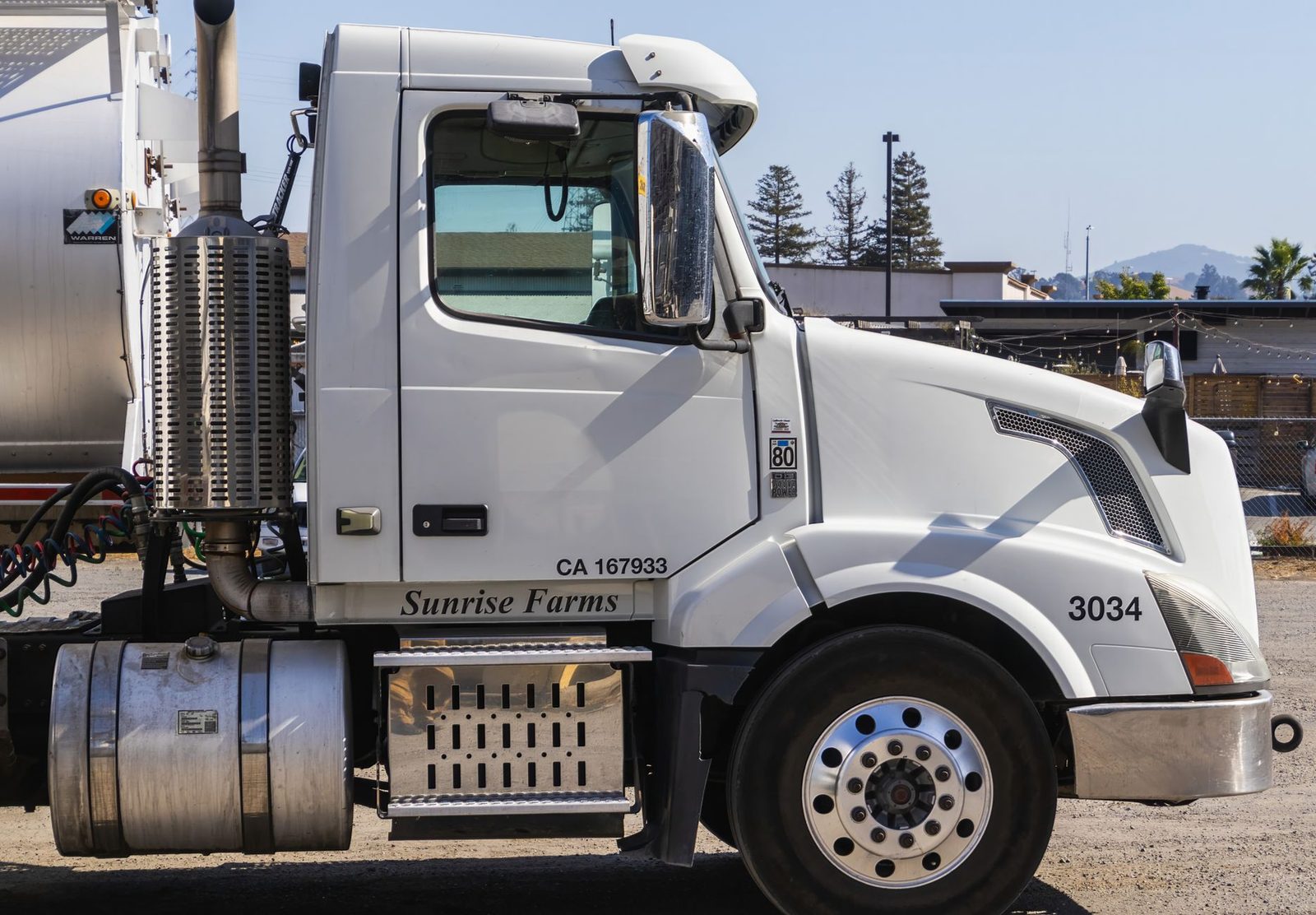
Write down the crash report number and the responding agency. Ask how to get a copy. Then note the company name, the USDOT number, and the unit number. These are often shown on the cab or trailer doors.
Photograph the vehicles, skid marks, lighting, and any visible cargo. Collect names and phone numbers from witnesses. Keep a written timeline of symptoms, medical bills, and missed work.
Think before giving a recorded statement to the trucking company’s insurer. Our team can walk you through that step.
Deadlines That Apply to Truck Crash Claims in New Mexico
New Mexico sets filing deadlines by statute. Claims involving a government vehicle run on much shorter timelines.
Under NMSA § 37-1-8, an action brought under the wrongful death provisions must be brought within three years after the cause of action accrues, and the cause of action accrues as of the date of death (NMSA 1978, § 37-1-8 — three years from the date of death) (NMSA 1978, § 41-2-2 — three years from the date of death). The clock starts on the date of death. NMSA 1978 § 37-1-8 sets the deadline: every action instituted by virtue of the provisions of this and the preceding section must be brought within three years after the cause of action accrues. History: Laws 1882, ch. 61, § 2 (NMSA § 41-2-1).
Close family members may have their own loss of consortium claim. Those damages belong to the family member, not to the decedent’s estate. Thompson v. City of Albuquerque
Claims against a government entity or public employee move faster. The action generally must start within two years after the occurrence. A narrow exception applies to very young children. Under NMSA § 41-4-15, actions against a governmental entity or a public employee for torts shall be forever barred unless such action is commenced within two years after the date of occurrence resulting in loss, injury or death, except that a minor under the full age of seven years shall have until his ninth birthday in which to file. NMSA § 41-4-15 reads: “Actions against a governmental entity or a public employee for torts shall be forever barred, unless such action is commenced within two years after the date of occurrence resulting in loss, injury or death, except that a minor under the full age of seven years shall have until his ninth birthday in which to file.” Separately, NMSA § 41-4-16 requires a written notice stating the time, place and circumstances of the loss or injury within ninety days after an occurrence giving rise to a claim for which immunity has been waived under the Tort Claims Act.
Claims against private companies follow other statutes. Checking the timing early protects your options.
Catastrophic Injuries Common in Truck Crashes
Trucking accidents can cause catastrophic injuries that need long-term care. Our firm handles claims involving spinal cord injuries, amputations, and burn injuries. You can read more on the spinal cord injuries page, the amputations page, and the burn injuries page.
Long-term needs call for careful records. Keep medical bills, therapy notes, equipment receipts, and notes about any changes to your home. Future care needs are easier to explain when they are documented from the start.
Families of people killed in a truck crash face a different set of questions. They need to know who may be responsible and which records to request. Our wrongful death page covers those claims.
Not sure what your next step is?
Talk it through with our team — the first consultation is free, confidential, and carries no obligation.
Frequently Asked Questions About Rio Rancho Truck Crashes
Most people ask who pays, who is at fault, and what to do first. These short answers cover those questions.
How do I find out which company owns the truck?
Look for the company name and USDOT number on the cab or trailer. The crash report can also help identify the carrier.
Does the trucking company’s insurance pay for the crash?
Coverage turns on the policy and the facts of the crash. Hovet v. Allstate
Can I still make a claim if I was partly at fault?
The answer turns on the facts of your crash. Our team can review those facts with you.
Do I need to act if the truck driver was cited?
A citation is one piece of evidence. It does not by itself decide fault in a civil claim.
Talk With Josh Wood About Your Rio Rancho Truck Crash
Josh Wood is the lawyer responsible for the content on this page, and he is licensed in New Mexico and Arizona. The firm handles car accident, trucking accident, wrongful death, and catastrophic injury claims.
Your first consultation is free, confidential, and carries no obligation to continue.
If a truck crash in Rio Rancho left you hurt or took someone you love, you may have a claim, and our team is ready to talk it through with you. Reach us through our contact page to submit the contact form or start a chat.
How We Approach a Trucking Case
We review the crash record
Police reports, photos, and the truck's identifying details, such as the USDOT number on the cab or trailer, can help show who was operating and who was responsible for the truck.
We look beyond the driver
Trucking companies, shippers, loaders, and maintenance contractors may each have a role in a crash. We examine the whole picture, not just the person behind the wheel.
We work to protect your claim
Early steps matter. We help you understand insurance communications and preserve evidence while you focus on recovering.
We are here for you
Our team is available to answer your questions in English or Spanish, and we keep your personal information confidential.
Before You Speak with an Insurer
A trucking company's insurance adjuster may contact you soon after a crash. Talk with a lawyer before you give a recorded statement, sign a release, or accept any settlement offer.
Parties That May Be Involved in a Trucking Crash
The truck driver
Fatigue, distraction, speeding, or impairment may be part of the investigation into how a crash happened.
The trucking company
The carrier may be responsible for hiring, training, supervising, and dispatching its drivers, depending on the facts.
Maintenance and cargo contractors
Brake, tire, and equipment problems, or improperly loaded cargo, can contribute to a crash and may involve outside companies.
Other drivers and insurers
Passenger vehicles, other trucks, and the insurance companies involved can all affect how a claim is handled.