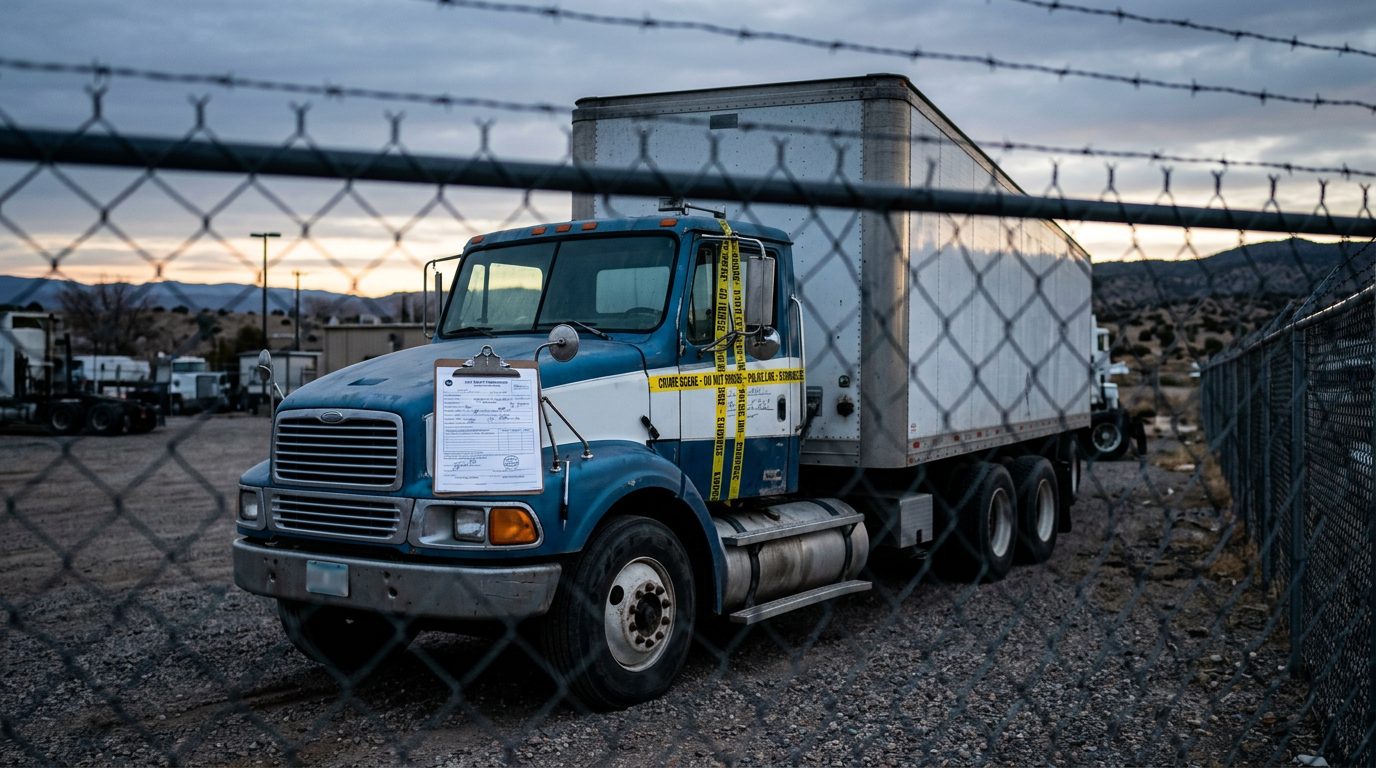
Trucking Accidents · Santa Fe
Hurt in a Semi-Truck Crash in Santa Fe? Start With a Free Consultation
El Gringo Law represents people injured in trucking accidents in Santa Fe and across New Mexico. Your first consultation is free, confidential, and carries no obligation to continue.
By Josh Wood · Published October 24, 2026
Trucking Accidents in Santa Fe: What to Know After a Semi-Truck Crash
Trucking accidents in Santa Fe involve large commercial vehicles that share busy roads with cars. They often involve more parties and more records than a typical car crash. This guide explains how these crashes differ, who may be responsible, and which steps protect your claim early.
If a semi-truck crash in Santa Fe left you injured or a family member gone, you do not have to work out the next steps alone. Reach out to our team to talk through your situation. Talk it through with our team — the first consultation is free, confidential, and carries no obligation.

Why Trucking Crashes Happen on Santa Fe Roads
Trucking accidents happen here when heavy trucks and passenger cars share the same lanes. I-25, St. Francis Drive and Cerrillos Road carry commuters, visitors, delivery vans and freight trucks all at once.
Mixed traffic leaves less room for error. A car can change lanes quickly. A loaded truck needs more distance to slow down, so a sudden backup or a slowdown in a construction zone can turn into a serious crash. Weather and wet or icy pavement can add to that risk.
Crash facts should come from official records. The UNM Traffic Research Unit publishes New Mexico crash data.
How a Semi-Truck Crash Differs From a Car Crash
A semi-truck crash differs from a car crash because of weight, size and the records the trucking company must keep. A loaded semi weighs far more than a passenger vehicle. The force of a collision with it can be much greater.
Common crash patterns include jackknifing, where the trailer swings out of line. Others are rollovers, underride collisions where a car slides under a trailer, and cargo spills.
Federal rules limit how long drivers may work. Under federal driving-time limits, a driver may not drive without first taking 10 consecutive hours off duty. Except for drivers who qualify for certain short-haul exceptions, driving is not permitted once more than 8 hours of driving time pass without at least a consecutive 30-minute interruption in driving status.
Records show whether those limits were followed. A motor carrier may instead require a driver to record duty status manually if the driver is operating a commercial motor vehicle in any of these ways: in a manner requiring completion of a record of duty status on not more than 8 days within any 30-day period; in a driveaway-towaway operation in which the vehicle being driven is part of the shipment being delivered; in a driveaway-towaway operation in which the vehicle being transported is a motor home or a recreation vehicle trailer; or in a vehicle manufactured before model year 2000, as shown by the vehicle identification number on its registration (duty-status recording rules). Carriers must also keep a driver qualification file for each driver, under driver file rules.
Who Can Be Responsible After a Truck Crash
More than one party can share responsibility after a trucking crash. The truck driver is only one possibility.
Others may include the motor carrier that employs the driver, the vehicle owner, maintenance providers and, where cargo was loaded improperly, the loaders. Each party’s role depends on the facts of the crash.
Brokers can also be involved.
New Mexico assigns fault by percentage. Under New Mexico’s comparative negligence jury instruction, the jury assigns a percentage of negligence to the injured person, each defendant and any non-party whose negligence contributed. Each defendant’s award generally equals its percentage times the total damages, except where New Mexico’s statutory exceptions to several liability apply (NMSA 41-3A-1).
That makes finding every responsible party a practical question.
Serious Injuries Common in Truck Crashes
Trucking crashes can cause catastrophic injuries, spinal cord injuries, amputations and burn injuries. These harms can change a person’s work, home life and independence for a long time.
Some injuries take time to show their full extent. A complete medical evaluation matters, and keeping every treatment record helps later.
When a truck crash causes a death, the family has a separate claim. Under New Mexico’s wrongful death limit, every action instituted under the wrongful death provisions must be brought within three years after the cause of action accrues (NMSA 1978, § 41-2-2 — three years from the date of death). That cause of action accrues as of the date of death.
Close family members may have their own claims, depending on their relationship to the injured person or decedent and the type of loss.
Steps That Protect Your Claim After a Santa Fe Truck Crash
Get medical care first, then keep every record. Injuries can seem minor at the scene and grow worse later.
New Mexico law requires a driver in a crash with injury or death to stop. Under New Mexico’s accident stop rule, the driver must stop at the scene or as close as possible. The driver must remain until the statutory requirements are fulfilled.
Timing matters for company records. Under records retention rules, companies keep records for minimum periods, and records may be destroyed after those periods end.
The post-accident testing rule states that it does not require delaying necessary medical attention for injured people.
Also collect photos of the scene and vehicles, the police report, and names of witnesses. Keep a simple log of missed work, expenses and how the injury affects daily life.
Not sure what your next step is?
Talk it through with our team — the first consultation is free, confidential, and carries no obligation.
How El Gringo Law Handles Trucking Cases in Santa Fe
El Gringo Law represents people hurt in trucking accidents. Josh Wood is the responsible lawyer for this page, and he is licensed in New Mexico and Arizona.
The firm’s lawyers and support staff handle car accidents, trucking accidents, premises liability, negligent security, wrongful death, sexual assault, catastrophic injuries, spinal cord injuries, amputations and burn injuries.
Our team reviews the crash facts, asks for records early, and explains your options in plain language. A truck crash can involve several parties, so the review looks at each one.
You can reach the firm through its contact page. You can call, use the contact form, or start a chat.
Talk With Us About Your Santa Fe Truck Crash
If a semi-truck crash left you hurt or a loved one gone, you can talk with our team about your options. You can do this before you decide anything.
The first consultation is free, confidential, and comes with no obligation to continue.
Who can be responsible after a Santa Fe truck crash?
The truck driver, the trucking company and other parties may share fault. Under New Mexico’s several liability rule, each defendant generally pays only its own share.
How long do I have to file?
If a truck crash causes a death, an action under New Mexico’s wrongful death statute must be filed within three years, with that period measured from the date of death (NMSA § 41-2-2). NMSA § 41-2-2 requires that every action brought under the wrongful death provisions be filed within three years after the cause of action accrues, and the cause of action accrues as of the date of death (NMSA 1978, § 41-2-2 — three years from the date of death). Other claims have their own deadlines, so timing matters.
Does being partly at fault end my claim?
New Mexico assigns a percentage of fault to the injured person, and that percentage generally reduces the award rather than ending it.
If a semi-truck crash on I-25 or St. Francis Drive has you facing medical bills and missed work, contact us today by phone, through the contact form, or by starting a chat.
Why people in Santa Fe contact El Gringo Law
Focus on injury cases
Car accidents, trucking accidents, and catastrophic injury claims are the core of our practice.
Free first consultation
Your initial consultation is free, confidential, and comes with no obligation to continue.
Support from our team
Our team keeps you informed and helps you understand each step, from the first call through the case.
Serving Santa Fe and nearby areas
We work with injured people in Santa Fe, Rio Rancho, Las Cruces, Taos, Farmington, and throughout New Mexico.
Protect your health and your records
Even if you feel fine after a crash, see a medical provider promptly. Keep copies of the police report, photos of the scene and your vehicle, and records of every treatment and expense.
What to do after a semi-truck crash in Santa Fe
1. Get medical care
Some injuries from large truck collisions appear hours or days later. A medical evaluation documents your condition from the start.
2. Document the scene
If you can, take photos of vehicles, road conditions, skid marks, and any visible injuries. Write down the truck's company name and DOT number if you see them.
3. Report the crash
Make sure a police report is filed and keep a copy. Note the names and contact details of witnesses.
4. Talk with our team
Contact El Gringo Law for a free, confidential consultation with Josh Wood, with no obligation to continue.