Wrongful Death · Rio Rancho, New Mexico
Losing a Loved One Changes Everything. You Don't Have to Sort Out the Legal Side Alone.
El Gringo Law helps Rio Rancho families understand their situation after a death that may have been caused by another party's conduct. Start with a free, confidential first consultation.
By Josh Wood · Published October 25, 2026
A wrongful death claim is a lawsuit a family can file after someone dies because another party’s wrongful act, neglect, or default caused the death. Under NMSA 1978, § 41-2-2 — three years from the date of death, every action brought under these provisions must be brought within three years after the cause of action accrues, and the cause of action accrues as of the date of death (NMSA 1978, § 41-2-2 — three years from the date of death). This guide answers the questions Rio Rancho families ask most, in plain language, so you can take the next step with clear facts.
What a Wrongful Death Claim Means in New Mexico
A wrongful death claim lets the family seek damages after a death caused by someone else’s wrongful conduct. The New Mexico statute allows this claim even though the injured person has died. New Mexico’s wrongful death statute, Section 41-2-1, provides that when the death of a person is caused by the wrongful act, neglect or default of another, and that act, neglect or default would have entitled the injured person to maintain an action and recover damages if death had not ensued, the person or corporation that would have been liable if death had not ensued shall be liable to an action for damages, notwithstanding the death of the person injured, even if the death was caused under circumstances that amount in law to a felony.
The death can come from many events. A crash, a fall on unsafe property, a violent attack, or an injury that later proves fatal can all lead to a claim. The statute covers any wrongful act, neglect, or default of another that would have let the injured person sue, had they lived, under Section 41-2-1.
The jury may award damages it considers fair and just. It looks at the financial loss to the surviving family and at the circumstances that make the act worse or better. See NMSA 1978, § 41-2-3.
Close family members can have a separate claim for loss of consortium, which means the loss of a close relationship. New Mexico courts say that claim belongs to the family member, not to the estate. See the Thompson loss of consortium ruling.
If your family lost someone in Rio Rancho, you do not have to sort out the deadlines and paperwork alone. Our team is ready to talk with you about your options. Talk it through with our team — the first consultation is free, confidential, and carries no obligation.
Who Can Bring a Claim for a Death in Rio Rancho
The statute says every wrongful death action must be brought by and in the name of that personal representative. See NMSA 1978, § 41-2-3.
A petition to appoint the personal representative can be filed before the lawsuit or with it, under Rule 1-017 NMRA.
The money goes to people the statute names. If there is a surviving spouse and no child, the spouse receives the proceeds. If there is a spouse and a child or grandchild, the spouse takes half and the children and grandchildren take the other half.
Without a spouse, children and grandchildren take. Parents and siblings appear later in the list, in cases the statute describes.
Families often ask who gets what first. The answer turns on which relatives survived. Bring a list of family members to the first conversation. Helpful papers also include the decedent’s ID, the death certificate, and any estate or probate papers.
Common Wrongful Death Cases in Rio Rancho and Sandoval County
Wrongful death Rio Rancho claims can start with a crash, an unsafe property, a violent attack, or an injury that later proves fatal. Each type raises its own questions.
Fatal car and motorcycle crashes. The UNM Traffic Research Unit prepares annual New Mexico traffic crash reports with county breakdowns, including Sandoval County. The Insurance Institute for Highway Safety also publishes state-by-state traffic death data for New Mexico.
Fatal truck crashes. Truck cases can involve the driver, the trucking company, and sometimes a broker who arranged the trip. The investigation may look at more than one company.
Deaths on unsafe property. Stairs, parking areas, and other hazards that an owner knew about or should have fixed can lead to a claim. A negligence claim generally requires a duty owed, a breach of that duty, and a breach that caused the harm. See Herrera v. Quality Pontiac.
Deaths tied to negligent security. Some deaths at apartments or businesses involve security problems. These can raise a negligent security question.
Deaths after severe injuries. A catastrophic injury, spinal cord injury, severe burn, or amputation can later prove fatal. The death may then support a claim under the same statute.
Deaths connected to sexual assault. These cases raise the same questions about who may file and how the family’s losses are measured.
How Long a Family Has to File in New Mexico
Under NMSA 1978, § 41-2-2 — three years from the date of death, a wrongful death action must be brought within three years after the cause of action accrues, and the cause of action accrues as of the date of death (NMSA 1978, § 41-2-2 — three years from the date of death). NMSA 1978, § 41-2-2 provides that every action instituted under these provisions must be brought within three years after the cause of action accrues, and that the cause of action accrues as of the date of death. It also says the cause of action accrues as of the date of death.
Government defendants change the timeline. Under NMSA 1978 § 41-4-15, actions against a governmental entity or a public employee for torts are forever barred unless commenced within two years after the date of occurrence resulting in loss, injury or death, except that a minor under the full age of seven years has until his ninth birthday to file, and the three-year period in § 41-2-2 may not apply to those defendants. Under NMSA § 41-4-15, actions against a governmental entity or a public employee for torts shall be forever barred, unless such action is commenced within two years after the date of occurrence resulting in loss, injury or death, except that a minor under the full age of seven years shall have until his ninth birthday in which to file.
Notice can come first for many government claims. Under the Tort Claims Act, Section 41-4-16 requires a person claiming damages from the state or a local public body under the Act to present a written notice stating the time, place and circumstances of the loss or injury within ninety days after the occurrence giving rise to the claim, unless the governmental entity had actual notice of the occurrence. When the claim is one for wrongful death, the notice may be presented by or on behalf of the personal representative of the deceased person, any person claiming benefits of the proceeds of a wrongful death action, or the consular officer of a foreign country of which the deceased was a citizen, within six months after the date of the occurrence of the injury which resulted in the death.
A Rio Rancho crash can involve a city, county, or state entity. Families should not assume the three-year period covers every defendant. Waiting for insurance answers can use up time you need, so start the review early.
Why Evidence in a Rio Rancho Death Case Can Change Quickly
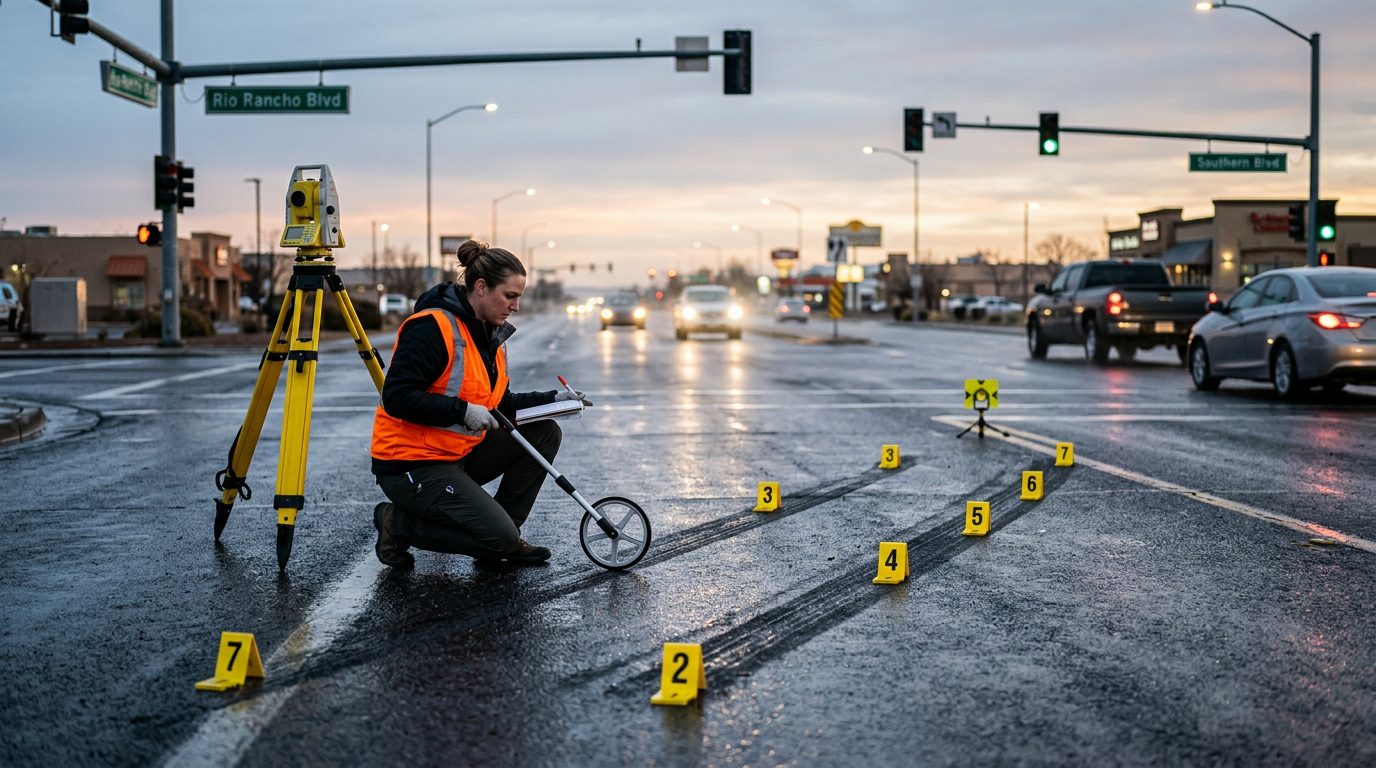
Key evidence after a fatal crash or incident can be lost, overwritten, repaired, or discarded. Dash camera video and store surveillance can be overwritten. Skid marks fade. Vehicles get repaired or sold. Scenes reopen, and property gets fixed.
Witnesses also forget details over time. Early action helps keep the facts clear.
Trucking records follow federal retention rules. Companies must keep certain records for minimum periods. After those periods, the records may be destroyed at the discretion of each company’s management, but this does not excuse compliance with the lawful requirements of any other governmental body prescribing longer retention periods for any category of records. See 49 CFR 379.3.
Logs, maintenance files, and dispatch messages are examples of trucking records that can matter in these cases. A preservation request asks the other side to keep relevant evidence. Early requests help protect what your family may need later.
Questions Families Ask About Wrongful Death Lawsuits
No one can predict how a wrongful death case will end. Every case is different, and past results do not predict a similar outcome.
Can anyone tell me the odds of winning?
No. Results turn on the facts of the death, the evidence, the insurance involved, and the legal issues in the case.
How much is a wrongful death case worth?
The jury decides damages under the statute. It looks at the family’s financial loss and the circumstances of the act. Amounts vary widely from case to case.
Is a wrongful death case hard to prove?
The family must show that the other party owed a duty, breached it, and caused the death. Insurers may dispute each point, so the proof matters.
Is it worth pursuing?
That question turns on the family’s losses and the evidence. A first conversation with a lawyer can help you weigh it for your situation.
Not sure what your next step is?
Talk it through with our team — the first consultation is free, confidential, and carries no obligation.
How the Process Typically Moves in Rio Rancho
A typical wrongful death case starts with investigation. It then moves into insurance talks. It may become a lawsuit if talks do not resolve it.
Investigation. Early work often gathers police reports, medical and autopsy records, scene photos, and vehicle or property records. Names of witnesses matter too.
Insurance talks. Insurers may reach out early. Read any statement or release carefully before you sign.
Lawsuit. If talks fail, the case may move into court. The personal representative is the party named in the action.
Talk With El Gringo Law About a Death in Rio Rancho
El Gringo Law represents people in personal injury matters, including wrongful death. We can talk through the questions in this guide with your family.
Our practice areas include car accidents, trucking accidents, premises liability, negligent security, wrongful death, sexual assault, catastrophic injuries, spinal cord injuries, amputations, and burn injuries.
Josh Wood is the responsible lawyer for this page. He is licensed in New Mexico and Arizona. Our team includes assistants and office staff.
Our first consultation is free, confidential, and comes with no obligation to continue.
If your family is weighing whether to act now after a death in Rio Rancho, call the firm, submit the El Gringo Law contact form, or start a chat.
How we work with families
Free first consultation
Your first consultation is free, confidential, and comes with no obligation to continue.
Plain-language guidance
We explain the process in clear terms so you can make informed decisions at a difficult time.
Focused on Rio Rancho and Sandoval County
We serve families in Rio Rancho and throughout Sandoval County, along with other communities in New Mexico.
Confidential conversations
What you share with us in your consultation is kept confidential.
Before you give a statement
Insurance companies may contact your family quickly after a death. Before you give a recorded statement or sign any release or settlement paperwork, consider speaking with a lawyer first.
Questions families often ask
Can anyone tell me the odds of winning?
No. Every case is different. Results depend on the facts of the death, the evidence, the insurance involved, and the legal issues in the case.
What should we keep?
Keep medical and funeral bills, police or accident reports, photos, and any messages or records connected to the incident. Share them with us during your consultation so we can review them together.
How long does this take?
The timeline depends on the facts, the parties involved, and how the case develops. We will walk you through what to expect during your consultation.
Do we have to decide right away?
No. Your consultation is a chance to ask questions and understand your situation. There is no obligation to continue after it.