Wrongful Death | New Mexico
Supporting New Mexico Families After a Wrongful Death
El Gringo Law represents families who have lost a loved one because of someone else's negligence or misconduct. Our team handles car and trucking accidents, premises liability, negligent security, and other wrongful death matters across New Mexico. Your first consultation is free, confidential, and carries no obligation to continue.
By Josh Wood · Published October 25, 2026
A wrongful death claim is a civil lawsuit a family can bring after someone dies because of another party’s wrongful act or negligence. This page explains the New Mexico rules and how a wrongful death attorney New Mexico families hire can help. The rules start with the Wrongful Death Act, so that is where we begin.
What a Wrongful Death Claim Means Under New Mexico’s Wrongful Death Act
A wrongful death claim lets survivors seek damages when another person’s wrongful act, neglect or default causes a death. The rule comes from the Wrongful Death Act. Under § 41-2-1, the party who would have been liable if the injured person had lived stays liable after the death. The core idea is simple. If the injury would have supported a lawsuit, the death does not erase that responsibility.
The claim is not brought for the person who died. Under § 41-2-3, it is brought by the personal representative of the deceased person. Under § 41-2-3, the proceeds of a wrongful death judgment are not liable for the deceased’s debts, provided the decedent has left a spouse, child, father, mother, brother, sister, or child or children of the deceased child. The proceeds are then distributed as follows: if there is a surviving spouse and no child, to the spouse; if there is a surviving spouse and a child or grandchild, one-half to the surviving spouse and the remaining one-half to the children and grandchildren, the grandchildren taking by right of representation; if there is no husband or wife, but a child or grandchild, to such child and grandchild by right of representation; if the deceased is a minor, childless and unmarried, to the father and mother, who share an equal interest, or to the survivor if either is dead; if there is no father, mother, husband, wife, child or grandchild, to a surviving brother or sister if there are any; and if there is no such kindred, as the personal property of deceased persons is distributed.
Some families also ask about an injury claim the person may have had before dying. That is a separate question from the death claim. Whether either one applies depends on the facts.
Timing matters. Under § 37-1-8, the action must be brought within three years after the cause of action accrues. The cause of action accrues as of the date of death. Families should not let that clock run while they wait.
If a crash, a fall, or an act of violence took someone your family loved, our team can talk through whether a wrongful death claim fits your situation. Talk it through with our team — the first consultation is free, confidential, and carries no obligation.
Typical Grounds for a Wrongful Death Lawsuit
The most common grounds are fatal car crashes, fatal truck crashes, deaths on someone else’s property, and deaths linked to a lack of reasonable security. Each case starts with the same basic question. Was someone careless, and did that carelessness cause the death?
As explained in Herrera v. Quality Pontiac, a negligence claim generally requires a duty owed by a defendant to a plaintiff, a breach of that duty (typically based upon a standard of reasonable care), and that breach being both a proximate cause and a cause in fact of the plaintiff’s damages. The defendant owed a duty to the plaintiff. The defendant breached that duty, which is usually measured by reasonable care. And the breach was a proximate cause and cause in fact of the damages, as stated in Herrera v. Quality Pontiac.
A proximate cause produces the harm in a natural and continuous sequence. Without it, the harm would not have happened. It does not have to be the only cause. It also does not have to be the last one.
Negligence is not the same as bad luck. A driver who runs a red light, a property owner who ignores a known hazard, or a business that skips basic security may each face this question. Hit-and-run crashes and crashes involving a driver who died raise separate questions. Those cases need their own review.
Fatal Car and Truck Crashes
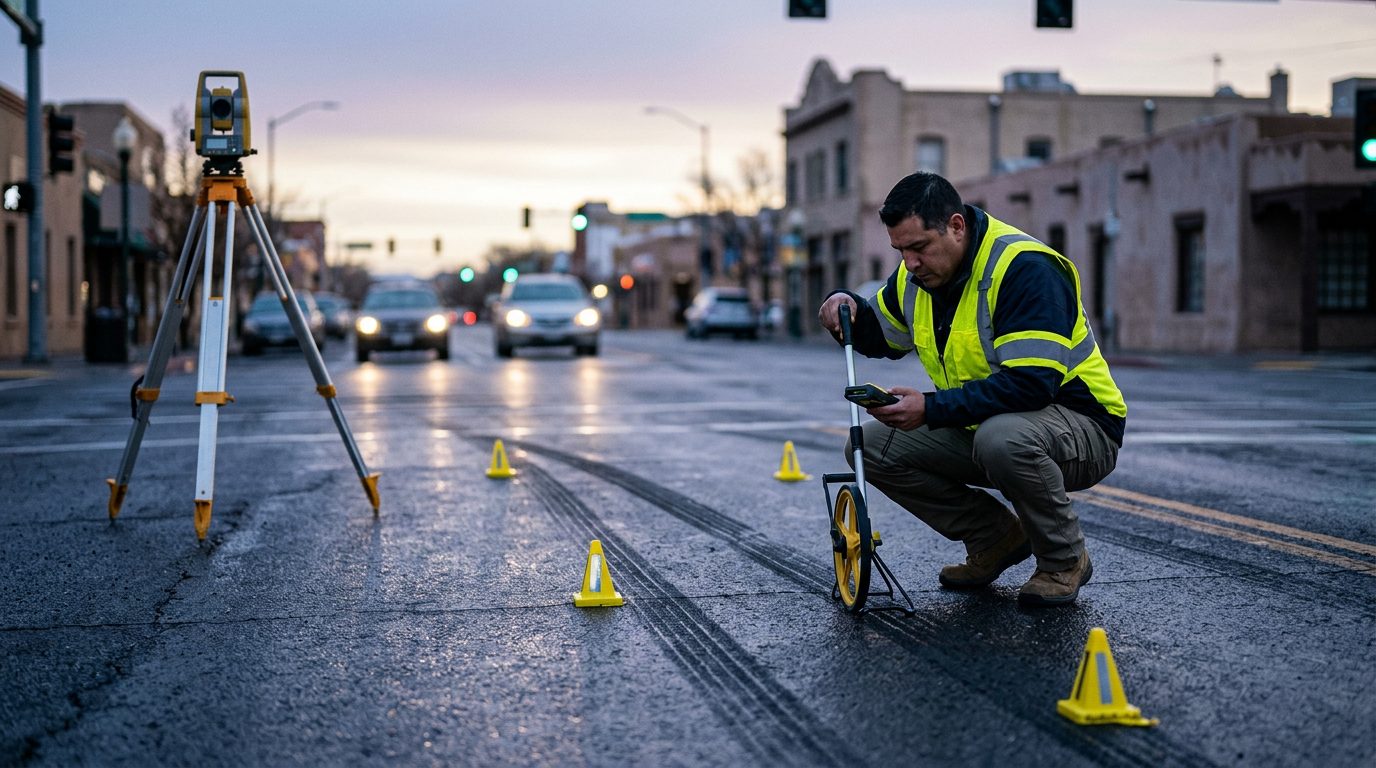
A fatal crash claim usually turns on how the crash happened and what the records show. The crash report is often the first record. Under § 66-7-207, a driver in an accident that causes bodily injury or death, or total property damage to an apparent extent of five hundred dollars ($500) or more, must forward a written report to the department of transportation within five days. A law enforcement officer who investigates must forward a report within twenty-four hours after finishing the investigation.
A crash report is not always evidence at trial. Under § 66-7-213, accident reports generally cannot be used as evidence in a civil or criminal trial arising from the accident. The statute lists exceptions, so the report’s role depends on the case. Witness statements, photos, and vehicle data also matter.
Fatal truck crashes often involve more parties. The driver is one. The carrier, the company that arranged the trip, or a maintenance contractor may also be involved. A claim against a vehicle owner may rest on negligent entrustment. Under DeMatteo v. Simon, that claim requires three things. The owner entrusted its vehicle to the driver. The owner knew or should have known the driver was incompetent. And that incompetence caused the injury.
Crash patterns are also studied at the national level. The IIHS Fatality Facts publish state-by-state research on traffic deaths. That research helps explain why these cases get close attention.
Premises and Negligent Security Deaths
A premises death claim asks whether the property owner or occupant failed to keep the property reasonably safe. Under UJI 13-1318 NMRA, an owner or occupant owes a visitor a duty to use ordinary care to keep the premises safe. That duty applies whether or not a dangerous condition is obvious.
The owner is also charged with knowledge of conditions a reasonable inspection would have revealed. The same instruction covers conditions the owner caused or that an employee caused. A fatal fall on stairs or a fire caused by a hazard can raise these questions.
Negligent security claims ask a related question. Was the security at the property reasonable under the circumstances? Did a lack of it contribute to a death caused by someone else’s crime? Families should write down what they know about prior incidents, lighting, locks, and staffing. These details often shape the case early.
Who Can Bring a Claim and What It May Cover
A personal representative brings the claim for the people the law names as beneficiaries. Under § 41-2-3, the action is brought by and in the name of the personal representative. The statute then sets the order for who receives the proceeds. It starts with a surviving spouse and children. Parents take a share only if the deceased was a minor, childless and unmarried, and siblings take only if there is no father, mother, husband, wife, child or grandchild.
The jury may award compensatory and exemplary damages it deems fair and just. The statute directs the jury to consider the pecuniary injury from the death to the surviving party. It also looks at whether the circumstances of the wrongful act make it worse or less serious. What a family can recover depends on the facts of the case.
A close family member may also have a loss of consortium claim.
Families should start a file early. Keep medical bills, funeral invoices, pay records, and tax returns that show the person’s earnings. Organized records make it easier to explain the family’s losses later.
Who Pays a Wrongful Death Lawsuit and How Costs Work
Often, the at-fault party’s liability insurer pays a settlement. Some cases end with a judgment paid by the at-fault party directly. Families should understand both paths before they talk about money.
Court costs and litigation expenses are a separate issue from the lawyer’s fee. The firm can advance these costs.
Under Rule 16-105 NMRA, a contingent fee agreement must be in a writing signed by the client. The agreement must also clearly tell the client which expenses the client will owe whether or not the client prevails. If there is no recovery, you may be responsible for court costs and the expenses of litigation, as the written contingency agreement you sign will state.
Not sure what your next step is?
Talk it through with our team — the first consultation is free, confidential, and carries no obligation.
What Kind of Lawyer Handles Wrongful Death Cases
A wrongful death attorney New Mexico families rely on needs to know three areas well. The first is the Act. The second is negligence law. The third is how insurance claims move. These cases ask the lawyer to prove duty, breach, and causation, and to match the damages to what the statute allows.
Josh Wood concentrates in personal injury matters. These include car accidents, trucking accidents, premises liability, negligent security, and wrongful death. Josh Wood is licensed in New Mexico and Arizona and is the responsible lawyer for this page.
Our team includes assistants and office staff who support the firm’s lawyers. Families who reach out can ask how costs are handled and who will work on the case. Those answers help a family decide what comes next.
Insurance Offers, Settling, and Deciding Whether to Go to Trial
An early offer is not a final answer. A family may take time to review any offer and ask questions before deciding. The deadline in § 41-2-2 still applies while the family reviews.
The full list appears in § 59A-16-20.
Before signing any release, families should know the rule in § 41-3-4. A release by the injured person of one at-fault party does not discharge the others unless the release says so. New Mexico’s joint tortfeasor release statute, § 41-3-4, provides that a release by the injured person of one joint tortfeasor, whether before or after judgment, does not discharge the other tortfeasors unless the release so provides; but reduces the claim against the other tortfeasors in the amount of the consideration paid for the release, or in any amount or proportion by which the release provides that the total claim shall be reduced, if greater than the consideration paid.
Settling ends the case with an agreed payment. A trial puts the case before a jury, which decides the award under the statute. The choice turns on the family’s goals and the strength of the evidence.
Common Questions About Wrongful Death Claims
How long do families have to file?
Under § 41-2-2, the deadline is three years from the date of death (NMSA 1978, § 41-2-2 — three years from the date of death).
Who can file?
The personal representative brings the action for the beneficiaries the Act names.
Can an accident report be used at trial?
Section 66-7-213 generally bars that use, with listed exceptions.
Can a family member recover loss of consortium?
Where the Firm Serves New Mexico
El Gringo Law serves families in Bernalillo County, Sandoval County including Rio Rancho, Santa Fe, Las Cruces, Taos, and Farmington. Bernalillo County includes Albuquerque. Las Cruces sits in Doña Ana County, and Farmington sits in San Juan County.
Talk With Josh Wood About Your Family’s Situation
If a crash, a fall, or an act of violence took someone your family loved, you may be asking whether a wrongful death claim fits. Josh Wood is the responsible lawyer for this page. Our team can talk through your questions through the contact form or by chat.
The first consultation is free, confidential, and comes with no obligation to continue. You can take the next step at your own pace.
How We Work With Families
Respect for Your Loss
We understand that a death in the family comes before any legal question. We listen first and explain your options at a pace that works for you.
Free, Confidential First Consultation
Your initial consultation is free, confidential, and without obligation to continue. You can ask questions and decide what comes next on your own timeline.
A Team Built Around You
Josh Wood is the responsible lawyer for this page, and our team of lawyers and support staff works together to keep your case organized and your questions answered.
Serving Families Statewide
We represent families in Santa Fe, Rio Rancho, Las Cruces, Bernalillo County, Sandoval County, Taos, Farmington, and throughout New Mexico.
Before You Speak With an Insurance Company
Insurance adjusters may contact grieving families soon after a death. Please talk with our team before giving a recorded statement or signing any document.
Types of Wrongful Death Cases We Handle
Car and Trucking Accidents
Fatal collisions involving passenger vehicles, commercial trucks, and other large vehicles on New Mexico roads and highways.
Premises Liability
Deaths that occur when a property owner fails to keep a property reasonably safe for the people who enter it.
Negligent Security
Deaths linked to inadequate security at apartments, businesses, parking areas, and other properties where violence occurred.
Catastrophic Injuries Leading to Death
Cases where a serious injury, including spinal cord injury, amputation, or severe burns, later results in a loved one's death.