Wrongful Death · Santa Fe
When a Loved One Dies, Santa Fe Families Deserve Clear Answers
Start with a free, confidential first consultation with no obligation to continue.
By Josh Wood · Published October 25, 2026
For families dealing with wrongful death Santa Fe matters, the first questions are usually who can file, how long they have, and who pays. Under New Mexico’s Wrongful Death Act, a claim for damages can be brought when someone else’s wrongful act, neglect or default causes a death, and it must be brought by and in the name of the personal representative of the deceased person. Under NMSA 1978, § 41-2-2, a wrongful death action must be brought within three years after the cause of action accrues, and the cause of action accrues as of the date of death (NMSA 1978, § 41-2-2 — three years from the date of death). Santa Fe families often face these questions after a fatal crash, a truck collision, a deadly fall on unsafe property, or a death tied to poor security. This page answers the common questions in plain English. It is general information, not a ruling on your family’s claim.
Who Can Bring a Wrongful Death Claim in New Mexico
The claim is brought by the deceased person’s personal representative, in that person’s name. Under NMSA § 41-2-1, whenever a person’s death is caused by the wrongful act, neglect or default of another, even if the death occurred under circumstances that amount in law to a felony, the person who, or the corporation which, would have been liable if death had not ensued shall be liable to an action for damages, notwithstanding the death of the person injured, provided the act, neglect or default would have entitled the injured party to maintain an action and recover damages had death not ensued. A personal representative is the person appointed to handle the deceased person’s estate.
Section 41-2-1 makes the person or corporation who would have been liable, if death had not ensued, liable to an action for damages notwithstanding the death of the person injured; it does not set who receives money from a judgment, which is addressed in § 41-2-3. A surviving spouse with no children receives it all. A surviving spouse with children or grandchildren takes half, and the children and grandchildren share the rest. The statute then looks to the parents of a deceased minor who was childless and unmarried, and to a surviving brother or sister when there is no father, mother, husband, wife, child or grandchild. The judgment proceeds aren’t liable for the deceased person’s debts, provided the decedent has left a spouse, child, father, mother, brother, sister or child or children of the deceased child.
Who qualifies in your family turns on your family’s facts. This summary is general information, not a finding about your case.
If your family just lost someone in a Santa Fe crash or incident, our team can talk through your questions at a free, confidential first consultation. Talk it through with our team — the first consultation is free, confidential, and carries no obligation.
Filing Deadlines for a Santa Fe Wrongful Death Claim
A New Mexico wrongful death lawsuit must be brought within three years after the cause of action accrues, and the cause of action accrues as of the date of death (NMSA 1978, § 41-2-2). Under N.M. Stat. § 41-2-2, the cause of action accrues as of the date of death.
Under NMSA 1978, § 37-1-8, every action must be brought within three years after the cause of action accrues, though other laws may set different timing rules for some defendants. Some defendants, including certain government bodies, can bring other timing rules into play. Don’t assume the same date applies to every Santa Fe claim.
The biggest mistake is waiting. Grief takes time, and families often spend the first weeks on funeral arrangements and paperwork. Meanwhile, the calendar keeps running. Evidence and records also become harder to collect as time passes. Missing the limit can end the family’s ability to file. An early review of the date of death, the parties, and the incident protects the timeline you still have.
Fatal Incidents Along Santa Fe’s Roads and Properties
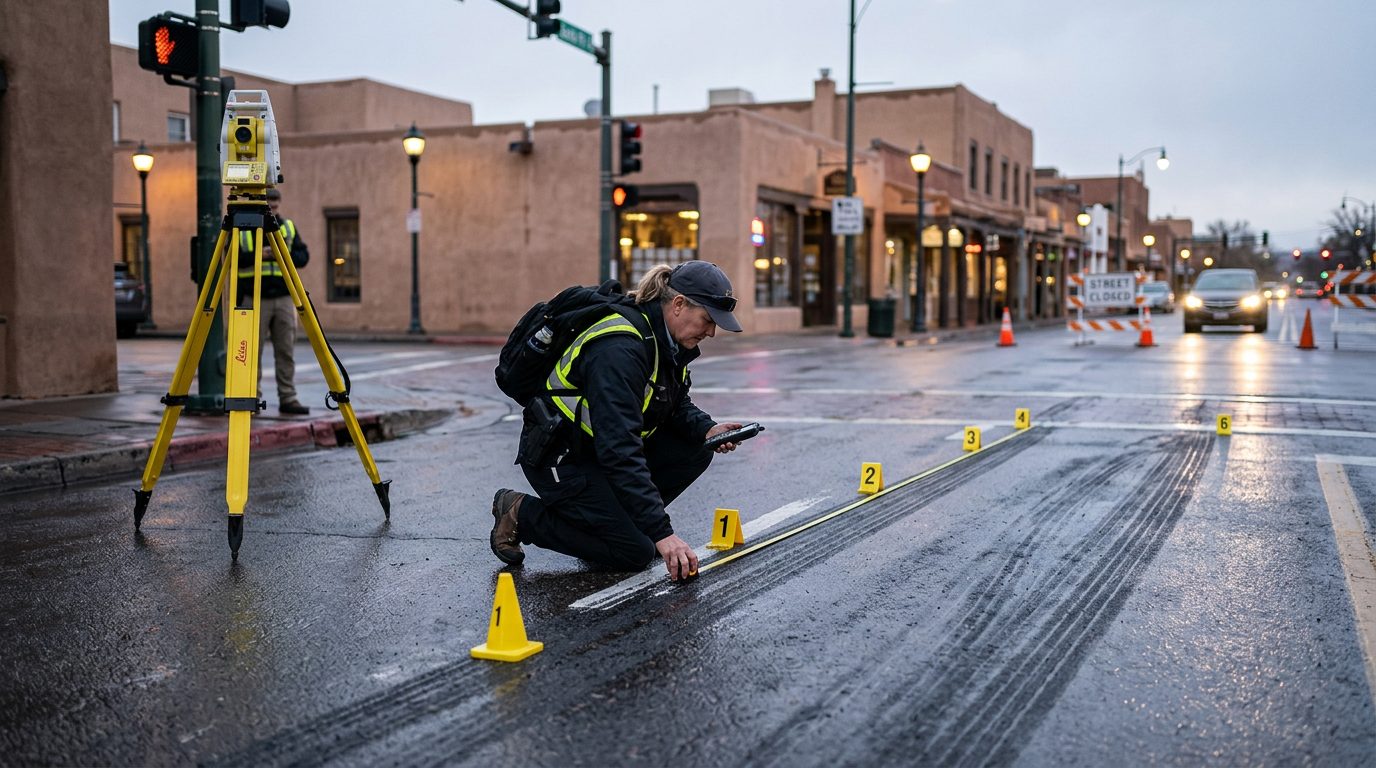
Santa Fe wrongful death claims often start with a fatal crash, a commercial truck collision, a fall on unsafe property, or a death linked to inadequate security. Each type raises different questions about who was responsible.
Crashes on Interstate 25 and along NM-14 are among the Santa Fe-area incidents that lead to these claims. Car and motorcycle collisions are a common starting point.
When a commercial truck is involved, 49 C.F.R. § 395.3 provides that, except as otherwise provided in § 395.1, a motor carrier may not permit or require a driver to drive a property-carrying commercial motor vehicle without first taking 10 consecutive hours off duty. Those records can matter in a trucking case.
A property owner or occupant owes visitors a duty to use ordinary care to keep the premises safe, as UJI 13-1309 NMRA states it. When a visitor is hurt by another person’s conduct, UJI 13-1320 NMRA addresses that situation.
Santa Fe County claims are typically filed in the First Judicial District Court, which serves the county.
Damages Families May Be Able to Pursue
Under N.M. Stat. § 41-2-3, the jury in a wrongful death action may give such damages, compensatory and exemplary, as it deems fair and just. It takes into consideration the pecuniary injury resulting from the death to the surviving party entitled to the judgment, or any interest in the judgment, and also has regard to the mitigating or aggravating circumstances attending the wrongful act, neglect or default. Compensatory damages pay for a loss. Exemplary damages are meant to punish especially harmful conduct.
The jury weighs the pecuniary injury, meaning the financial loss, to the person entitled to the judgment. It also considers mitigating or aggravating circumstances, which are facts that make the conduct look less or more serious. Those facts vary widely from one death to the next.
A common mistake is treating a number from a news story as a forecast for your case. Every case is different. Past results do not predict a similar outcome. No amount can be known before the claim is investigated and the losses are documented.
Who Pays in a Wrongful Death Case
The money usually comes from the at-fault person or company, often through its liability insurance.
When more than one party contributed, New Mexico law generally limits each defendant to its own share. As N.M. Stat. § 41-3A-1 provides, in causes of action to which several liability applies, any defendant who establishes that the fault of another is a proximate cause of a plaintiff’s injury shall be liable only for a portion of the total dollar amount awarded as damages to the plaintiff. That portion equals the ratio of that defendant’s fault to the total fault attributed to all persons, including plaintiffs, defendants and persons not party to the action. Joint and several liability, which can make one defendant answer for the full amount, applies to people who acted with the intention of inflicting injury; to people whose relationship makes one vicariously liable for the other, and to people strictly liable for making and selling a defective product, in both cases only for the share of liability attributed to them; and to other situations with a sound basis in public policy. Those include intentional injury and certain vicarious liability relationships.
A typical claim moves through steps. Investigators look into the incident. Counsel identifies the responsible parties and their insurers. A settlement demand may follow, then negotiation and, if needed, a lawsuit. No one can know each step’s timing in advance.
A Criminal Charge Does Not Decide the Civil Claim
A wrongful death claim is a civil case for money damages. It is not a criminal charge. Under N.M. Stat. § 41-2-1, this rule applies when a death is caused by the wrongful act, neglect or default of another, and that act, neglect or default would have entitled the injured person to maintain an action and recover damages if death had not ensued. In that case, the person who, or the corporation which, would have been liable if death had not ensued shall be liable to an action for damages, notwithstanding the death of the person injured. This is so even if the death was caused under circumstances that amount in law to a felony.
Under NMSA 1978, § 66-7-201, failing to stop or to meet the duties after a crash that results in great bodily harm or death is a fourth degree felony, or a third degree felony if done knowingly. That is a separate criminal matter from the family’s civil claim.
A criminal case runs on its own track and timeline. Don’t let it push the civil deadline aside. Families who wait for criminal proceedings can lose time on the civil side. Bring any police or charging papers you have to the consultation so the timing questions can be checked.
Not sure what your next step is?
Talk it through with our team — the first consultation is free, confidential, and carries no obligation.
How Negligence Is Shown in a Santa Fe Death Case
A family generally must show the defendant owed a duty, breached it, and caused the death. The breach is typically measured by a standard of reasonable care, and the breach must be a proximate cause and cause in fact of the damages.
Causation has its own test. Under UJI 13-305 NMRA, an act is a cause if it contributes to bringing about the injury and the injury would not have occurred without it, and it must be reasonably connected as a significant link to the injury. It need not be the only explanation.
How hard it is to sue for negligence turns on the evidence. Cases often rest on several kinds of proof: witness statements, photographs, vehicle and trucking logs, maintenance and security records, and medical records.
Crash reports have limits. Under N.M. Stat. § 66-7-213, no accident report shall be used as evidence in any trial, civil or criminal, arising out of an accident, except as otherwise provided in that section. That makes witness accounts, photos, and records especially important.
Evidence can disappear quickly. Vehicle data, surveillance video, and scene conditions change. Early review helps preserve what still exists.
Fees, Costs, and Your Free Consultation
The first consultation with El Gringo Law is free, confidential, and carries no obligation to continue (consulta inicial gratuita, confidencial y sin compromiso).
Fee terms are set out in a written contingency agreement. If there is no recovery, you may be responsible for court costs and the expenses of litigation, as that written agreement states. The written agreement controls. The firm may advance court costs and litigation expenses if the written agreement provides for it. Those advances are repaid only from a recovery.
Josh Wood, licensed in New Mexico and Arizona, is the lawyer responsible for the content of this page. El Gringo Law can be reached through the contact details on its website.
Talk With Us About Your Loss in Santa Fe
Families weighing a Santa Fe wrongful death claim often ask the same questions: who can file, when, and what evidence still exists. Those answers shape the next step.
Frequently asked questions
Is there a deadline for a wrongful death Santa Fe claim?
Under New Mexico law, every action instituted by virtue of the provisions of this and the preceding section must be brought within three years after the cause of action accrues, and the cause of action accrues as of the date of death (NMSA § 41-2-2). Some defendants can bring other timing rules into play, so review dates early.
Who pays in a wrongful death case?
The at-fault person or company usually pays, often through its liability insurance. Under New Mexico law, each defendant is generally liable only for its own share of fault.
Is wrongful death a criminal charge?
No. It’s a civil claim for money damages, and it can still proceed when the death amounts to a felony.
If your family lost someone in a Santa Fe crash or incident and you’re deciding whether to file, use the contact form to request your free, confidential first consultation.
How El Gringo Law Can Help
Confidential First Consultation
Tell us what happened in a private conversation. The first consultation is free, confidential and carries no obligation to continue.
Review of Your Situation
We look at the facts of your loss, including the records and reports your family may already have, and explain the questions to consider.
Support for Families
Losing someone is hard. Our team takes the time to listen and answers your questions in plain language.
Serving New Mexico Families
We represent families in Santa Fe and across New Mexico in wrongful death matters arising from car, trucking, premises and other incidents.
Early Steps Matter
Accident reports, medical records, photos and witness contact information can become harder to gather as time passes. Reaching out early helps preserve what your family may need later.
Questions Families Often Ask
Who Can File
Ask us how this applies to your family's situation during your free consultation.
Why Timing Matters
Deadlines and other timing issues can affect a wrongful death claim. Contacting us early gives us more time to review your options.
Gathering Evidence
Police reports, medical records, employment information and photos can all be important. We can explain what to keep and what to share.
Talking With Us
You can call, submit a contact form or start a chat. Every conversation is confidential, and you decide what happens next.