Premises Liability & Wrongful Death | Albuquerque, NM
Lost a Loved One in a Fatal Slip and Fall?
El Gringo Law represents families in Albuquerque and Bernalillo County after deadly falls on unsafe property. Start with a free, confidential consultation, with no obligation to continue.
By Josh Wood · Published October 27, 2026
A fatal slip and fall lawyer in Albuquerque can explain how a New Mexico wrongful death claim works after a fall on someone else’s property. The claim is brought by the personal representative of the person who died, and it asks whether the property’s owner or operator failed to use reasonable care. This page covers who can file, what the law requires, what a claim can recover, what evidence matters, and how to take the first step.
What a Fatal Slip and Fall Claim Is and Who It Is For
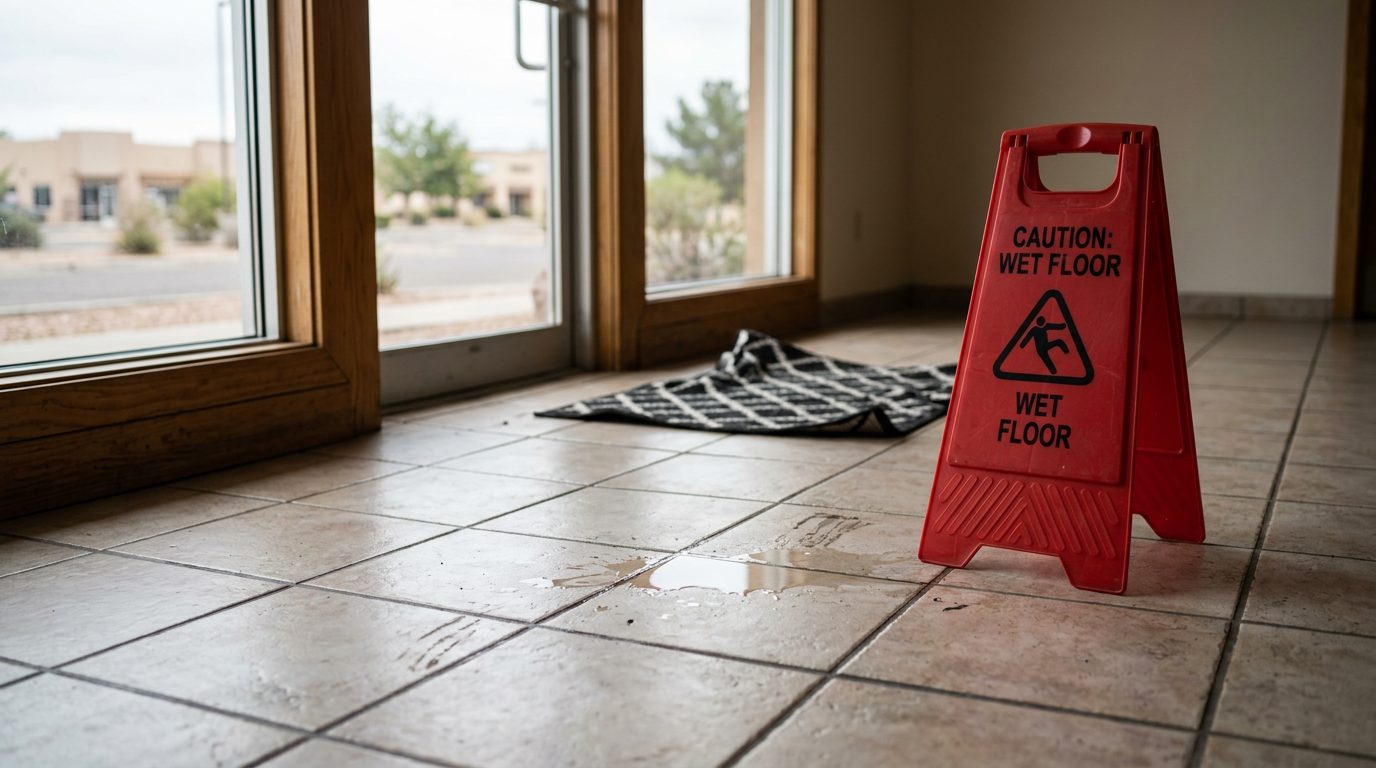
A fatal slip and fall claim is a wrongful death case that starts with a fall. The fall happened because of a hazard on property the person who died did not control. Common hazards include wet or unmarked floors, uneven walkways, icy or unsalted surfaces, broken stairs, missing handrails, and poor lighting.
New Mexico’s wrongful death law allows a lawsuit when a death is caused by another person’s wrongful act, neglect or default, if that act would have entitled the injured person to maintain an action and recover damages had death not followed. The party who would have been liable, had death not followed, can be sued. (NMSA § 41-2-1), history note: “History: Laws 1882, ch.”
This kind of claim can involve a store, apartment complex, parking lot, office, or other public-facing business in Albuquerque or Bernalillo County. The key question is usually who controlled the area where the fall happened.
If a fall on someone else's property took your loved one's life, you may have a wrongful death claim, and our team can talk it through with you. Talk it through with our team — the first consultation is free, confidential, and carries no obligation.
How New Mexico Negligence Law Applies to a Fatal Fall
Negligence means the property owner or operator did not use reasonable care, and that failure caused the fall and the death.
A negligence claim generally requires a duty owed to the injured person, a breach of that duty measured by reasonable care, and a breach that was a proximate cause of the damages. (Herrera v. Quality Pontiac) A proximate cause produces the injury in a natural and continuous sequence. It need not be the only cause.
A property owner must use ordinary care to keep the premises safe for visitors. That duty can apply even when a danger is obvious, unless the court concludes that the visitor’s negligence in encountering it was unforeseeable as a matter of law. (UJI 13-1309 visitor duty) Under this instruction, an owner or occupant must use ordinary care to keep the premises safe for the visitor’s use. (UJI 13-1318 slip and fall)
More than one party can share responsibility, such as an owner, a manager, or a maintenance contractor. New Mexico uses comparative negligence (shared fault), so a jury assigns each responsible person a percentage. (UJI 13-2219 comparative negligence) If a plaintiff’s injury was caused by a combination of negligence of more than one person, the jury first determines the total damages, then assigns a percentage of negligence to each person named, and multiplies each defendant’s percentage by the plaintiff’s total damages. (NMSA § 41-3A-1) provides: “In any cause of action to which the doctrine of comparative fault applies, the doctrine imposing joint and several liability upon two or more wrongdoers whose conduct proximately caused an injury to any plaintiff is abolished except as otherwise provided hereafter.”
What a Wrongful Death Claim Can Recover
The jury may award compensatory and exemplary damages that it deems fair and just. Under Section 41-2-3 of New Mexico’s wrongful death statute, the action is brought by the personal representative of the deceased person, and the jury may give such damages, compensatory and exemplary, as they deem fair and just. In doing so, the jury takes into consideration the pecuniary injury resulting from the death to the surviving party entitled to the judgment and has regard to the mitigating or aggravating circumstances attending the wrongful act, neglect or default. It also weighs the mitigating or aggravating circumstances of the fall.
The statute also says judgment proceeds are not liable for the decedent’s debts, provided the decedent has left a spouse, child, father, mother, brother, sister or child or children of the deceased child. It sets an order for who receives them, starting with a surviving spouse and children.
Some family members may also have a separate loss of consortium claim for the loss of a close relationship. (Thompson v. City of Albuquerque)
What a family can recover turns on its relationships to the person who died and on the fall itself. Each case is reviewed on its own. Every case is different, and no dollar amount can be predicted.
Evidence and Timing That Matter After a Fatal Fall
Two steps matter most early: preserving evidence and watching the filing deadline.
Photograph the hazard, the surface, the lighting, and any signs as soon as it is safe to do so. Write down witness names and contact details, and keep any incident report the property created. A short written timeline of the fall, with dates and names, also helps.
Ask in writing for surveillance video, inspection and maintenance logs, cleaning schedules, prior complaints, and contractor records. Some video is recorded over on a set schedule, so waiting can cost the family the footage.
Gather medical records, emergency response records, and the medical examiner’s findings about the fall.
A wrongful death action must be brought within three years after the cause of action accrues, and it accrues as of the date of death (NMSA 1978, § 41-2-2 — three years from the date of death).
How the Process Works, Step by Step
A fatal fall claim usually moves from consultation to investigation, negotiation, and, if needed, a lawsuit. Each stage sets up the next one.
- Consultation. Our team reviews the fall, the property, and your questions.
- Investigation. We send written requests for records and footage, and identify the owner, manager, and any contractor involved.
- Claim review. We measure the facts against the negligence elements described above.
- Negotiation. We send the insurer a written demand that explains the losses and the evidence behind them.
- Lawsuit, if needed. The case is filed in the name of the personal representative, followed by discovery, depositions, motions, and trial if needed.
Some claims resolve in negotiation. Others take longer in court. The pace depends on the facts, the parties, and the court’s schedule.
Costs, Fees, and What the Firm Advances
The first consultation is free, confidential, and carries no obligation to continue (consulta inicial gratuita, confidencial y sin compromiso).
The firm may advance court costs and litigation expenses. If a fee is contingent on a recovery, you may still be responsible for court costs and the expenses of litigation. Your written agreement states exactly what applies. Read that agreement carefully before you sign it.
Contingent fee agreements must be in writing and signed by the client. (Rule 16-105 NMRA)
Not sure what your next step is?
Talk it through with our team — the first consultation is free, confidential, and carries no obligation.
Why Families Work With El Gringo Law
El Gringo Law represents people in New Mexico on car accident, trucking accident, premises liability, negligent security, wrongful death, catastrophic injury, and related injury matters. It serves clients in Albuquerque and Bernalillo County, among other areas of the state.
Josh Wood is the lawyer responsible for this page. He is licensed in New Mexico and Arizona. Our team includes the firm’s lawyers and support staff, who work together on each matter.
Our team explains each step in plain language. We review the evidence with you before any decision about a claim, and we answer your questions as each step comes up.
Common Questions About Fatal Slip and Fall Claims
Who can file a wrongful death claim after a fall in New Mexico?
The personal representative of the person who died brings the action for the surviving family. (NMSA 1978, § 41-2-3)
Does the property owner have to inspect its floors?
The owner must use ordinary care, and where the evidence supports it, the owner may be charged with what a reasonable inspection would have shown. (UJI 13-1318 slip and fall)
What if the person who died was partly at fault?
New Mexico uses comparative negligence, so the jury assigns each person a percentage of the total fault.
What if the fall happened in a store or apartment complex?
Responsibility can reach the owner, the manager, or a maintenance contractor, depending on who controlled the area.
How long does a family have to file?
New Mexico requires every wrongful death action to be brought within three years after the cause of action accrues, and it accrues as of the date of death (Section 41-2-2 of New Mexico’s wrongful death statute). (NMSA 1978, § 41-2-2)
What does a fatal slip and fall lawyer in Albuquerque cost?
Fees and costs are set out in the written agreement you sign, and contingent fee terms must be in writing.
Talk With Our Team About Your Family’s Fall
If a family member died after a fall on a property in Albuquerque or Bernalillo County, you may be facing a wrongful death claim and a deadline you want to understand early. Questions about who was responsible and how to protect the evidence are important to answer early.
Reach out through the contact page to set up your initial consultation or start a chat. Josh Wood is the responsible lawyer for this page, and El Gringo Law is the firm behind it.
How We Work With Grieving Families
Investigating the Property
We look into what the property owner knew, what conditions existed, and whether warnings or repairs were in place at the time of the fall.
Gathering the Records
We work to collect incident reports, maintenance logs, photographs, and medical and coroner records that help tell what happened.
Standing With the Family
Our team keeps the family informed and handles communication with insurers and other parties so you can focus on your loved one.
Clear Answers, Plainly Given
We explain each step in plain language, so you know what to expect and can make decisions with full information.
Before You Speak With an Insurer
A property owner's insurance company may contact your family soon after a fatal fall. Consider speaking with a lawyer before giving any recorded statement or signing any document.
Common Conditions Behind Fatal Falls
Wet or Slippery Floors
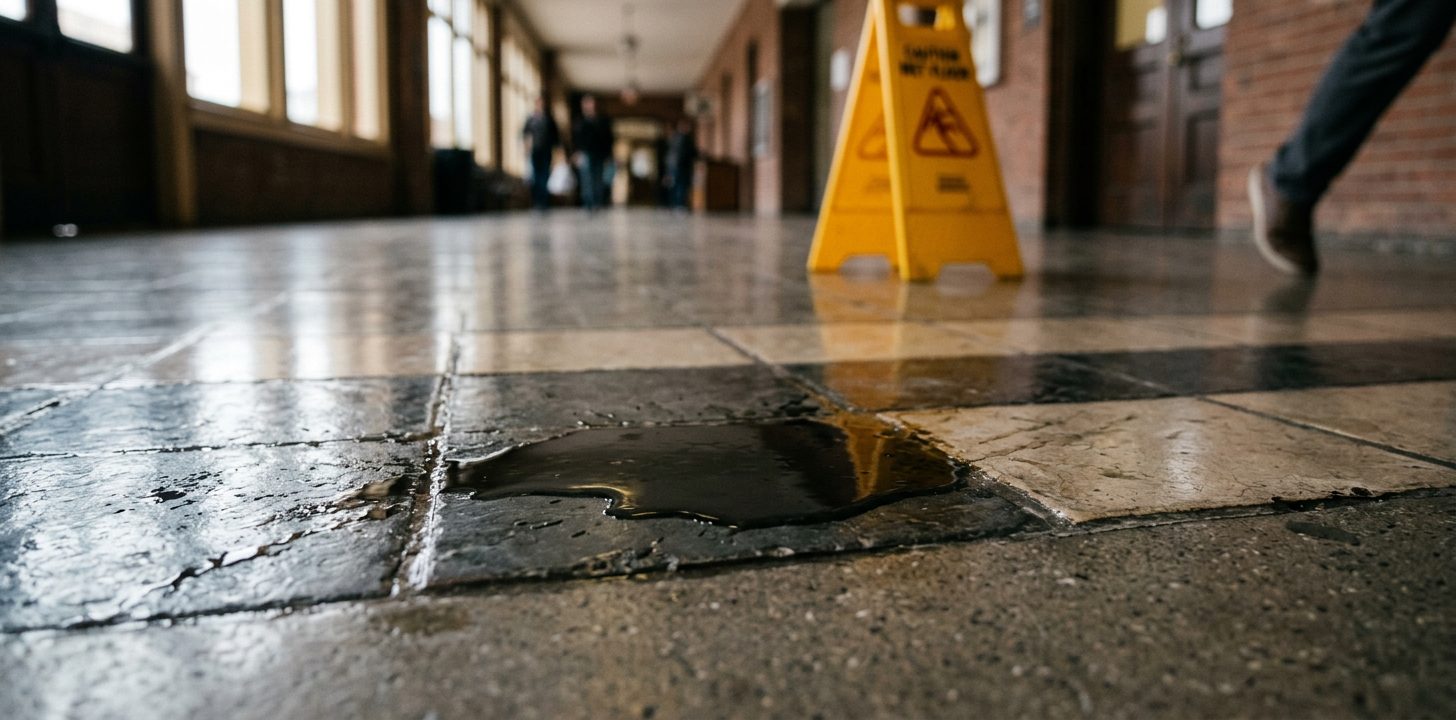
Spills, freshly mopped floors, or missing wet-floor signs can turn an ordinary walkway into a deadly hazard.
Broken Stairs and Handrails
Loose treads, missing railings, and uneven steps are frequent factors in serious and fatal falls.
Poor Lighting and Hidden Dangers
Dark parking lots, stairwells, and entryways can hide holes, debris, and changes in elevation.
Unrepaired Known Hazards
When a property owner knew about a defect and did not fix it or warn visitors, the consequences can be severe.