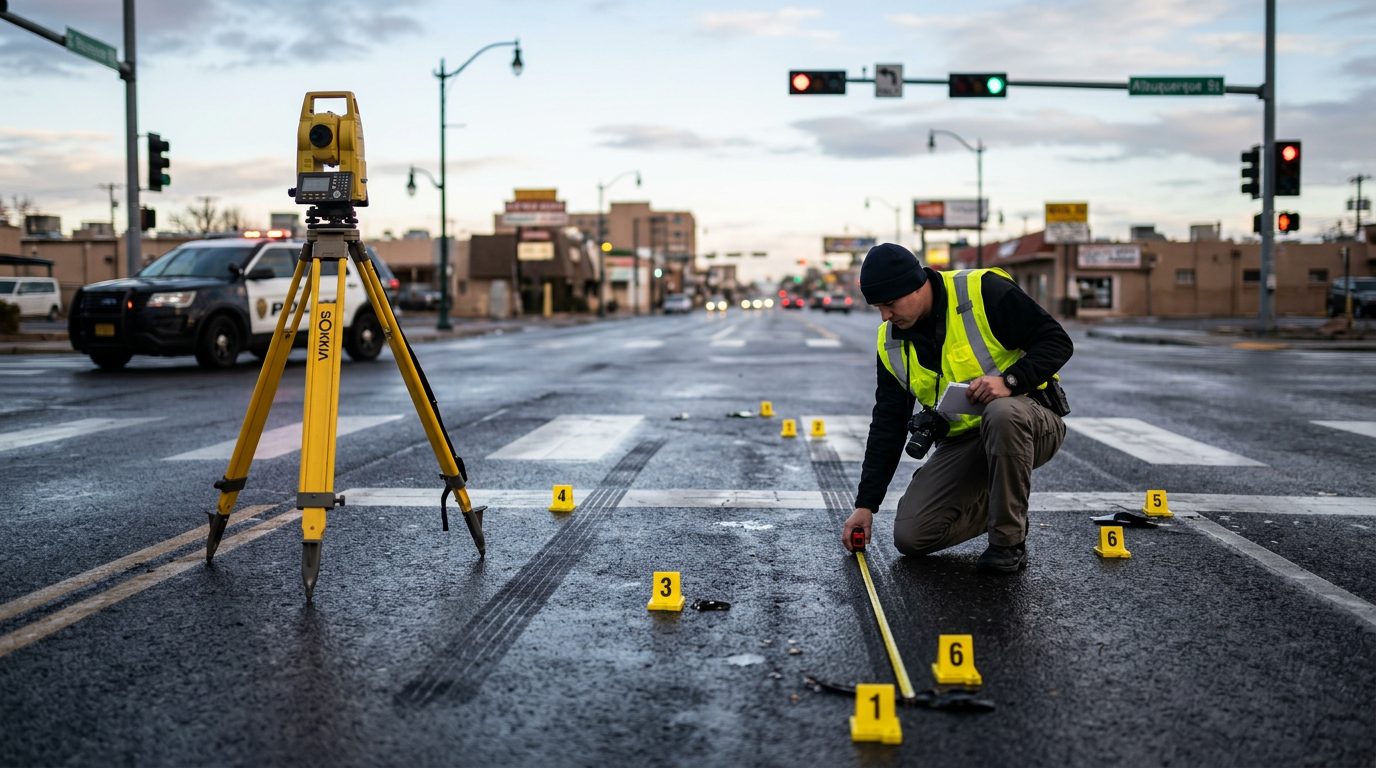
Albuquerque & Bernalillo County | Wrongful Death
When a Pedestrian Is Killed by a Car, Your Family Doesn't Have to Face It Alone
El Gringo Law represents families in Albuquerque and across New Mexico after a pedestrian death. Our first consultation is free, confidential, and carries no obligation.
By Josh Wood · Published October 26, 2026
Pedestrian Killed by Car in Albuquerque: Who Can Bring a Wrongful Death Claim
When a pedestrian is killed by a car in Albuquerque, the family may be able to bring a wrongful death claim under New Mexico law. Who can file it and when depends on the facts, and a three-year deadline generally applies. This guide explains who can act, who may be responsible, and what to do first.
You may be reading this in the days after a loss. You may also be gathering facts for a relative who can’t do it alone. That is a hard place to start, and you don’t have to sort everything out at once.
If someone you love was struck and killed on an Albuquerque street or path, you don't have to work out who can act alone. Reach out to El Gringo Law for a free, confidential consultation. Talk it through with our team — the first consultation is free, confidential, and carries no obligation.
What a Wrongful Death Claim Is for a Pedestrian or Cyclist
A wrongful death claim is a civil lawsuit a family brings after another person’s wrongful act, neglect or default causes a death. New Mexico’s wrongful death statutes allow the claim even though the injured person has died. If the injured person could have sued had they lived, the responsible party can be sued after a death.
A death involving a pedestrian is handled within the same basic framework as other wrongful death cases. The family must show a duty, a breach of that duty, and that the breach caused the death. It need not be the only cause.
The claim seeks money for the surviving family. It does not decide whether the driver is guilty of a crime. A criminal case, if one exists, runs on its own track.
If you’re gathering facts for someone else, start with two questions. Who can file? How much time is left?
Who Can Bring the Claim Under New Mexico Law
The personal representative of the deceased person’s estate brings the claim, in that person’s name. The money then goes to people the statute names. New Mexico’s wrongful death statutes set this order for distributing a judgment:
- A surviving spouse, with no children, receives the judgment.
- A surviving spouse and children or grandchildren share it. The spouse takes one-half, and the children and grandchildren take the rest.
- With no spouse but a child or grandchild, the judgment goes to the children and grandchildren, with the grandchildren taking by right of representation.
- If the deceased was a minor, childless and unmarried, the father and mother share equally. If one has died, the survivor takes it.
- With no father, mother, spouse, child or grandchild, a surviving brother or sister takes it.
Who holds that role can depend on the estate’s paperwork.
Some close relatives may also have their own loss-of-consortium claim.
Bring those details to your consultation so the team can review them.
Who May Be Responsible for the Crash
The driver whose negligence caused the crash is the most direct source of responsibility. New Mexico’s crosswalk statute, Section 66-7-334, provides that when traffic-control signals are not in place or not in operation, a driver must yield the right of way to a pedestrian crossing the roadway within a crosswalk, slowing down or stopping if need be to so yield, subject to the exceptions the statute itself lists. § 66-7-337 also requires every driver to exercise due care to avoid colliding with any pedestrian on a roadway.
Pedestrians have duties too. Under the same crosswalk section, a pedestrian may not suddenly leave a curb or place of safety into a path where the vehicle is so close that it is impossible for the driver to yield. That can shift part of the fault.
New Mexico applies comparative negligence (shared fault). The jury compares each person’s negligence and assigns percentages. Each defendant pays its share of the total damages, as UJI 13-2219 NMRA explains.
Whether an employer is responsible for a driver’s trip depends on the facts of the case. Lessard v. Coronado Paint & Decorating Ctr. describes the general rule against employer liability for an employee’s negligent use of a personal vehicle on the way to or from work.
A property owner or manager can share responsibility when a dangerous condition, such as a poorly marked crossing or an unsafe path, contributed to the death. Each crash turns on its own facts.
Albuquerque Pedestrian and Cyclist Crash Patterns
Some crashes raise extra questions, and each one can change the next steps.
Hit-and-run crashes. A driver involved in a crash that causes injury or death must stop at the scene and stay until the legal requirements are met, under NMSA 1978 § 66-7-201. If the driver leaves, ask about uninsured motorist coverage. New Mexico policies generally must include it, unless the insured rejects it as the statute allows, and that coverage includes underinsured coverage (§ 66-5-301).
Impaired driving. It is unlawful for a person under the influence of intoxicating liquor to drive in New Mexico (§ 66-8-102). A criminal case and a civil claim are separate matters.
Night crashes and busy roads. Poor lighting and fast traffic on arterial roads and shared-use paths can make pedestrians and cyclists harder to see.
Police reports. A crash report is a starting point, not the final word on fault. Under § 66-7-213, an accident report generally cannot be used as evidence in a civil trial arising from the accident, except as the statute provides.
Evidence to Preserve Early
Much of the best evidence is time-sensitive, so it helps to act early. Focus on these items first.
- The full crash report and any supplemental reports, requested from the investigating agency.
- Names and phone numbers of witnesses, written down while memories are fresh.
- Surveillance, business and dash camera footage. Video is often recorded over quickly.
- The vehicle and any physical evidence. Ask early that it be preserved.
- Medical examiner, hospital and death records.
- Photos of the scene and roadway, plus the bicycle and phone records where relevant.
Before giving a recorded statement to an insurance adjuster, consider speaking with our team first. Insurers ask questions that can affect a claim later.
Not sure what your next step is?
Talk it through with our team — the first consultation is free, confidential, and carries no obligation.
Damages and the Filing Deadline
New Mexico generally allows three years from the date of death to file a wrongful death action (NMSA 1978, § 41-2-2 — three years from the date of death). NMSA 1978 § 41-2-2 says the action “must be brought within three years after the cause of action accrues,” and that the cause of action “accrues as of the date of death (NMSA 1978, § 41-2-2 — three years from the date of death).” Other timing rules can apply, so review the date early.
A jury may award compensatory and exemplary damages it deems fair and just. Under § 41-2-3, the jury considers the pecuniary injury to the surviving family and the mitigating or aggravating circumstances of the wrongful act. Where the decedent has left a spouse, child, father, mother, brother, sister or child or children of a deceased child, judgment proceeds are not liable for the deceased’s debts.
If a city bus, city-maintained crossing or public employee is involved, a claim against a government body may follow different rules and deadlines, which can include shorter notice requirements, so contact our team as soon as possible. Raise that question at the start.
What a claim is worth depends on the facts of each case. No general article can predict an amount.
How the Process Works, Timeline, and Cost Terms
The process starts with a free, confidential initial consultation, with no obligation to continue. The steps usually follow this order:
- Consultation. The family shares the basic facts and asks who can act and by when.
- Review. The team reviews the crash report, death records and insurance information, then explains the likely path in writing.
- Investigation. Evidence gathering, scene review, and contact with insurers and other parties.
- Demand and negotiation. If the matter does not settle, a lawsuit may be filed. How long a matter takes depends on the facts of each case.
If there is no recovery, you may be responsible for court costs and litigation expenses, as your written fee agreement states.
Why El Gringo Law and Common Questions
El Gringo Law handles personal injury matters in New Mexico, including car accidents, trucking accidents, wrongful death and catastrophic injuries. El Gringo Law handles personal injury matters for people hurt in New Mexico. You can learn more about wrongful death claims and car accident claims on the site.
Josh Wood is the responsible lawyer for this page. He is licensed in New Mexico and Arizona. Our lawyers and team support intake and case work.
Frequently Asked Questions
The statute does not name cousins or friends in its distribution order; if there is no kindred as named in Subsections A through E of this section, then the proceeds of the judgment shall be disposed of in the manner authorized by law for the disposition of the personal property of deceased persons. Bring the family’s details to a consultation so they can be reviewed.
Does a criminal charge decide the civil claim?
No. A civil claim is separate from any criminal case against the driver.
What if the driver was uninsured?
New Mexico auto policies generally must include uninsured motorist coverage, and that coverage includes underinsured coverage. Ask about it early.
What should I bring to the consultation?
Bring the crash report, death records, insurance information, and any witness names or photos you have.
If a family member was killed on an Albuquerque street or path, and you’re working out who can act and by when, reach out. Use our contact form to request a free, confidential consultation with El Gringo Law, or start a chat through elgringolaw.com.
How El Gringo Law Approaches These Cases
Compassion First
Losing someone to a car strike on a street or crosswalk is devastating. We listen to your family's story before talking about the legal process.
Careful Attention to Evidence
Police reports, vehicle information, witness details, and records can change quickly. We help families think about what to preserve and what to gather.
Advocacy for Your Family
We focus on pursuing fair compensation for families who have lost a loved one, and we keep you informed as your case moves forward.
Time at Your Pace
Our team understands that families are grieving. We explain each step in plain language and answer your questions without pressure.
Before You Speak With an Insurance Company
Insurance adjusters may contact your family soon after a crash. Statements made early can affect a later claim, so it is worth speaking with a lawyer before giving a recorded statement or signing any document.
Steps Families Often Take in the First Days
Get the Report Number
If a police report was filed, write down the agency and report number so you can request a copy later.
Write Down What You Remember
While details are fresh, note the time, location, weather, and anything you learned about the driver or vehicle.
Keep Records Together
Save medical bills, funeral receipts, and any letters from insurers in one folder so nothing is lost.
Reach Out to El Gringo Law
Call or send a message for a free, confidential, no-obligation first consultation. We will answer your questions and explain what comes next.