Wrongful Death · Taos, New Mexico
Lost a Loved One in Taos? Learn Who Can File a Wrongful Death Claim
El Gringo Law helps Taos families understand their options after a death caused by a car accident, trucking crash, or other preventable harm. Start with a free, confidential consultation, with no obligation to continue.
By Josh Wood · Published October 25, 2026
Wrongful Death Taos: Who Can File and What the Deadlines Are
A wrongful death claim lets a family seek money damages after someone dies because another party acted wrongfully or carelessly. Under NMSA § 41-2-3, every action mentioned in Section 41-2-1 NMSA 1978 shall be brought by and in the name of the personal representative of the deceased person, and the jury in every such action may give such damages, compensatory and exemplary, as they deem fair and just. This guide covers wrongful death Taos cases under New Mexico law, from who can file to the deadlines that matter most.
If a loss in Taos has you asking who is responsible and which deadlines apply, you do not have to face it alone; contact El Gringo Law for a free, confidential initial consultation. Talk it through with our team — the first consultation is free, confidential, and carries no obligation.
What a Wrongful Death Claim Means in Taos
A wrongful death claim is a civil lawsuit for money damages after a death another party caused. It is separate from any criminal case. A criminal case asks whether the law was broken and what punishment applies. A civil claim asks who must pay for the losses the death caused.
New Mexico law makes the at-fault person or company answer for the death, even though the injured person has died. Under NMSA § 41-2-1, whenever the death of a person is caused by the wrongful act, neglect or default of another, and the act, or neglect, or default, is such as would, if death had not ensued, have entitled the party injured to maintain an action and recover damages in respect thereof, the person who, or the corporation which, would have been liable if death had not ensued shall be liable to an action for damages, notwithstanding the death of the person injured.
Taos County families live under the same state law as families anywhere in New Mexico. The facts still decide the outcome. Who was driving, what a property owner knew, and what the records show all matter. A fatal crash on a mountain highway and a death at a rental property raise different questions under the same statute.
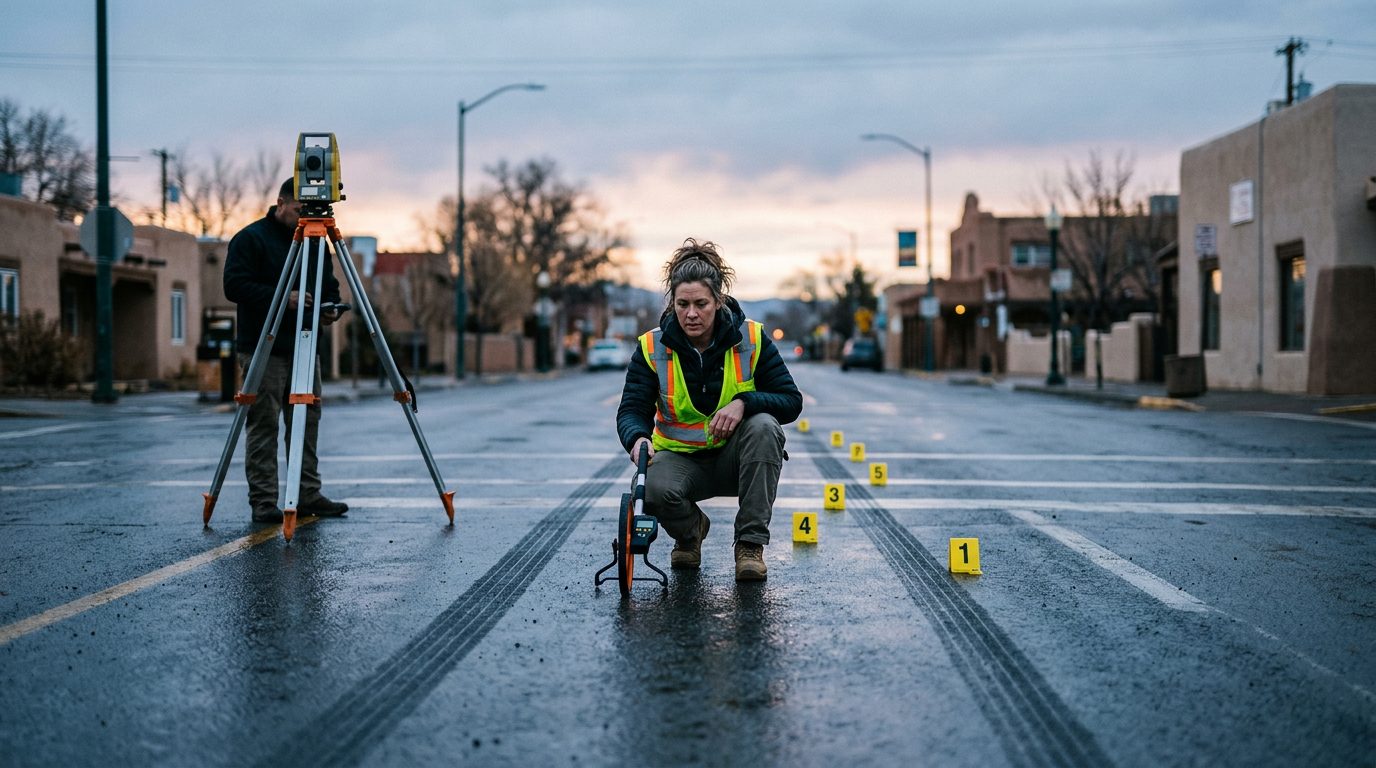
Mountain roads around Taos can change fast in winter. Each crash has its own facts about speed, visibility, and road conditions. Read more about car accident claims and trucking accident claims.
Who Can File and How Money Is Shared Among Survivors
The personal representative files a New Mexico wrongful death case. That is the person authorized to act for the deceased person’s estate. Under NMSA § 41-2-3, the action shall be brought “by and in the name of” the personal representative of the deceased person.
The same statute controls who receives the money. Judgment proceeds are not liable for the deceased person’s debts, provided the decedent has left a spouse, child, father, mother, brother, sister, or child or children of a deceased child.
The statute also sets how the proceeds are divided; when a surviving spouse and a child both survive, they share the proceeds. Half goes to the spouse, and the other half goes to the children and grandchildren. Grandchildren take by right of representation, which means they step into the share their parent would have received.
Apart from the wrongful death claim itself, a family member who lost a close relationship with the person who died may have a separate loss of consortium claim.
Payment often comes from liability insurance tied to the at-fault driver, business, or property owner. Under NMSA § 41-3A-1, in causes of action to which the doctrine of comparative fault applies, joint and several liability among wrongdoers is abolished except as otherwise provided, and the liability of such defendants shall be several.
Common Ways Wrongful Deaths Happen in Taos County
Wrongful death claims can follow several kinds of events. Each kind needs different proof, so the facts shape the case from the start.
A fatal car or motorcycle crash may turn on speed, distraction, or other driving conduct. Those facts shape the claim. See car accident claims for the basics.
Commercial truck crashes add federal rules. Under 49 C.F.R. § 395.3, a driver may not drive without first taking 10 consecutive hours off duty, and may not drive after a period of 14 consecutive hours after coming on duty following 10 consecutive hours off duty. Driver logs and records can show whether those rules were followed. Read more about trucking accident claims.
Property owners owe visitors a duty of care. Under UJI 13-1309 NMRA, an owner or occupant must use ordinary care to keep the premises safe for visitors. Stairs, decks, parking areas, and poor upkeep at lodging, restaurants, and rentals can lead to a fatal fall. See premises liability claims.
Owners also must protect visitors against conditions that foreseeably pose an unreasonable risk of injury. UJI 13-1320 NMRA covers harm from the foreseeable conduct of a third party, including criminal conduct. That principle can matter in negligent security claims and in cases involving sexual assault on a property.
Some deaths follow serious injuries. A crash or fall can cause catastrophic injury claims, including spinal cord injury cases, burn injury cases, or amputation cases. The injured person may later die from those injuries.
Deadlines That Can Change Your Claim
Under NMSA § 37-1-8, the person whose wrongful act, neglect or default causes a death is liable to an action for damages, notwithstanding the death of the person injured; under NMSA § 41-2-2, every such action must be brought within three years after the cause of action accrues, and the cause of action accrues as of the date of death (NMSA 1978, § 41-2-2 — three years from the date of death).
Government defendants follow shorter rules. A claim against a government entity or public employee falls under the Tort Claims Act. Under NMSA § 41-4-15, actions against a governmental entity or a public employee for torts shall be forever barred, unless such action is commenced within two years after the date of occurrence resulting in loss, injury or death, except that a minor under the full age of seven years shall have until his ninth birthday in which to file.
Government claims also require notice. Under NMSA § 41-4-16, when a claim for which immunity has been waived under the Tort Claims Act is one for wrongful death, the required notice may be presented by, or on behalf of, the personal representative of the deceased person or any person claiming benefits of the proceeds of a wrongful death action, or the consular officer of a foreign country of which the deceased was a citizen, no later than six months from the date of the occurrence of the fatal injury; but if the person for whose death the claim is made presented a notice that would have been sufficient had he lived, the wrongful death action may be brought without any additional notice. For other claims, written notice is due within ninety days after the occurrence. Under § 41-4-16(B), no suit for which immunity has been waived under the Tort Claims Act may be maintained unless notice was given as required or the governmental entity had actual notice of the occurrence, and that rule applies to wrongful death claims as well. The time for giving that notice does not include any period, not exceeding ninety days, during which the injured person is incapacitated from giving the notice by reason of injury. The statute has exceptions, so the timing deserves a quick review.
A crash on a county road, city street, or state highway may involve a government defendant. In that case, the shorter timelines can apply.
A crash report helps, but it is not always trial evidence. Under NMSA § 66-7-213, except as otherwise provided in that section, no accident report shall be used as evidence in any trial, civil or criminal, arising out of an accident.
Early steps protect proof. Vehicle data, surveillance video, and witness names can be lost over time. Write down dates, names, and details while memories are fresh. Waiting to see how an insurer responds can use up time that the deadlines do not wait for.
How a Wrongful Death Case Moves Forward
A wrongful death case usually moves through a few stages. These include an initial consultation, investigation, claims to insurers, negotiation, and a lawsuit if one is needed.
A wrongful death investigation gathers the proof. It can include police and crash reports, medical and autopsy records, work and income records, scene photos, and witness statements. Each record helps show who was responsible and what the survivors lost.
Insurers and responsible parties receive notice of the claim and respond. Negotiation may follow. Some cases settle without a trial. Others go to court. The evidence, the insurers’ positions, and the timing decide which path fits.
If a lawsuit is filed, the personal representative is the named party. Keep notes on every call with an insurance adjuster. Record the date, the person’s name, and what was said.
Not sure what your next step is?
Talk it through with our team — the first consultation is free, confidential, and carries no obligation.
What Affects the Value of a Wrongful Death Claim
The value of a wrongful death claim turns on the evidence in each case. No fixed formula sets the number.
Under NMSA § 41-2-1, the person whose wrongful act, neglect or default causes a death is liable to an action for damages, notwithstanding the death of the person injured; under NMSA § 41-2-3, the jury may give such damages, compensatory and exemplary, as they deem fair and just. Under NMSA § 41-2-1, the person whose wrongful act, neglect or default causes a death is liable to an action for damages, notwithstanding the death of the person injured; under NMSA § 41-2-3, the jury considers the pecuniary injury, meaning financial loss, to the surviving party entitled to the judgment. It also weighs mitigating or aggravating circumstances of the wrongful act.
Facts such as the decedent’s work, income, family ties, and dependents can bear on the financial loss to survivors. Those facts need documents to back them up.
The UJI 13-1830 NMRA instruction separates wrongful death damages from loss of consortium damages. Keep that separation in mind when a close family member has a personal claim.
How hard is it to win? The main hurdles are disputed fault, insurance disagreements, and proof of the survivors’ losses. Every case is different, and past results do not predict a similar outcome in a new matter.
Free Initial Consultation: What to Expect
El Gringo Law offers a free initial consultation that is confidential and carries no obligation to continue. In Spanish, the firm describes it as “consulta inicial gratuita, confidencial y sin compromiso.”
Bring what you have. That includes the crash report number or incident details, names and dates, and any medical or funeral paperwork. Bring a short list of questions, too. The meeting is a chance to ask about deadlines, who may be responsible, and what the next steps look like.
Talk With El Gringo Law About Your Injury Case
Josh Wood is the responsible lawyer for this page. He is licensed in New Mexico and Arizona. You can reach the firm through its website at elgringolaw.com, including the contact form.
How long do I have to file a wrongful death lawsuit in New Mexico?
Under NMSA § 41-2-2, every action instituted under Section 41-2-1 must be brought within three years after the cause of action accrues. Claims against government entities have shorter timelines, so act early.
Who can file a wrongful death claim in New Mexico?
The personal representative of the deceased person files the case for the family. The statute then sets who receives the proceeds.
Who pays wrongful death settlements?
Payment often comes from liability insurance tied to the at-fault party. The source depends on who was responsible and what coverage applies.
Can a crash report prove fault?
A crash report generally cannot be used as evidence at a civil trial, with listed exceptions. It is still worth keeping the report number.
If a loss in Taos has you asking who is responsible and which deadlines apply, you do not have to face it alone. Call, use the contact form, or start a chat with El Gringo Law for a free initial consultation.
Situations We Help Families With
Car Accidents
Fatal collisions on New Mexico roads, including crashes that happen on rural highways around Taos.
Trucking Accidents
Deaths involving commercial trucks, where the companies and drivers involved may be complex to identify.
Premises Liability
Deaths caused by unsafe property conditions, where a property owner may have failed to address a known hazard.
Negligent Security
Deaths that occurred when inadequate security at a property allowed a foreseeable assault to happen.
How We Can Help Your Family
Free, Confidential Consultation
Talk with us about what happened and your questions. The first consultation is free, confidential, and carries no obligation to continue.
Clear, Plain-Language Guidance
We explain the legal process in terms you can understand, so you can make informed decisions during a difficult time.
Attention to Your Family
Our team focuses on the people left behind, not just the paperwork, and keeps you informed at every step.
Serving Taos and Northern New Mexico
We represent families in Taos and communities across New Mexico, including Bernalillo, Sandoval, and Santa Fe counties.
Don't Wait to Get Answers
Legal deadlines in wrongful death matters can be strict, and evidence can be lost over time. Reaching out early gives your family the best chance to understand its options.