Car Accidents | Santa Fe, New Mexico
Hurt in a Santa Fe Crash? Start With the Right Steps.
Clear, practical guidance from El Gringo Law for the hours and days after a collision on Santa Fe roads.
By Josh Wood · Published November 10, 2026
A crash on St. Francis Drive or Cerrillos Road can leave you hurt and facing questions you didn’t expect. For car accidents in Santa Fe, the direct answer is this: get medical care, report the crash, keep your records, and act within New Mexico’s filing deadlines.
New Mexico generally allows three years for an injury claim. Claims against a city, county, or state government run on a much shorter clock. Here is what each step means for you.
Car Accidents in Santa Fe: Where Crashes Happen and Why It Matters
Crashes in Santa Fe often happen on busy city corridors and at highway interchanges. St. Francis Drive, Cerrillos Road, and Old Pecos Trail carry steady traffic. The I-25 interchanges through the city bring merging cars and quick lane changes. Visitors who don’t know the roads may merge late or stop short.
Winter adds another layer. At Santa Fe’s higher elevation, snow and ice can change how a crash happens and what marks are left on the road.
The responding agency depends on where the crash happened. Santa Fe Police Department usually responds inside city limits. Santa Fe County Sheriff’s Office or New Mexico State Police may respond elsewhere, depending on the location.
If a city, county, or state vehicle was involved, the deadlines below change. A minor parking lot bump and a highway crash can both cause injuries that show up later.
If a crash left you hurt, facing insurer calls, and unsure about a claim, our team can talk through your situation with you. Talk it through with our team — the first consultation is free, confidential, and carries no obligation.

The First Steps After a Crash in Santa Fe
The first steps are to get medical care, report the crash as the law requires, and document the scene.
Get checked by a doctor even if you feel fine. According to the Brain Trauma Foundation, brain damage after a traumatic brain injury can worsen or develop during the hours and days after a crash. Headache, dizziness, vision problems, and balance trouble can appear later. Keep every appointment and save every bill.
New Mexico also sets duties at the scene. A driver in a crash with injuries must stop and stay until the legal requirements are met, under NMSA 1978, § 66-7-201. The driver must also give immediate notice to police or the sheriff, under NMSA 1978, § 66-7-206. A written report to the Department of Transportation is due within five days, under NMSA 1978, § 66-7-207.
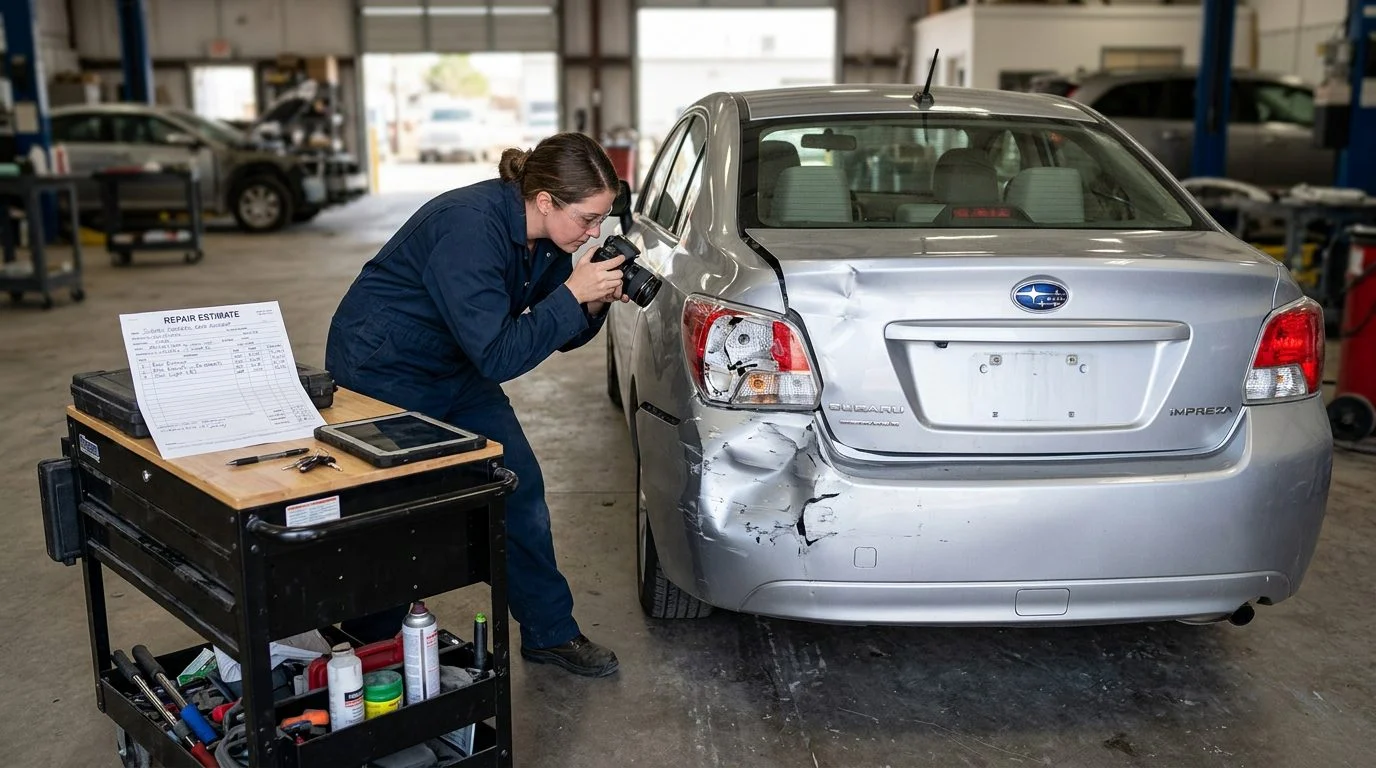
Photograph the vehicles, the roadway, lighting, and any signs before the scene changes. Write down witness names and phone numbers. Be careful with recorded statements and quick settlement offers from an insurer before your injuries are understood.
How New Mexico Law Affects a Santa Fe Car Accident Claim
New Mexico uses comparative negligence (shared fault). Your own share of fault lowers your damages, but it does not automatically end your claim.
New Mexico adopted comparative negligence in Scott v. Rizzo (1981). Under the comparative negligence jury instruction, the jury totals your damages, assigns fault percentages that add to 100%, and reduces your damages by your percentage.
Several liability also matters. Under NMSA 1978, § 41-3A-1, a defendant is generally liable only for its own share of fault, with listed exceptions.
A negligence claim generally needs a duty, a breach of that duty, and a breach that is a legal cause of the harm. Herrera v. Quality Pontiac lays out that rule.
Insurance matters too. Under NMSA 1978, § 66-5-301, New Mexico policies must provide uninsured motorist coverage, which includes underinsured coverage, unless the named insured rejects it. Under Jordan v. Allstate, a rejection equal to the liability limits is valid only if it is in writing and made part of the policy. Check your policy early.
New Mexico’s Time Limit for Personal Injury Claims
New Mexico generally allows three years to sue for an injury to a person. The three-year period appears in NMSA 1978, § 37-1-8. Other deadlines can apply in some cases.
Under NMSA 1978, § 37-1-8, actions against sureties on official bonds and on bonds of guardians, conservators, personal representatives and persons acting in a fiduciary capacity must be brought within two years after liability is finally established, and within three years for an injury to the person or reputation of any person; the section says nothing about city, county, or state vehicles. A claim filed late can be lost for good.
Notice is a separate step. Claims against the state or a local public body under the Tort Claims Act carry a ninety-day notice period: the claimant must present a written statement of the time, place and circumstances of the loss or injury within ninety days after the occurrence, as set out in NMSA 1978, § 41-4-16. One exception is when the government entity already had actual notice of the occurrence; also, the time, not exceeding ninety days, during which the injured person is incapacitated from giving notice by reason of injury does not count toward the notice period. For wrongful death claims under the Tort Claims Act, the required notice may be presented by, or on behalf of, the personal representative of the deceased person, any person claiming benefits of the proceeds of a wrongful death action, or the consular officer of a foreign country of which the deceased was a citizen, within six months after the date of the occurrence of the injury that resulted in the death; but if the person who died had already presented a notice that would have been sufficient had he lived, a wrongful death action may be brought without any additional notice.
Evidence fades too. Skid marks wear away, video gets overwritten, and witnesses move or forget details. Early review helps preserve what still exists.
Serious Injuries From Santa Fe Crashes
Some crash injuries need care that lasts for months or years. Those cases take careful planning.
El Gringo Law handles car accident cases involving catastrophic injuries, spinal cord injuries, amputations, and burn injuries. These cases often need records of treatment, therapy, and future medical needs. Gathering them takes time.
Commercial trucks add another layer. Under 49 CFR § 395.3, property-carrying commercial drivers face a maximum of 11 hours of driving and a 14-hour window. Those hours-of-service limits can matter when a truck is involved in a crash on I-25 or another Santa Fe route.
The firm also handles trucking accidents and wrongful death claims that can follow a fatal crash. Early notes on symptoms, work limits, and daily tasks can help show how an injury changes your life. Describe the crash and your symptoms clearly at every medical visit.

Talk With El Gringo Law About Your Santa Fe Crash
El Gringo Law offers a free, confidential initial consultation with no obligation to continue.
Josh Wood is the lawyer responsible for this page. He is licensed in New Mexico and Arizona. You can reach the firm through its contact page, by calling the office, or by starting a chat on the site.
How long do I have to file a car accident claim in Santa Fe?
New Mexico generally allows three years for an injury to a person. Claims against a city, county, or state government are subject to a written notice requirement. Under NMSA 1978, § 41-4-16(A), written notice generally must be given within 90 days after the occurrence, so contact El Gringo Law as soon as possible.
What is uninsured motorist coverage in New Mexico?
It helps cover damages you are legally entitled to recover from a driver with no insurance or too little. New Mexico policies for any motor vehicle registered or principally garaged in New Mexico generally must include it, in at least the minimum limits and any higher limits the insured wants, but up to the limits of liability specified in the policy’s bodily injury and property damage liability provisions.
If a Santa Fe crash left you hurt, facing insurer calls, and unsure whether you have a claim, reach out to El Gringo Law today. Use the contact page or start a chat, and tell us what happened and what decision is in front of you.
Your First Steps After a Crash
Get medical care
Some injuries, including whiplash and internal injuries, may not show symptoms for hours or days. Get checked even if you feel fine.
Document the scene
Photos of vehicles, roadway conditions, traffic signals and visible injuries can help preserve what happened.
Get the police report
Note the responding agency and report number, and keep a record of anyone who saw the crash.
Keep your records
Save medical bills, prescriptions, time missed from work and repair estimates in one place.
Be careful with statements
Insurance adjusters may ask for recorded statements quickly. Talking with a lawyer first can help you decide what to say.
Call a lawyer
Our team can review your situation at no cost and explain what comes next, in plain language.
Why Start the Conversation Early
Free first consultation
Our first consultation is free, confidential and comes with no obligation to continue.
Help preserving evidence
We can advise you on which records, photos and reports to keep while the details are fresh.
Plain-language answers
We explain your options clearly so you can make decisions with confidence.
Focused on Santa Fe drivers
We represent people injured in car accidents across Santa Fe and nearby communities.
Be Careful Before You Sign Anything
Before you give a recorded statement or sign a release or settlement offer from an insurance company, consider talking with a lawyer first. Early offers may not reflect the full cost of your injuries.