Amputation Injury Claims | Albuquerque, New Mexico
Facing an Amputation Injury? Get Clear Answers From a Lawyer Who Listens
El Gringo Law represents people who have suffered serious injuries, including amputations caused by car and trucking accidents. Your first consultation is free, confidential and comes with no obligation to continue.
By Josh Wood · Published October 28, 2026
If you’re researching an amputation injury claim in Albuquerque, you’re probably trying to understand a lot at once. An amputation injury claim seeks money for the loss of a limb, partial or full, caused by someone else’s negligence (carelessness). This page explains who can bring one, what it can include, how fault is proven, and how the process works in New Mexico.
What an Amputation Injury Claim Is and Who It Is For
An amputation injury claim asks the party whose negligence caused the loss of a limb to pay for the harm. The injured person usually brings the claim. If that person has died, New Mexico law may allow a wrongful death action instead.
Section 41-2-1 of the New Mexico statutes provides that when a person’s death is caused by the wrongful act, neglect or default of another, and that act, neglect or default would have entitled the injured party to maintain an action and recover damages if death had not ensued, the person or corporation that would have been liable if death had not ensued shall be liable to an action for damages, notwithstanding the death of the person injured, even when the death was caused under circumstances that amount in law to a felony.
Losing a limb is usually treated as a catastrophic injury. It can change work, daily routines and future costs for years. Many people researching this topic are doing it for a parent, spouse or child who is still in treatment. Decisions can feel urgent while recovery is still unfolding.
If a crash or accident cost you a limb, you may have a claim, and you don't have to work through the next steps alone. Reach out to our team for a free, confidential, no-obligation consultation. Talk it through with our team — the first consultation is free, confidential, and carries no obligation.
Common Causes of Amputation Injuries in New Mexico
Amputation claims often follow a car crash, a trucking crash, an unsafe property condition or an attack where security was inadequate. The most common paths include:
- Car and motorcycle crashes, including high-speed impacts and crushing injuries.
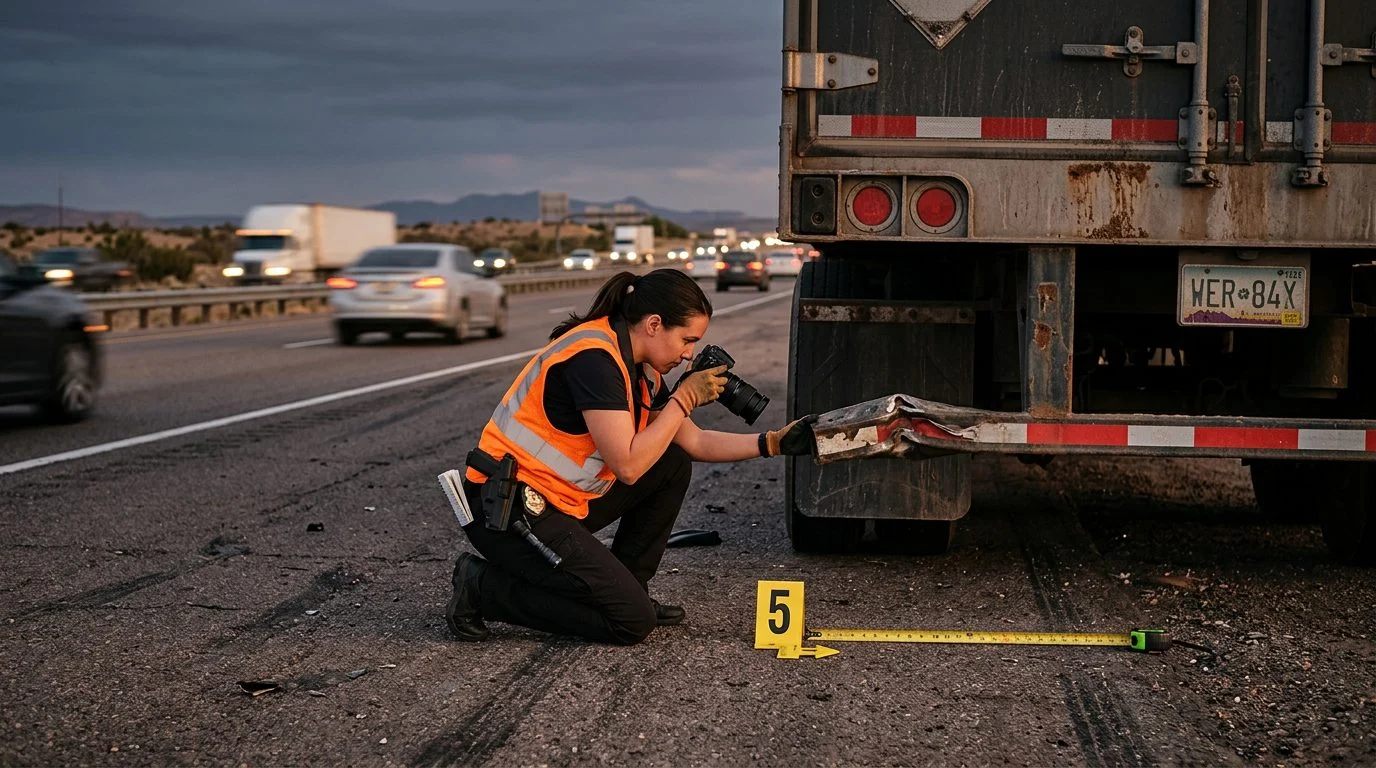
- Trucking accidents, where crush injuries and entrapment can happen and commercial carrier records often matter.
- Premises liability incidents, such as machinery injuries or hazards a property owner failed to fix.
- Negligent security cases, where a property owner’s failure to guard against foreseeable crime contributed to an attack.
Burns and crush injuries can also lead to amputation. Each case turns on the medical record. The Amputee Coalition limb loss statistics describe how traumatic limb loss happens.
What Compensation for an Amputation Claim Can Include
No single dollar figure applies to a limb. The value comes from the losses documented in your case.
- Past medical costs, including emergency care, surgery, hospital stays and rehabilitation.
- Prosthetic devices, including the first fitting and later replacements, repairs and adjustments.
- Future medical care and therapy that the medical records show will be needed.
- Lost income and reduced earning ability, documented through employer records and vocational evaluations.
- Non-economic losses such as pain, suffering, emotional distress and loss of enjoyment of life.
- Home or vehicle changes made necessary by the loss.
Each category needs proof. Keeping records of bills, work history and daily limits from the start makes that proof easier to build.
Proving Fault and Building the Evidence
A claim must show that the other party was negligent and that the negligence caused the injury. In New Mexico, a negligence claim generally requires a duty, a breach of that duty, and a breach that was a proximate cause and cause in fact of the damages, as stated in Herrera v. Quality Pontiac.
Under UJI 13-305 NMRA, an act, omission or condition is a cause of an injury when it contributes to producing that injury. The connection between the act and the injury must be reasonable and significant, and the instruction also includes a bracketed requirement, used where the case calls for it, that the injury would not have occurred without the act.
If you share some blame, you aren’t shut out. New Mexico follows pure comparative negligence under Scott v. Rizzo. Under UJI 13-2218 NMRA, where comparative negligence is an issue, the court submits the case on a general verdict without special interrogatories, and there is no apportionment of negligence among defendants or non-parties, the damages are reduced by the injured person’s percentage of negligence.
Useful evidence includes crash reports, scene photos, witness statements, camera or surveillance footage, and medical records that tie the injury to the event. In trucking cases, 49 C.F.R. § 395.8 requires a motor carrier subject to its requirements to require each driver to record the driver’s duty status for each 24-hour period, and provides that no driver or motor carrier may make a false report in connection with a duty status. Those logs and maintenance files can matter.
Deadlines vary by claim type. For wrongful death actions under NMSA 1978, § 41-2-1, the filing deadline is set by NMSA 1978, § 41-2-2, which requires that the action be brought within three years after the cause of action accrues, as of the date of death (NMSA 1978, § 41-2-2 — three years from the date of death). Evidence can also disappear, so early review helps.
How the Claim Process Works, Step by Step
Most amputation claims move through a consultation, an investigation, medical documentation, a demand and, if needed, court.
- Free first consultation. Your first consultation is free, confidential and carries no obligation to continue (consulta inicial gratuita, confidencial y sin compromiso). We review what happened and which records exist.
- Investigation. We gather crash reports, witness information and requests for medical and employer records.
- Medical documentation. Treatment records and prosthetic prescriptions are organized. Future needs are planned where the medical picture allows.
- Demand and negotiation. A written demand goes to the at-fault party or its insurer, followed by negotiation.
- Court, if needed. If a fair resolution isn’t reached, the claim can be filed in court. Discovery (the exchange of evidence) and trial preparation follow.
Timelines vary with the medical picture. Complex amputation claims often take longer than smaller injury claims, because the full losses are hard to measure until recovery is clearer.
Long-Term Care, Rehabilitation and Planning for the Future
Long-term planning covers rehabilitation, prosthetics, future medical care and daily help. Each need should be documented as it arises.
- Rehabilitation stages: acute care, inpatient rehab, outpatient therapy and prosthetic fitting.
- A life care plan, a written projection of future medical and care needs, usually prepared with medical input.
- Home changes and accessible vehicles that the injury makes necessary.
- Caregiver needs. Keep a log of help received, who provided it and which tasks it covered.
- Health coverage and benefits. Ask how they may interact with a claim during review.
Not sure what your next step is?
Talk it through with our team — the first consultation is free, confidential, and carries no obligation.
Common Questions About Amputation Injury Claims
How much is an amputated leg worth in a lawsuit?
No formula sets that amount. Value comes from documented medical, economic and non-economic losses.
Can a claim still be made after three years?
Deadlines vary. For wrongful death, an action must be brought within three years after the cause of action accrues, and the cause of action accrues as of the date of death (NMSA 1978, § 41-2-2 — three years from the date of death).
How long can a personal injury case take?
Complex amputation cases often take longer, especially while the medical picture is still settling.
Do I have to go to court?
Some cases settle before trial. If one doesn’t, it may be filed in court, and preparing for it is part of the process.
Can I recover if I was partly at fault?
Yes. New Mexico follows pure comparative negligence, so fault reduces damages rather than barring recovery.
Can family members bring a claim?
Family members may have their own loss of consortium claim. Under Thompson v. City of Albuquerque, that claim belongs to the family member, not the injured person. Whether a claim exists depends on the facts, including whether the injured person has died.
Responsible Lawyer and Next Steps
Josh Wood is the responsible lawyer for this page at El Gringo Law. He is licensed in New Mexico and Arizona. You can reach our team through the El Gringo Law contact form.
If a crash or accident cost you a limb, you may have a claim, and you don’t have to work through the next steps alone. Reach out through our contact form to talk about what happened and what comes next.
Accidents That Can Lead to Amputation Injuries
Car Accidents
Collisions at high speed or with heavy impact can crush or sever limbs. We review how the crash happened and how it affected you.
Trucking Accidents
Large commercial vehicles can cause catastrophic harm. We look closely at the vehicles, the driver and the circumstances of the crash.
Premises Liability
Dangerous conditions on someone else's property can cause serious injuries. We examine what happened and who was responsible for the space.
Catastrophic Injuries
Amputations are often part of a broader catastrophic injury. We consider the full range of physical, emotional and financial effects.
How El Gringo Law Approaches Your Amputation Claim
A Full Picture of Your Losses
We look at how the injury affects your health, your work, your family and your daily life, not just the immediate medical bills.
Early Attention
Evidence and records can change quickly. Contacting us early helps us begin reviewing what happened while information is still available.
Plain-Language Communication
We explain your situation and your options clearly, so you can make informed decisions at every stage.
Compassionate Representation
Losing a limb changes everything. We listen first and build your case around your needs and your goals.
A Simple First Step
Call, submit a contact form or start a chat to schedule your free, confidential consultation.
Before You Talk to the Insurance Company
Insurance adjusters may contact you soon after an accident. Before you give a recorded statement or sign any paperwork about your injuries, talk with us first.
Talk With Josh Wood About Your Amputation Injury Claim. Your First Consultation Is Free and Confidential.
Related practice areas
- Catastrophic Injuries in New Mexico: Costs, Claims, and Your Next Steps | El Gringo Law
- Negligent Security Lawsuit Bernalillo County | El Gringo Law