Catastrophic Burn Injury Claims | New Mexico
The Gringo on Your Side After a Catastrophic Burn Injury
Burns can change your body, your work, and your family's daily life. Tell us what happened and we will talk through your situation at no cost to you.
By Josh Wood · Published November 12, 2026
Being burned in a crash, a fire, or an accident can change your work, your family, and your daily life in one moment. If someone else’s carelessness caused your burns, you may have a personal injury claim.
Severe burns can support a catastrophic injury claim in New Mexico. This page explains which burns may qualify, who may be responsible, and what happens after you reach out. We represent injured people across New Mexico, including in Albuquerque and nearby communities.
Burn Injuries That May Support a Catastrophic Injury Claim
A burn may support a catastrophic injury claim when it is deep, covers a large part of the body, or leaves lasting harm. Depth and size matter. A deep burn or one that covers much of the body is usually more serious than a small surface burn. For national burn data, including causes and survival, see the American Burn Association fact sheet.
Burn claims often come from these sources:
- Fire or flame burns, such as a vehicle fire after a crash
- Scalds from hot liquids or steam
- Chemical and electrical burns
- Flash burns from equipment or electrical work
Serious burns often bring long-term problems. These can include skin grafts, several surgeries, long hospital stays, infection risk, and scarring. They can also include contractures, which are tight scars that limit movement. Some people lose use of a hand, arm, or leg. Inhalation injury, which is damage to the airways from smoke or hot gases, is another serious concern.
Our lawyers handle catastrophic injury cases, including burn injuries. We also handle car accident, trucking, premises liability, negligent security, and wrongful death matters. This page is written for an injured adult, a parent of a burned child, or a family member after a fatal burn.
If a burn from a vehicle fire, an unsafe property, or a job site has left you facing surgeries and ongoing care, you don't have to sort out your options alone; reach out to our team to talk it through. Talk it through with our team — the first consultation is free, confidential, and carries no obligation.
Who May Be Responsible for a Burn Injury
The person or company whose negligence caused the burn may be responsible. A negligence claim generally requires a duty, a breach of that duty, and a breach that is a proximate cause of your harm, as explained in Herrera v. Quality Pontiac. A proximate cause produces the injury in a natural and continuous sequence. It doesn’t have to be the only cause.
Common responsible parties include:
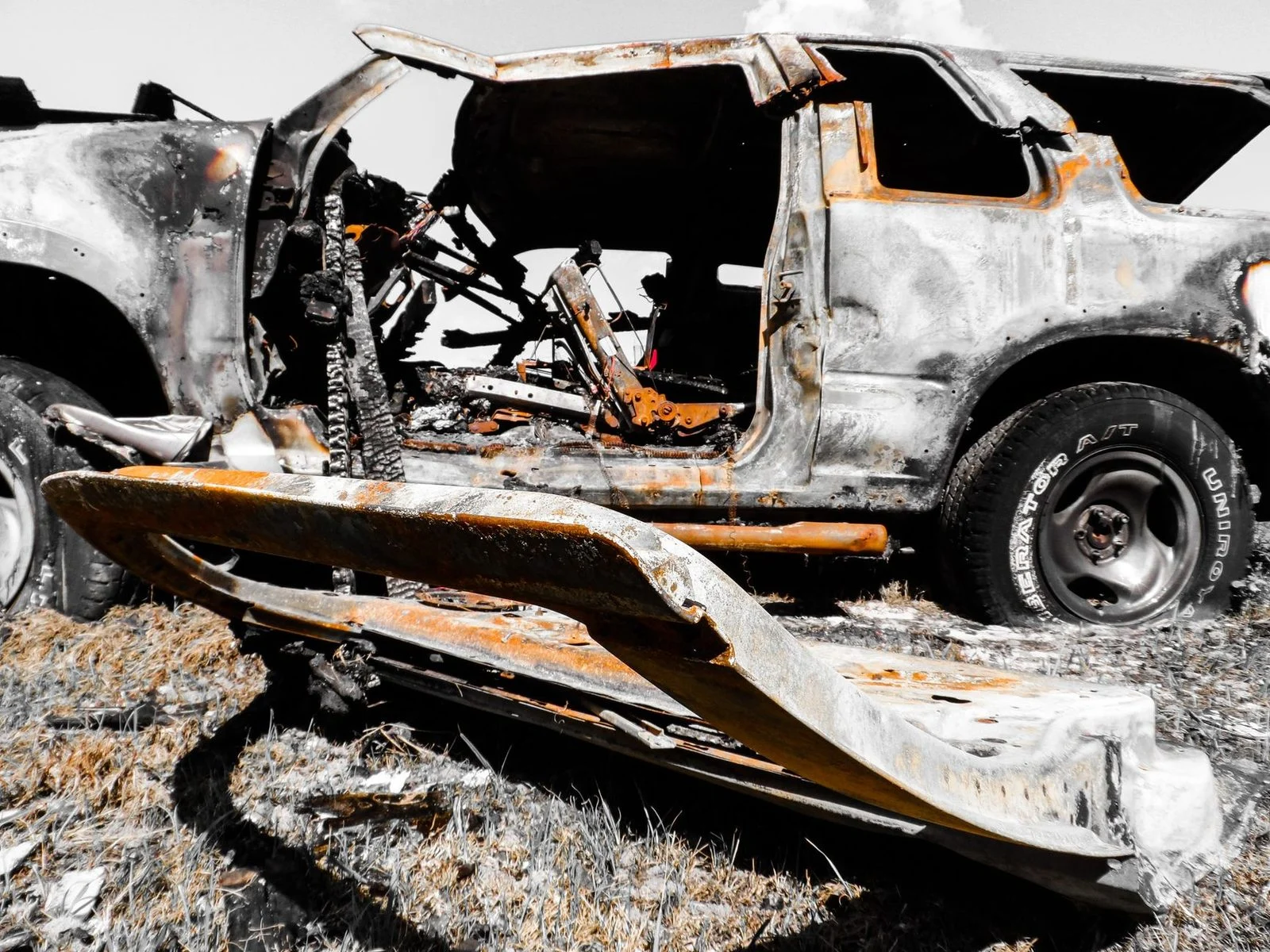
- Vehicle fire sources. Fuel leaks, battery or electrical failures, and crashes involving commercial vehicles can start fires.
- Property owners. Faulty wiring, gas leaks, defective heaters, grease fires in commercial kitchens, and unguarded hot surfaces can cause burns.
- Workplace equipment. Industrial equipment, chemicals, and electrical work create risk. Equipment makers or contractors may share responsibility, not only the employer.
- Product makers. A product that ignites or fails in a dangerous way may support a claim against its maker.
Commercial trucks follow specific fueling rules. Under the federal rule on fueling commercial vehicles, a driver or motor carrier employee may not fuel a truck with the engine running unless running it is necessary. Smoking or open flames near a vehicle being fueled are also barred.
Evidence often decides who is responsible. Under NMSA 1978, § 66-7-213, an accident report generally cannot be used as evidence in any civil or criminal trial arising out of an accident, though a certified copy of the investigating officer’s report may be introduced in an arbitration or civil action involving an insurer’s liability under uninsured motorist coverage to prove that the other vehicle’s owner or operator is either insured or uninsured. That makes photos, maintenance records, and witness details especially important.
What a Burn Injury Claim May Include
A burn injury claim may seek payment for medical costs, lost income, pain, and lost function. Burn claims often cover much more than the first hospital bill. Losses may include:
- Emergency care, burn center treatment, skin grafts, reconstructive surgery, and rehabilitation
- Future care that your doctors expect you will need
- Lost wages and lost earning ability if burns prevent a return to the same work
- Pain, emotional distress, and the effects of scarring and disfigurement
- Loss of enjoyment of life and loss of physical function
New Mexico uses comparative negligence, which means shared fault. The jury reduces your damages by your percentage of fault, under UJI 13-2218 NMRA. New Mexico follows comparative negligence, and under UJI 13-2218 NMRA, a jury reduces the plaintiff’s total damages by the plaintiff’s percentage of negligence.
The several liability statute, NMSA 1978, § 41-3A-1, has exceptions. The value of any claim turns on the medical record, the evidence, and the facts. Past results do not predict a similar outcome.
What to Expect: How a Burn Injury Case Moves Forward
A burn injury case usually moves through five steps, from the first call to a lawsuit if one is needed. Each step builds the record for your claim.
- Free first consultation. We listen to what happened, review your injuries, and flag urgent deadlines.
- Evidence gathering. We collect the crash or incident report, photos, medical records and bills, and work records. We send preservation letters asking others to keep equipment and footage.
- Medical documentation. Your burn care and future needs must be described accurately in the claim.
- Demand and negotiation. We present your documented losses to insurers or responsible parties and work toward a resolution.
- Filing suit if needed. A lawsuit moves through discovery, depositions, and preparation for trial.
Timelines depend on the facts, including how severe the burns are and how long recovery takes. Deadlines are the part to watch. Under NMSA 1978, § 37-1-8, actions against sureties on official bonds and on bonds of guardians, conservators, personal representatives and persons acting in a fiduciary capacity must be brought within two years after the liability of the principal or the person for whom they are sureties is finally established or determined by a judgment or decree of the court; for an injury to the person or reputation of any person, actions must be brought within three years. A wrongful death action must be brought within three years after the date of death, under NMSA 1978, § 41-2-2. Early contact protects your options.
Why Choose El Gringo Law for a Burn Injury Claim
El Gringo Law handles serious injury matters, including burn injuries, car and trucking accidents, and wrongful death. We build each case around its own facts.
Josh Wood is the responsible lawyer for this page. He is licensed in New Mexico and Arizona. Our lawyers and support staff work together on case files, and our team keeps you informed about case status and the medical timeline.
We bring you decisions that need your approval before we act on them. You stay in control of choices about your claim. You can reach us through our website at elgringolaw.com.
The Free First Consultation and How Costs Work
The firm offers a free first consultation, confidential and without obligation to continue. Bring what you have, but you don’t need every item to start.
Helpful items include:
- Hospital discharge papers and treatment summaries
- Photos of your injuries, the scene, or the equipment involved
- The crash, fire, or incident report
- Letters from insurance companies
- Medical and repair bills
Fee and cost terms are set out in a written agreement that you review before we begin work. The agreement also explains any costs you may owe if there is no recovery. Ask us to walk you through it before you sign.
Not sure what your next step is?
Talk it through with our team — the first consultation is free, confidential, and carries no obligation.
Frequently Asked Questions About Burn Injury Claims
Can I still have a claim if I was partly at fault?
Yes. In New Mexico, your share of fault reduces your damages but generally does not bar recovery.
Do I have to go to court?
Some claims resolve before trial. Others need a lawsuit, and we prepare every case as if it could reach trial.
What if my burns are still healing?
A claim can move forward while treatment continues. We document future care needs as your recovery progresses.
Should I talk to the insurance company first?
Statements to an insurer can affect your claim. Speak with us before you give a recorded statement.
What should I do now?
Keep medical records, photos, receipts, and any crash or incident report. Early contact helps protect deadlines and evidence.
Talk With Josh Wood About Your Burn Injury
If a burn from a vehicle fire, an unsafe property, or a job site has left you with surgeries and ongoing care, you may have a claim worth reviewing. Contact El Gringo Law through our contact page to talk with Josh Wood about your situation. You can also reach out through the contact form or by starting a chat.
How we approach your burn injury claim
Focus on your recovery
A serious burn affects your health, your work, and your family. We keep the legal process organized so you can concentrate on healing.
Careful case preparation
We gather the records, photos, and details that matter in burn cases, from the scene to your medical care.
Clear communication
We explain what is happening in plain language, in English or in Spanish, and keep you informed at each step.
Advocacy for fair compensation
We push for fair compensation for medical care, lost income, and the long-term effects of a burn injury.
Before you talk to an insurance company
Adjusters may ask for a recorded statement or for you to sign medical authorizations soon after an accident. Consider speaking with a lawyer before you give a statement or sign anything.
Burn injuries we handle
Vehicle crash fires
Burns from fuel or electrical fires after a car accident, including burns to the hands, face, and torso.
Trucking accidents
Burns and related injuries from crashes involving commercial trucks, tractor-trailers, and hazardous loads.
Unsafe premises
Burns caused by hazards on property that was not kept reasonably safe, such as faulty wiring, scalding water, or chemical exposure.
Negligent security incidents
Burns or fire-related injuries connected to an assault or attack on property where security was inadequate.