A Pelvis Fracture Changes Everything. Get Clear Answers About Your Options.
El Gringo Law represents people hurt in car and truck crashes and other accidents across New Mexico. Your first consultation is free, confidential, and comes with no obligation to continue.
By Josh Wood · Published October 29, 2026
A pelvis or femur fracture caused by someone else’s negligence may support a claim. This page explains what these injuries mean, what a claim can cover, what affects its strength, and which New Mexico deadlines matter most. If you’re searching for a pelvis fracture injury lawyer in Albuquerque, this is a plain-language starting point. It can’t replace a conversation about your own facts.
What a Pelvis or Femur Fracture Means After an Accident
A pelvis or femur fracture is a break in a bone that carries body weight and links the trunk to the legs. The pelvis is a ring of bones that connects the spine to the legs and protects the organs inside it. The femur is the thigh bone.
These fractures can come from high-energy impacts. Common causes include car and motorcycle crashes, pedestrian strikes, commercial truck collisions, and serious falls on unsafe property.
A break in either bone can come with other injuries. People often hear about:
- Internal bleeding
- Nerve or bladder injury
- Hip or knee damage
- Long-term limits on walking, standing, or sitting
Recovery can take a long time. This page is written for two readers: a person hurt in a New Mexico incident, and a family member helping them through the hospital, rehab, and paperwork.
If a crash left you or someone you love with a broken pelvis or femur, you may have a claim, and you don't have to figure out the next steps alone. Talk it through with our team — the first consultation is free, confidential, and carries no obligation.
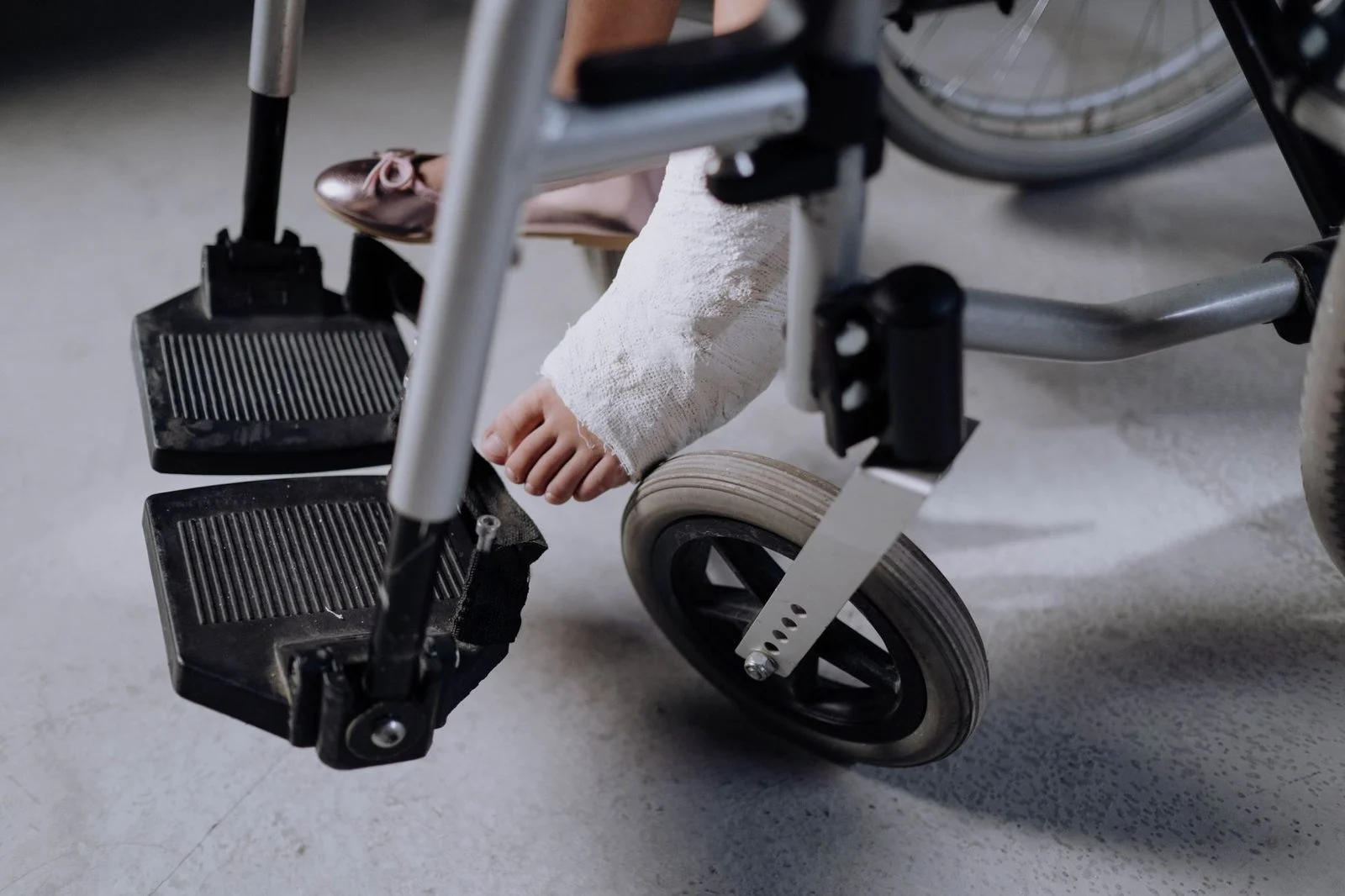
What a Claim for These Injuries Can Cover
A claim can seek compensation for the losses the injury causes, not only the bills that arrive first. Losses usually fall into several groups:
- Medical expenses. Emergency care, imaging, surgery such as internal fixation, hospital stays, and physical or occupational therapy, both past and expected future care.
- Lost income. Wages missed during recovery, and lost earning capacity if the injury limits the work you can do.
- Pain, suffering, and loss of enjoyment of life. The effect on sleep, daily tasks, hobbies, and relationships.
- Mobility and home needs. Walkers, wheelchairs, home or vehicle changes, and ongoing care that treating providers describe.
If a crash causes a death, a wrongful death action is brought by the deceased person’s personal representative. The proceeds go to statutory beneficiaries, such as a surviving spouse, children, or parents (NMSA 1978, § 41-2-3).
Close family members may have their own claim for loss of consortium. Those damages belong to that family member, not to the injured person or the estate (Thompson v. City of Albuquerque).
What Shapes the Strength and Value of a Claim
The strength of a claim rests on who was at fault, how well the injuries are documented, and what insurance is available.
Fault. The claim must show the other party’s negligence caused the harm. A proximate cause is one that produces the injury in a natural and continuous sequence. It need not be the only cause (Herrera v. Quality Pontiac).
Your own share of fault. New Mexico uses comparative negligence (shared fault). Your percentage of fault reduces the damages you can recover (UJI 13-2218 NMRA). New Mexico follows comparative negligence, under which a plaintiff’s total damages are reduced by the plaintiff’s percentage of negligence (UJI 13-2218 NMRA).
Several defendants. In a comparative fault action, the liability of defendants is several, and the statute lists limited situations where joint and several liability still applies (NMSA § 41-3A-1).
Medical records. Records from the first emergency visit onward, imaging, surgical notes, and a treating provider’s view of recovery show how the injury affects you. Gaps in treatment can be questioned by insurers.
Insurance. Under New Mexico law, a motor vehicle liability policy issued for a vehicle registered or principally garaged in New Mexico must provide uninsured motorist coverage in minimum limits for bodily injury or death and for injury to or destruction of property as set forth in Section 66-5-215 NMSA 1978, and higher limits as the insured may desire, to protect people insured under it who are legally entitled to recover damages from owners or operators of uninsured motor vehicles, and that uninsured motorist coverage must include underinsured motorist coverage for persons protected by the insured’s policy, although the named insured has the right to reject uninsured motorist coverage (NMSA § 66-5-301).
Commercial trucks. Federal rules limit driving time and on-duty time for drivers of property-carrying commercial motor vehicles. A driver may not drive without first taking 10 consecutive hours off duty, may not drive after a period of 14 consecutive hours after coming on-duty following 10 consecutive hours off-duty, and may drive a total of 11 hours during that 14-hour period (49 CFR § 395.3). Driver logs and maintenance records can show what happened before a crash.
Evidence. Photos, vehicle data, dashcam or surveillance footage, and witness names are most useful early, before they are lost.
Deadlines and What to Do in the First Weeks
For most personal injury claims in New Mexico, the general limit is three years. Claims against government owners can have much shorter deadlines, and the exact date turns on the facts.
- Personal injury: actions for an injury to the person or reputation of any person must be brought within three years (NMSA § 37-1-8).
- Government defendant, such as a city road or state agency: actions against a governmental entity or a public employee for torts are forever barred unless commenced within two years after the date of occurrence resulting in loss, injury or death, subject to the statute’s exception for a minor under the full age of seven years (NMSA § 41-4-15). A written notice stating the time, place and circumstances of the loss or injury must be presented within ninety days after an occurrence giving rise to a claim for which immunity has been waived under the Tort Claims Act, to the designated official of the governmental body, such as the risk management division for claims against the state (NMSA § 41-4-16). The time for giving notice does not include the time, not exceeding ninety days, during which the injured person is incapacitated from giving the notice by reason of injury, and a suit may proceed without notice if the governmental entity had actual notice of the occurrence.
- Wrongful death: the action must be brought within three years after the cause of action accrues, and the cause of action accrues as of the date of death (NMSA § 41-2-2). For a wrongful death claim against a government defendant, the required notice may be presented within six months after the date of the occurrence of the injury that resulted in the death (NMSA § 41-4-16).
In the first weeks, focus on these steps:
- Follow medical advice and keep every appointment, receipt, and therapy record.
- Be careful with insurers. Hold off on recorded statements or signed releases until you know what they cover.
- Keep a simple log of pain, missed work, and out-of-pocket costs.
- Save photos, the incident report number, and all paperwork.
How the Process Typically Works, Step by Step
A typical claim moves from a first conversation to investigation, evaluation, negotiation, and, if needed, a lawsuit. Timing varies by case.
- First conversation. The facts, injuries, and documents are reviewed.
- Investigation. Medical records, crash or incident reports, and insurance information are gathered.
- Evaluation. Fault, damages, and available coverage are reviewed, and likely next steps are explained.
- Negotiation. The responsible parties and their insurers are pressed toward a fair resolution. This can take months while treatment continues.
- Lawsuit, if needed. If a fair resolution is not reached, a case may be filed in the right New Mexico court. It then moves through discovery, mediation, and possibly trial.
Serious fracture cases can take longer than minor injury claims. Recovery has to be understood before the full value of the claim can be assessed.
Why Work With El Gringo Law and How Fees Work
El Gringo Law represents people hurt in car and trucking accidents, premises liability incidents, negligent security situations, wrongful death, sexual assault, and catastrophic injuries. Those include spinal cord injuries, amputations, and burn injuries.
Josh Wood is the responsible lawyer for this page. Josh Wood is licensed in New Mexico and Arizona. Our team helps with records requests, insurance communication, and case updates. The firm works with clients in Albuquerque, Rio Rancho, Bernalillo County, Sandoval County, Santa Fe, Las Cruces, Taos, and Farmington.
The first consultation is free, confidential, and comes with no obligation to continue (consulta inicial gratuita, confidencial y sin compromiso).
Every case is different, and no outcome can be predicted.
Not sure what your next step is?
Talk it through with our team — the first consultation is free, confidential, and carries no obligation.
Frequently Asked Questions
Can I still file a claim if I was partly at fault?
Yes. New Mexico uses comparative negligence, so your share of fault reduces what you can recover.
How long do I have to file?
Most personal injury claims generally have a three-year limit. Claims against government owners can have a two-year limit and a 90-day notice requirement. Our team can check the exact dates for your situation.
Will I have to go to court?
Some claims settle through negotiation. Others may move into a lawsuit and, if needed, trial.
Can a family member ask about a claim?
Yes. A family member can ask questions for someone else, and the injured person’s consent and details guide the next steps.
Can Spanish speakers reach the firm?
Yes. Spanish-speaking readers can use the contact options in the final section to ask their questions.
Does the first conversation commit me to hiring the firm?
No. The first conversation is for reviewing your facts, and you decide what to do next afterward.
Talk With Josh Wood About Your Situation
If a crash left you or someone you love with a broken pelvis or femur, the bills, paperwork, and recovery questions can pile up fast. You don’t have to sort them out alone. Josh Wood and our team can talk through the facts of your injury and where a claim may stand. Reach out through the El Gringo Law contact form or start a chat on elgringolaw.com.
Responsible lawyer: Josh Wood, El Gringo Law, elgringolaw.com.
How a pelvis fracture claim may take shape
Crash-related injuries
Pelvis fractures are often caused by strong impacts in car and truck collisions, including side-impact crashes. We review how the crash happened and how the injury was treated.
Medical records and care
Your treatment, imaging, surgery, and rehabilitation records help show how the injury affects your daily life and work. We help you organize them.
Losses beyond the hospital
Pelvis injuries can affect mobility, income, and family responsibilities for a long time. We discuss the full range of losses with you during your consultation.
Other responsible parties
Some injuries involve unsafe premises or other negligent conduct. We look at every possible source of the harm so no important detail is missed.
Get medical care first
Pelvic injuries can involve internal bleeding and other serious conditions. Seek medical evaluation as soon as possible, and follow your doctor's treatment plan. Your health comes first, and your medical records are an important part of any injury claim.
What to expect when you contact El Gringo Law
A free first consultation
Speak with our team about your injury at no cost. The consultation is confidential and carries no obligation to continue.
Contact in the way you prefer
Call the firm, submit the contact form on this page, or start a chat to ask your first questions.
Clear explanations
We explain the process in plain language so you can make informed decisions about your case and your recovery.
Your responsible lawyer
Josh Wood, licensed in New Mexico and Arizona, is the responsible attorney for this page. Our team supports every step of your matter.