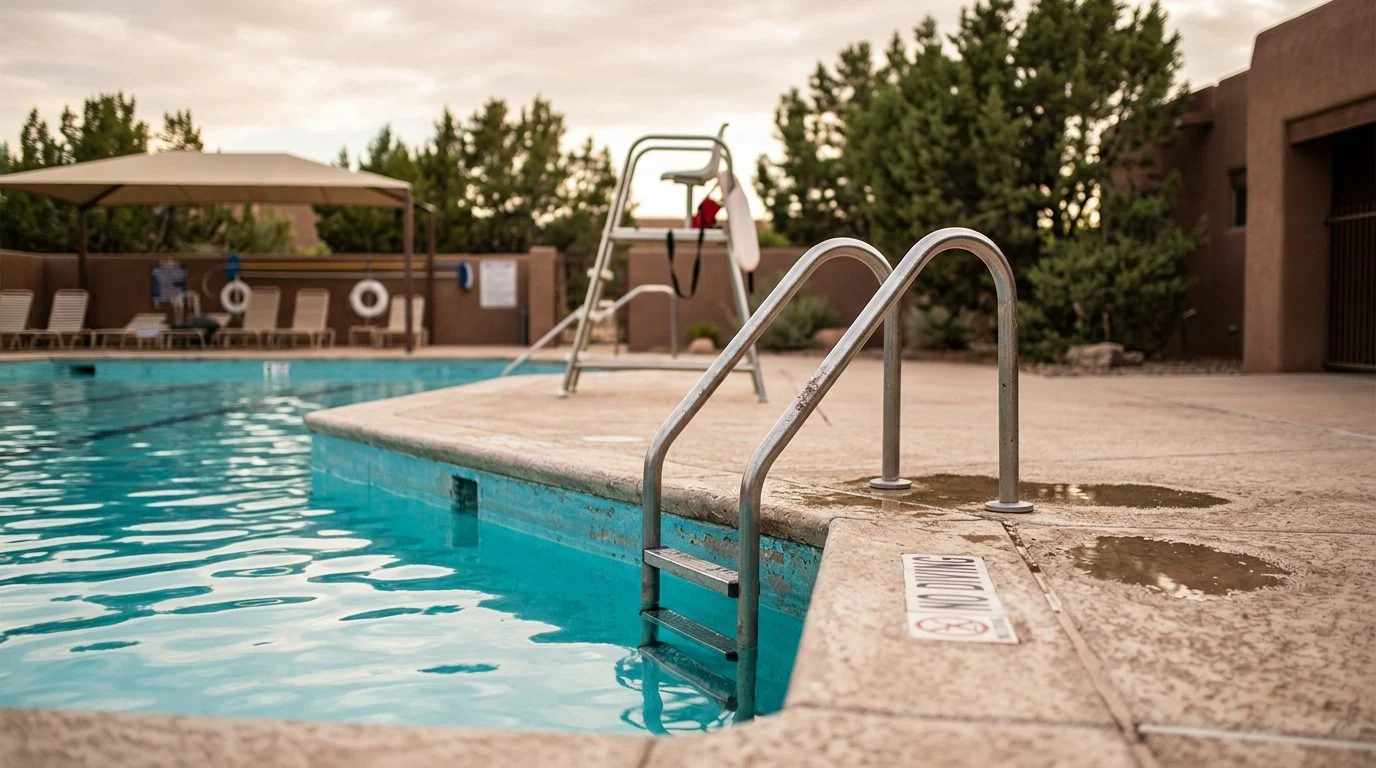
Swimming Pool Injury Lawyer | New Mexico
Hurt at a Pool? Talk to El Gringo Law About Your Options
Pool injuries can happen at hotels, apartment complexes, HOAs, private homes, and public facilities. We help injured people in Santa Fe, Rio Rancho, Las Cruces, Bernalillo County, Sandoval County, Taos, and Farmington understand what happened and who may be responsible.
By Josh Wood · Published November 1, 2026
Albuquerque Swimming Pool Injury Lawyer
A swimming pool injury lawyer represents people hurt in a pool, spa or hot tub, and families of people who died there. El Gringo Law offers a free, confidential first consultation with no obligation to continue. These cases are premises liability claims. They ask whether the person in control of the pool kept the area reasonably safe.
Not sure what your next step is?
Talk it through with our team — the first consultation is free, confidential, and carries no obligation.
What a swimming pool injury lawyer handles
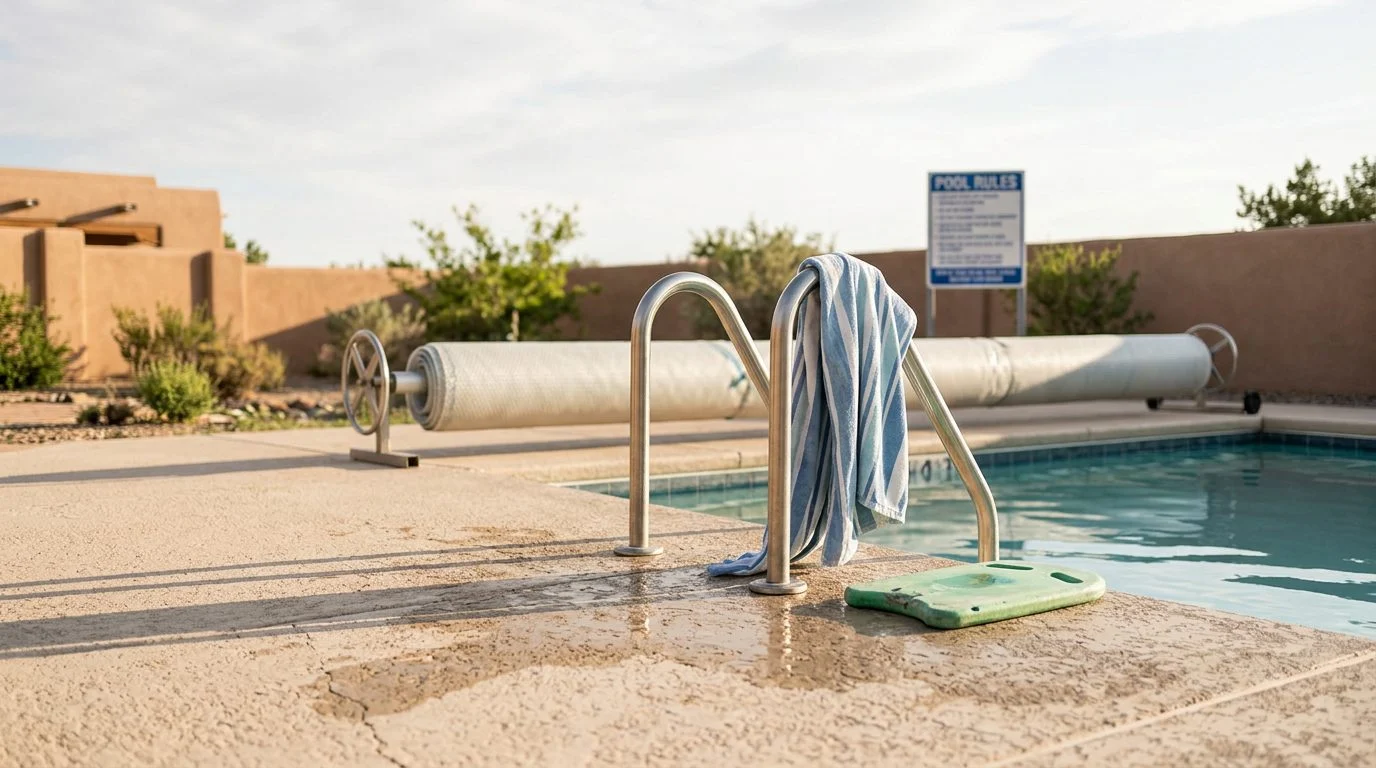
A swimming pool injury lawyer handles claims from injuries and deaths at a pool, spa or hot tub that someone else controlled. The main question is whether that owner or operator kept the area reasonably safe.
These cases often involve:
- Swimmers and divers hurt by unclear depths, broken drains or unsafe diving
- Children hurt when a fence, gate or barrier fails
- Guests, tenants and members of a hotel, apartment complex or gym
- Families of someone who drowned or was seriously hurt
Settings include private homes, apartment and HOA complexes, hotels and motels, gyms, water parks, and other commercial or public pools. Each setting has different owners, managers and records. That is why the first step is identifying who controlled the area.
New Mexico’s jury instructions set out the basic duty. Under UJI 13-1309, an owner or occupant must use ordinary care to keep the premises safe for visitors. That duty applies even when a danger is known or obvious, like a wet pool deck, unless the trial court determines that the visitor’s negligence was unforeseeable as a matter of law.
Injuries and damages a pool claim can address
A pool claim can address drowning, brain injury, spinal cord injury, fractures and chemical burns. The damages depend on the injury, the care it needs and how it changes work and daily life.
- Drowning and near-drowning, including brain injury from lost oxygen
- Spinal cord injuries from shallow-water diving or drain and suction incidents
- Head injuries and fractures from slips on wet decks, collisions or slides
- Chemical burns from unbalanced pool or spa chemicals, and burns from hot tub equipment
The NINDS spinal cord injury overview explains that the spinal cord has three protective layers. Cerebrospinal fluid cushions it against shock. The same source says an injury between C1 and C4 can stop breathing, because those nerves control the diaphragm.
Non-economic damages cover pain, suffering and loss of enjoyment of life.
Keep every bill, pay stub and receipt from day one. They show what the injury has cost so far and help document what it will cost next.
Who can be responsible for a pool injury
Responsibility can fall on whoever controlled the pool, its barriers and its upkeep. That can include owners, landlords, property managers, homeowners associations, hotels and gyms. Often, more than one party shares responsibility.
Common unsafe conditions include:
- Missing or broken barriers, gates and latches
- Drain covers that are missing, broken or not compliant
- Slippery decks without warnings
- Missing depth markers
- Weak lifeguarding or supervision
Equipment and chemical problems can involve manufacturers, service contractors and chemical suppliers. Under UJI 13-1318, an owner is charged with knowing what a reasonable inspection would have revealed. It is also charged with knowing conditions its own employees caused.
Section 41-3A-1 of the New Mexico Statutes Annotated provides that, where several liability applies, any defendant who establishes that the fault of another is a proximate cause of a plaintiff’s injury shall be liable only for that portion of the total dollar amount awarded as damages to the plaintiff that is equal to the ratio of that defendant’s fault to the total fault attributed to all persons, including plaintiffs, defendants and persons not party to the action.
Public pools follow different rules. A pool run by a government entity falls under the Tort Claims Act. Section 41-4-16 of the New Mexico Statutes Annotated sets a written notice requirement for every person who claims damages from the state or any local public body under the Tort Claims Act: the notice must state the time, place and circumstances of the loss or injury and be presented within ninety days after an occurrence giving rise to a claim for which immunity has been waived, to the official the statute designates, such as the risk management division for claims against the state or the county clerk for claims against a county. The statute also provides that a suit generally cannot be maintained without this notice unless the governmental entity had actual notice of the occurrence, and that the time for giving notice does not include up to ninety days during which the injured person is incapacitated from giving notice by reason of injury. Section 41-4-15 of the New Mexico Statutes Annotated states that tort actions against a governmental entity or a public employee shall be forever barred unless commenced within two years after the date of occurrence resulting in loss, injury or death, except that a minor under the full age of seven years shall have until his ninth birthday in which to file. Ask early whether a pool is public.
Catastrophic injuries and wrongful death after a pool accident
A catastrophic pool injury can require lifelong medical care, equipment and changes to work and family roles. Planning for those future needs is part of the case from the start.
If a pool incident causes a death, the claim is brought by the deceased person’s personal representative. Section 41-2-3 of the New Mexico Statutes Annotated directs how the proceeds of a wrongful death judgment are distributed: to a surviving spouse if there is no child; one-half to the surviving spouse and one-half to the children and grandchildren if both survive; to the children and grandchildren if there is no husband or wife; to the father and mother if the deceased is a minor, childless and unmarried, or to the surviving parent if one is dead; to a surviving brother or sister if there is no father, mother, husband, wife, child or grandchild; and if there is no such kindred, the proceeds are disposed of in the manner authorized by law for the personal property of deceased persons.
Under NMSA 1978, § 41-2-2, a wrongful death action has a limit of three years, and the cause of action accrues as of the date of death; a shorter deadline may apply under the Tort Claims Act when the defendant is a governmental entity or public employee (NMSA 1978, § 41-2-2 — three years from the date of death). If a government pool is involved, notice can be due within six months after the injury that caused the death.
Family members can have their own claims. Thompson v. City of Albuquerque explains that loss of consortium damages belong to the family member, not the injured person or the estate.
Records matter. Pool operator logs, inspection reports, maintenance history and incident reports can show what the owner knew and when.
How a pool injury case works, step by step
A pool injury case usually moves through five steps, from first contact to suit if needed. The timing depends on the facts, and the firm explains each step as it happens.
- First contact. Call, use the contact form or start a chat. Describe the date, location, injuries and who controlled the pool.
- Evidence. The firm asks for medical records, photos, witness names, incident reports and maintenance records.
- Investigation. The review covers barriers, drains, signs, lifeguard staffing, maintenance history and applicable safety codes.
- Claim and negotiation. The claim goes to the responsible parties and their insurers, and the firm keeps you informed.
- Suit, if needed. A lawsuit is filed when a fair resolution is not reached.
Deadlines matter most. Government-run pools can have much shorter deadlines, so contact the firm early.
Not sure what your next step is?
Talk it through with our team — the first consultation is free, confidential, and carries no obligation.
Why clients contact El Gringo Law
El Gringo Law is a New Mexico firm that handles premises liability, catastrophic injury and wrongful death claims. It also handles car accident, trucking, negligent security, spinal cord and burn injury matters. Josh Wood, licensed in New Mexico and Arizona, is the responsible lawyer for this page. Our team includes support staff.
Clients from Albuquerque, Bernalillo County, Rio Rancho, Sandoval County, Santa Fe, Las Cruces, Taos and Farmington can reach the firm. Every case is different, so the real answer comes from reviewing your facts in a consultation.
You can call the firm, use the contact form on elgringolaw.com, or start a chat. For related claims, see premises liability in New Mexico.
Frequently asked questions about pool injury claims
Can I still have a claim if I was partly at fault?
Yes. New Mexico reduces damages by the injured person’s percentage of fault when comparative negligence is an issue, and UJI 13-2218 explains how, in cases with no apportionment of negligence among defendants or non-parties.
Should I talk to the property owner or insurer first?
Talk with the firm before giving a recorded statement to an insurer or signing anything from the property.
What if the pool is at a hotel or apartment?
Claims can involve the owner, the manager and the maintenance contractor. The firm looks at each party that may share responsibility.
What if my child was hurt in a pool?
Child claims often involve supervision, barriers and property conditions. Deadlines for minors can differ, so contact the firm early.
If a pool, spa or hot tub incident left you or a family member hurt in Albuquerque or elsewhere in New Mexico, send the date, place and injuries through the contact form while the details are fresh.
Why Injured Swimmers Call El Gringo Law
Free First Consultation
Your initial consultation is free, confidential, and comes with no obligation to continue.
Plain-Language Guidance
We explain your situation in clear terms, and our team is available to answer your questions in English or Spanish.
Careful Review of the Facts
We look at maintenance records, warning signs, supervision, safety equipment, and the property's condition to understand how the injury happened.
Before You Speak With an Insurance Company
Insurance adjusters may ask for a recorded statement soon after a pool injury. Talk with our team before you give one, so you understand what you are being asked and how your words may be used.
Common Pool Injury Situations We Review
Drowning and Near-Drowning
Unsupervised children, missing barriers, faulty drain covers, and inadequate lifeguard coverage can contribute to serious water incidents.
Slip and Fall on Pool Decks
Wet, cracked, or poorly maintained pool surfaces and missing warning signs can cause falls that lead to fractures and head injuries.
Diving and Shallow Water Injuries
Unmarked depths, improperly placed diving boards, and insufficient warnings can contribute to spinal cord injuries and other catastrophic harm.
Chemical and Drain Injuries
Improper chemical handling and malfunctioning suction drains can cause burns, entrapment, and other serious injuries.