Negligent Security | New Mexico
Hurt on Someone Else's Property? Find Out Whether the Owner Should Answer for It.
El Gringo Law represents people in New Mexico who were injured in assaults and other crimes on property where the owner failed to provide reasonable security. Your first consultation is free, confidential, and comes with no obligation to continue.
By Josh Wood · Published October 25, 2026
Farmington Negligent Security Lawyer: When Owners Are Liable
If someone was assaulted on another person’s property in Farmington, the owner may share responsibility. Lawyers call this a negligent security claim. Under New Mexico law, the answer often turns on what the owner knew and what it did to protect people. Farmington and San Juan County residents deserve clear answers after a violent attack. This guide explains how these claims work, what evidence tends to matter, and how to talk with our team about your situation.
If an assault hurt you or someone you love on a Farmington property, you don't have to sort out the next step alone. Our team is ready to talk. Talk it through with our team — the first consultation is free, confidential, and carries no obligation.

What Is Considered Negligent Security?
Negligent security is a premises liability claim. A property owner or manager may be responsible when a third party’s crime causes harm to a visitor, the harm arose from a foreseeable risk that a third person would injure a visitor, and the owner failed to use ordinary care to protect visitors.
New Mexico’s jury instructions say a landowner has a duty to use ordinary care to protect visitors from harm caused by the foreseeable conduct of a third party, including criminal conduct. See the UJI 13-1320 commentary.
A crime on a property does not make the owner automatically liable. The key questions are whether the attack was foreseeable and whether reasonable precautions were in place.
These claims arise in apartment complexes, hotels and motels, parking lots and garages, bars, and retail centers. Each setting raises its own questions. A hotel has guests coming and going at all hours. An apartment complex may have many residents who don’t know one another.
How Negligent Security Liability Is Evaluated
A negligence claim generally needs a duty owed, a breach of that duty, and a breach that caused the plaintiff’s harm. Herrera v. Quality Pontiac states these basics. Our guide to the four proofs of negligence walks through each one.
Foreseeability is central. Evidence can include prior assaults or break-ins on or near the property, tenant or guest complaints, and reports the owner received but did not act on. A pattern of small failures can tell a clearer story than one missing light.
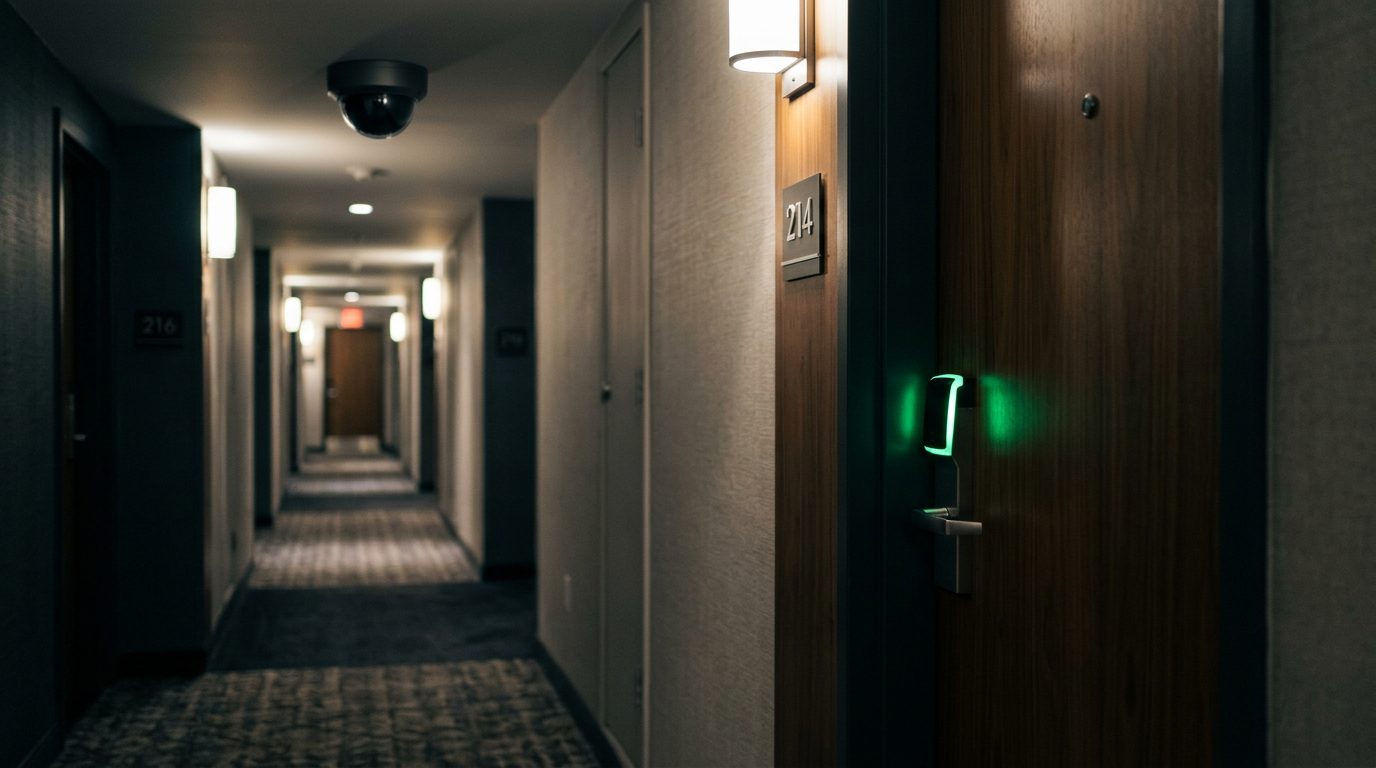
Security measures often examined include lighting, working locks and gates, cameras, access control, patrols, and whether repairs followed reported problems.
Causation asks whether a missing precaution was a significant link to the injury. The UJI 13-305 commentary uses that phrase. A cause need not be the only explanation for an injury.
Under NMSA § 41-3A-1, in causes of action to which several liability applies, a defendant who establishes that the fault of another is a proximate cause of a plaintiff’s injury is liable only for the portion of the total dollar amount awarded as damages that equals the ratio of that defendant’s fault to the total fault attributed to all persons, including plaintiffs, defendants and persons not party to the action.
Negligent Security Situations in Farmington and San Juan County
Negligent security Farmington cases often start with an attack in a place where protection seemed missing or ignored. The details of each setting shape the questions that follow.
Consider an assault in an apartment parking lot where lights had been out for weeks. Or an attack after tenants reported a broken gate that was never fixed. A hotel guest hurt in a doorway after a lock failed raises a different question than one hurt in a public lot.
A guest hurt in a stairwell with prior incidents raises similar questions. No single fact decides a case. Each one asks what the owner knew, when it knew it, and what it did next.
Farmington sits in San Juan County, where people live in multi-unit housing, stay in hotels, and park in commercial lots. Each property may have a different owner or manager. That party may not be the one who runs security day to day.
Evidence That Decides Farmington Negligent Security Cases
Evidence is often most at risk right after an incident. Video can be recorded over, and maintenance and incident logs can change.
Useful proof includes police and incident reports, photos of the scene and lighting, repair requests, prior complaints, lease or access documents, and witness contact details. Each item shows what the owner knew and whether precautions were in place.
A written request to preserve records can ask the owner to keep video, logs, and complaints. Early steps protect proof that might otherwise be lost.
Write down what you remember and when, while details are fresh. Note the time, the lighting, who was nearby, and what staff said. Keep discharge papers, bills, and notes from doctors and therapists too.
Injuries and Losses in Negligent Security Claims
Negligent security claims can involve physical assault injuries, sexual assault, catastrophic injuries, spinal cord injuries, burn injuries, and wrongful death. Each type raises its own medical and legal questions.
A claim looks at the losses the injury caused. Medical records that connect treatment to the attack matter, because each link in that chain gets tested. A simple journal of symptoms, missed work, and daily limits can also help show how the injury changed daily life.
If someone died, New Mexico’s wrongful death statute makes a responsible party liable for damages in an action. The claim is brought by the deceased person’s personal representative under § 41-2-3. It must be brought within three years after the date of death under § 41-2-2.
Close family may have a separate loss of consortium claim where the relationship qualifies. Under Thompson v. City of Albuquerque, those damages belong to the claimant, not the injured person or the estate.
Not sure what your next step is?
Talk it through with our team — the first consultation is free, confidential, and carries no obligation.
Common Questions About Negligent Security
Here are short answers about negligent security Farmington claims. Each gives the general rule, not a forecast for any one case.
What is considered negligent security?
It is a premises liability claim. An owner’s lack of reasonable protection may have allowed a third party’s crime to cause harm.
How much is a negligence claim worth?
No value can be set without the injuries, the evidence, and the facts of the case.
What is needed to prove negligence?
Generally, a negligence claim requires the existence of a duty from a defendant to a plaintiff, breach of that duty, which is typically based upon a standard of reasonable care, and the breach being a proximate cause and cause in fact of the plaintiff’s damages, as Herrera v. Quality Pontiac explains.
How long do I have to file?
New Mexico sets filing deadlines, so don’t assume time is unlimited. A wrongful death claim must be brought within three years after the date of death (NMSA 1978, § 41-2-2 — three years from the date of death).
Who brings a wrongful death claim?
The personal representative of the deceased person brings the claim under New Mexico’s wrongful death law.
Does a free consultation mean I have to hire the firm?
No. The initial consultation is free, confidential, and carries no obligation to continue.

Talk With Our Team About Your Incident
Our initial consultation is free, confidential, and comes with no obligation to continue.
This page is the responsibility of Josh Wood, a lawyer licensed in New Mexico and Arizona, at El Gringo Law. You can reach our team by phone, through our contact form, or by starting a chat on our website.
If someone was hurt in an assault on a Farmington property, and you’re weighing whether to act while the evidence still exists, reach out to our team today.
How We Work With You
Talk With Our Team
Call the firm or send a contact form. A member of our team will listen to what happened and answer your questions.
Confidential Review
Your first consultation is free, confidential, and carries no obligation to continue. Sharing details does not commit you to hire us.
Clear Next Steps
We explain what the evidence may show, including police reports, lighting, locks, and prior incidents on the property, and what options may be available.
Lawyers Who Focus on Injury Cases
Our lawyers focus on personal injury claims, including negligent security, premises liability, and car and trucking accidents across New Mexico.
Injury Matters We Handle
Negligent Security
Injuries from assaults or other crimes that may have been made possible by inadequate locks, lighting, cameras, or staffing.
Premises Liability
Falls, unsafe conditions, and other injuries on property that owners or managers were responsible for maintaining.
Car and Trucking Accidents
Collisions involving passenger vehicles or commercial trucks, including the injuries and losses that follow.
Serious and Catastrophic Injuries
Spinal cord injuries, amputations, burn injuries, and wrongful death cases that require careful investigation.
Preserve What You Can
If you were hurt on someone else's property, write down what you remember, keep your medical records, and save any photos, messages, or receipts. Evidence such as security footage and incident reports can be lost over time.
Talk With Josh Wood and Our Team About Your Case
Related practice areas
- Negligent Security Lawyer in New Mexico: When a Business Should Have Protected You
- Negligent Security Taos: Property Owner Responsibility