Spinal Cord Injuries · New Mexico
Proving a Spinal Cord Injury Starts with the Right Records
Learn which evidence helps show how an injury affects your body and your life, and how El Gringo Law can help you take the next step.
By Josh Wood · Published November 13, 2026
If you were hurt in a car or truck crash, you may be asking how to prove a spinal cord injury in New Mexico. The short answer is a dated medical record, a clear before-and-after comparison, and a daily record of how the injury affects your life.
Each piece answers a question an insurer or a court may ask. This guide walks through them in order, starting with the injury itself.
What a Spinal Cord Injury Is and Why Proof Matters
A spinal cord injury damages the bundle of nerves that carries signals between the brain and the rest of the body. When that bundle is hurt, movement, feeling, and bodily functions can change. Doctors rarely rely on one test. They combine exam findings, imaging, and treatment notes to describe the injury.
That is why proof is built in pieces. The core question is whether the crash caused the injury and changed your life. New Mexico’s causation instruction asks whether an act or omission “contributes to bringing about the injury,” and whether the injury would not have occurred without it, and the act or omission must be reasonably connected as a significant link to the injury (UJI 13-305 NMRA). Each record you gather should help answer one of those two questions.
Not sure what your next step is?
Talk it through with our team — the first consultation is free, confidential, and carries no obligation.
Warning Signs After a Crash That Need Immediate Medical Care
Numbness, tingling, weakness, or loss of movement after a crash needs prompt emergency care. So do trouble with balance and new changes in bladder or bowel control. Don’t wait to see whether the symptom fades. The first hours and days create the earliest entries in your medical record.
If someone may have a spinal injury, call 911 right away. Don’t move them unless they are in immediate danger, such as a fire or moving traffic. Keep them still until help arrives. Moving a person with a suspected spine injury can make the damage worse.
Crash duties are separate from your medical proof. New Mexico law requires a driver in a crash with injury to stay at the scene until the legal steps are done (New Mexico accident duties statute). The driver must also give notice to police, or to the county sheriff or state police outside a city, by the quickest means available.
Medical Records That Show the Before-and-After Picture
Medical records are the center of a spinal injury claim. They should tell a clear story over time. Start with the emergency department notes, which record what you reported and what staff found at the first visit. Imaging reports show what doctors saw. Treating-provider notes show how the injury has changed since.
Consistency matters. If you told the emergency room about leg numbness, but later notes never mention it, the other side may ask why. Gaps in treatment get questioned too. If you missed visits, write down the reason and tell your provider.
Records from before the crash give a baseline. Old imaging or past visits for back pain show what your spine looked like earlier. A doctor can compare that baseline with findings after the crash. Without it, the comparison is much harder to make. Ask your providers for copies of your records, and keep them in one folder, sorted by date.
The crash report is not the same as medical proof. New Mexico law generally bars using an accident report as evidence at trial, with exceptions (New Mexico accident report statute). That is why your medical file carries so much of the weight.
Can a Back Problem That Existed Before a Crash Still Support a Claim?
The key question is what changed after the crash, and whether the crash caused that change.
New Mexico’s causation rule does not require the crash to be the only explanation. An act can be a cause if it works in combination with some other cause to produce the injury, but it must still be reasonably connected as a significant link to the injury (UJI 13-305 NMRA). The cause also need not be “the reason that is nearest in time or place.”
Your own fault is not an automatic bar. New Mexico follows pure comparative negligence. A plaintiff “shall no longer be totally barred from recovery” because of their own negligence (Scott v. Rizzo). Your share of fault can lower what you recover, but it does not wipe out the claim.
How this applies depends on the facts, including your prior records and the findings after the crash. Sudden impact, a rollover, and forceful jolts to the spine are details to write down early, because they help explain how the force reached your body.
How Insurers and Defense Lawyers Often Challenge Prior Back Problems
The usual argument is that your symptoms come from an older condition, not the crash. The other side may point to old imaging, a gap in treatment, or notes that describe pain differently from one visit to the next. Each of these points can be answered with records.
Start with a timeline. A clear sequence from before the crash to today shows when symptoms began and how they changed. Then ask your treating providers to explain, in their own notes, how the crash changed your condition. A provider’s written explanation carries more weight than your general statement.
Care that was interrupted needs a reason in the file. Write down why a visit was missed, such as work, transportation, or a provider’s schedule. If your descriptions of pain varied, a note that explains the change helps the reader understand it. A complete, dated file is the strongest reply to these arguments.
Documenting How the Injury Changes Daily Life
Daily life changes are part of the injury, so write them down. Keep a simple journal of pain, mobility limits, the help you need, and tasks that have changed. Dressing, driving, lifting, and work duties are common examples. Add the date and one or two plain sentences for each entry.
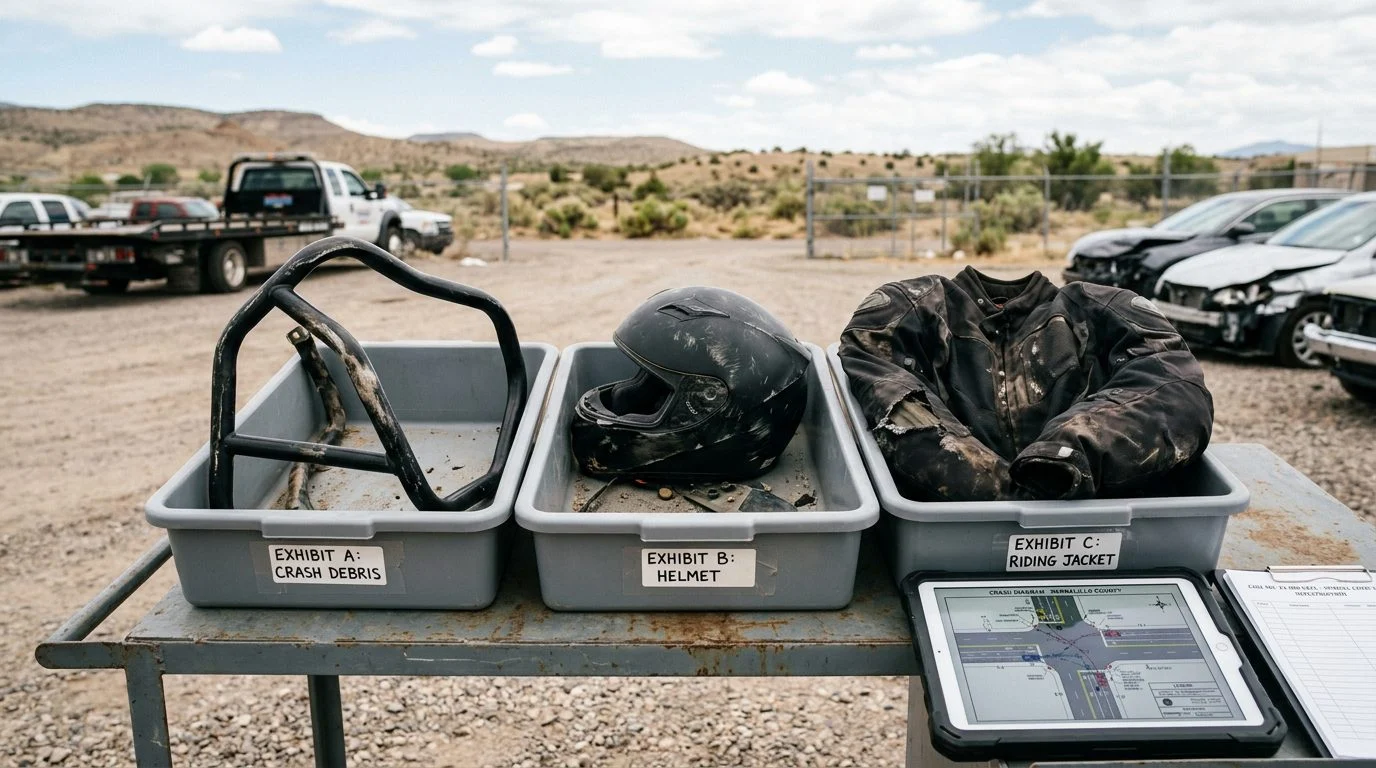
Keep a crash file too. It should hold the crash report, photos of the vehicles and the scene, witness names, and the name of every provider you see. Photos taken soon after the crash show the damage before any repairs.
Equipment and home changes matter as well. If a provider recommends a brace, a wheelchair, or changes at home, keep the recommendation and the receipts. If the injury affects bladder, bowel, or sexual function, our guide on those damages explains what to track.
A journal supports your medical records. It does not replace them.
Not sure what your next step is?
Talk it through with our team — the first consultation is free, confidential, and carries no obligation.
Talk With El Gringo Law About Your Crash
If you are caring for someone hurt in a crash, or working through your own injury, the paperwork can feel like too much. You do not have to sort it out alone.
El Gringo Law represents people hurt in car accidents, trucking accidents, and spinal cord injuries in New Mexico. Josh Wood is the lawyer responsible for this page. You can reach the firm through the contact form or by starting a chat at elgringolaw.com. Your first consultation is free, confidential, and comes with no obligation to continue.
Frequently Asked Questions
Every case is different, so questions about a prior back problem are best reviewed during the free, confidential initial consultation. How that applies depends on your records and the medical findings after the crash.
Does my own fault stop me from recovering?
No. New Mexico follows pure comparative negligence, so your share of fault lowers damages but does not bar recovery.
Why does a medical record matter more than a crash report?
Medical records show your condition over time. State law generally bars using an accident report as evidence at trial.
Evidence That Often Matters
Imaging and diagnostic tests
MRI, CT and X-ray results, along with the reports that explain what they show about your spine and nervous system.
Treatment and rehabilitation notes
Emergency, surgical, hospital and therapy records that track your condition from the first day of care onward.
Daily-life impact
Journals, statements from family and friends, and notes about tasks you can no longer do on your own.
Work and income records
Pay stubs, employer records and documents showing how the injury has changed your ability to earn a living.
How We Approach Your Case
Organized records
We help you gather the medical, imaging and treatment records that document your injury from the start.
Compassion first
A spinal cord injury changes daily life. We listen to your story before we discuss strategy.
Plain-language updates
We explain each step in clear terms so you know what is happening and why it matters.
Free, confidential consultation
Start with a free initial consultation. There is no obligation to continue.
Keep Up with Your Care
Follow your medical team's recommendations and keep copies of appointment notes, prescriptions and therapy records. Consistent documentation helps show how your injury affects you over time.