Impaired driver crashes · New Mexico
Hurt by an Impaired Driver? Talk With a New Mexico Spinal Cord Injury Lawyer
El Gringo Law represents people in New Mexico who were seriously hurt in crashes caused by drunk or impaired drivers. Our free, confidential first consultation has no obligation to continue.
By Josh Wood · Published November 5, 2026
Albuquerque Drunk Driver Spinal Cord Injury Lawyer
If a drunk driver caused your spinal cord injury in New Mexico, you may have a claim against that driver and possibly others. A drunk driver spinal cord injury lawyer in Albuquerque can review the crash, the injury and the evidence with you. This page explains what a claim can cover, who may be responsible, what happens next and what proof matters.
If an impaired driver's crash left you or a family member with a spinal cord injury, you may have a claim, and our team is ready to talk it through with you. Talk it through with our team — the first consultation is free, confidential, and carries no obligation.

What a Drunk Driver Spinal Cord Injury Claim Is and Who It Is For
A drunk driver spinal cord injury claim seeks compensation for harm caused by a crash involving an impaired driver. New Mexico makes it unlawful for a person under the influence of intoxicating liquor to drive a vehicle in the state (New Mexico DWI statute).
A spinal cord injury can change how you move, feel and manage daily tasks. Doctors describe these injuries by where they occur in the spine and how much function is lost. Your medical team can explain the level and type of injury in your case.
This page is written for injured people and family members in Albuquerque, Bernalillo County, Rio Rancho, Sandoval County and Santa Fe. For the broader picture, read our spinal cord injury guide for New Mexico.
What a Claim Can Cover
A claim can seek money for medical costs, lost income and losses in daily life. Each category needs records to support it.
- Past and future medical care: emergency care, surgery, rehabilitation, medications and ongoing treatment.
- Equipment and home or vehicle changes: wheelchairs, adaptive equipment and modifications that make daily life workable.
- Lost wages and earning capacity: income lost now and the ability to earn later.
- Pain and daily life: pain, loss of enjoyment of life and loss of independence.
Future care can be one of the largest parts of a spinal cord injury claim. Learn more about how care is paid for after a crash.
Punitive damages punish conduct that is willful, reckless or similar. New Mexico requires evidence of a culpable mental state and conduct at that level, so whether they apply turns on the evidence (Torres v. El Paso Electric).
Who Can Be Held Responsible and How Fault Is Shared
The impaired driver is the most direct source of responsibility. Other parties may share responsibility, depending on the facts.
- The driver: a driver whose impairment causes a crash can be liable for the injuries that crash causes.
- An employer: New Mexico’s general rule does not make an employer liable for an employee’s negligent driving to and from work (Lessard v. Coronado Paint). Driving on the job raises different questions.
- Certain claims against a licensed alcohol seller are allowed under the dram shop statute in specific cases. The seller must have sold alcohol to a person who was intoxicated, and the intoxication must have been reasonably apparent and known from the circumstances. That section limits this liability in dollar terms: recovery for one person’s bodily injury or death in a single occurrence may not exceed $50,000, and the statute sets further limits, including a total limit on all claims arising from the same occurrence.
New Mexico generally makes each defendant liable only for its own share of fault, with exceptions the statute lists. If you were partly at fault, your damages are reduced by your percentage of fault (UJI comparative negligence instruction).
The general time limit for an injury to a person is three years under the New Mexico injury time limit, but exceptions exist. Early contact helps protect your options.
What to Expect: Steps After an Impaired Driver Crash
Most claims move through five stages. They start with a conversation and may end in a settlement or a lawsuit.
- First conversation. You describe the crash, your injuries and your treatment. This helps identify who may be responsible and which records matter.
- Records and investigation. Records are gathered, including crash reports, any criminal case documents, medical records and wage records.
- Damages documentation. Current and projected care needs are documented, using your medical providers’ records.
- Claim presentation and negotiation. The claim goes to insurers and responsible parties. You decide whether to accept any settlement offer.
- Lawsuit, if needed. If a fair resolution isn’t reached, the claim can be filed in court.
Each stage’s length depends on your medical course, the insurers’ positions and the court’s schedule. Keep your medical appointments and follow your providers’ treatment plan. Records from those visits form the core of your damages proof.
Evidence That Supports a Drunk Driver Spinal Cord Injury Claim
Strong claims rest on records that show the impairment, the crash and the injury. Causation matters too. A cause need not be the only cause, but it must produce the injury in a natural and continuous sequence (Herrera v. Quality Pontiac).
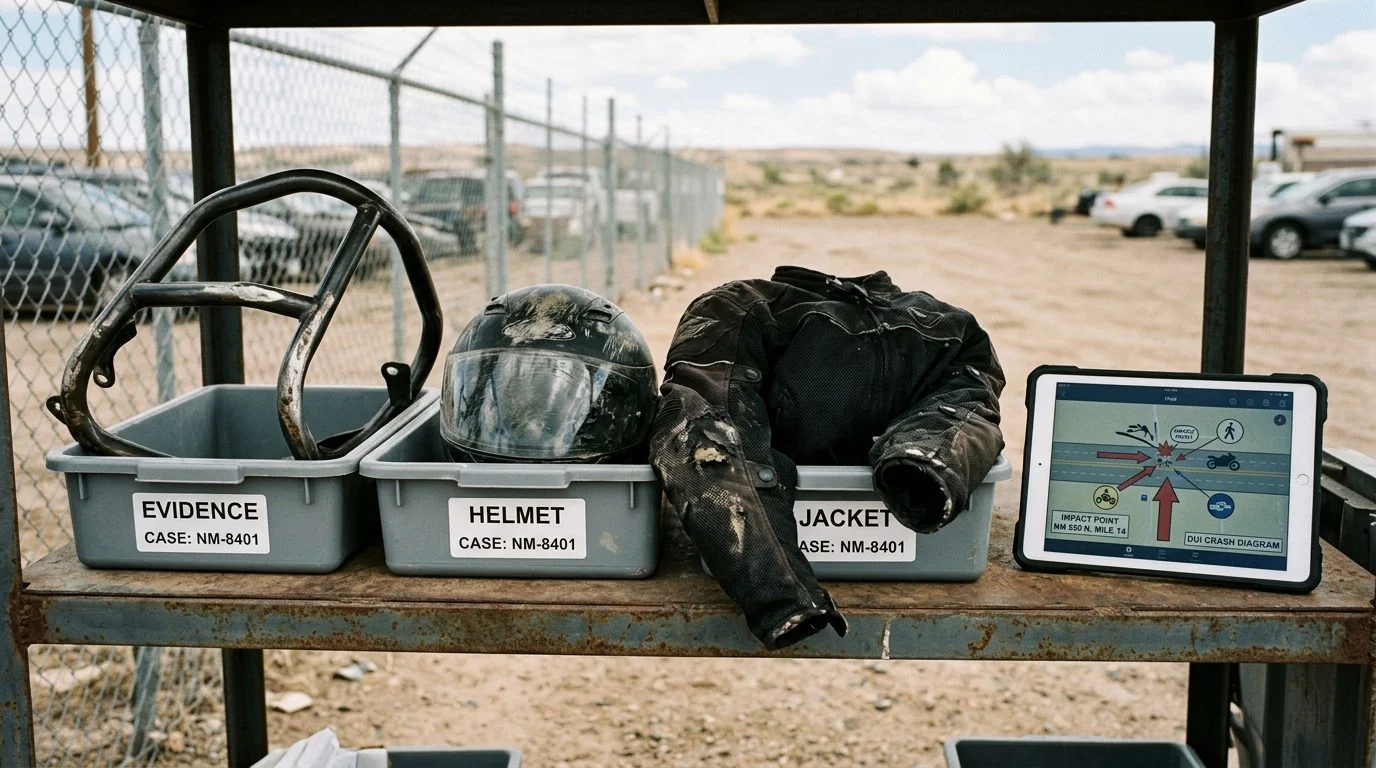
- Crash reports: officer notes on impairment, testing and citations. Whether an accident report can be used as trial evidence depends on the rules of evidence and the circumstances, so other proof matters too.
- Alcohol test results: blood or breath results and any related criminal records.
- Medical records: scene, emergency, imaging, surgery and rehabilitation records that show the injury.
- Scene proof: witness statements, photos, traffic camera footage and vehicle data where available.
- Alcohol sale records: receipts or bar tabs, if an alcohol seller may be part of the claim.
- Income records: pay stubs, tax records and a description of the job duties the injury affects.
- Your own journal: track pain, mobility, treatment and daily limits. Keep bills, receipts and mileage to appointments.
Not sure what your next step is?
Talk it through with our team — the first consultation is free, confidential, and carries no obligation.
Serving Injury Victims Across New Mexico
El Gringo Law represents people hurt in serious injury cases, including spinal cord injuries from crashes involving impaired drivers. The firm also handles car accidents, trucking accidents, premises liability, negligent security, wrongful death, sexual assault, catastrophic injuries, amputations and burn injuries.
- Responsible lawyer: Josh Wood, licensed in New Mexico and Arizona, is responsible for the content of this page. Contact details appear on the firm’s website at elgringolaw.com.
- Support team: our team includes assistants and office staff who help with day-to-day coordination of each matter.
- Service area: people in Albuquerque, Bernalillo County, Rio Rancho, Sandoval County and Santa Fe can contact the firm.
Each case turns on its own facts. Bring your questions about the crash, your injuries and your records when you reach out.

Frequently Asked Questions
These short answers cover common questions about impaired driver crash claims.
Can I still have a claim if I was partly at fault?
Yes. New Mexico reduces your damages by your percentage of fault, so partial fault lowers an award rather than ending the claim.
How long do I have to file?
New Mexico’s general time limit for an injury to a person is three years, but exceptions exist, and a shorter limit and a notice requirement can apply when the impaired driver was a government employee driving a public vehicle. Early contact helps protect your options.
Can I sue a bar or restaurant that served the driver?
New Mexico’s dram shop statute allows some claims against licensed alcohol sellers. Whether one fits your crash turns on the evidence.
Who else besides the driver can be responsible?
An employer or an alcohol seller may share responsibility in some crashes. Each relationship follows its own legal rules.
Can a family member bring a claim?
A spouse or other close family member may bring a loss of consortium claim. That claim belongs to the family member.
Does it cost anything to talk with you?
The firm offers a free, confidential initial consultation, with no obligation to continue.
If an impaired driver’s crash changed your life or your family’s life, you may have a claim worth discussing. Use the contact form on elgringolaw.com or start a chat, and tell us what happened.
How we approach these cases
Thorough record review
We gather police reports, medical records, and crash evidence so the full picture of what happened is clear from the start.
Focus on serious injuries
We concentrate on catastrophic injuries, including spinal cord injuries, and understand how they change daily life, work, and family.
Direct attention to your situation
Our team keeps you informed and answers your questions in plain language, in person, by phone, or by chat.
Protecting your rights
We work to hold the at-fault driver accountable and to address the costs of your injury, including future care.
Protect your case from the start
Keep copies of the police report number, photos of the scene and your injuries, and every medical record and bill. Be cautious about giving recorded statements to insurance adjusters before you have spoken with a lawyer.
What happens next
1. Tell us what happened
Share the basic facts of the crash and your injuries through our contact form, by phone, or through chat.
2. We review your case
We look at the crash report, medical information, and any evidence of impairment, such as toxicology or police findings.
3. We explain your options
You receive a clear, honest explanation of your situation and the steps ahead, with no obligation to move forward.