Spinal Injury Claims | New Mexico
A Spinal Fracture Is Not the Same as a Spinal Cord Injury. Know the Difference Before You Talk About Your Claim.
Start with a free, confidential consultation with no obligation to continue.
By Josh Wood · Published November 8, 2026
A spinal fracture is a broken or cracked bone in the spine. A spinal cord injury is damage to the nerves inside it. The two can happen together or apart, and in a claim the difference changes what the records must show. This page explains the spinal fracture vs spinal cord injury lawsuit question in plain language for adults in New Mexico who are researching an injury, often for someone they love.
Two Different Injuries That Often Get Confused
A spinal fracture is a break or crack in one or more vertebrae, the bones that make up the spine. A spinal cord injury is damage to the spinal cord, the bundle of nerves that carries signals between the brain and the body. One can happen without the other.
Doctors ask two separate questions. Is the bone broken? Is the cord hurt? The MedlinePlus spinal cord injury article covers the causes, symptoms, and tests used to answer them.
A fracture can occur with no cord damage. Cord damage can also occur when a fracture does not show clearly on a scan. The two are not the same problem.
They often appear together in high-energy crashes. A rollover, a truck impact, or a hard fall can break bones and injure the cord at the same time. That is why the labels get mixed up. Emergency notes, insurance forms, and family conversations often say “broken back” or “back injury” for both. Check the exact diagnosis in the medical chart.
If you're trying to make sense of a spine diagnosis for someone you love, our team is ready to talk through the records with you. Talk it through with our team — the first consultation is free, confidential, and carries no obligation.
Why the Distinction Shapes the Claim
In a spinal fracture vs spinal cord injury lawsuit, the medical records often decide how the injury is presented. Claims are built from documented injuries, so the wording matters.
A broken bone may lead to care focused on healing and stabilizing the spine. Damage to the cord can add rehabilitation, equipment, home changes, and long-term medical care. Those needs are part of the damages discussion in a claim.
Injury claims commonly include medical bills, lost income, pain and suffering, and future care needs. Cord involvement often bears most directly on the last two.
Future care is where the gap often shows. The Christopher & Dana Reeve Foundation’s financial planning guidance covers planning for spinal cord injury medical, equipment, and care costs. It also notes that settlements may affect need-based benefits.
Family members have their own interests too. In New Mexico, loss of consortium damages belong to the family member who brings the claim, not to the injured person, as Thompson v. City of Albuquerque explains.
What Medical Records Need to Show
Medical records should describe both the bone and the nerves. Imaging and a neurological exam answer different questions.
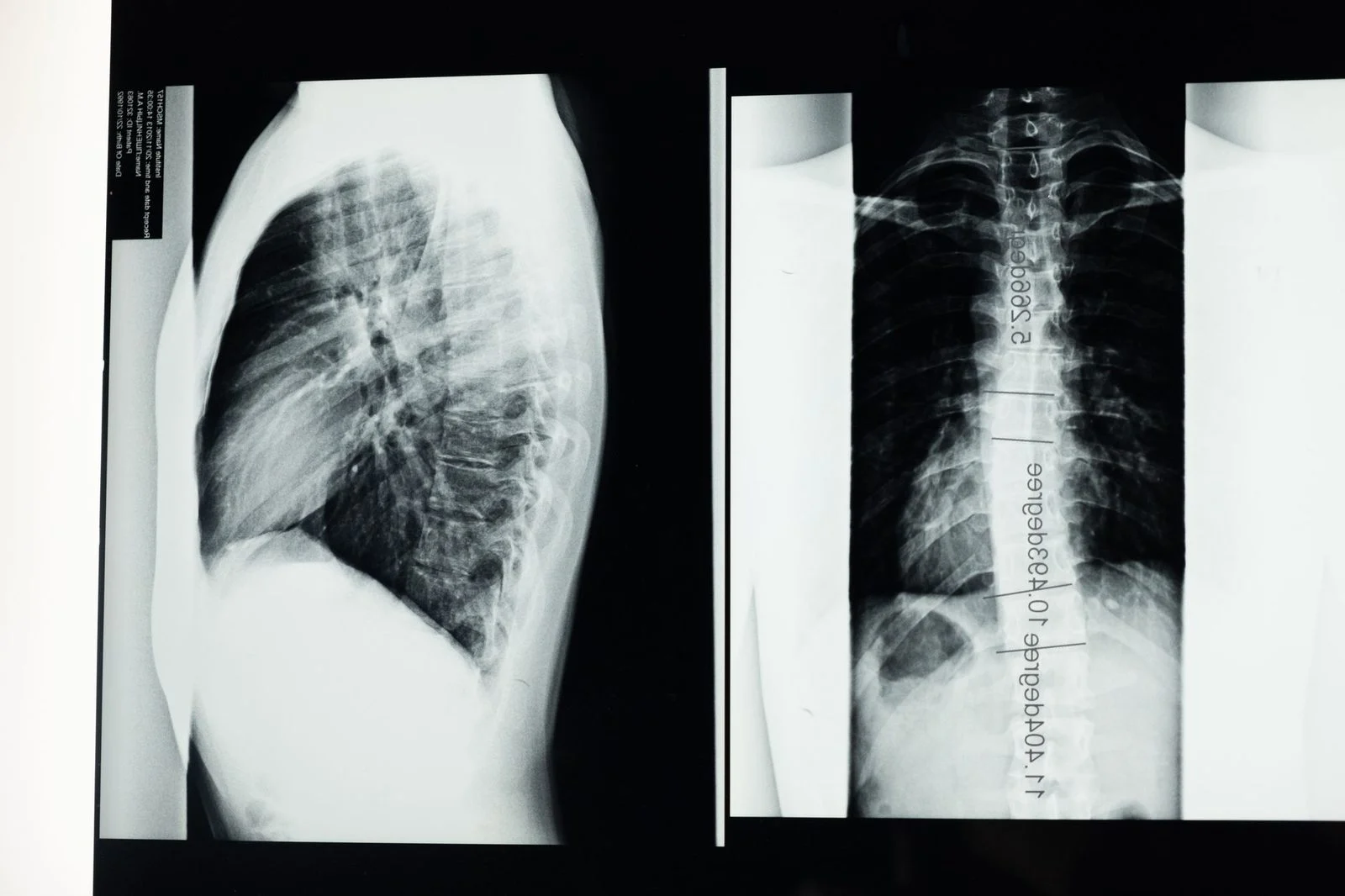
Imaging such as X-rays, CT scans, and MRI shows bone and soft tissue. A neurological exam records movement, sensation, and reflexes. An X-ray can show a fracture. The exam shows how the nerves are working on that day.
Records often use the terms complete and incomplete. In general terms, a complete injury means no movement or feeling below the level of injury. An incomplete injury means some function remains. The MedlinePlus article on spinal cord injury describes this difference.
Charts also describe motor function, meaning movement, and sensory function, meaning feeling. Ask the treating team to explain any term you do not understand. Write the answer down.
Keep copies of discharge summaries, follow-up notes, therapy records, imaging reports, and bills. Start a simple timeline of symptoms and missed work. The details in these records are often what a claim relies on.
How Insurers Often Look at Fractures and Cord Injuries
Insurance adjusters review medical records closely. They may focus on whether the injury is described as a fracture, a cord injury, or both.
A healed fracture and an ongoing nerve problem can be viewed differently. A healed bone may be treated as a closed medical question. Continuing weakness or numbness raises questions about future care. The insurer’s response depends on the whole file.
New Mexico law limits early settlement contact. Under NMSA § 41-1-1, within fifteen days from the date of the occurrence causing an injured person’s injury, no person whose interest is or may become adverse to that injured person may negotiate or attempt to negotiate a settlement with that person, obtain or attempt to obtain a general release of liability from that person, or obtain or attempt to obtain any written or oral statement from that person for use in negotiating a settlement or obtaining a release, provided that person is under the care of a person licensed to practice the healing arts or confined to a hospital or sanitarium as a patient. This applies when the patient is under medical care or in a hospital. Those papers must also be acknowledged before a notary who has no adverse interest, or they are void.
Be careful with recorded statements and releases. Before you sign a release or speak on the record, make sure you understand what it covers. Ask for a copy of anything you sign.
How Fault Can Affect a New Mexico Claim
New Mexico does not bar an injury claim just because the injured person shares some blame. Fault still matters, because the injured person’s share reduces what can be recovered.
New Mexico adopted pure comparative negligence (shared fault) in Scott v. Rizzo in 1981. In New Mexico, a person who is partly at fault for an accident can still recover damages. Under UJI 13-2218 NMRA, the plaintiff’s total damages are reduced by the percentage of the plaintiff’s negligence.
Under UJI 13-2218 NMRA, jurors first total the damages. They then assign fault percentages that add up to 100%. Finally, they reduce the damages by the injured person’s percentage.
When more than one person is at fault, NMSA § 41-3A-1 provides that the liability of defendants in a comparative fault action is several, so each defendant is liable only for the portion of the total damages equal to the ratio of that defendant’s fault to the total fault attributed to all persons, including plaintiffs, defendants and persons not party to the action. The statute lists exceptions where joint and several liability applies instead, such as cases of intentional harm, vicarious liability (only for that portion of the total liability attributed to those persons), defective product manufacturers (only for that portion), and situations not covered by the others and having a sound basis in public policy.
A crash with several drivers, a commercial truck, or a property condition can spread fault across more than one party. Who did what, and when, shapes the split. Keep photos and witness names for that reason.
For a fuller explanation, see the comparative fault explanation.
Time Limits and How Long a Case Can Take
Injury claims have legal time limits, and a spinal injury case often takes longer than a simpler injury claim. Time limits come from New Mexico statutes, and the type of claim matters.
A spinal cord injury can take time to show its full extent. Doctors may need more time before long-term needs are clear.
Medical recovery and claim timing do not always move on the same schedule. A claim can move faster or slower than treatment does, and that gap can surprise families.
Which deadline applies turns on the facts and the parties involved, so it is worth checking early. The timing guide for spinal cord injury cases in New Mexico explains more.
Keep track of dates from the start, including appointments, letters, and insurer calls.
Not sure what your next step is?
Talk it through with our team — the first consultation is free, confidential, and carries no obligation.
Court Costs and What the Firm Advances
Our initial consultation is free, confidential, and carries no obligation to continue. That first conversation is a chance to ask how a claim like this would be handled.
If you hire the firm, the written agreement explains how costs work. Under that agreement, the firm may advance court costs and litigation expenses. Those advances are repaid only from a recovery.
If there is no recovery, you may still be responsible for court costs and the expenses of litigation, as the written agreement states. Read that section before you sign.
Costs are one part of a claim. The costs guide for spinal cord injury lawsuits walks through them in more detail.
Medical bills and lost wages are separate from court costs. Track each one on its own timeline.
Frequently Asked Questions
Short answers to common questions about spinal fractures and spinal cord injuries follow.
What happens if someone has a spinal cord injury?
Effects depend on where the injury sits on the spine and how severe it is. The treating medical team guides care and the expected course of recovery. MedlinePlus covers symptoms and treatment.
What are the signs of a spinal injury?
Numbness, weakness, loss of bladder or bowel control, and severe back or neck pain after trauma need emergency medical care right away. MedlinePlus lists symptoms in more detail.
How much is a spine injury worth?
No fixed value exists for a spine injury. The facts of each case shape the damages. Every case is different, and results in other cases do not set the value of yours.

Preparing Your Questions Before Speaking With a Lawyer
Gathering records before you talk with a lawyer makes the first conversation more useful.
Start with the accident report, photos, and the names of treating providers. Add discharge summaries, follow-up notes, therapy records, bills, and a timeline of symptoms and missed work. Note the exact words in each diagnosis.
Under NMSA § 66-7-213, except as otherwise provided in that section, no accident report shall be used as evidence in any trial, civil or criminal, arising out of an accident. Keep yours anyway.
Many people reading this page about a spinal fracture vs spinal cord injury lawsuit are researching for a family member while dealing with a medical crisis. You do not need to know the legal terms before you ask for help.
If you’re trying to make sense of a spine diagnosis for someone you love, our team is ready to talk through the records with you. Reach out through the contact form.
Responsible lawyer: Josh Wood, El Gringo Law, elgringolaw.com. Josh Wood is licensed in New Mexico and Arizona.
How El Gringo Law Works With Spinal Injury Clients
Free, confidential first consultation
Call, send a contact form or start a chat. A free first consultation is confidential and carries no obligation to continue.
We listen before we advise
We take time to learn how the injury happened, what medical care you have received and what questions are weighing on you.
Clear explanations
Our team explains, in plain language, what the medical records say and how a fracture and a spinal cord injury can lead to very different legal questions.
Support staff who keep you informed
Our team, including office and support staff, answers questions and keeps you updated on the steps in your matter.
Responsible lawyer
Josh Wood, licensed in New Mexico and Arizona, is the responsible lawyer for this page. Contact El Gringo Law through the form or chat on this page.
Don't assume a fracture is the whole story
A broken vertebra can look stable on imaging and still be linked to nerve or spinal cord damage. If you have numbness, weakness, tingling, trouble walking or changes in bladder or bowel control, get medical care right away. Keep every record, and talk with our team about how your injury is documented.
Questions people often ask us
Can a spinal fracture lead to a lawsuit?
It can, depending on how the injury happened, who may be responsible and what the medical records show. Every case is different, and our team reviews the facts of yours during a free consultation.
What makes a spinal cord injury different?
A spinal cord injury involves damage to the nerves that carry signals between the brain and the body. Its effects depend on where it sits on the spine and how severe it is. Your treating medical team guides care and expected recovery.
What should I bring to my consultation?
Bring any medical records, imaging reports, accident details and insurance correspondence you have. Our team will tell you what else is useful.
Ready to talk about your spinal injury?
Start with a free, confidential consultation with El Gringo Law.