Trucking Accidents | New Mexico
Semi Truck Accident Compensation in New Mexico
Crashes with big rigs involve trucking companies, insurers, and complex federal and state rules. El Gringo Law focuses on helping injured people and their families understand their options after a semi truck collision.
By Josh Wood · Published November 2, 2026
A semi truck crash can change a life in a single moment. If a commercial truck hit your car, or the car of someone you love, you may be asking what semi truck accident compensation in New Mexico can cover. This page explains the main damage categories, the state rules that can change a recovery, and the records that help. It is general information to help you think through your options.
What Compensation Can a Car Accident Victim Typically Recover From a Semi-Truck Crash in New Mexico, Including Medical Bills, Lost Wages, and Pain and Suffering?
An injured driver or passenger may seek money for medical bills, lost wages, and pain and suffering. The amount turns on the injuries and the facts of the crash, so no single figure fits every case.
Past and future medical bills. Past bills cover emergency care, surgery, hospital stays, and therapy. Future care can include rehabilitation, medication, medical equipment, and in-home help that a treating provider recommends. Keep every bill and provider note, because they show what the injury has cost.
Lost wages and earning capacity. Lost wages cover time off work and shifts you could not work. Lost earning capacity covers income a lasting injury may take away over time, such as moving from a physical job to lower-paying work.
Pain and suffering. This is the non-economic harm from the injury. It includes physical pain, emotional distress, and loss of the activities that make daily life work. It is harder to put on a receipt, so records about daily life matter.
Property damage. Vehicle repair or replacement is a separate loss from bodily injury damages.
If you're trying to sort out a semi truck crash that happened to you or someone you love, our team is glad to talk it through with you. Talk it through with our team — the first consultation is free, confidential, and carries no obligation.

How Semi-Truck Crashes Differ From Typical Car Accident Claims
A semi truck crash can involve more than one party. Federal trucking rules also create records that often matter early in a claim.
More than one party may share responsibility. Possibilities include the driver, the motor carrier that uses the driver, a company that loaded the cargo, or a provider that maintained the truck. The crash itself decides which of these are involved.
Federal driving limits matter. Under 49 CFR § 395.3, a property-carrying driver may not drive without first taking 10 consecutive hours off duty.
Drivers also keep a duty status record. 49 CFR § 395.8 requires that record for each 24-hour period. Carriers must keep those records for at least 6 months from receipt.
Driver files and maintenance records matter too. 49 CFR § 391.51 requires a carrier to keep a file for each driver. 49 CFR § 396.3 requires carriers to inspect, repair, and maintain the vehicles they control.
Commercial trucking insurance also differs from personal auto insurance. How much coverage applies is a question for the facts of each case.
Which Injuries and Damages Commonly Come Up in Semi-Truck Cases?
Semi truck crashes can cause catastrophic injuries, spinal cord injuries, amputations, and burn injuries. Each can bring long-term medical and living costs.
- Catastrophic injuries are serious harms that can change how a person lives and works for a long time.
- Spinal cord injuries involve damage to the spinal cord itself.
- Amputations involve the loss of a limb, which can bring ongoing medical and equipment needs.
- Burn injuries damage skin and tissue and often need long treatment.
Serious injuries often need ongoing care and long recovery periods. Future costs take time to measure. Those claims usually rely on medical records and treating provider opinions that show the expected course of care.
How New Mexico Fault Rules and Deadlines Can Affect a Truck Accident Recovery
New Mexico uses pure comparative negligence, so your share of fault reduces your recovery but does not bar it. This rule comes from Scott v. Rizzo.
The jury instruction shows how the math works. Under UJI 13-2218 NMRA, when fault is not split among defendants, the jury totals your damages and reduces them by your percentage of fault. UJI 13-2219 NMRA covers cases where fault is split among defendants.
Several liability can also limit a defendant’s share. New Mexico’s Section 41-3A-1 provides that, in causes of action to which several liability applies, any defendant who establishes that the fault of another is a proximate cause of a plaintiff’s injury is liable only for the portion of the total dollar amount awarded as damages that equals the ratio of that defendant’s fault to the total fault attributed to all persons, including plaintiffs, defendants and persons not party to the action. The statute lists exceptions, such as intentional injury.
New Mexico’s Section 37-1-8 requires an action for an injury to the person or reputation of any person to be brought within three years. Under NMSA 1978, § 41-2-2, every action instituted under this section and the preceding section must be brought within three years after the cause of action accrues, and the cause of action accrues as of the date of death (NMSA 1978, § 41-2-2 — three years from the date of death). Deadlines depend on the facts of each crash.
New Mexico’s Section 41-2-1 provides that whenever a person’s death is caused by the wrongful act, neglect or default of another, even under circumstances that amount in law to a felony, and that act, neglect or default would have entitled the injured party to maintain an action and recover damages if death had not ensued, the person or corporation that would have been liable is liable to an action for damages, notwithstanding the death of the person injured.
What Records and Evidence Help Document Losses After a Semi-Truck Crash?
Medical records, bills, wage records, and crash records are the core evidence after a semi truck crash. Each one shows a different part of the loss.
- Medical records and itemized bills show the injury, the treatment, and what it cost.
- Pay stubs, employer letters, and tax records support lost wage and earning capacity claims.
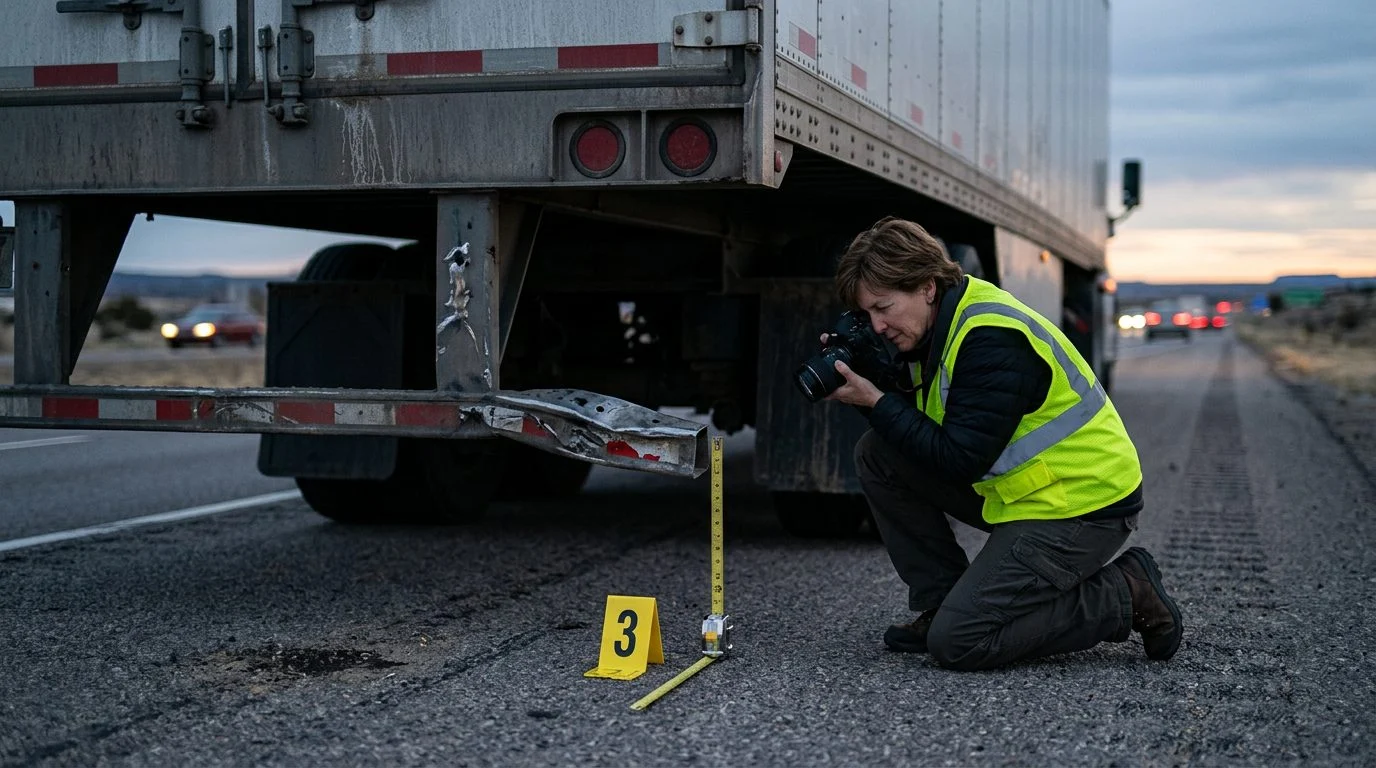
- The police report, scene and vehicle photos, witness names, and insurance letters document the crash itself.
- A simple daily log of symptoms, appointments, and activities you cannot do shows how the injury affects life outside the hospital.
Records like these are often requested early. A claim is assessed on the full set of facts, not on one document.
Steps That Can Help Protect a Semi-Truck Accident Claim in New Mexico
Getting a medical evaluation soon after the crash, following through on care, and keeping every record are practical first steps.
Get checked promptly, even if injuries seem minor at first. Some symptoms appear later. Follow the care a provider recommends, and keep records of each appointment.
Keep copies of receipts, bills, and messages with any insurer. Statements to an insurance company can be used in a claim. Many people find it reasonable to speak with a lawyer before giving a recorded statement.
No step can predict how a particular claim will end. A useful habit is to keep a clean, dated file from day one.
Not sure what your next step is?
Talk it through with our team — the first consultation is free, confidential, and carries no obligation.

How El Gringo Law Can Talk With You About a Semi-Truck Crash Claim
El Gringo Law serves people in Santa Fe, Rio Rancho, Las Cruces, Bernalillo County, Sandoval County, Taos, and Farmington. The firm handles car accident and trucking accident claims, including the injury types on this page. Josh Wood is the lawyer responsible for this page. He is licensed in New Mexico and Arizona.
The firm offers a free first consultation that is confidential and carries no obligation to continue. You can reach the firm through its contact page at El Gringo Law contact page.
Can I still recover if I was partly at fault?
Yes, under New Mexico’s pure comparative negligence rule, your share of fault lowers your recovery but does not bar it. Scott v. Rizzo sets out this rule.
How long do I have to file an injury claim?
New Mexico generally allows three years for an action for injury to a person.
Can a family member bring a claim after a fatal truck crash?
If you’re trying to sort out a semi truck crash that happened to you or someone you love, our team is glad to talk it through with you.
How We Can Help After a Semi Truck Crash
Free, Confidential First Consultation
Your first consultation is free, confidential, and comes with no obligation to continue.
Evidence Review
We look at the crash report, photos, and records that can show how the collision happened.
Attention to Every Party
Semi truck claims can involve the driver, the trucking company, and other businesses. We examine who may be responsible.
Serious Injury Focus
Our practice includes catastrophic injuries, spinal cord injuries, amputations, and burn injuries caused by commercial vehicle crashes.
Before You Speak With an Insurance Company
A trucking company's insurer may contact you quickly. Talk with a lawyer before giving a recorded statement or signing any release, especially if your injuries are still being treated.
What Makes Semi Truck Cases Different
Multiple Responsible Parties
A crash may involve the driver, the carrier, the vehicle owner, or a company that loaded the cargo. Each may play a role in the claim.
Federal and State Trucking Rules
Commercial drivers and trucking companies are subject to safety regulations on hours of service, vehicle maintenance, and driver qualifications.
Electronic and Business Records
Driver logs, electronic control module data, dispatch communications, and maintenance files can help show what happened before and during the crash.
Serious Injuries and Long Recovery
Because of a truck's size and weight, crashes often cause catastrophic injuries. Recovery and future medical needs are part of the case.