Car Accidents · New Mexico
Car Accident Deadlines in New Mexico: Know the Clock Before It Runs
Learn how filing deadlines work after a crash, what can change them, and why an early conversation with El Gringo Law can help you protect your claim.
By Josh Wood · Published November 8, 2026
The statute of limitations for a car accident in New Mexico is generally three years for a personal injury claim. Some related claims run on different clocks, and a few rules are much shorter. This guide explains each one in plain words so you can track the right dates.
The Short Answer: Three Years for Most Car Accident Injury Claims
For most injuries from a crash, New Mexico gives three years to file a lawsuit. New Mexico’s Section 37-1-8 provides that actions against sureties on official bonds and on bonds of guardians, conservators, personal representatives and persons acting in a fiduciary capacity must be brought within two years after the principal’s liability is finally established by a judgment or decree of the court, and that actions for an injury to the person or reputation of any person must be brought within three years.
This two-year rule applies to actions against sureties on official bonds and on bonds of guardians, conservators, personal representatives and persons acting in a fiduciary capacity. A separate three-year period applies to actions for an injury to the person or reputation of any person. Negligence means a failure to use the care a reasonable person would use. Negligence means a failure to use the care a reasonable person would use.
The deadline is for filing in court. Many people talk with an insurance company for months before anything is filed. A settlement offer does not file anything with a court, so keep the filing date in view while talks continue.
Three years is the starting point. Other clocks in this guide can be shorter or different, so match your situation to the right category.
If you are tracking a filing date while recovering from a crash, our team can go over your timeline with you and talk through what comes next. Talk it through with our team — the first consultation is free, confidential, and carries no obligation.

How the Clock Starts and How to Count the Deadline
For a crash on June 14, 2026, the three-year date would fall on June 14, 2029. Mark that date on a calendar.
Some situations can change the start point, which is why exact dates matter. Write down the crash date, the date you first felt symptoms, and any date a doctor linked to the crash.
Filing is what counts. New Mexico’s Section 37-1-13 provides that filing the petition, declaration, bill or affidavit in the proper clerk’s office, when process is authorized by law to be issued upon that filing and with intent that process shall issue immediately (an intent presumed unless the contrary appears), is deemed a commencement of the action. A demand letter to an insurer is not that filing.
Ongoing talks with an insurer do not file a case. Keep the court date separate from the insurer’s timeline. Set a reminder several months before the three-year date so you have time to review your options.
Wrongful Death After a Fatal Crash: A Separate Three-Year Period
Under NMSA 1978, § 41-2-2, an action brought under the wrongful death provisions must be brought within three years after the cause of action accrues (NMSA 1978, § 41-2-2 — three years from the date of death). New Mexico’s Section 41-2-2 states that the cause of action accrues as of the date of death.
Death can follow a crash by days, weeks, or months. That is why the date of death, not the crash date, controls this clock. Record both dates.
New Mexico law allows an action when a wrongful act or neglect causes a death. New Mexico’s Section 41-2-1 provides that the person or corporation that would have been liable, if death had not ensued, is liable to an action for damages, notwithstanding the death of the person injured.
Family members may have losses of their own, such as loss of consortium. New Mexico treats those damages as belonging to the family member who claims them, not to the injured person or the estate, as explained in Thompson v. City of Albuquerque.
Property Damage and Vehicle Claims Have a Different Deadline
A claim for damage to your vehicle generally falls under a four-year period. New Mexico’s Section 37-1-4 lists actions brought for injuries to property among those that must be brought within four years.
One crash can create both an injury claim and a property claim. Each has its own clock. The injury clock is three years, and the property clock is four years.
Because a car repair can settle quickly, some people lose track of the injury date. Keep both dates on one list. Put the shorter injury date at the top so it gets attention first.
Shorter Notice Rules When a Government Vehicle or Entity Is Involved
When a government body is involved, the rules change and the timelines get much shorter. The New Mexico Tort Claims Act, in Section 41-4-16, requires a person claiming damages from the state or a local public body to present a written notice stating the time, place and circumstances of the loss or injury to the proper official. The general deadline is ninety days after the occurrence. For a wrongful death claim, the notice may be presented within six months after the date of the occurrence of the injury that resulted in the death.
That notice must state the time, place and circumstances of the loss or injury. It goes to a specific office, such as the risk management division for the state or the county clerk for a county.
Notice is separate from the court deadline. New Mexico’s Section 41-4-15 provides that actions against a governmental entity or a public employee for torts are forever barred unless commenced within two years after the date of occurrence resulting in loss, injury or death, except that a minor under the full age of seven years has until his ninth birthday in which to file.
Under § 41-4-16(B), notice is not required to maintain a suit where the governmental entity had actual notice of the occurrence, and the notice period does not include up to ninety days during which the injured person is incapacitated from giving notice by reason of injury.
A crash involving a city bus, a county vehicle, or a state vehicle can raise these rules. So can a road hazard a public body maintains. Check early whether a public body is involved.
Exceptions That Can Change the Timing
Limited rules can extend some deadlines for certain people, and the facts decide whether one applies. New Mexico’s Section 37-1-10 extends the times limited for bringing actions by the preceding provisions of that chapter in favor of minors and incapacitated persons, so that they have one year from and after the termination of the incapacity within which to commence those actions.
For tort actions against a governmental entity or a public employee, Section 41-4-15 provides that a minor under the full age of seven years has until his ninth birthday in which to file. Section 41-4-15 provides that actions against a governmental entity or a public employee for torts shall be forever barred, unless such action is commenced within two years after the date of occurrence resulting in loss, injury or death, except that a minor under the full age of seven years shall have until his ninth birthday in which to file, and this subsection applies to all persons regardless of minority or other legal disability (Section 41-4-15).
New Mexico law at Section 37-1-12 provides: “When the commencement of any action shall be stayed or prevented by injunction order or other lawful proceeding, the time such injunction order or proceeding shall continue in force shall not be counted in computing the period of limitation.”
Do not assume an exception applies to you. Review the exact dates and circumstances before you count on any extension.
Not sure what your next step is?
Talk it through with our team — the first consultation is free, confidential, and carries no obligation.
The Four Elements of Negligence a Claim Must Prove
A negligence claim generally needs a duty, a breach of that duty, and a breach that caused the damages, according to Herrera v. Quality Pontiac.
Duty is the first piece. Under UJI 13-1604, every person has a duty to use ordinary care for the safety of others. UJI 13-1604 NMRA reads: “Every person has a duty to exercise ordinary care for the safety of the person and the property of others. [Every person also has a duty to exercise ordinary care for the person’s own safety and the safety of their property.] USE NOTES The bracketed material is to be used only when the party seeking recovery has been charged with lack of ordinary care.” Drivers owe that duty to other people on the road.
Breach is the second piece. A driver who runs a red light has failed to use that care, if the facts show it.
Causation is the third piece. Under Herrera, a proximate cause produces the injury in a natural and continuous sequence, and the injury would not have occurred without it. It need not be the only cause, the last cause, or the nearest cause.
Damages are the harm itself, such as medical bills, lost work, and pain. The deadline question and the proof question are separate.
Why Early Steps Matter Between the Crash and the Deadline
Early steps matter because dates and proof are tied together. Outside a municipality, the driver notifies the county sheriff or New Mexico State Police.
Get medical care, even if symptoms seem minor. Some injuries show up days later. Write down symptoms and dates as they appear.
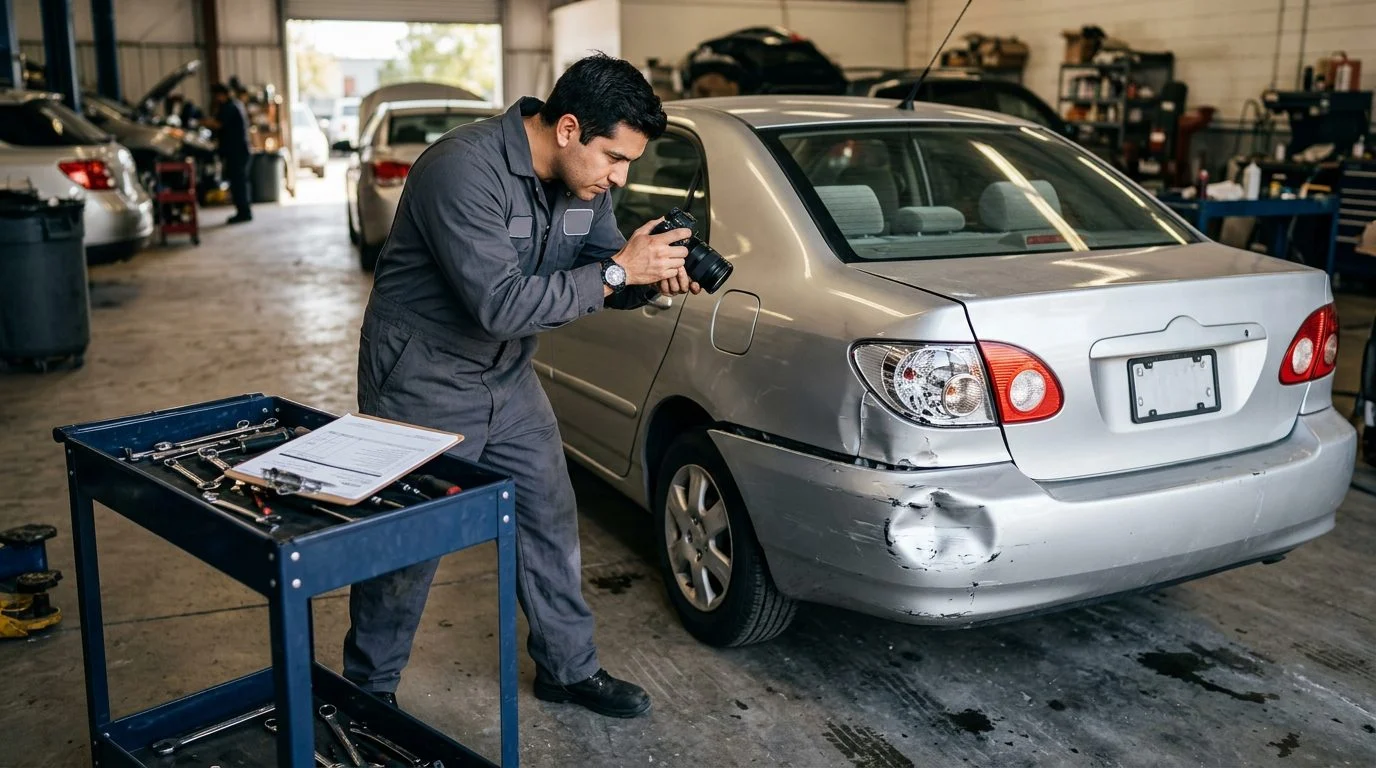
Keep the police report number, photos of the scene and vehicles, and names of any witnesses. Save repair estimates and bills in one folder.
Insurance adjusters may make early offers. Read any offer and any release closely before you sign.
Evidence fades over time. Witness memories blur, and video can be overwritten. Early records help your claim no matter which deadline applies.

Talk Through Your Deadline With Our Team
You may be tracking a filing date while managing a hospital stay, a long recovery, or grief over a family member’s death. You don’t have to sort out the dates alone.
El Gringo Law represents people hurt in car accidents and related injury cases across New Mexico. Josh Wood is the lawyer responsible for this page, and he is licensed in New Mexico and Arizona.
If you want to check the dates in your situation, reach out through the El Gringo Law contact page. The initial consultation is free, confidential, and comes with no obligation.
Website: elgringolaw.com. Responsible lawyer: Josh Wood.
Frequently Asked Questions
What time limits apply to injury claims in New Mexico?
How long do I have to file a wrongful death claim after a crash?
Generally three years from the date of death, under NMSA 1978, § 41-2-2.
Is the deadline shorter if a government vehicle caused the crash?
It can be.
Do property damage claims and injury claims have the same time limit?
Why Talk to El Gringo Law Early
Early Review of Your Timeline
We look at the date of your crash and the steps still ahead so you understand where your claim stands.
Help Preserving Evidence
Police reports, photos, medical records and witness details are easier to collect while memories and records are fresh.
Free, Confidential First Consultation
Your first consultation is free, confidential and comes with no obligation to continue.
Reach Us Your Way
Call us, send a contact form or start a chat to tell us what happened.
Don't Wait to Get Answers
Deadlines are easy to overlook while you are recovering from injuries and dealing with insurance companies. Contact us early so we can review your situation before time runs short.
Questions to Bring to Your Consultation
When did the crash happen?
The exact date of the collision is the starting point for reviewing your timeline.
Who was involved?
Details about other drivers, passengers, employers or vehicle owners can affect who may be part of a claim.
Was a government vehicle involved?
Crashes involving public vehicles or agencies can raise different procedural questions, so tell us about them right away.
What injuries and treatment do you have?
Your medical records and treatment history help us understand the full scope of your claim.
Talk With Josh Wood at El Gringo Law About Your Crash
Related practice areas
- Wrongful Death Lawyers in New Mexico | El Gringo Law
- Can Adult Children Sue for the Death of a Parent in New Mexico?
- Can a Wrongful Death Claim Go Forward If the At-Fault Driver Died?
- Fatal Crash Insurance Adjuster Calls in New Mexico