Negligent Security | Albuquerque, New Mexico
Hurt in an Apartment Assault? Talk With Our Team About Owner Responsibility
El Gringo Law helps people injured in apartment assaults and other negligent security incidents across New Mexico. Your first consultation is free, confidential, and comes with no obligation to continue.
By Josh Wood · Published October 26, 2026
An owner or manager can be held responsible for an assault on their property when the attack was foreseeable and the owner did not use reasonable security. This is the core question in a negligent security claim, and it applies to apartments, hotels, parking lots, and shared areas. If you or a family member was hurt in one of these attacks, an apartment assault lawyer Albuquerque residents can reach is a good place to start. El Gringo Law offers a free, confidential, no-obligation initial consultation.
What a Negligent Security Claim Covers After an Assault on a Property
A negligent security claim is a civil case against the property owner or manager, not against the attacker. It asks whether the owner failed to protect people from a criminal act it should have anticipated.
New Mexico landowners must use ordinary care to protect visitors. The duty covers harm from a third party’s conduct, including criminal conduct, when that conduct was foreseeable. See UJI 13-1320 NMRA and UJI 13-1309 NMRA.
This type of claim may help:
- Tenants and their guests
- Hotel and extended-stay guests
- Visitors in lobbies, parking garages, stairwells, and pools
- Family members of someone killed in an attack on the property
Common settings include apartment complexes, rental buildings, hotels, and their parking lots and common areas. Our negligent security and premises liability work covers cases in Albuquerque, Rio Rancho, Bernalillo County, and Sandoval County.
If you were hurt in an attack at an apartment, hotel, or parking lot, the owner may share responsibility, and our team can review your facts with you. Talk it through with our team — the first consultation is free, confidential, and carries no obligation.
When an Apartment or Hotel Owner Can Be Held Responsible
An owner can be held responsible when the attack was foreseeable and the owner did not use ordinary care to guard against it. That test drives most of the analysis in an owner liability case.
Foreseeability. Prior break-ins, assaults, shootings, repeated complaints, and known dangerous conditions are the kind of evidence that can show an attack was foreseeable.
Ordinary care. Ordinary care is what a reasonably prudent person would do in the same situation. As the danger that should reasonably be foreseen grows, the care required also grows. UJI 13-1603 NMRA
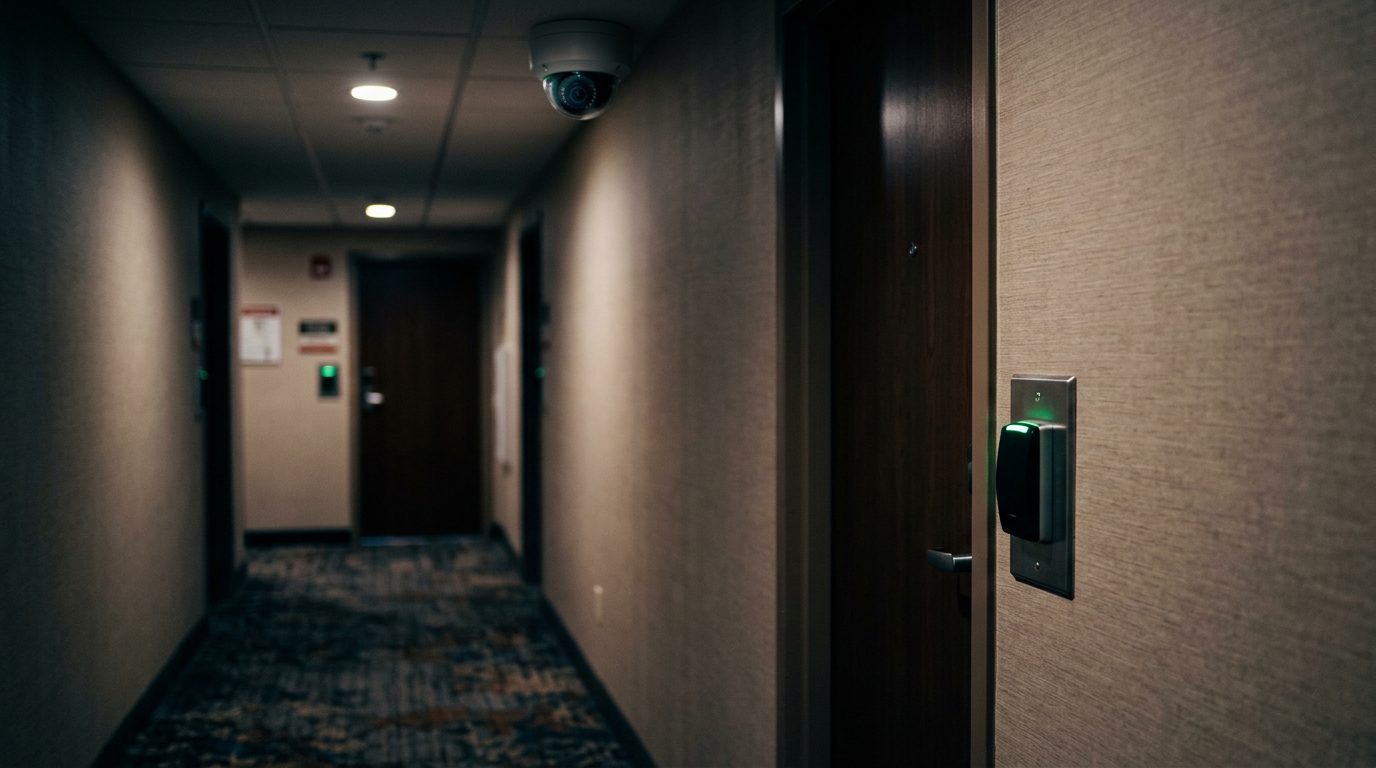
Reasonable security. Courts look at locks, access control, gates, lighting, cameras, patrols, and how quickly known problems were fixed.
Causation. The security failure must be a real cause of the harm. A cause contributes to bringing about the injury. UJI 13-305 brackets the clause “and if injury would not have occurred without it,” and its committee commentary notes that the clause may be unnecessary or inappropriate in some cases. UJI 13-305 NMRA This instruction defines “cause” and does not use the word “proximate”; its use notes state that the 2004 amendments eliminated that word. Herrera v. Quality Pontiac
UJI 13-305 NMRA does not address comparing the owner’s failure to the attacker’s conduct; its bracketed “independent intervening cause” clause shall not be used for a plaintiff’s comparative negligence or in cases involving multiple acts of negligence by concurrent tortfeasors. Every building and every attack is different, so the answer depends on the facts.
Evidence That Shows What the Owner Knew and Did
The strongest proof shows what the owner knew before the attack and what it did about it. Gather or request these records early:
- Prior incident reports and police call logs for the address
- Tenant or guest complaints about the same area
- Work orders for broken locks, lights, gates, and cameras, including how long they stayed broken
- Security policies, staffing schedules, and camera coverage maps
- Key-card or visitor access records
- Photos of the entry points, lighting, and scene, plus witness names and phone numbers
- Medical records that tie the injuries to the attack
Ask for footage early. Camera systems often overwrite old video. A written preservation request to the owner or manager helps stop that loss. Your own notes, texts, and photos also matter, so write down what you remember while it is fresh.
What Damages an Assault Victim May Be Able to Pursue
A claim can seek medical costs, lost income, and pain and suffering. A wrongful death claim can seek losses for surviving family members. The categories below are the ones our team reviews with clients.
- Emergency care, hospital stays, surgery, rehabilitation, and counseling
- Future medical treatment
- Lost wages and reduced ability to earn in the future
- Pain, emotional distress, and loss of enjoyment of life
Wrongful death claims are brought by the personal representative of the person who died. NMSA 1978, § 41-2-3 A jury may award compensatory and exemplary damages. It considers the pecuniary injury to the surviving party and the circumstances of the wrongful act. NMSA 1978, § 41-2-3
A close family member’s loss of consortium claim belongs to that person, not to the injured person or the estate. Thompson v. City of Albuquerque When more than one party shares fault, New Mexico’s several liability statute generally limits each defendant to its own share, with exceptions. Under New Mexico’s comparative fault statute: “In any cause of action to which the doctrine of comparative fault applies, the doctrine imposing joint and several liability upon two or more wrongdoers whose conduct proximately caused an injury to any plaintiff is abolished except as otherwise provided hereafter.”
Burns, amputations, and spinal cord injuries often need detailed records of future care. Document these needs early.
How a Negligent Security Case Works, Step by Step
A case usually moves from a consultation to records requests, investigation, a claim to the insurer, and a lawsuit if needed. The timeline depends on the facts and on how the insurer responds.
- Free consultation. Call or use the contact form to review what happened, where, and what records exist.
- Preservation letter. We send written requests to the owner, manager, or management company for security records and footage.
- Investigation. We review the police report, prior incidents, witnesses, and the property itself, and we document the medical picture.
- Claim to the insurer. The demand is based on the evidence. Some claims settle at this stage.
- Lawsuit if needed. Litigation can include discovery, depositions, and mediation, followed by trial or settlement.
Timing matters. New Mexico generally allows three years for an injury-to-person claim. Under NMSA 1978, § 41-2-2, which governs wrongful death actions, a wrongful death claim under NMSA 1978, § 37-1-8 must be brought within three years after the date of death, because the cause of action accrues as of that date (NMSA 1978, § 41-2-2 — three years from the date of death). For wrongful death, the cause of action accrues as of the date of death. NMSA 1978, § 41-2-2
How a Criminal Case Against the Attacker Relates to a Civil Claim
A civil negligent security claim is a separate case from any criminal charge against the attacker. The civil case asks whether the owner was negligent, not whether the attacker should be punished.
New Mexico negligence requires a duty owed to the plaintiff, a breach of that duty, and a breach that is a proximate cause of the damages. Herrera v. Quality Pontiac The owner’s duty and conduct are the focus of that analysis.
A criminal case can produce useful records, such as a police report or case file. Criminal and civil cases have different goals and can move on different timelines. Keep your copies of any criminal filings, and tell us about them during the consultation.
Not sure what your next step is?
Talk it through with our team — the first consultation is free, confidential, and carries no obligation.
Working With El Gringo Law on Property Assault Claims
El Gringo Law handles negligent security, premises liability, wrongful death, and catastrophic injury claims for clients in New Mexico. The responsible lawyer for this page is Josh Wood, who is licensed in New Mexico and Arizona.
The firm has more than one lawyer and a support staff. Our team can keep your case organized as records come in and as the claim develops. We explain evidence and deadlines in plain words, so you know what to gather and what comes next.
We serve clients in Santa Fe, Rio Rancho, Las Cruces, Bernalillo County, Sandoval County, Taos, and Farmington. You can reach us through the contact form on our website.
Frequently Asked Questions About Owner Liability for Assaults
Can I still sue if the attacker was never arrested or charged?
The civil claim focuses on the owner’s duty and conduct. Talk with our team about what records exist in your case.
Does the owner have to have known about the attacker?
Not always. Prior incidents and known problems are one way to show an attack was foreseeable.
Can a hotel guest bring a claim?
Hotel guests are visitors, so the owner’s duty of ordinary care applies to them. UJI 13-1309 NMRA
Can family members sue after a death?
A wrongful death claim is brought by the personal representative of the person who died. NMSA 1978, § 41-2-3
How long do I have to file?
New Mexico generally allows three years for injury-to-person claims. For wrongful death claims, the cause of action accrues as of the date of death. Under NMSA 1978, § 41-2-2, which governs wrongful death actions, a wrongful death claim under NMSA 1978, § 37-1-8 must be brought within three years after the date of death (NMSA 1978, § 41-2-2 — three years from the date of death). New Mexico generally allows three years for injury-to-person claims.
Will my apartment assault lawyer Albuquerque case go to trial?
Some cases settle, and others need a lawsuit. Our team prepares each case as the facts require.
If you were attacked at an apartment, hotel, or parking lot, reach out to El Gringo Law today through the contact form. Josh Wood and our team can review what the owner knew and did.
How We Approach Your Case
Focus on the property
We look at the property's security measures, lighting, locks, and maintenance practices.
Records matter
We help identify police reports, lease terms, and other records that may be relevant to your situation.
Support for you and your family
Our team keeps you informed about each step of the process and answers your questions.
Plain-language answers
We explain the process clearly, so you know what to expect before you decide on next steps.
Preserve What You Have
Keep texts, photos, medical records, and any messages with your landlord or property manager. Before you sign anything from an insurance company or property company, talk with us first.
What to Expect
1. Tell us what happened
Call, submit the contact form, or start a chat. Your first consultation is free, confidential, and comes with no obligation to continue.
2. We review the facts
Our team looks at the property, the incident records, and the injuries you have suffered.
3. We explain your options
We walk you through what we found and what comes next, at a pace that works for you.