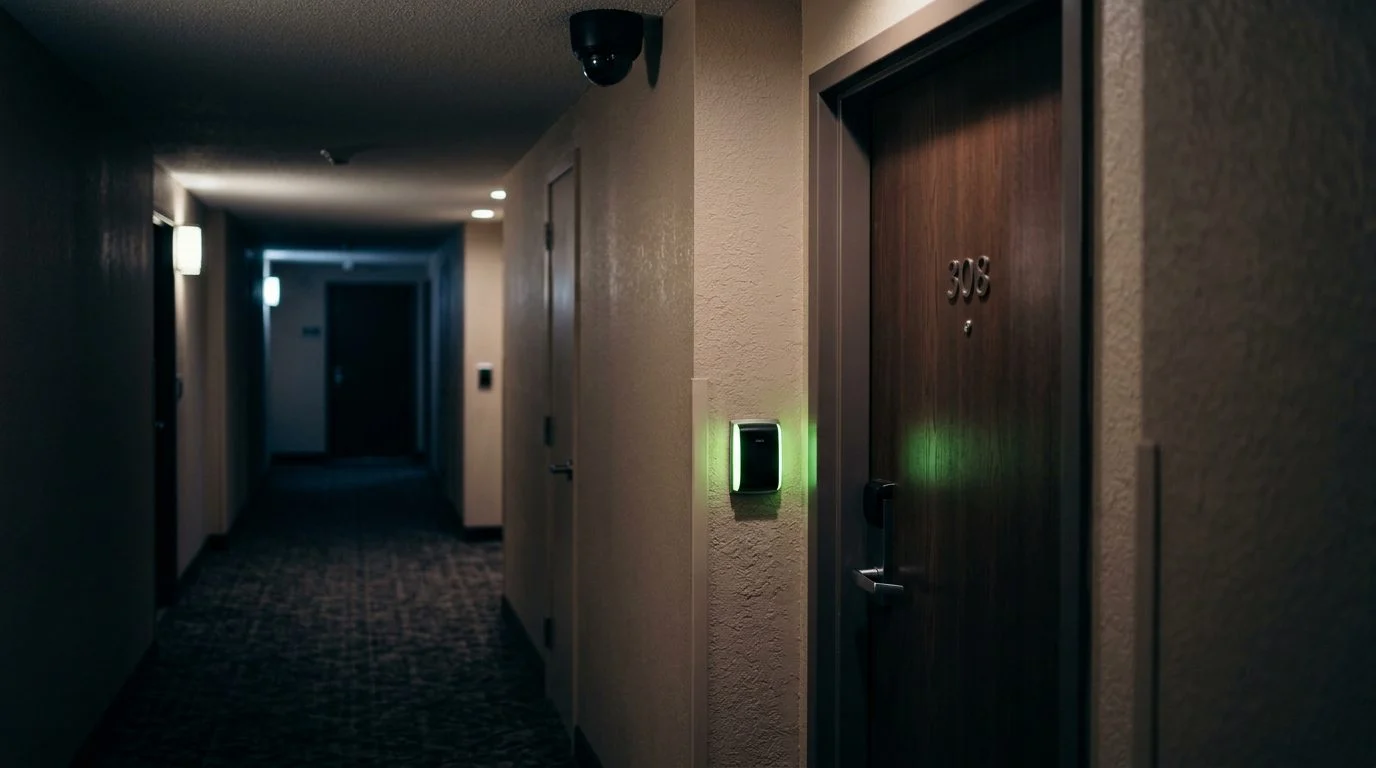
Albuquerque · Nightclub Shooting Injuries
Injured in a Nightclub Shooting? We Look Closely at Who Was Responsible for Your Safety.
El Gringo Law represents people hurt in shootings at bars, clubs and other nightlife venues, including cases involving negligent security. Your first consultation is free, confidential and comes with no obligation to continue.
Getting Started with El Gringo Law
Free
Confidential first consultation, no obligation to continue
NM & AZ
Josh Wood is licensed in New Mexico and Arizona
3 Ways
Call, chat or submit a contact form
By Josh Wood · Published November 2, 2026
A bar or nightclub shooting or assault can cause serious injuries or a death. In New Mexico, the venue may be responsible when it failed to protect people from harm it should have expected. Whether a claim exists depends on the facts. This page explains how a nightclub shooting injury lawyer in Albuquerque approaches these cases, what a claim can seek, and what to do early.
When a Bar or Nightclub Shooting or Assault May Support a Legal Claim
A bar or nightclub shooting or assault claim seeks compensation for injuries or a death caused by gunfire, a stabbing, or a physical attack at a venue that serves alcohol or draws crowds. A claim often turns on where the attack happened, who handled security, and whether the harm was reasonably foreseeable.
This page is written for three groups:
- People shot, stabbed, or assaulted inside or near a venue.
- Bystanders hurt during the incident.
- Family members of someone killed, who may bring a wrongful death claim.
Attacks by another patron, a staff member, or a security guard raise different questions. Venues often control lighting, staffing, entry checks, and how staff respond to trouble. Those choices can be central to a claim.
A criminal case and a civil injury claim are separate processes. They can move on different timelines.
Not sure what your next step is?
Talk it through with our team — the first consultation is free, confidential, and carries no obligation.
Who May Be Responsible for Injuries Inside a Bar or Nightclub
The attacker, the venue’s owner or operator, and sometimes a security company may be responsible. In most negligent security claims, the venue’s conduct is the central question. Negligent security means a venue failed to take reasonable steps against violence it should have expected.
New Mexico’s uniform jury instructions say an owner or occupant must use ordinary care to keep premises safe for visitors (UJI 13-1309 NMRA). That duty covers foreseeable harm from the acts of a third person who injures a visitor (UJI 13-1320 NMRA).
Questions that often matter include:
- Did the venue know, or should it have known, about earlier fights or threats?
- Were there enough staff, working lights, and entry checks?
- How did staff respond to warning signs?
A security company that employs the guard may face a claim too. Under UJI 13-1647 NMRA, the plaintiff must prove that the company was the guard’s employer, that it knew or should have known hiring, retaining, or supervising the guard would create an unreasonable risk of injury to a group that includes the plaintiff, that it failed to use ordinary care in doing so, and that this negligence was a cause of the injury. See the security guard company page.
Alcohol service claims are narrow. Under NMSA 1978 § 41-11-1, no civil liability is based on breach of Section 60-7A-16 by a licensee except when the licensee sold or served alcohol to a person who was intoxicated, it was reasonably apparent to the licensee that the person was intoxicated, and the licensee knew from the circumstances that the person was intoxicated. A person who was sold or served alcoholic beverages while intoxicated also cannot collect damages from the licensee unless the licensee is determined to have acted with gross negligence and reckless disregard for that person’s safety. The statute also sets dollar caps, including $50,000 for one person’s bodily injury in each occurrence.
What a Claim Can Seek to Recover
A claim can seek money for economic losses, like medical bills and lost income, and for non-economic losses, like pain and emotional distress.
- Medical costs, including emergency care, surgery, hospital stays, rehabilitation, and future treatment.
- Lost wages and reduced ability to earn in the future.
- Pain, suffering, and emotional distress.
- Serious harm, such as catastrophic injuries, spinal cord injuries, amputations, or burns, often needs long-term care planning. The burn incidence fact sheet from the American Burn Association covers burn incidence, hospitalization, causes, and survival rates.
In a wrongful death case, the claim is brought by the deceased person’s personal representative. The jury in a wrongful death action may give compensatory and exemplary damages it deems fair and just, taking into consideration the pecuniary injury resulting from the death to the surviving party entitled to the judgment (NMSA § 41-2-3). Loss of consortium (the loss of a close relationship) belongs to the family member who suffered it, not the estate (Thompson v. City of Albuquerque).
New Mexico uses comparative negligence, so a jury assigns each person a percentage of fault. Each defendant’s percentage is applied to the total damages (UJI 13-2219 NMRA).
The value of a claim turns on the injuries and the records that document them. No amount can be predicted at a first call.
Evidence and Steps to Take Right After a Bar or Nightclub Incident
The first steps are getting medical care, keeping records, and asking early for evidence that can be lost.
- Get medical care and keep every bill, record, and prescription.
- Write down names and phone numbers of witnesses, staff, and security guards who were there.
- Ask in writing that surveillance video be preserved. Video can be recorded over, so earlier requests matter more.
- Keep police, 911, and incident report numbers.
- Write a timeline while memory is fresh, including drinks, warnings, arguments, and earlier disturbances you saw or heard about.
Under NMSA § 37-1-8, actions for an injury to the person or reputation of any person must be brought within three years (NMSA § 37-1-8). A wrongful death claim must be brought within three years after the cause of action accrues, which is the date of death (NMSA 1978 § 41-2-2). Other rules can apply to some claims, so early review helps.
How the Process Works, Step by Step
A typical claim moves from a first consultation to investigation, a written demand, and then negotiation or a lawsuit.
- Initial consultation. You describe the incident, your injuries, and any police or medical records you have.
- Investigation. The firm gathers records, requests video and incident reports, and reviews security practices and prior incidents at the venue.
- Identifying parties and insurance. The firm looks at who owned, operated, or staffed security, and what insurance may apply.
- Demand. A written demand goes to the responsible parties and their insurers.
- Negotiation or lawsuit. If the claim does not resolve, the firm may file suit in New Mexico court, followed by discovery, mediation, and trial preparation.
Timelines vary widely with the injuries, the parties, and the records. The firm explains the expected steps during the consultation.
Why Work With El Gringo Law in Albuquerque
El Gringo Law represents people hurt in New Mexico. The firm represents clients in Bernalillo County in negligent security and wrongful death matters.
- Practice areas: negligent security, wrongful death, premises liability, and catastrophic injuries, including spinal cord injuries, amputations, and burn injuries.
- Communities: Albuquerque, Bernalillo County, Sandoval County, Rio Rancho, Santa Fe, Las Cruces, Taos, and Farmington.
- Responsible lawyer: Josh Wood, who is licensed in New Mexico and Arizona.
- Our team can walk you through each step in plain language.
The firm’s approach is to explain the law clearly and focus on the evidence that matters in your case. Every case is different.
Not sure what your next step is?
Talk it through with our team — the first consultation is free, confidential, and carries no obligation.
Frequently Asked Questions About Bar and Nightclub Shooting and Assault Claims
Can I bring a claim if the shooter was never arrested?
A civil claim and a criminal case are separate processes. The civil claim focuses on the venue’s conduct and your injuries.
Can I sue the bar if another patron attacked me?
Possibly. New Mexico’s jury instructions cover harm from a third person’s foreseeable conduct (UJI 13-1320 NMRA). Outcomes turn on the specific facts.
What if a family member was killed?
A wrongful death claim is brought by the deceased person’s personal representative (NMSA 1978 § 41-2-3). It must be brought within three years after the date of death (NMSA 1978 § 41-2-2).
Do I have to pay anything to talk with the firm?
No. The initial consultation is free, confidential, and comes with no obligation to continue.
How soon should I act?
How soon should I act?
Claims for an injury to the person under NMSA § 37-1-8 must be brought within three years (NMSA § 37-1-8). Other rules can apply, so early review is wise.
Talk With Our Team About Your Albuquerque Bar or Nightclub Case
If you were shot or assaulted at a bar or nightclub, or a loved one was killed, the next decisions can feel urgent. Our team can review what happened and explain what a claim may involve. Call (505) 207-5000, send a message through the contact form, or start a chat to set up your initial consultation.
How We Approach a Nightclub Shooting Case
Security Questions
We look at whether the venue's security measures, staffing and entry screening were reasonable for the way it was run that night.
Timeline of the Night
We work to reconstruct what happened before, during and after the shooting, including warning signs and how staff responded.
Your Injuries and Recovery
Gunshot wounds can cause lasting harm. We pay attention to your medical treatment, your daily limits and the effect on your work and family.
Plain-Language Guidance
Our team explains each step in clear terms so you know what to expect, and you decide how to move forward.
A Helpful Tip Early On
Keep copies of any medical bills, discharge papers, photos and messages about the night of the shooting. Please don't post details about the incident on social media before you speak with a lawyer.
Questions We Review in Nightclub Shooting Cases
Entry and Screening
How guests were checked at the door, whether weapons were detected, and whether screening was applied consistently.
Staffing and Response
How many security staff were on duty, how they reacted to threats or fights, and how quickly help was called.
Prior Warning Signs
Earlier incidents, complaints or visible tension that may have called for a stronger security response.
Your Medical Needs
Surgery, rehabilitation, long-term care and other costs that help show the full impact of your injuries.