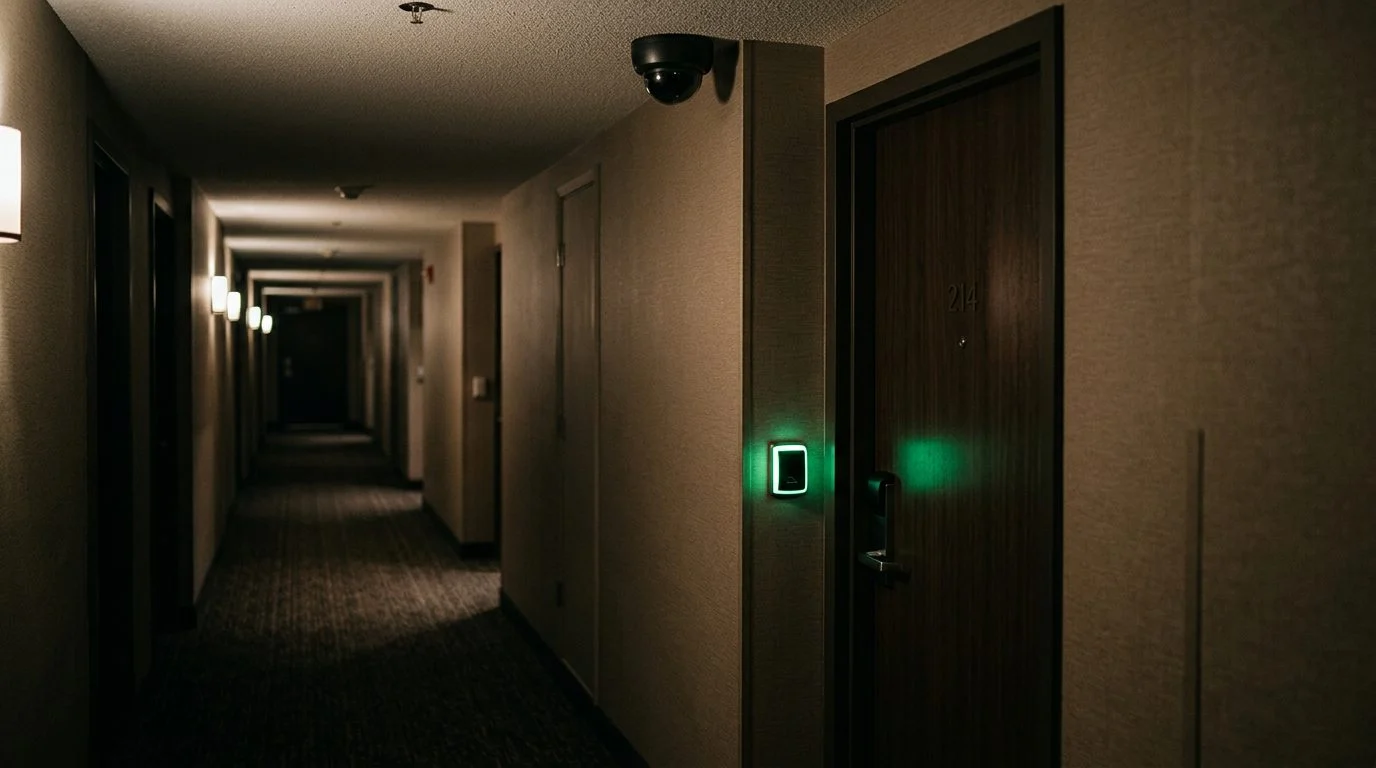
Negligent Security | New Mexico
Hurt in a Parking Lot Attack? Find Out Who May Be Responsible.
When violence happens on someone else's property, the owner, manager or security provider may bear responsibility. El Gringo Law helps people injured in parking lot attacks across New Mexico understand their options.
Questions we look at in every parking lot attack case
Who controlled the lot
Ownership, management and security duties can differ from one property to the next, and each matters to the analysis.
Whether the attack was foreseeable
Prior incidents, known crime in the area and warnings the property received can all bear on the question.
Security and lighting
Cameras, lighting, patrols, gates and staffing are reviewed to understand what was in place and what was not.
Police and incident records
Reports, report numbers and surveillance footage can help show what happened, when and where.
By Josh Wood · Published October 28, 2026
A parking lot attack lawsuit is a civil claim for money, filed by someone hurt in an assault or violent crime on a lot, garage, or property tied to a business. In New Mexico, these claims often ask whether the property owner or manager used reasonable care to protect people. This page explains how a parking lot attack lawsuit New Mexico claim works, who may be responsible, what damages may cover, and what to do now. It’s written for people who were attacked and for family members researching on someone else’s behalf.
If you were hurt in an attack in a parking lot, or you are helping someone who was, you may have a claim worth reviewing. Talk it through with our team — the first consultation is free, confidential, and carries no obligation.
What a parking lot attack lawsuit is and who it is for
A parking lot attack lawsuit is a civil claim brought by the person who was hurt. It is separate from any criminal case. A criminal case asks whether the attacker broke the law. A civil claim asks whether someone responsible for the property failed to protect people, and whether that failure helped cause the injury.
These claims are often framed as negligent security or premises liability. New Mexico’s jury instruction on a landowner’s duty says an owner must use ordinary care to keep the premises safe for visitors. That duty covers conditions that foreseeably pose an unreasonable risk of injury (UJI 13-1309 NMRA).
In a wrongful death action, the claim shall be brought by and in the name of the personal representative of the deceased person (NMSA 1978, § 41-2-3). Attacks like this can happen at shopping centers, apartment complexes, hotels, parking structures, and entertainment venues.

What a claim can cover
A claim can seek money for the losses the attack caused. Common categories include:
- Medical bills, from emergency care through surgery, rehabilitation, and ongoing treatment
- Lost wages and lost earning capacity
- Pain and suffering, including emotional distress
- Property loss, such as a damaged phone, vehicle, or belongings
Catastrophic injuries, spinal cord injuries, amputations, and burn injuries can involve long-term care, medical equipment, and changes to a home or job. Planning for those costs early helps families understand what a claim may need to cover.
Family members can have their own losses.
No one can tell you a dollar figure based on another case. The value turns on the injuries, the medical records, the evidence, and who is at fault.
Who may be responsible and what must be shown
The owner, a property manager, a leasing company, or a contracted security company may each be a defendant. The right defendants depend on who controlled the lot and its security.
In plain words, the failure must have helped cause the injury. It does not have to be the only cause.
Foreseeability is often the central question (Scott v. Rizzo). Could the owner have expected an attack? Evidence may include:
- Prior similar crimes or complaints in the lot
- Lighting or gate failures that were reported and not fixed
- Ignored security reports or requests for patrols
Common security gaps include dim or broken lights, cameras that are missing or not working, no patrols when needed, unsecured access points, and trespassers left alone. You can read more about proving an owner knew about crime and the broader negligent security overview.
Shared fault matters too. New Mexico’s comparative negligence instruction has the jury assign a percentage of fault to each person whose negligence caused the harm (UJI 13-2219 NMRA). Each defendant’s share is then figured from those percentages. Under New Mexico’s several liability statute, each defendant is generally responsible only for its own share of fault. In any cause of action to which comparative fault applies, New Mexico law abolishes joint and several liability for two or more wrongdoers whose conduct proximately caused a plaintiff’s injury, except as the statute otherwise provides: the doctrine still applies to any person who acted with the intention of inflicting injury or damage, to persons whose relationship to each other would make one person vicariously liable for the acts of the other (but only to that portion of the total liability attributed to those persons), to any persons strictly liable for the manufacture and sale of a defective product (but only to that portion of the total liability attributed to those persons), and to situations not covered by those exceptions that have a sound basis in public policy (Section 41-3A-1 of the New Mexico statutes).
How the process works, step by step
A claim often moves through five stages. Each stage builds on the one before it.
- Consultation. We review what happened, your injuries, and any records you already have.
- Investigation. We request security footage, incident reports, maintenance and lighting records, and prior-crime information where it can be obtained.
- Medical documentation. We gather records and review how the injuries affect work and daily life.
- Demand. We present the claim to the responsible parties and their insurers, and we negotiate.
- Lawsuit, if needed. If a fair resolution isn’t reached, we file suit. Under Section 37-1-13 of the New Mexico statutes, filing in the proper clerk’s office the petition, declaration, bill or affidavit on which process is authorized by law to be issued, with intent that process issue immediately thereupon, is deemed a commencement of the action, and that intent is presumed unless the contrary appears. Discovery, settlement talks, mediation, and trial may follow.
Timelines vary widely based on injuries, evidence, and defendants. We explain the expected steps for your case as the matter moves forward.
Not sure what your next step is?
Talk it through with our team — the first consultation is free, confidential, and carries no obligation.
Time limits and evidence to protect now
Under New Mexico law, actions for an injury to the person or reputation of any person must be brought within three years (Section 37-1-8 of the New Mexico statutes). The time limits that chapter sets for bringing actions are extended in favor of minors and incapacitated persons, so that they have one year from and after the termination of the incapacity within which to commence those actions (Section 37-1-10 of the New Mexico statutes). Under New Mexico law, a wrongful death action must be brought within three years after the cause of action accrues, and the cause of action accrues as of the date of death (NMSA 1978, § 41-2-2). Claims against government owners can follow different rules (Thompson v. City of Albuquerque), so tell us early if the lot is public.
Evidence to preserve includes:
- Photos of the lot, its lighting and cameras, and your injuries
- Names and contact details of witnesses
- Police report numbers
- Medical records and bills
- Texts, messages, or emails about the incident
Many camera systems record over older video on a set schedule. A written request to preserve footage early can matter. Avoid posting detailed accounts or statements about fault while a claim is pending, because posts can be used as evidence.
Why clients consult El Gringo Law
El Gringo Law represents people in New Mexico who were hurt in car accidents, trucking accidents, premises liability and negligent security matters, wrongful death, sexual assault, catastrophic injuries, spinal cord injuries, amputations, and burn injuries.
Josh Wood is the responsible lawyer for this page. He is licensed in New Mexico and Arizona. Our team includes office and support staff who handle scheduling, records, and client communication.
In a parking lot matter, our work focuses on the security conditions at the property, careful documentation of injuries, and plain-language updates on each step. We represent people in Santa Fe, Rio Rancho, Las Cruces, Bernalillo County, Sandoval County, Taos, and Farmington.
Fees, costs, and the free consultation
Our initial consultation is free, confidential, and comes with no obligation to continue. You can ask about next steps at that meeting and decide afterward whether to move forward.
Bring any records you already have, such as a police report number, medical bills, and photos. That helps us review your situation more quickly.
Frequently asked questions
Can I sue a property owner if I was attacked in their parking lot?
Possibly. Whether a claim is possible depends on the facts, including who controlled the lot and whether the attack was foreseeable.
Do I need the attacker to be charged or convicted?
Does a police report matter?
A police report can be useful evidence of what happened and when. Keep the report number.
What if the attacker was a stranger, a tenant, or an employee?
The attacker’s identity affects the analysis but does not automatically end a claim.
How much time do I have to file?
New Mexico’s general deadline for an injury to a person is three years, with some exceptions. Review the date right away.
Have questions about what happened?
Ask our team directly. The first conversation is free, confidential, and there is no obligation to continue.
Talk with our team about your parking lot injury
If you were hurt in an attack in a parking lot, or you are helping someone who was, you may have a claim worth reviewing. Reach out through the El Gringo Law contact form at elgringolaw.com. Our team, including responsible lawyer Josh Wood, can talk through what happened, your injuries, and what comes next.
Protect your evidence early
Keep your police report number, photos of the lot and your injuries, medical records, receipts and the names of any witnesses. Write down what you remember while it is fresh, and avoid posting about the incident online.
Who may be involved in a parking lot attack claim
Property owners
The owner of a shopping center, apartment complex, hotel, office or garage may have duties to the people who park there.
Security companies
Contracted guards and security providers may be part of a claim when their duties were not carried out as expected.
Other responsible parties
Depending on the facts, other businesses or parties that controlled the area may also be part of the review.