Negligent Security · New Mexico
Security Camera Footage Can Disappear. Act Early.
Many camera systems record over older video on a regular cycle, so questions about preserving recordings are best raised quickly.
By Josh Wood · Published November 9, 2026
After a crime on someone else’s property, one of the first questions is whether the cameras recorded it. In New Mexico, that footage can be sought, but it may be recorded over quickly. A written request to keep it, sent early, is often the step that matters most. Here is how it works and what comes next.
Why Security Camera Footage Matters in a Negligent Security Case
Security camera footage can show the sequence of events that a negligent security claim has to examine.
Negligent security is a claim that a property owner or business failed to use ordinary care to keep the premises safe for visitors from a foreseeable risk that a third person would injure them. New Mexico’s uniform jury instructions say a landowner must use ordinary care to protect visitors from harm caused by a third party’s foreseeable conduct, including criminal conduct (UJI 13-1320 commentary), and the New Mexico Supreme Court has addressed this duty in a Rodriguez v. Del Sol Shopping Center decision. So the question is not only who committed the crime. It is also what the property did to prevent it.
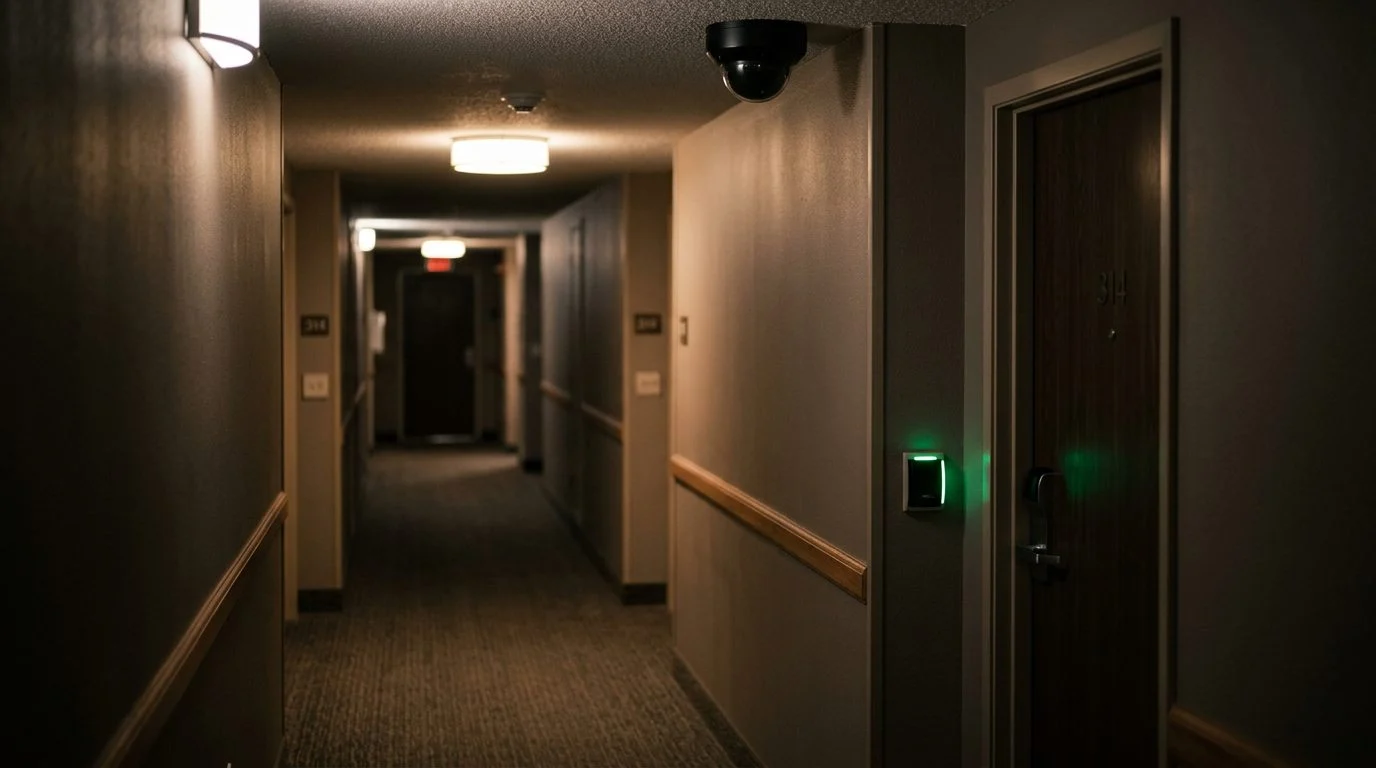
Video can show how the person got in, how long they stayed, and whether a door, gate, or lock worked. It can show whether staff or guards noticed and responded. It can also show lighting, camera coverage, and other security measures in place that day. Those details connect directly to whether the property took reasonable precautions.
Footage is one kind of evidence, not the whole case. Police reports, witness accounts, and property records can matter too. For a broader look at these claims, read our negligent security overview for New Mexico.
Not sure what your next step is?
Talk it through with our team — the first consultation is free, confidential, and carries no obligation.
Why Footage Can Be Lost in Days If It Is Not Preserved
Footage can be lost quickly because many camera systems record over older files in a loop.
Many systems keep only a set number of days of video. When storage fills, new recordings replace the oldest ones. Footage from the night of an attack can disappear without anyone meaning harm.
A property may also export only part of the video, delete a clip by mistake, or replace the system altogether. Evidence can be lost without bad intent, which is why early action matters.
Families often don’t know what cameras exist, where the recorder is kept, or how long it stores video. You may not even know whether the building has cameras. Asking the property directly is the way to find out.
While details are fresh, write them down. Note the address, the date and time, where you or your loved one were, which entrances were nearby, the camera positions you remember, and the staff you saw. Those notes help a reviewer know which footage to ask for.
What a Written Preservation Request Should Cover
A written preservation request asks the property to keep its recordings and related records about the incident.
Writing matters because it creates a record that the property was told to keep the material. The request can name the items that matter, so nothing important is left out. It can cover:
- Video from every camera that covers the area, for a time window around the incident
- The recording system, its retention settings, and any exported clips
- Incident reports, security logs, and visitor or access records
- Guard patrol logs and shift schedules
- Written communications about the incident
Send the request as early as possible. Keep a copy and proof of delivery. Ask the property to confirm in writing that it received it.
A preservation request protects evidence. It does not decide who is at fault. Fault is answered later, from the facts that come out in the case.
What Discovery Can Reach in a New Mexico Negligent Security Lawsuit
Discovery is the formal process where each side asks the other for documents, recordings, and information after a lawsuit is filed.
Court rules and deadlines control how requests and responses work, so timing matters.
Records that often matter include:
- Prior incidents on the same property
- Written security policies and procedures
- Maintenance or repair records for locks, gates, and lighting
- Hiring, training, and supervision records for guards
A request sent before a lawsuit can still help keep records in place.
What the property kept, deleted, or never recorded can also become part of the evidence. A gap in the footage is a question the case has to address.
How Screening, Training, and Supervision of Security Staff Are Examined
New Mexico’s uniform jury instruction lists the core elements. The employer must have known or should have known the employee would create an unreasonable risk of injury to a group or class that includes the plaintiff. The employer must have failed to use ordinary care in hiring, retaining, or supervising. That failure must have caused the injury (UJI 13-1647).
The “knew or should have known” test is important. Under the ‘knew or should have known’ element of UJI 13-1647, what an employer should have known can matter, not only what it actually knew. New Mexico courts have examined employer liability for an employee’s conduct in Spencer v. Health Force. That makes screening and training records relevant even when no one admits to knowing about a problem.
For this kind of claim, the employee does not have to be acting within the scope of the job when the injury happens. The commentary to the same instruction says so.
Investigators commonly look at hiring files, training records, screening documents, shift schedules, and supervision practices. Footage can then be compared with those records. Did the guard respond the way the written policy says? Did a patrol actually happen?
Other measures may also be reviewed, such as lighting, fencing, locks, access control, and the number of staff on duty. How much each one matters depends on the facts.
Who May Have a Claim and How a Case Moves Forward
The injured person, or the family of someone who died, may have a claim. A property owner, a manager, or a security contractor may be named.
In a wrongful death case, the action is brought by the personal representative of the person who died (NMSA 1978, § 41-2-3). The deadline is three years from the date of death (NMSA 1978, § 41-2-2). For an injury to a person or reputation, New Mexico law sets three years (NMSA 1978, § 37-1-8). Actions against sureties on official bonds and on bonds of guardians, conservators, personal representatives and persons acting in a fiduciary capacity must be brought within two years after the principal’s liability is finally established by a judgment or decree of the court.
New Mexico uses comparative negligence. An injured person’s share of fault reduces the damages they recover (UJI 13-2218). When more than one party is at fault, each is generally responsible only for its own share, but joint and several liability still applies to anyone who acted with the intention of inflicting injury, and in certain other situations the law lists (NMSA 1978, § 41-3A-1).
Causation asks whether the failure was a real link to the harm.
A typical case moves through a review of the incident, a preservation request, investigation and evidence gathering, a demand to the other side, and, if needed, a lawsuit with discovery. Each step takes time, and the order matters.
Not sure what your next step is?
Talk it through with our team — the first consultation is free, confidential, and carries no obligation.

Talk With El Gringo Law About Footage From Your Incident
If an incident happened at a property you know, asking that property to keep its recordings is the first step to consider.
Maybe you’re deciding now whether to ask, and the video may exist for only a short time. Josh Wood, the lawyer responsible for this page, can review the facts of the incident, discuss whether a preservation request should go out, and explain the steps that follow. Readers in Santa Fe, Rio Rancho, Las Cruces, and Bernalillo or Sandoval County can ask about their incident too.
Your first consultation with El Gringo Law is free, confidential, and comes with no obligation to continue. If the firm takes a case, it can advance court costs and litigation expenses. You may be responsible for those costs if there is no recovery, as the written fee agreement states.
Reach out through the El Gringo Law contact page, where you can submit a form or start a chat.
Common questions
Can I get security camera footage after a crime in New Mexico?
You can ask the property in writing to keep its recordings now.
How long do I have to file a claim?
New Mexico sets three years for an injury to a person (NMSA 1978, § 37-1-8). A wrongful death claim has three years from the date of death (NMSA 1978, § 41-2-2).
Does my own partial fault stop a claim?
New Mexico reduces damages by the injured person’s share of fault. Partial fault does not automatically erase the claim (UJI 13-2218).
How El Gringo Law Can Help
Prompt Attention
Because video can be overwritten, we treat requests to preserve footage with urgency from the first call.
Written Preservation Requests
We help you put requests to property owners and managers in writing so there is a clear record of what was asked.
Plain-Language Guidance
Our team explains each step in clear terms, in English or Spanish, so you know what to expect.
Confidential Conversations
Everything you share with us in your free consultation is kept confidential.
Don't Wait to Ask
Recordings may be overwritten on a schedule set by the property. If you were injured in an incident on someone else's property, ask for preservation of the video in writing as soon as you can.
Steps to Take Now
Note the Details
Write down the date, time, location and what you remember while it is still fresh.
Identify the Cameras
Note where cameras were visible, such as entrances, parking areas or hallways.
Request Preservation
Ask the property owner or manager in writing to keep the recordings from that time.
Call Our Team
Reach out for a free, confidential first consultation with no obligation to continue.