Negligent Security | Rio Rancho, New Mexico
Hurt in a Crime on Someone Else's Property? Property Owners Can Be Held Responsible.
When a property owner ignores foreseeable danger and fails to provide reasonable security, visitors can suffer serious harm. El Gringo Law represents people injured in Rio Rancho and Sandoval County. Your first consultation is free, confidential, and comes with no obligation.
By Josh Wood · Published October 31, 2026
Negligent Security Rio Rancho: When a Property Owner May Be Responsible
Negligent security is a claim that a property owner or manager failed to protect people from a crime that was reasonably foreseeable. If a crime hurt you on a property in Rio Rancho, the owner’s conduct may matter as much as the attacker’s. This guide explains how a negligent security Rio Rancho claim works under New Mexico law. It also covers steps that help protect a claim early. If you were hurt in one of these situations, you can contact El Gringo Law to ask about your options.
Not sure what your next step is?
Talk it through with our team — the first consultation is free, confidential, and carries no obligation.

What Negligent Security Means in New Mexico
Negligent security is a type of premises liability claim. A third party’s crime injures someone on property that lacked reasonable protection. A property owner must use ordinary care to keep the premises safe for visitors (UJI 13-1309 NMRA). That duty covers harm from the foreseeable conduct of others, including criminal conduct (UJI 13-1320 NMRA).
The attacker’s crime is at the center of the event, but it isn’t the whole story. The legal question often turns on the owner’s conduct. Did the owner take reasonable steps to protect visitors from a risk it should have seen coming? That question is what sets these claims apart from a simple assault case.
These cases often arise in apartment complexes, parking areas, retail centers, hotels and entertainment venues. Each setting raises different questions about lighting, access control, staffing and cameras. A dark parking lot raises different facts than a locked lobby with a broken gate.
Who Can Be Held Responsible in Rio Rancho
A property owner or property manager is usually the first party a claim looks at. Depending on who ran security and what it agreed to do, a security contractor may also be part of the review. Each party’s role matters.
The injured person’s connection to the property matters too. Tenants, guests, customers and other visitors each raise their own facts. The rule that applies is the owner’s duty of ordinary care, so the question is how the owner kept the property.
What counts as reasonable security depends on the property. Common examples include lighting, working locks, controlled gates, patrols and cameras. Whether those measures were reasonable turns on each case’s details. Owners who know about repeated problems and leave them unfixed create a very different picture than owners who had no warning.
How Negligence Is Proven in a Security Claim
A negligence claim generally requires a duty owed by the defendant, a breach of that duty, and causation and damages (Herrera v. Quality Pontiac). The breach must be a proximate cause (a legal cause) and a cause in fact (the act actually led to the harm).
A proximate cause produces the injury in a natural and continuous sequence. The injury would not have happened without it. It doesn’t need to be the only cause, or the last one.
Foreseeability is often the central question. Did the owner know, or should it have known, that crime was a real risk? Evidence that can matter includes prior police calls, tenant complaints, repair requests, incident reports and security logs. Each case has its own record, so the most useful documents vary.
Public data can add context. The FBI Crime Data Explorer publishes agency-level reported crime data for New Mexico jurisdictions. That data can help describe an area, but it is not a substitute for records from the property itself.
How Long You Have to File in New Mexico
The New Mexico statute at Section 37-1-8 of the New Mexico Statutes provides a three-year period for bringing an action for an injury to the person or reputation of any person. That is the general rule for injury claims.
A wrongful death claim has its own rule. The action must be brought within three years after the cause of action accrues, and the cause of action accrues on the date of death (NMSA 1978, § 41-2-2).
Don’t wait to act. Video can be overwritten, and witnesses can move away or forget details. Those losses make a case harder to prove, even before any deadline arrives. The exact timing depends on the facts of the incident, so it helps to check your dates early.
What Damages Can Be Part of a Negligent Security Claim
Damages depend on the injury and the losses it caused. Claims often include medical bills, lost income, future care needs and pain and suffering. Emotional harm that comes with a physical injury may also be part of a claim. Keep records of each type of loss, because the proof for each one looks different.
New Mexico uses comparative negligence (shared fault). It was adopted in Scott v. Rizzo in 1981. Under UJI 13-2219 NMRA, a jury sets a percentage of fault for each person whose negligence caused the harm. Damages are figured from those percentages, so an injured person’s own share of fault can reduce what they recover.
Wrongful death claims follow a separate statute. Section 41-2-1 of the New Mexico Statutes provides that when a person’s death is caused by the wrongful act, neglect or default of another, and that act, neglect or default would, if death had not ensued, have entitled the injured party to maintain an action and recover damages, the person or corporation that would have been liable is still liable to an action for damages, notwithstanding the death of the person injured. The action must be brought by the personal representative of the deceased person (NMSA 1978, § 41-2-3).
Not sure what your next step is?
Talk it through with our team — the first consultation is free, confidential, and carries no obligation.
Steps to Protect Your Claim After an Incident in Rio Rancho
Start with medical care and keep every record. Save bills, appointment notes, prescriptions and any note from work about missed time. Medical records link your injuries to the incident, so follow your doctor’s plan.
Write down what you remember while it’s fresh. Note the time, the place on the property, who was on duty and the names of any witnesses. Ask for the police report number and keep it with your notes.
Save photos, texts, emails and any messages with the owner or manager. If it is safe, photograph lighting, gates, locks and cameras in the area.
Ask the owner in writing to keep surveillance footage. New Mexico recognizes a claim for intentional spoliation of evidence, which means destroying or hiding evidence.
Before you give a recorded statement to the property’s insurance adjuster, talk with our team first. An adjuster works for the insurer, not for you.
How the Free First Consultation Works
Our first consultation is free, confidential and comes with no obligation to continue.
During that conversation, our team reviews what happened, what the property did about security and how your injuries affect daily life. You don’t need every document to start. Bring what you have.
Josh Wood is licensed in New Mexico and Arizona. He is the lawyer responsible for this page’s content. You can learn more at elgringolaw.com, or send a message through the contact form.

Talk With Our Team About Your Rio Rancho Incident
If you’re weighing a negligent security Rio Rancho claim, the next step is a conversation about what happened. Our team can look at the property, the incident and your injuries, then explain the possible paths.
Common Questions
What is negligent security?
Negligent security is a claim that a property owner failed to protect people from a reasonably foreseeable crime, and someone was hurt as a result.
Can a property owner be responsible for a crime on its property?
A property owner may be responsible if its failure to protect visitors from foreseeable harm played a part in the injury.
How long do I have to file in New Mexico?
New Mexico gives three years for an injury to a person. A wrongful death claim has a three-year limit that starts on the date of death.
Does New Mexico use comparative negligence?
Yes. An injured person’s share of fault can reduce what they recover.
Is a negligent security Rio Rancho claim different from a regular assault case?
The main difference is the focus on the property owner’s conduct, not only the attacker’s.
If a Rio Rancho property failed to protect you or someone you love, you don’t have to sort out the next steps alone. Send our team a message through the contact form, and we’ll start with what happened.
How We Approach Your Negligent Security Case
We Look at the Property Itself
We review lighting, locks, cameras, staffing, prior incidents, and whether the owner took reasonable steps to address known risks.
We Build the Record
We help gather police reports, incident history, photos, and medical records that show what happened and what the owner knew.
We Keep You Informed
Our team explains each step in plain language so you understand where your case stands and what comes next.
Spanish-Speaking Support
Consultations are available in English and Spanish, so you can discuss your situation in the language you are most comfortable using.
Protect Your Health and Your Records
Get medical attention for every injury, even ones that seem minor at first. Keep copies of police reports, bills, photos, and any messages about the incident. These details can matter a great deal later.
Places Where Negligent Security Claims Often Arise
Apartment and Condo Complexes
Injuries in common areas, parking garages, or stairwells where poor lighting, broken gates, or ignored tenant complaints played a role.
Bars, Restaurants, and Nightlife Venues
Assaults or fights in venues that failed to control known problems, manage crowds, or provide adequate staff and security.
Parking Lots and Retail Stores
Attacks in unlit or unmonitored lots, or inside stores where prior thefts or threats were reported but not addressed.
Hotels and Motels
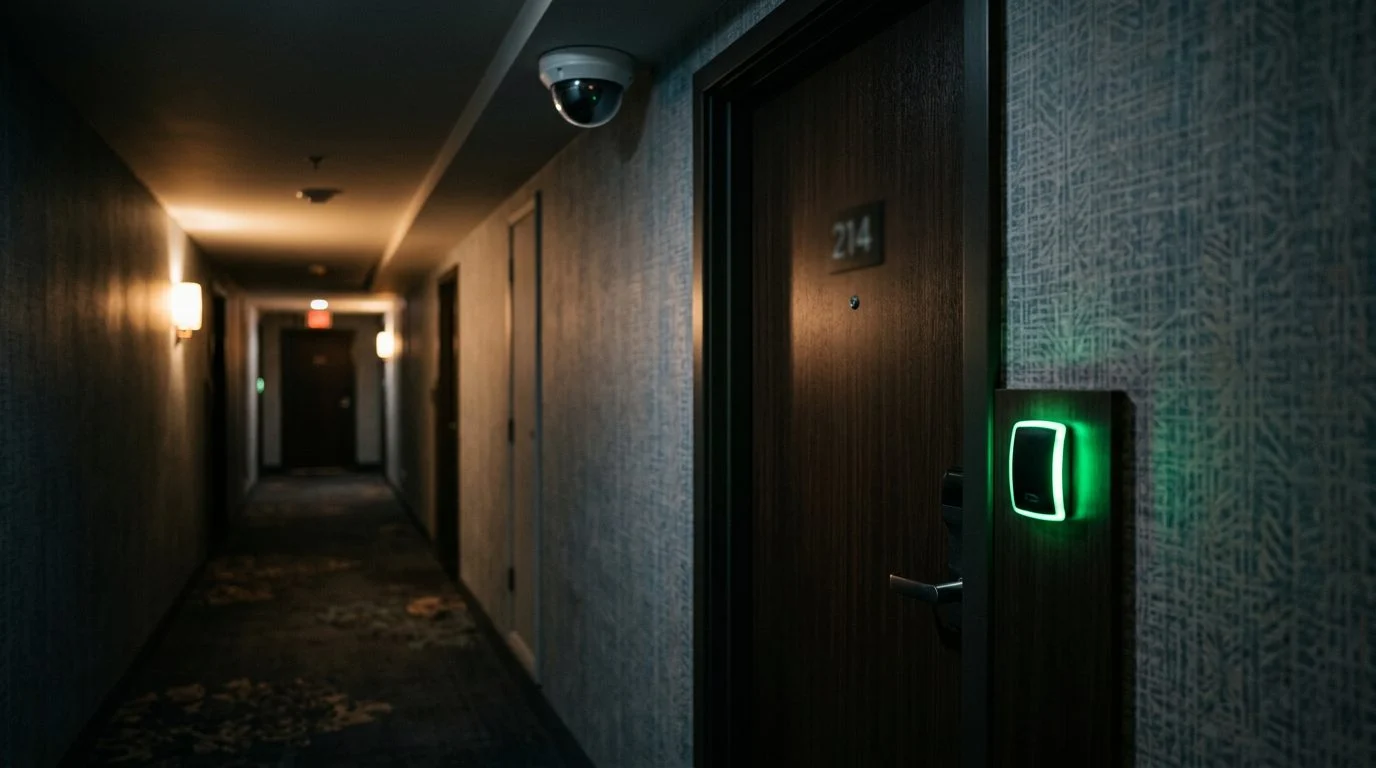
Crimes against guests where locks, access controls, or security patrols were inadequate for a known risk.