Personal Injury Guide · New Mexico
Four Proofs of Negligence in New Mexico, Explained in Plain English
How El Gringo Law approaches the four elements of a negligence claim in car accidents, trucking crashes, premises injuries and other cases we handle.
By Josh Wood · Published October 30, 2026
Under Herrera v. Quality Pontiac, a negligence claim generally requires a duty owed by the defendant to the plaintiff, a breach of that duty (typically measured against a standard of reasonable care), and a breach that is both a proximate cause and a cause in fact of the plaintiff’s damages. This guide explains each one in plain language, with examples from New Mexico car crashes, property falls, and negligent security incidents.
This page is general education, not legal advice. Every case depends on its own facts.
What the Four Proofs of Negligence Mean
Negligence means failing to use the care a reasonable person would use in the same situation. New Mexico courts describe a negligence claim as generally requiring a duty owed by the defendant to the plaintiff, a breach of that duty, and a breach that is both a proximate cause and a cause in fact of the plaintiff’s damages (Herrera v. Quality Pontiac).
Think of the four elements as links in a chain. If one link is missing or weak, the whole claim can suffer. That is why evidence is gathered early, while it still exists and people still remember what happened.
If a crash or a fall left you or someone you love hurt, you don't have to sort out these four elements alone. Our team can talk through your facts with you. Talk it through with our team — the first consultation is free, confidential, and carries no obligation.
1. Duty of Care
Duty of care is the obligation to act with ordinary care toward other people. New Mexico’s jury instruction says every person has a duty to exercise ordinary care for the safety of others (UJI 13-1604). UJI 13-1604 NMRA reads: “Every person has a duty to exercise ordinary care for the safety of the person and the property of others. [Every person also has a duty to exercise ordinary care for the person’s own safety and the safety of their property.] USE NOTES The bracketed material is to be used only when the party seeking recovery has been charged with lack of ordinary care.”
Duty shows up in everyday settings. A driver owes other road users that duty. At intersections, pedestrians are subject to traffic-control signals as provided in Section 66-7-105 NMSA 1978, unless a local ordinance requires them to comply strictly with those signals. At all other places, pedestrians are accorded the privileges and subject to the restrictions stated in Sections 66-7-333 through 66-7-340 NMSA 1978 (NMSA 1978, § 66-7-333). New Mexico’s pedestrian statute, Section 66-7-337, requires every driver to use due care to avoid colliding with any pedestrian on any roadway, to give warning by sounding the horn when necessary, and to take proper precaution upon observing any child or any confused or incapacitated person on a roadway.
A property owner owes lawful visitors a duty to use ordinary care to keep the premises safe (UJI 13-1309). New Mexico applies a single standard of reasonable care to visitors, which replaced the older licensee and invitee labels (Ford v. Board of County Commissioners).
Businesses can also owe a duty to protect people from foreseeable crime. A landowner owes visitors a duty of ordinary care that arises from a foreseeable risk that a third person will injure a visitor, and the landowner’s breach is compared with the conduct of the third person who actually caused the injury (UJI 13-1320). UJI 13-1320 NMRA reads: “If an [owner] [occupant] breaches the duty to use ordinary care to keep the premises safe for use by a visitor, resulting in injury to the visitor from the acts of a third person.”
Who the parties are and what they were doing shape the duty. A customer, a tenant, and a driver on the road each stand in a different relationship to the person who may owe them care.
2. Breach of Duty: How to Prove It
A breach happens when a person or business falls short of the care owed. The key question is what they actually did or failed to do, compared with what a reasonable party would have done.
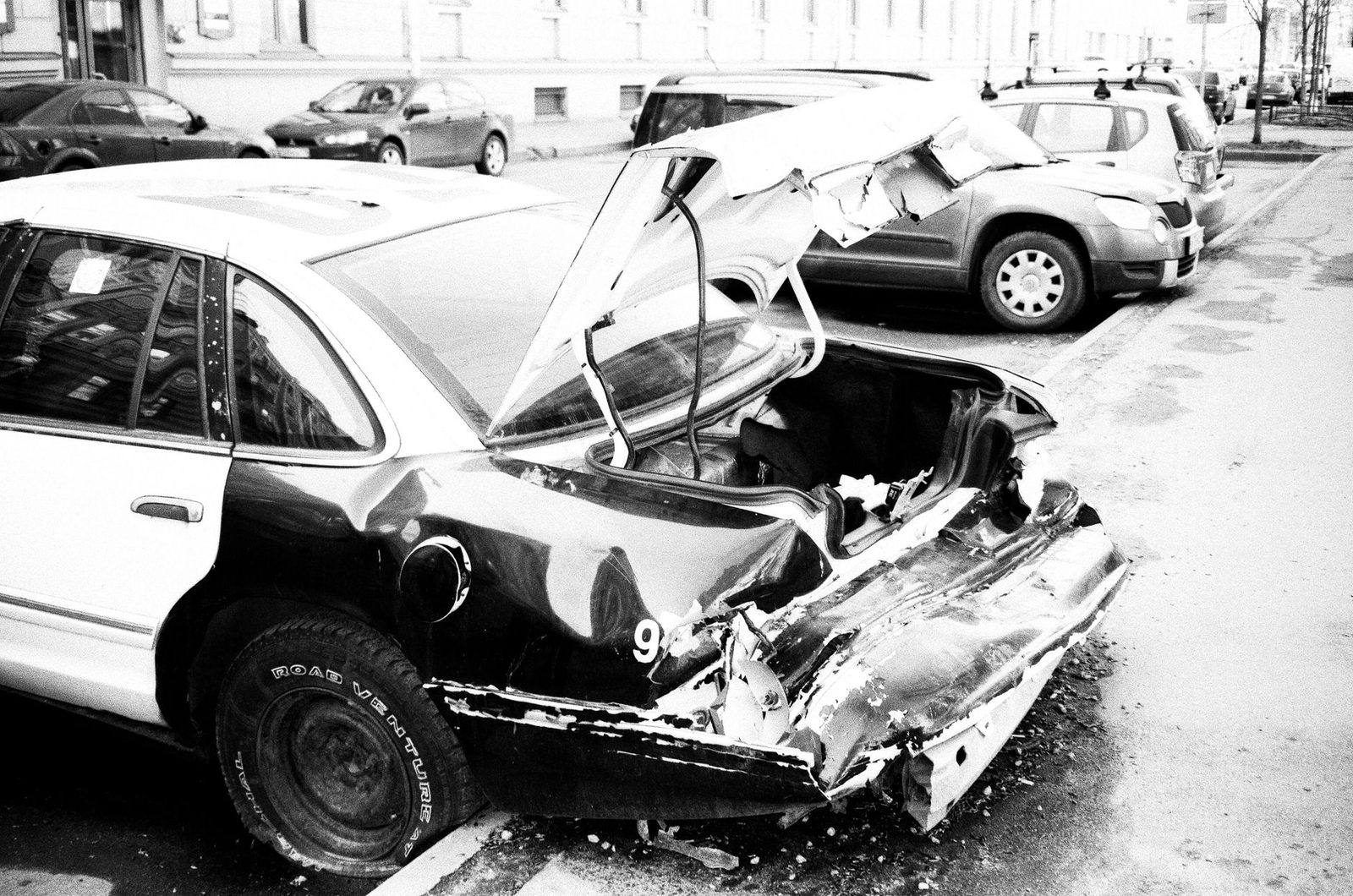
On the road, common breaches include following too closely, failing to yield, and speeding. Under New Mexico law, a driver of a motor vehicle shall not follow another vehicle more closely than is reasonable and prudent, with due regard for the speed of the vehicles, the traffic upon the highway, and the condition of the highway (NMSA § 66-7-318). Upon the immediate approach of an authorized emergency vehicle displaying flashing emergency lights, or when the driver is giving an audible signal by siren, the driver of every other vehicle shall yield the right of way and move to a position parallel to the right-hand edge of the roadway, clear of any intersection, and stop until the emergency vehicle has passed, unless a police officer directs otherwise (NMSA § 66-7-332). The intersection yield rule is in NMSA § 66-7-328. Speed must also be controlled to avoid colliding with a person or vehicle on the highway (speed rules, § 66-7-301).
A speed limit violation alone does not finish the case. The injured person still has to prove that the driver’s negligence was the proximate cause of the crash (§ 66-7-307).
Premises breaches often involve a known hazard, such as a broken stair or a floor that stays wet. An owner is charged with knowledge of a condition it would have found through a reasonable inspection, or one its own acts or employees caused (UJI 13-1318).
Evidence commonly used to show breach includes:
- Crash reports and photographs of the scene
- Witness statements
- Surveillance video
- Maintenance and inspection records
- Prior incident reports, which can show what a property owner knew or should have known
3. Causation: Actual and Proximate Cause
To be a cause, the act, omission or condition must be reasonably connected as a significant link to the injury or harm (UJI 13-305 NMRA).
Cause in fact asks whether the injury would have happened without the act. New Mexico’s causation instruction says an act is a cause if it contributes to bringing about the injury, the injury would not have occurred without it, and it is reasonably connected as a significant link to the injury (UJI 13-305).
Proximate cause asks whether the link is significant enough. The act must be reasonably connected as a significant link to the injury (UJI 13-305). A proximate cause need not be the only cause, nor the last or nearest one (Herrera v. Quality Pontiac).
For example, imagine a stair rail that stays loose for weeks. A person grabs it, falls on the stair, and breaks a wrist. The loose rail is the breach, and the fall is the harm that followed from it.
In a negligent security case, a gate left broken after earlier break-ins could matter if an assault later happens in the same lot. The earlier problem matters if it contributes to bringing about the harm, the harm would not have occurred without it, and it is reasonably connected as a significant link to the harm (UJI 13-305).
Intervening events can complicate causation. An independent intervening cause, meaning an unforeseeable force not in operation at the time the defendant acted and not a concurrent cause of the injury, can break the chain and change the outcome, so the timeline of events is documented carefully from the start.
4. Damages: The Harm the Law Recognizes
Damages are the losses the negligence caused. They can include medical bills, lost income, property damage, and pain and suffering.
Economic damages have a dollar figure you can document, such as receipts, bills, and pay stubs. Non-economic damages, such as pain and loss of enjoyment of life, are harder to put into a number.
Catastrophic injuries, spinal cord injuries, amputations, and burn injuries often involve long medical treatment and future costs. Those costs need careful records from the treating providers who manage the recovery.
Where the deceased left a spouse, child, parent, sibling or grandchild, NMSA 1978, § 41-2-3 sets out how a wrongful death judgment is divided. For example, if there is a surviving spouse and a child or grandchild, one-half goes to the spouse and the remaining one-half to the children and grandchildren, with the grandchildren taking by right of representation.
How the Four Elements Apply in New Mexico Injury Claims
The proof looks different in each one.
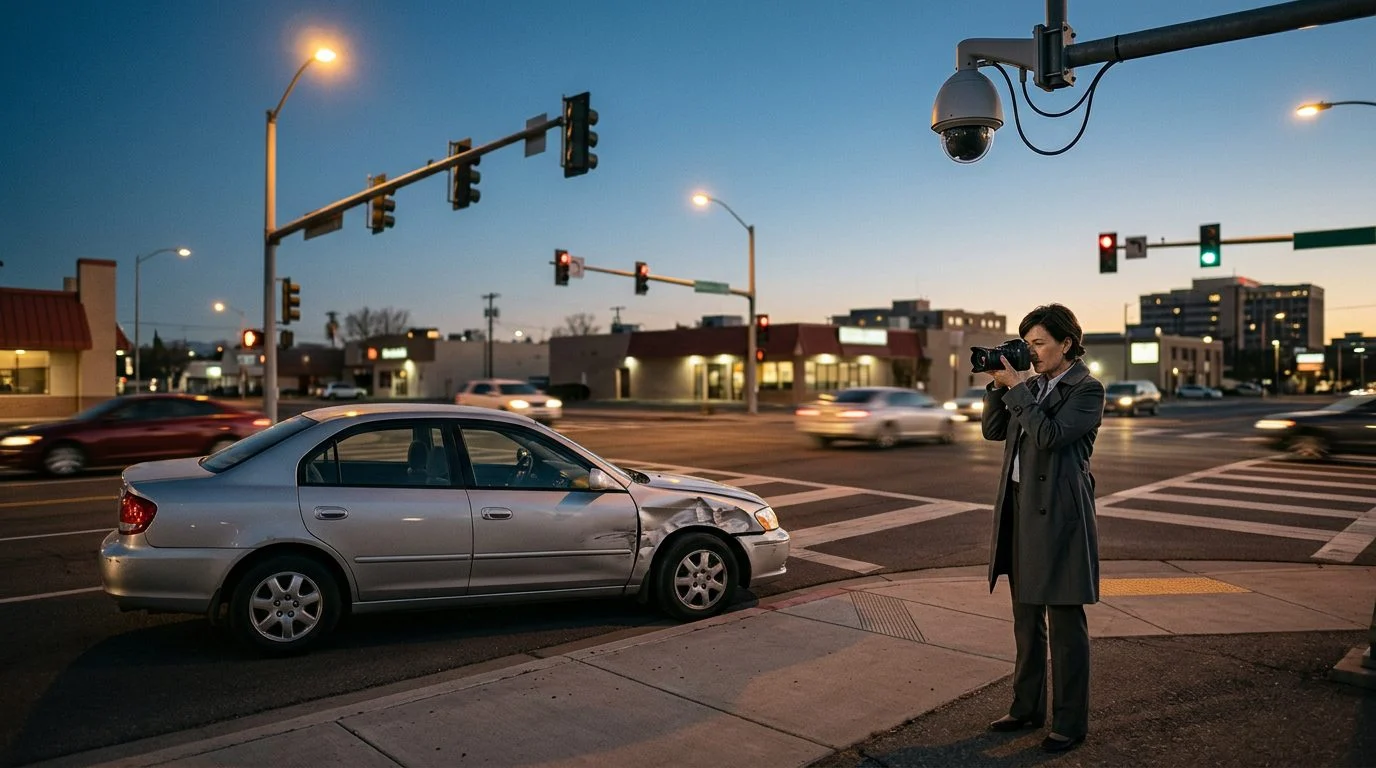
In a car crash, the crash report, scene photographs, and vehicle damage often show what happened.
In a premises case, inspection and maintenance records often matter most. In a negligent security case, the central question is often what the owner knew or should have known about earlier risks. For more on that claim type, read our negligent security guide.
Each claim turns on its own evidence and its own timing. A strong early record makes each element easier to show later.
Not sure what your next step is?
Talk it through with our team — the first consultation is free, confidential, and carries no obligation.
Negligence and Malpractice: What Is the Difference?
Malpractice claims still look at duty, breach, causation, and damages.
A car crash or a property fall is usually general negligence, not malpractice.
Talk With Our Team About Your Situation
If you are dealing with an injury, a loss, or a decision you did not choose, you don’t have to work through these four elements alone. Some readers are looking into this for a family member who is still recovering.
Josh Wood is the responsible lawyer for this page. He is licensed in New Mexico and Arizona. Your initial consultation is free, confidential, and without obligation.
You can reach our team through our contact form, or start a chat from the same page.
Is a negligence claim the same as a car accident claim?
A car accident claim is one kind of negligence claim.
Does a missing element end a case?
Under Herrera v. Quality Pontiac, a negligence claim generally requires a duty owed by a defendant to a plaintiff, a breach of that duty, typically judged by a standard of reasonable care, and that breach being both a proximate cause and a cause in fact of the plaintiff’s damages. Each case turns on its own evidence.
Does my own conduct matter?
New Mexico’s jury instruction also covers each person’s duty to use ordinary care for their own safety, to be used only when the party seeking recovery has been charged with lack of ordinary care (UJI 13-1604).
The Four Proofs at a Glance
Duty of Care
The person or business being asked to answer for the harm owed a legal duty of care to the injured person in that situation.
Breach of Duty
The duty was not met. Courts often ask whether the person acted with reasonable care under the same circumstances.
Causation
The breach was a link in the chain that led to the injury, not just a background condition that happened to be present.
Damages
The injured person suffered real losses, such as medical costs, lost income, pain and suffering, or the loss of a loved one.
Every Case Is Different
This guide explains general concepts and is not legal advice about your situation.