Negligent Security · New Mexico
Who Can Be Named in a Negligent Security Lawsuit?
When an assault happens on someone else's property, several parties may be connected to the case. Here is how to think about them and what to do next.
By Josh Wood · Published November 9, 2026
If a guard was posted at a property and an attack still happened, you may be asking who should answer for it. Can I sue a security company if its guard failed to stop an attack in New Mexico? Possibly.
Which of these parties can be sued, and on what legal theory, turns on the incident and the contracts behind the property’s security. This page explains how New Mexico law looks at each party and which records usually matter most.
Short Answer: Who Can Be Named After a Contracted Guard Fails to Stop an Attack
Each party’s role depends on who controlled security and what that party did or failed to do.
The security contract and the owner’s control over security are usually the first documents reviewed. Those papers show who hired the contractor, what the guard was supposed to cover, and who could change the rules.
Under New Mexico’s comparative fault statute, several liability generally applies, so each defendant pays only its own share of fault, although the statute provides exceptions. New Mexico’s comparative fault statute makes an exception for persons who intentionally inflicted harm, who remain subject to joint and several liability (Section 41-3A-1 of the New Mexico Statutes).
Early questions matter because records can be lost or overwritten. This page is written by Josh Wood, the responsible lawyer for El Gringo Law. Josh Wood is licensed in New Mexico and Arizona. The firm’s website is elgringolaw.com, and it handles matters across New Mexico, including Santa Fe, Rio Rancho, Las Cruces, and Bernalillo County.
If a guard was on duty when a loved one was attacked, you may have a claim worth reviewing, and our team can talk it through with you. Talk it through with our team — the first consultation is free, confidential, and carries no obligation.

The Property Owner’s Duty to Protect Visitors From Foreseeable Crime
A property owner may owe visitors ordinary care against crime by others when that crime was foreseeable. New Mexico’s jury instruction says a landowner must use ordinary care to keep the premises safe for visitors, and that duty to protect visitors arises from a foreseeable risk that a third person will injure a visitor (UJI 13-1320 committee commentary).
Common examples include earlier attacks or break-ins on or near the property, poor lighting or broken locks, and warnings from tenants or staff.
New Mexico uses one standard of reasonable care for visitors.
The commentary also explains that a jury can weigh the owner’s failure to protect visitors against the attacker’s conduct. The owner should not be able to shift too much blame onto the person who committed the crime.
The duty is ordinary care, not perfect protection. Whether care was reasonable is judged on the property, the risk, and what the owner did about it.
Property Management Companies and Their Role in Security Decisions
The key question is who controlled security decisions before the attack.
A negligence claim generally requires a duty owed to the plaintiff, a breach of that duty, and a breach that was a proximate cause and cause in fact of the injury (Herrera v. Quality Pontiac).
Useful questions include these. Who hired the security contractor? Who set the guard’s schedule and posts? Who received complaints about the area, and what did they do next?
Management agreements, vendor approval records, and work orders often answer these questions. A company that ignored repeated complaints about broken gates or dark parking areas may face questions about whether it used reasonable care.
The Security Contractor and the Guard: Who Can Be Named and Why
A security company can be named for its own negligence. Under respondeat superior, a plaintiff may sue an employer when the employee was acting within the scope of employment (UJI 13-1647 committee commentary).
The company can also be named directly for negligent hiring, retention, or supervision. The plaintiff must show the employer knew or should have known the employee would create an unreasonable risk of injury (UJI 13-1647 negligent hiring instruction).
New Mexico uses a “knew or should have known” standard, not only actual knowledge (F & T Co. v. Woods). Under this direct theory, the commentary says the employee does not need to be acting within the scope of employment at the time of the attack.
Naming decisions are made case by case, based on the contract, the records, and what the guard actually did.
Can a Security Guard Be Held Liable for Failing to Intervene?
A guard can be examined for whether he or she used reasonable care in the role assigned. New Mexico law says every person has a duty to use ordinary care for the safety of others (UJI 13-1604 duty of ordinary care). UJI 13-1604 NMRA reads: “Every person has a duty to exercise ordinary care for the safety of the person and the property of others. [Every person also has a duty to exercise ordinary care for the person’s own safety and the safety of their property.] USE NOTES The bracketed material is to be used only when the party seeking recovery has been charged with lack of ordinary care.”
A failure to respond can look like several things. An alarm went unanswered. A guard left a post during a shift. No one called police when trouble started. A known problem area was never checked.
Each of these is a question about the guard’s role and the moment it happened. Training, post orders, and actual response time show what was expected and what happened.
A response time that looks slow on paper may still need context. The records tell the story, so they matter as much as witness accounts.
What the Security Contract and Post Orders Show
The security contract and post orders often show what the guard was supposed to do. Together, they set the baseline for reasonable performance at that property.
A services contract usually covers the scope of work, the number of guards, posts and patrol routes, hours, and reporting duties. Read closely, it shows what the owner or manager bought.
Post orders are the written instructions for each guard. They can say which doors to check, when to make rounds, when to call police, and when to get a supervisor.
A gap between the contract and reality can become central. For example, a contract may require two guards on a night shift while the schedule shows only one. Gaps like that often shape the questions a claim raises.
Not sure what your next step is?
Talk it through with our team — the first consultation is free, confidential, and carries no obligation.
Training, Licensing, and Incident Records
Training, supervision, and licensing records can show whether a guard was ready for the duties assigned. Where a license is required for the job, the license file is one more record to check.
Prior incidents also matter. Police calls, complaint logs, and earlier incident reports can bear on what the owner and contractor knew or should have known.
These records are usually obtained through the legal process. They can disappear, so early written requests to preserve them matter.
What Damages a Claim May Include
A claim seeks compensation for the harm caused by the attack. The losses in each case depend on the injuries, the evidence, and the people affected.
Under Section 41-2-1 of the New Mexico Statutes, whenever the death of a person is caused by the wrongful act, neglect or default of another, and the act, neglect or default would, if death had not ensued, have entitled the party injured to maintain an action and recover damages, the person or corporation that would have been liable, if death had not ensued, shall be liable to an action for damages, notwithstanding the death of the person injured. The action is brought by the personal representative of the person who died (NMSA 1978, § 41-2-3).
The jury may award damages it deems fair and just. It considers the pecuniary injury to the surviving family and the circumstances of the wrongful act. The statute also sets an order for distributing any judgment, starting with a surviving spouse or children.
Is it worth suing for pain and suffering?
Pain and suffering is one kind of harm a claim can address. Whether a claim is worth pursuing depends on the injuries, the evidence, and the circumstances of the attack.
How much money can you get for suing a hotel?
No amount can be predicted from general information. The value of any claim rests on the injuries, the evidence, and how the attack happened.
Deadlines to Keep in Mind: Statute of Limitations
New Mexico sets filing deadlines for these claims, and a claim filed too late can be barred. Waiting also makes evidence harder to find.
Under NMSA 1978, § 41-2-2, an action under the wrongful death statute must be brought within three years after the cause of action accrues (NMSA 1978, § 41-2-2 — three years from the date of death). For a wrongful death action, Section 41-2-2 of the New Mexico Statutes states that the cause of action accrues as of the date of death.
Personal injury claims have their own filing deadline under New Mexico law. The right deadline turns on how a claim is framed and who is named, so ask us to confirm yours early.
Evidence to Preserve Early, Including Camera Footage
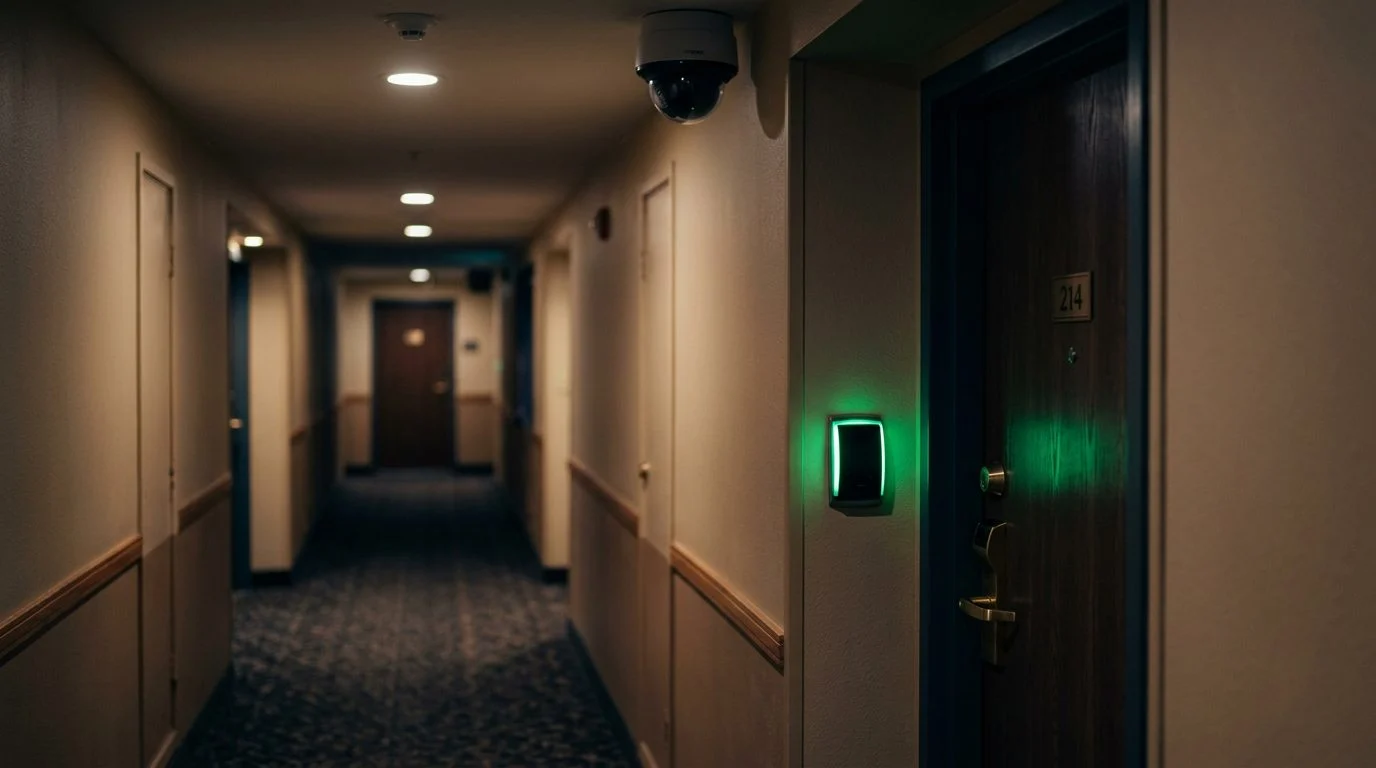
Surveillance video is often the evidence most at risk. Many camera systems record over older footage automatically, so footage can be gone within days.
Other evidence can disappear early:
- Incident reports and police reports
- Guard schedules and time records
- Texts, radio logs, and phone records
- Names and contact details for witnesses
New Mexico can hold a party liable for intentionally destroying evidence.
Early written requests help protect footage that might otherwise be overwritten.
Talk With El Gringo Law About Your Situation
If someone you love was hurt or killed in an attack at a property with a contracted guard, you may be trying to work out who should answer for it. The first weeks often bring questions about records, deadlines, and what to save.
Our team can review who controlled security at the property, what the contract and post orders required, and which records should be requested now. That review can apply whether the property is in Santa Fe, Rio Rancho, Las Cruces, Taos, or Farmington.
Our free first consultation is confidential and carries no obligation to continue.
To start, use the contact form at elgringolaw.com, call the firm, or start a chat. Describe the property, the guard’s role, and the date of the incident.
Parties that may be named in a claim
Property owners
Whoever owned the property may be named, depending on the facts of the case and who controlled the premises.
Business operators
Tenants or businesses that controlled the area where the harm occurred may be part of the picture.
Act early to protect evidence
Security footage, incident reports and witness contact information can be lost or overwritten over time. Reaching out early gives our team a better chance to help preserve what matters.
How we can help
Free first consultation
A confidential, no-obligation consultation to talk through what happened and the questions you have.
Focused on your side
We focus on injury claims arising from violent acts on someone else's property.
Clear explanations
We explain the parties, the evidence and the options in plain language so you can make informed decisions.
Reach us your way
Call, submit a contact form or start a chat with our team.