Spinal Cord Injuries · New Mexico
Evidence to Save After a Spinal Cord Crash in New Mexico
The records, photos and details you collect now can help show what happened. Here is what to keep, and how El Gringo Law can help you start.
By Josh Wood · Published November 8, 2026
The evidence to save after a crash that caused a spinal cord injury in New Mexico includes the crash report, your medical records, photos of the scene and vehicles, witness details, and a dated record of how the injury affects your daily life.
A spinal cord injury can change over days and weeks, so records from the first days carry real weight. Vehicles get repaired or sold, roads reopen, and memories fade. This list is general information. Which items matter most depends on the facts of your crash and your injury.
Why Evidence Matters Early After a Spinal Cord Injury Crash
Early evidence is the easiest to keep and the hardest to rebuild later. The scene changes within hours. Cars are fixed, sold, or sent to a salvage yard. Witnesses move on with their days and may not remember details clearly.
Medical evidence works on its own timeline. A spinal cord injury can show its full effect over time. Symptoms reported at the scene, early scans, and notes from first responders create a timeline that later doctors can review. Gaps in that timeline make the story harder to follow.
Insurance companies also start asking questions early. An adjuster may ask for a recorded statement, photos, or records within days. Having your own organized file lets you answer carefully instead of working from memory alone.
For the bigger picture of how these claims work in New Mexico, read our spinal cord injury claims guide for New Mexico. The rest of this page covers what to collect and why.

The Crash Report: What It Is and How to Request It
A crash report is the written account of an accident prepared by the agency that responded. The agency might be a city police department, a county sheriff, or New Mexico State Police. Section 66-7-207 of the New Mexico Statutes provides that the driver of a vehicle involved in an accident resulting in bodily injury to or death of any person or total property damage to an apparent extent of five hundred dollars ($500) or more shall, within five days after the accident, forward a written report of the accident to the department of transportation. That same Section 66-7-207 also requires every law enforcement officer who, in the regular course of duty, investigates a motor vehicle accident of which report must be made to forward a written report of the accident to the department of transportation within twenty-four hours after completing the investigation.
If you’re unsure whether the crash was reported, contact the agency that handled it. Section 66-7-206 of the New Mexico Statutes provides that the driver of a vehicle (or, if applicable, the autonomous motor vehicle operator or the autonomous commercial motor vehicle operator) involved in an accident resulting in bodily injury to or death of any person or property damage to an apparent extent of five hundred dollars ($500) or more shall immediately, by the quickest means of communication, give notice of the accident to the police department if the accident occurs within a municipality, and otherwise to the office of the county sheriff or the nearest office of the New Mexico state police. For an autonomous motor vehicle or autonomous commercial motor vehicle operating without a human driver, the owner of the vehicle or a person working on the owner’s behalf is responsible for giving this notice.
To request your copy, contact the agency that handled the crash. Have the date, time, location, and names of the drivers ready. Include any report or incident number you have.
Read the report when you get it. Check names, vehicle details, the diagram, and the officer’s notes. Write down any errors and the date you found them. Keep the original copy unmarked.
The report has limits. Section 66-7-213 of the New Mexico Statutes provides that, subject to the limited disclosures the section allows, all accident reports made by persons involved in accidents or by persons in charge of garages shall be without prejudice to the individual so reporting and shall be for the confidential use of the state highway and transportation department or other state agencies having use for the records for accident prevention purposes or for the administration of the laws of this state relating to the deposits of security and proof of financial responsibility by persons driving or the owners of motor vehicles. Except as that section provides, no accident report may be used as evidence in a civil or criminal trial. Keep your copy anyway, because it guides the rest of your file.
Medical Records That Document the Spinal Injury
Medical records are the core proof of the injury itself. Collect every record from the scene forward:
- Ambulance or EMS run reports
- Emergency room notes and discharge papers
- X-ray, CT, and MRI results, plus the images
- Surgical reports, if surgery was done
- Follow-up notes from neurology, neurosurgery, or spine care
- Physical and occupational therapy notes
Keep every appointment you can. Describe your symptoms the same way each time, and note what has changed. Consistent notes create a clear timeline from the crash to the diagnosis. Missed visits invite questions.
Keep a running list of providers, dates, and prescriptions. Save itemized bills and insurance explanation-of-benefits statements too.
Whether the crash caused the injury often depends on medical opinions. Read how those opinions are used in expert witnesses in spinal cord injury lawsuits in New Mexico.
Photos and Video From the Scene and the Vehicles
Photos show the scene before anything changes. Take them only when it’s safe. Shoot the scene from several angles and capture:
- Vehicle positions and where they came to rest
- Damage to each vehicle, including the inside
- Skid marks, debris, and fluid on the road
- Traffic signals, stop signs, lane lines, and road signs
- Weather and road conditions
Keep the original files with their date and time data. Back them up to a second device or a cloud account. Don’t edit the originals.
Photograph your injuries and any braces or equipment at regular intervals, with dates. These photos show how the injury changes and which daily tasks it limits.
Ask early about dashcam footage from your car or others, and about business or traffic cameras near the crash. Recordings are often overwritten quickly, so early requests matter.
Photos and video also connect to fault. New Mexico follows pure comparative negligence. Under Scott v. Rizzo, New Mexico uses pure comparative negligence: a plaintiff’s own share of fault reduces the damages by that percentage, but it does not bar recovery, even when the plaintiff is mostly at fault. The jury instruction on shared fault asks for percentages that total 100% among the people whose negligence caused the harm, under UJI 13-2219 NMRA. Evidence helps show those percentages. Read more about how fault is shared in New Mexico.
Witness Names, Statements, and Contact Details
Write down each witness’s name and phone number at the scene if you can. Witnesses move, change numbers, and forget. For each witness, record:
- Full name, phone number, and email if known
- Where they stood or where they were driving
- What they said at the scene
Write a short account of what each witness saw and heard, in their own words, as soon as possible. Date the note. Include passengers, other drivers, pedestrians, and first responders. If an officer spoke with you, note the officer’s name and agency.
Write your own account too. Use a dated note while your memory is fresh. Keep it private. Don’t post it online or share it with people outside your claim.
Records That Show How the Injury Changed Daily Life
Bills show money spent. Work and daily-life records show what the injury took away. Keep:
- Pay stubs and records of time missed from work
- Letters from your employer about schedule changes or lost duties
- Written work restrictions from your doctor
- Receipts for medical equipment, prescriptions, and home changes
- Mileage logs for trips to appointments
Keep a daily journal as well. Note pain, mobility, sleep, and tasks you can’t do now, such as driving, lifting a child, or cooking a meal. Keep entries short and dated. Bills rarely show these losses, but a journal can.
Keeping Evidence Safe and Organized
Use one folder, paper or digital, with sections for the crash report, medical records, photos, witnesses, work records, bills, and insurance. Keep originals untouched and work from copies.
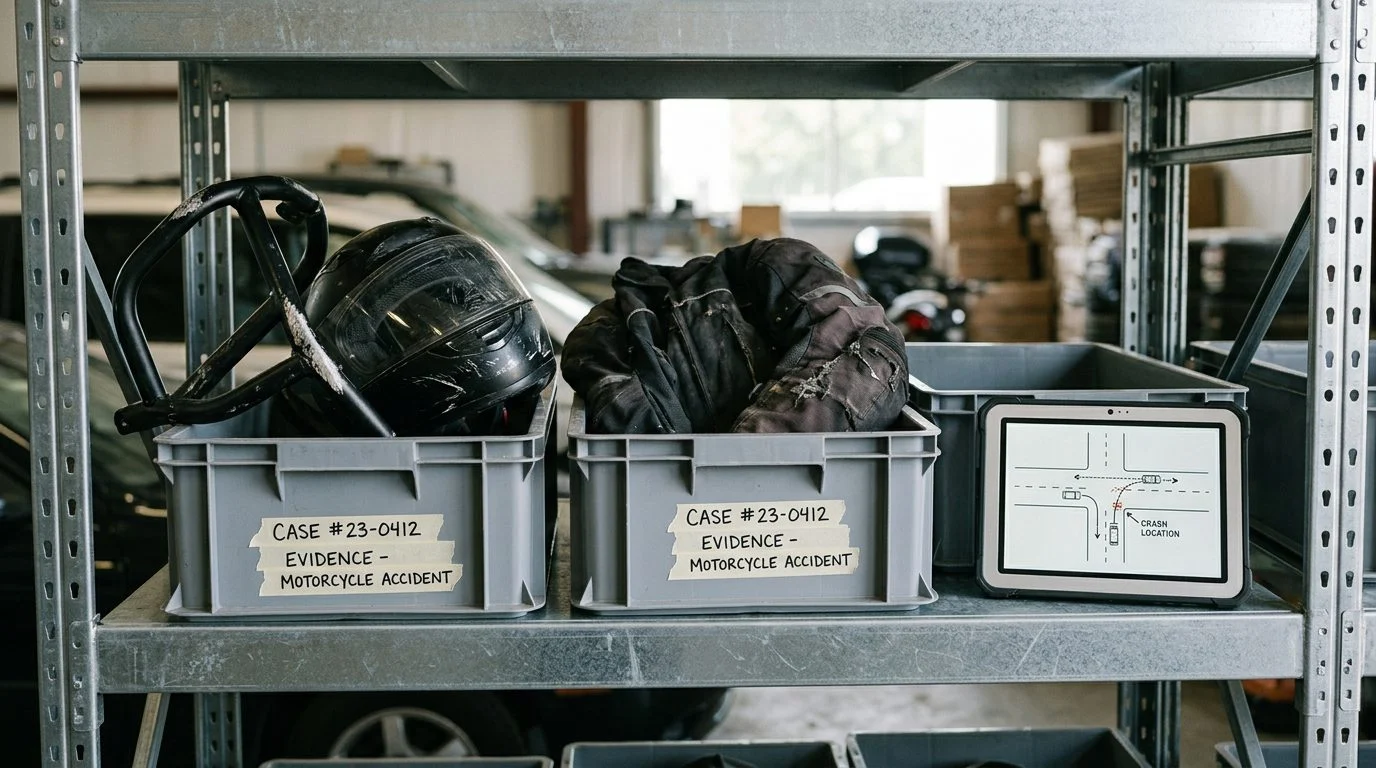
Keep your vehicle and any damaged parts until you’ve reviewed your options. Ask the repair shop or salvage yard in writing to hold them. Parts can be lost quickly once a car is repaired or sold.
Log every call, letter, and message from an insurance company. Note the name, date, and what was said. Keep every written offer. Think before you give a recorded statement.
If a government vehicle or employee was involved, a short notice rule applies. Section 41-4-16(A) of the New Mexico Statutes requires every person who claims damages from the state or any local public body under the Tort Claims Act to cause a written notice stating the time, place and circumstances of the loss or injury to be presented to the official the section designates for that public body, within ninety days of the occurrence that gives rise to the claim, where immunity has been waived under the Act (for wrongful death claims, within six months after the date of the occurrence of the injury which resulted in the death). The time for giving notice does not include up to ninety days during which the injured person is incapacitated from giving the notice by reason of injury. Without this notice, a lawsuit is barred unless the governmental entity had actual notice of the event, and the notice period also excludes up to ninety days in which the injured person is incapacitated by reason of injury.
Avoid posting about the crash, your injuries, or your activities on social media. Posts can be used in a claim.
Talk With Our Team About Your Free Case Review
If you’re gathering these records now, you may be deciding what comes next. You don’t have to sort out a spinal cord injury claim from a car or truck crash on your own. Our initial consultation is free, confidential, and without obligation to continue.
Josh Wood is the responsible lawyer for this page. He is licensed in New Mexico and Arizona. To reach El Gringo Law, use the contact form on our website or start a chat there. You can also review how fees and costs are explained before you reach out.
Every case is different, and past results do not predict a similar outcome.
Frequently Asked Questions
Where do I get a crash report in New Mexico?
Contact the agency that handled the crash, such as the police department, county sheriff, or New Mexico State Police, and ask for a copy.
Keep your copy anyway.
Should I keep my damaged car?
Keep it until you’ve reviewed your options, and ask the repair shop in writing to hold it.
Why keeping evidence matters
Records tell the story
Medical charts, imaging and treatment notes document the injury and how it has affected your daily life.
Scene details fade fast
Photos, skid marks, debris and vehicle damage can change or be cleared away within days.
Witnesses move on
Names and phone numbers of people who saw the crash are easiest to collect while they are still close by.
Your daily life is evidence too
A simple journal of pain, limits and small tasks you can no longer do helps show the full impact of the injury.
What to gather
Medical records and imaging
Keep discharge papers, therapy notes, prescriptions and copies of X-rays, MRIs and CT scans. Ask providers for copies as you go.
Crash scene and vehicles
Photos of the road, traffic signals, skid marks, vehicle damage and any visible injuries. Keep the vehicles if you can until you have reviewed your options.
Crash report and contacts
Ask the agency that responded for a copy of the crash report. Write down the names and phone numbers of drivers, passengers and witnesses.
Your own written record
Note what happened while it is fresh, then keep a daily log of pain, mobility, work missed and help you needed from family.
Be careful with insurance paperwork
Before you give a recorded statement or sign any release or settlement form from an insurance company, talk with a lawyer first. Those documents can affect your claim.