Spinal Cord Injury · Car Accidents · New Mexico
A Spinal Cord Injury Changes Everything. We Help You Take the Next Step.
When a crash leaves you with a spinal cord injury, you need clear answers and someone who will listen to your side of the story.
By Josh Wood · Published November 13, 2026
A spinal cord injury in a car crash turns life upside down. If you’re asking how soon to call a lawyer after a spinal cord injury car accident in New Mexico, here is the short answer. Get medical care first. Then an early call can help protect evidence and clarify deadlines.
The Short Answer: Get Medical Care First, Then Consider Calling Early
Calling a lawyer early is your choice, and it is a timing decision, not a required step. Your health comes first. Spinal cord injuries need careful medical attention, and that care should not wait for a legal decision. A first conversation is about getting information, not signing anything.
Early contact can help because some crash evidence is lost quickly, and legal deadlines keep running while you recover. Many people feel rushed to decide everything at once. You don’t have to.
You may be reading this while a family member is in the hospital and you are the one making calls. Or you may be in rehab, trying to understand what comes next for your work, your home, and your family. In either case, you decide when to talk with a lawyer. Your timing is your decision, and it can change as you learn more.
For background, read our spinal cord injury claims guide for New Mexico.
If the crash has left you sorting out medical visits, insurer calls, and deadlines, our team is glad to talk with you about your options. Talk it through with our team — the first consultation is free, confidential, and carries no obligation.

Why Medical Records Matter as Much as the Calendar
Your medical records are central evidence in a spinal cord injury claim, so start gathering them at the first hospital visit. Keep every discharge paper, imaging report, therapy note, and bill. These records show what happened to your body, what treatment you needed, and what care you may still need.
Ask for copies as you go, so the paper trail stays complete. Note what has become harder in daily life, such as dressing, driving, or working.
Tell your doctors everything you remember about the crash, and every symptom, even ones that seem minor. Your medical records and your account of the crash should line up. If they don’t, the gaps can take time to sort out later.
A simple notebook helps. Write down the date, the symptom, the doctor you saw, and any question you want answered. Once you decide to move forward, a lawyer can request records for you, so you don’t have to collect every file alone.
New Mexico Deadlines: The Clock Can Start Before You Feel Ready
Under NMSA 1978, § 37-1-8, actions against sureties on official bonds and on bonds of guardians, conservators, personal representatives and persons acting in a fiduciary capacity must be brought within two years after the liability of the principal (or the person for whom they are sureties) is finally established or determined by a judgment or decree of the court, and actions for an injury to the person or reputation of any person must be brought within three years.
A wrongful death action must be brought within three years, under NMSA 1978, § 41-2-2. The cause of action accrues as of the date of death.
Tort actions against a governmental entity or a public employee are forever barred unless filed within two years of the occurrence, except that a minor under seven has until his ninth birthday to file (NMSA 1978, § 41-4-15). The Tort Claims Act also requires written notice of the time, place, and circumstances of the loss within ninety days after the occurrence, not counting up to ninety days when the injured person is incapacitated by the injury from giving notice (NMSA 1978, § 41-4-16). Without that notice, a suit cannot be maintained unless the government had actual notice of the occurrence. When a government claim is one for wrongful death, notice may be presented by or on behalf of the personal representative, a person claiming benefits from a wrongful death action, or the consular officer of the country of which the deceased was a citizen, within six months after the date of the injury that caused the death; but if the deceased had already presented a notice that would have been sufficient had he lived, a wrongful death action may be brought without any additional notice (NMSA 1978, § 41-4-16).
A crash involving a state, county, or city vehicle or road condition is where this matters most. Write down the crash date and any dates in your papers, so the timeline is clear. Which deadline applies depends on the facts, including who may be responsible, so don’t assume the longer window applies.
Evidence That Fades Fast After a Crash
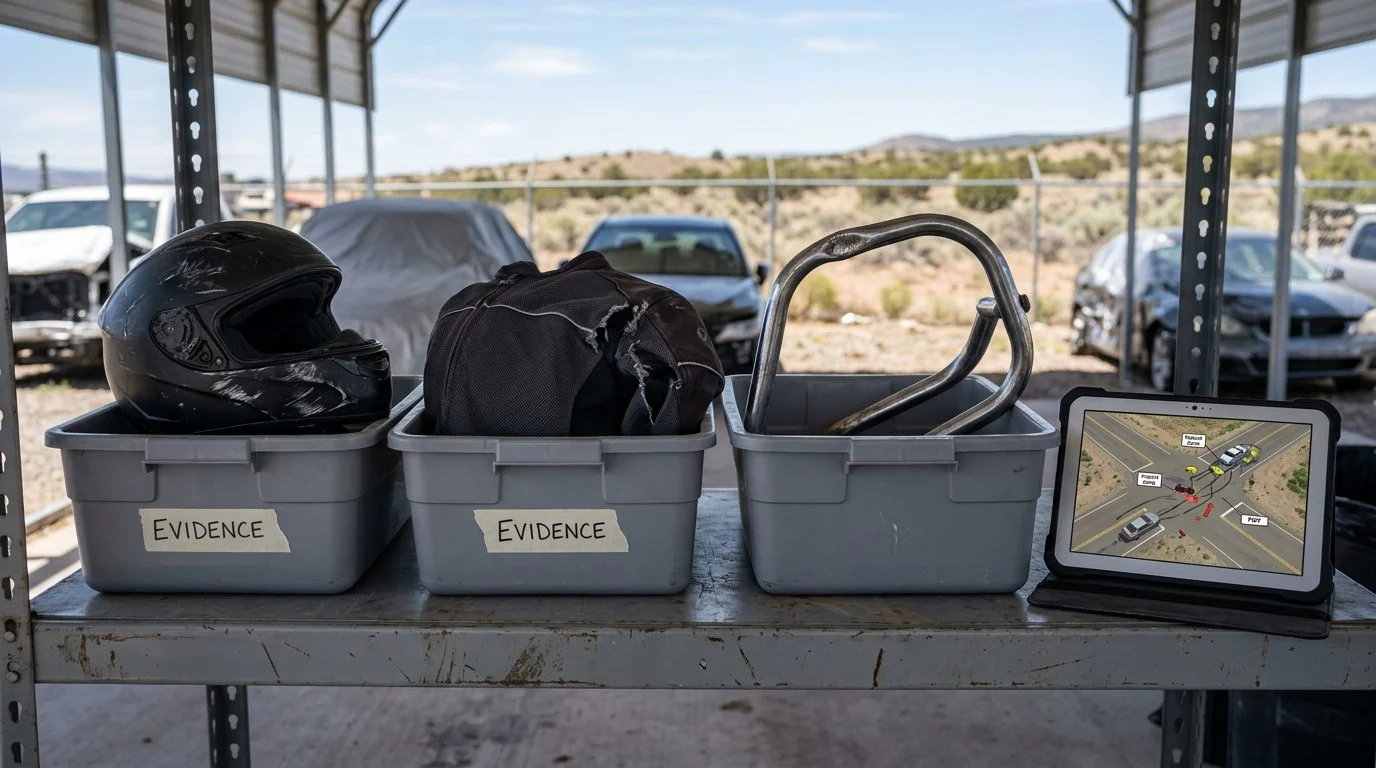
The evidence that changes fastest is the scene, the vehicles, and the people who saw the crash. Take photos as soon as it is safe.
- Scene and vehicles: Photos of the scene, the vehicle damage, skid marks, and traffic signals matter. Cars are often repaired, towed, or sold.
- Police and state reports: A driver in a crash involving bodily injury, death, or property damage of $500 or more must immediately notify police, or the county sheriff or State Police if the crash is outside a city (NMSA 1978, § 66-7-206). Within five days, the driver must send a written report to the Department of Transportation (NMSA 1978, § 66-7-207). Ask for the report number and the officer’s name.
- Witnesses: Get names and phone numbers from anyone who saw the crash, while they are still easy to reach.
- Insurance contact: An insurer may contact you early. Many lawyers advise caution before giving a recorded statement or signing forms. You can ask a lawyer about any request you have received.
- Work records: Keep pay stubs, schedules, and time-off records, since lost income is part of many claims.
Save text messages, emails, and voicemails about the crash too.
What a First Meeting Usually Covers
A first meeting is a conversation about your facts, your injuries, and your options. Expect questions about how the crash happened, who was involved, and what records you have.
It’s also a chance to bring what you have: discharge papers, the crash report number, and a list of questions. The conversation can also cover what happens next if you choose to move forward, step by step.
Damages are the losses a claim may cover. They can include medical bills, lost income, and the cost of long-term care and equipment. New Mexico uses comparative negligence (shared fault), so an injured person’s own share lowers damages rather than blocking recovery (Scott v. Rizzo, 96 N.M. 682 (1981)).
A claim also asks whether someone owed a duty, breached it, and caused the harm (Herrera v. Quality Pontiac). Family members may have their own claims. New Mexico recognizes loss of consortium claims, and those damages belong to the close family member, not the injured person (Thompson v. City of Albuquerque). Bring a family member if that helps you feel steady.
A lawyer reviews your facts before talking about the value of any claim.
Talk With Josh Wood About Your Situation, Free and Confidential
You can start by talking with Josh Wood, the lawyer responsible for this page’s content, about your timing and questions. Josh Wood is licensed in New Mexico and Arizona.
The firm handles injury claims for people in Santa Fe, Rio Rancho, Las Cruces, Bernalillo County, Sandoval County, Taos, and Farmington.
If you’re dealing with medical visits, insurer calls, or deadlines you didn’t expect, you don’t have to sort them out alone. You can share what you know now and fill in the rest later.
Use the contact form to reach out, on your own timeline. Your first consultation is free, confidential, and carries no obligation to continue (consulta inicial gratuita, confidencial y sin compromiso).
Not sure what your next step is?
Talk it through with our team — the first consultation is free, confidential, and carries no obligation.

Frequently Asked Questions
How soon after a spinal cord injury car accident should I call a lawyer in New Mexico?
Call as soon as you can, ideally within the first few days, so evidence and key details are preserved. Our free, confidential first consultation is available with no obligation to continue.
Is there a deadline to file a spinal cord injury claim after a car accident in New Mexico?
Filing deadlines can affect a personal injury claim, so contact our team to discuss the timing of your case during your free, confidential initial consultation, which carries no obligation. Because deadlines and evidence matter, contacting a lawyer early is important.
Why does calling a lawyer early matter when my spinal cord injury is still being treated?
Early contact helps preserve evidence such as crash reports, vehicle data, and witness accounts, which can be lost over time. You can focus on your medical care while a lawyer helps you understand your options.
What should I have ready when I call a lawyer after a spinal cord injury car accident?
Have the date and location of the crash, any police report number, insurance information, witness names, and your medical provider details if you have them. You do not need every document before you call, and our team can help you figure out next steps during a free, confidential consultation.
What to expect when you contact our team
Free first consultation
Our initial consultation is free, confidential and comes with no obligation to continue.
Responsible lawyer: Josh Wood
Josh Wood, a lawyer licensed in New Mexico and Arizona, is responsible for the content of this page and for the matters the firm takes on.
Focus on your recovery
We listen to your questions about medical care, daily life and what comes next, so you can focus on healing.
Clear explanations
We explain the steps in plain language, so you understand your options before you decide anything.
Be careful with insurance companies
Insurance adjusters may contact you soon after a crash and ask for recorded statements or quick agreements. Talking with a lawyer first can help you avoid saying something that is later used against your claim.
Steps that can help after a spinal cord injury crash
Get medical care
Follow your medical team's advice and keep every record, test result and appointment note.
Protect the evidence
Save photos, police report numbers, witness names and any damaged property connected to the crash.
Keep a journal
Write down pain, limitations and daily tasks you can no longer do. These details help show how the injury affects your life.
Reach out to a lawyer
Contact El Gringo Law to review your situation with a team that focuses on serious injury cases.