Spinal Cord Injury | New Mexico
Thinking About Accepting a Spinal Cord Injury Settlement? Pause and Check Before You Sign.
An early offer can look simple, but a spinal cord injury affects your future care, work, and daily life. Talk with El Gringo Law before you accept.
By Josh Wood · Published November 7, 2026
Whether you should accept an insurance settlement after a spinal cord injury depends on your facts. A few questions come first, though. Is your medical picture clear yet? Does the offer cover what your injury may need over time? What does the release say? If you’re asking, “should I accept an insurance settlement after spinal cord injury in New Mexico?” you’re asking the right question. This guide walks through those questions and the New Mexico rules that shape an offer. If you’re helping a parent, spouse, or adult child work through this, the same questions apply. Take a breath. You don’t need every answer today.
Why the First Insurance Offer Often Comes Quickly
Insurers often make contact early. An early offer can arrive before anyone knows how far a spinal cord injury will reach. That timing is the first reason to slow down. An offer made in the first weeks rests on what is known at that moment. Spinal cord injuries often take months to show their full effects. Doctors may not yet know which movement or feeling will return, or what care you’ll need next year.
Bills don’t wait while you recover. Rent, car payments, groceries, and medical co-pays keep coming. A family may feel pressure to say yes so money starts moving. That pressure is real, and it’s normal to feel it.
A useful first step is to write two short lists. The first lists what the offer would cover today. The second lists what it might leave out, such as future care, lost work, or home changes. Those two lists will guide every question that follows.
If an insurance offer after your spinal cord injury has you unsure what to do, our team can talk through your facts with you, with no obligation. Talk it through with our team — the first consultation is free, confidential, and carries no obligation.

What a Spinal Cord Injury Claim Has to Account For
A spinal cord injury claim has to look past the first months, because the injury can change over time. Recovery is judged over a longer span than a single hospital stay or a single test.
Doctors often use the phrase maximum medical improvement, or MMI, for the point when a condition has mostly stopped changing. At that point, doctors can usually describe which effects are likely to last. Before then, any estimate of lasting needs is a moving target.
Future needs can include ongoing therapy, doctor visits, medications, medical equipment, and changes to a home, such as a ramp or a modified bathroom. Some people need help with daily tasks, which may mean paid care or a family member’s time. A claim has to account for those needs over years, not just the bills you already have.
A settlement that looks large today may not cover that full timeline. Compare the offer to the whole picture. For background on these injuries, see our spinal cord injury guide.
Damages That May Be Part of a New Mexico Claim
A New Mexico injury claim can include both economic and non-economic damages. They include past and future medical bills, lost wages, and loss of earning capacity, meaning income you may lose if you can’t work as you did before.
They cover pain, suffering, and loss of enjoyment of life, such as no longer being able to drive, hike, or coach your child’s team. Household and caregiving losses can also be part of a claim when the facts support them.
A spouse or partner may have a claim for loss of consortium. That claim covers damage to a close, mutually dependent relationship.
A wrongful death claim follows different rules and is a separate matter. If a loss of life is part of your situation, it needs its own review.
How New Mexico’s Comparative Fault Rule Can Affect an Offer
New Mexico uses comparative fault, so your share of blame can lower what you recover. It does not automatically bar your claim. The state follows pure comparative negligence, set out in Scott v. Rizzo. A person suing in negligence is no longer totally barred from recovery because of their own negligence.
Under UJI 13-2218 NMRA, the jury totals the damages first. Then it reduces them by the injured person’s percentage of negligence. Under New Mexico’s comparative negligence instruction, if an injury was caused by negligence of both the defendant and the plaintiff, the jury determines the plaintiff’s total damages and then reduces that total by the percentage of the plaintiff’s negligence (UJI 13-2218 NMRA).
Insurers often argue that the injured person shares the blame. That argument can show up in an offer that quietly assumes you were partly at fault. Look for that assumption, and ask how the number was built.
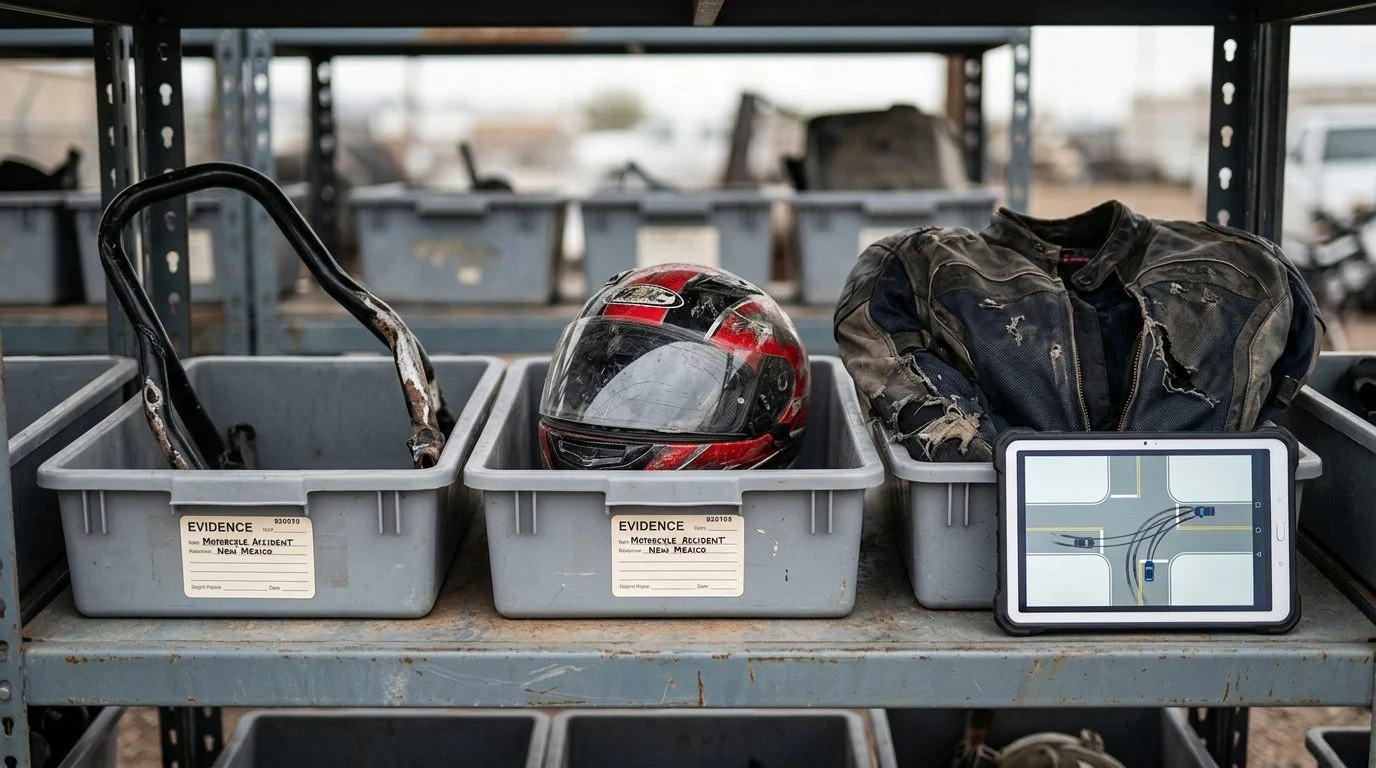
Evidence matters here. The accident report, photos, skid marks, and names of witnesses help show how the crash happened. Gather what you can, and keep a copy of every record you receive.
Before you accept, review the fault percentage the offer seems to assume.
Policy Limits, Multiple Coverages, and Underinsured Motorist Claims
An offer may be limited by the at-fault driver’s liability policy, so check those limits before you accept. Policy limits are the most the policy will pay for bodily injury. If an offer is near those limits, ask whether the limits can cover the items on your money list.
Under § 66-5-301, New Mexico auto liability policies covering vehicles registered or principally garaged in New Mexico must provide uninsured motorist coverage, unless the named insured rejects it. NMSA 1978, § 66-5-301 reads: “unless coverage is provided therein or supplemental thereto in minimum limits for bodily injury or death and for injury to or destruction of property as set forth in Section 66-5-215 NMSA 1978 and such higher limits as may be desired by the insured, but up to the limits of liability specified in bodily injury and property damage liability provisions of the insured’s policy, for the protection of persons insured thereunder who are legally entitled to recover damages from owners or operators of uninsured motor vehicles because of bodily injury, sickness or disease, including death, and for injury to or destruction of property resulting therefrom, according to the rules and regulations promulgated by, and under provisions filed with and approved by, the superintendent of insurance.” Section 66-5-301 of the New Mexico Statutes states: “The uninsured motorist coverage described in Subsection A of this section shall include underinsured motorist coverage for persons protected by an insured’s policy.” An underinsured motorist is a driver whose total applicable bodily injury liability limits, added together, are less than your own uninsured motorist limits. Your own policy may apply in addition to the other driver’s coverage.
Under § 66-5-301, the named insured has the right to reject uninsured and underinsured motorist coverage. Under NMSA § 66-5-301, the named insured has the right to reject coverage.
More than one policy can matter. Check any policy that covers a vehicle in your household, and list every policy that might apply. Each one can affect the total available recovery.
What Signing a Release Means
A signed release is a final agreement, so read it before you sign. Under § 41-3-4, a release from one person who shares fault for the same harm does not discharge the others unless the release says so. It also reduces your claim against the others by the amount paid for the release, or by a larger amount if the release provides.
Insurers may ask for a recorded statement or a medical authorization. A recorded statement is a taped account of what happened. A medical authorization lets the insurer request your records. Ask what each document covers, and whether it reaches beyond this accident or this claim. Ask before you sign anything.
Settlement talks have their own rules. Under Rule 11-408 NMRA, offers to compromise a claim, and statements made during compromise talks, generally cannot be used to prove the validity or amount of the claim, with some stated exceptions.
If an insurer handles a claim unfairly, the legal path has timing limits.
Not sure what your next step is?
Talk it through with our team — the first consultation is free, confidential, and carries no obligation.
Deadlines to Keep in Mind in New Mexico
New Mexico’s general deadline for an injury to a person is three years, under § 37-1-8. Write that date down, and confirm when the clock started in your case.
Claims against a government entity or public employee can follow shorter deadlines and separate notice rules. A city, county, or state agency may be involved in some crashes, such as those involving a road defect or a government vehicle. If a public body might be involved, raise that early.
Waiting can narrow your options. Some offers also carry an expiration date. Read any deadline in an offer letter carefully.
Deadlines are not a reason to panic, but they are a reason to move in steps. Gather records now, and bring your questions to a consultation soon.
Questions to Answer Before You Decide
Before you decide, answer questions in three groups: medical, money, and coverage with the release. Write down what you know and what you still need to learn.
Medical questions – What have your doctors said about how serious and lasting the injury is? – Are future care needs written into your records? – Which effects are still changing, and which have settled?
Money questions – What are your bills and lost wages to date? – What future care, equipment, or home changes are expected? – Does the offer cover those items, and does it say which ones?
Coverage and release questions – Which policies may apply, including your own? – Is any underinsured motorist rejection in writing and part of the policy? – Does the release name only one party? Does it limit future claims or bills?
Bring these lists to a consultation, along with the offer letter.
Does Physical Therapy and Treatment Documentation Affect Settlement Value?
Medical records and therapy notes are the main way an insurer can see your injury and how it affects daily life. They show what care you received, when you received it, and what providers recorded.
Consistent records make a claim easier to follow. A therapy note that describes what you can and cannot do helps show the injury’s effects. Gaps in care can leave questions for an insurer to raise, so talk with your care team about any missed visits.
Keep a simple log. Record appointments, therapy sessions, medications, and side effects. Note tasks that have become hard, such as dressing, cooking, or climbing stairs. Write the date and what happened. A log written close to the time of each event is easier to explain later.
Ask providers for copies of your records. Keep them in one folder with the offer letter and any insurance letters.

Talk With Our Team Before Accepting an Offer
If an offer is on the table, you don’t have to weigh it alone. You may be reading this for yourself, or for a parent, spouse, or child who was hurt in a crash they did not choose. Your questions are reasonable, and they deserve clear answers.
Should I accept an insurance settlement after spinal cord injury in New Mexico?
Take time to check your medical picture, your coverage, and the release before you decide. Each one is a question to answer first.
Is an insurance settlement offer final?
Read it carefully before you sign.
How long do I have to file a claim in New Mexico?
New Mexico’s general deadline for an injury to a person is three years under § 37-1-8. Confirm the start date for your case early.
If an offer has you unsure what to do next, our team can talk through your facts with you. Our first consultation is free, confidential, and comes with no obligation to continue. Reach us through the El Gringo Law contact page. Josh Wood, a lawyer licensed in New Mexico and Arizona, is responsible for this page’s content.
What to Weigh Before You Decide
Your full medical picture
Spinal cord injuries can change over time. Make sure your treatment plan and prognosis are clear before you decide whether an offer covers your needs.
The release you are asked to sign
Read every term and ask what it closes off.
Your insurance coverage
Review the policy limits and any other coverage that may apply, so you understand what is available before you respond to an offer.
Your timing
An offer is often presented quickly. Taking time to gather information is a reasonable step, and it is a decision you can make with help.
Do Not Sign Under Pressure
Insurance representatives may ask you to decide quickly. Before you sign anything, confirm that you understand your injuries, your future needs, and what you are giving up.
How We Can Help You Review an Offer
Confidential first conversation
Tell us about your injury and the offer you received. Our team will listen and explain the questions to answer first.
Review of your medical needs
We help you think through current treatment, future care, and the costs that may come with a spinal cord injury.
Review of the release
We walk through the paperwork with you, so you know what you would be agreeing to before you respond.
A decision that is yours
Whether you accept, negotiate, or wait, you choose the path. We focus on making sure you have the information to choose well.