Bicycle Accidents | Albuquerque and Bernalillo County, NM
Seriously Hurt in a Bicycle Crash? You Don't Have to Face the Recovery Alone
El Gringo Law represents people with spinal cord injuries and other serious harm from bicycle accidents. Start with a free, confidential consultation with no obligation to continue.
By Josh Wood · Published November 4, 2026
Looking for a spinal cord injury bicycle accident lawyer in Albuquerque? This page explains how these claims work, who may be responsible, and what happens next. A spinal cord injury after a bike crash can support a civil claim for money damages. That claim is separate from any traffic ticket.
What a Spinal Cord Injury Claim After a Bicycle Crash Involves
A spinal cord injury claim after a bicycle crash is a civil case for money damages. It seeks payment for harm caused by another person’s negligence, meaning a failure to use reasonable care.
Spinal cord injuries range from incomplete to complete. The cord sits inside the spine and is cushioned by cerebrospinal fluid, so a hard impact can damage it (NINDS, spinal cord injury). Injuries higher in the neck can affect breathing, because those nerves control the diaphragm. Lower injuries can affect the legs and nearby organs.
Doctors often need months to see how an injury settles. That means the full picture of your losses may take time to build.
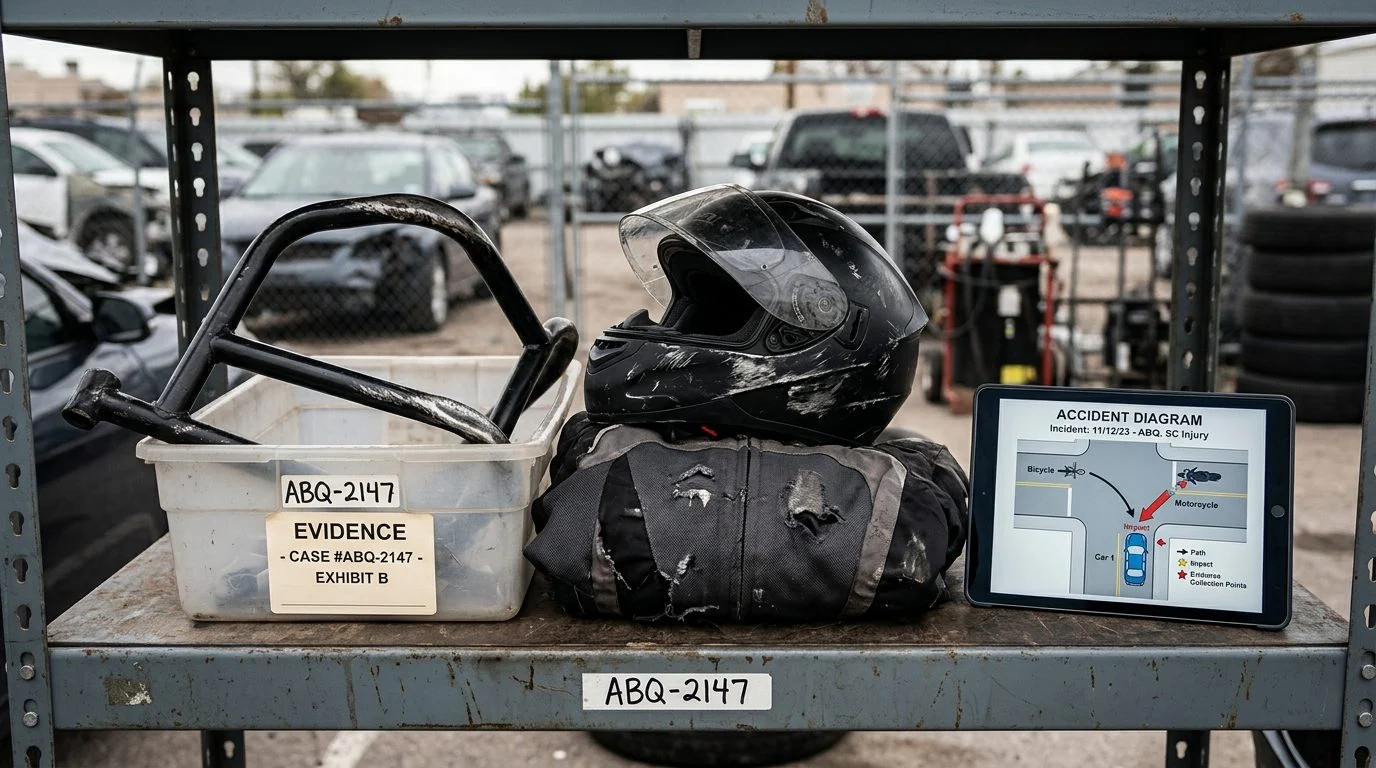
This claim may fit the injured cyclist, a family member acting for an injured adult, or a parent of an injured child. Start by gathering records from the scene, the ambulance, the emergency room, and any imaging. These records are the first evidence.
If a vehicle hit you on your bike and left you with a spinal cord injury, you may have a claim, and we can review your facts with you at no cost. Talk it through with our team — the first consultation is free, confidential, and carries no obligation.
Who Can Be Held Responsible: The Driver and Other Parties
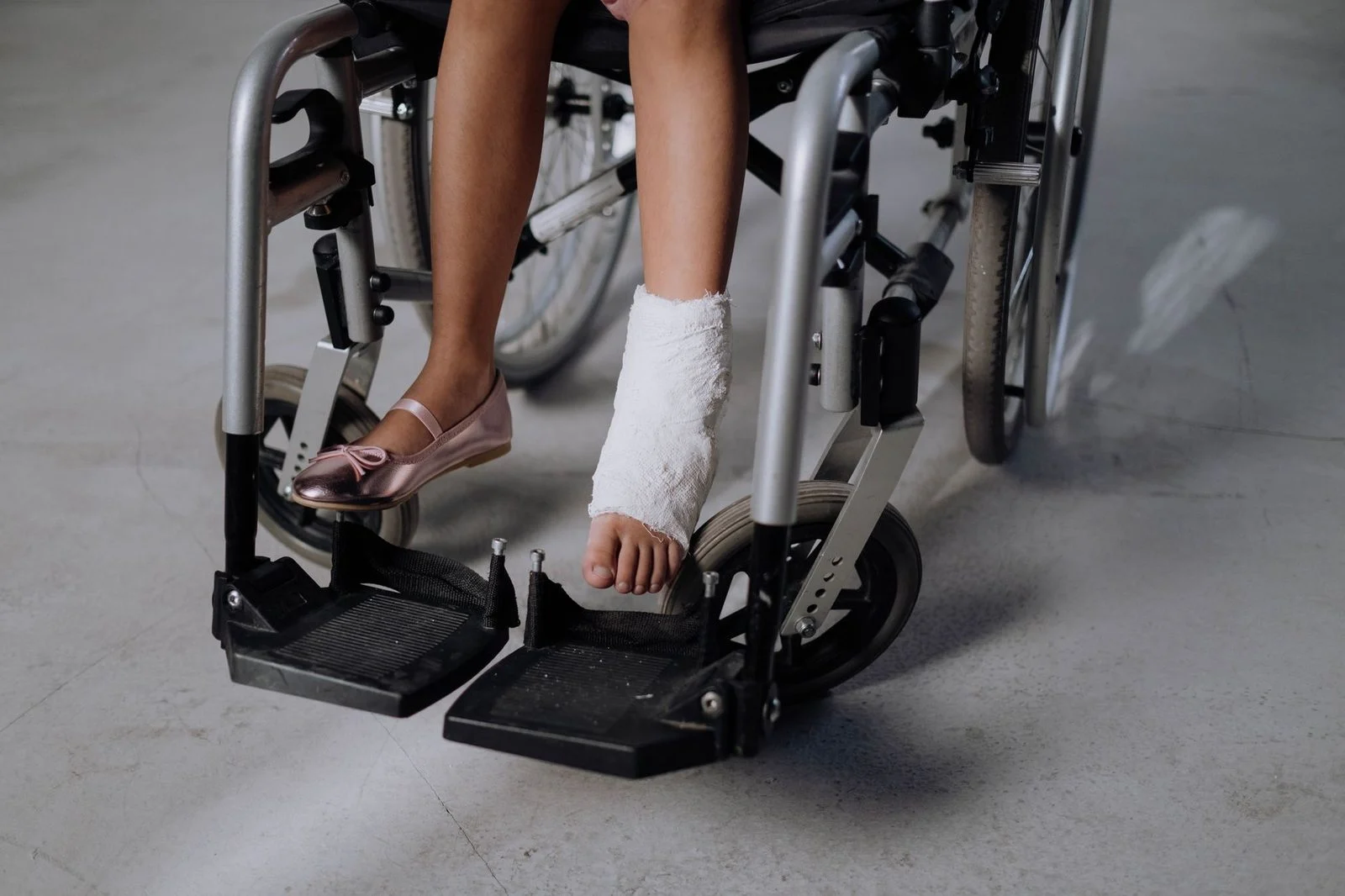
The driver is usually the first party to examine. Other parties may also share responsibility, and the facts decide who is responsible.
- The driver. A driver approaching a stop or yield sign must yield to vehicles already in the intersection (§ 66-7-330). NMSA 1978, § 66-7-330 reads: “Except when directed to proceed by a police officer or traffic-control signal, every driver of a vehicle approaching a stop intersection indicated by a stop sign shall stop as required by Section 66-7-345 C [NMSA 1978] and after having stopped shall yield the right-of-way to any vehicle which has entered the intersection from another highway or which is approaching so closely on the highway as to constitute an immediate hazard during the time when the driver is moving across or within the intersection.” Other conduct to examine includes passing too closely, turning into a cyclist, opening a door, or driving while distracted or impaired.
- The cyclist’s position. New Mexico asks bicyclists to ride as near the right side of the roadway as practicable (§ 66-3-705). Insurers often raise this point, so document the lane and road conditions.
- The employer. If the driver was working, the employer may be a possible defendant.
- Property owners. A hazard on private land, such as an unmarked obstacle in a parking area, may have contributed to the crash.
- Insurance. New Mexico law requires auto liability policies for vehicles registered or principally garaged in New Mexico to include uninsured and underinsured motorist coverage, but the named insured has the right to reject that coverage (§ 66-5-301). NMSA 1978, § 66-5-301 reads: “unless coverage is provided therein or supplemental thereto in minimum limits for bodily injury or death and for injury to or destruction of property as set forth in Section 66-5-215 NMSA 1978 and such higher limits as may be desired by the insured, but up to the limits of liability specified in bodily injury and property damage liability provisions of the insured’s policy, for the protection of persons insured thereunder who are legally entitled to recover damages from owners or operators of uninsured motor vehicles because of bodily injury, sickness or disease, including death, and for injury to or destruction of property resulting therefrom, according to the rules and regulations promulga.”
What a Claim Can Cover
A claim can seek money for medical costs, lost income, and other losses the crash caused. Common categories include:
- Medical care, past and future. Emergency care, surgery, hospital stays, rehabilitation, medications, and equipment.
- Home and daily-living changes. Ramps, bathroom changes, attendant care, or vehicle changes.
- Lost income. Lost wages, and lost ability to earn if the injury changes the work you can do.
- Pain and loss of enjoyment. How the injury affects your daily life and activities.
- Loss of consortium.
- Wrongful death. If the crash causes death through a wrongful act, neglect or default of another that would have entitled the injured person to recover damages, New Mexico’s wrongful death statute allows a claim for damages (§ 41-2-1).
The value of each part turns on medical proof, whether the injury is lasting, and evidence of fault.
How New Mexico Fault and Deadline Rules Affect Your Claim
New Mexico uses comparative negligence (shared fault). Your damages are reduced by your percentage of fault (UJI 13-2218 NMRA). The state adopted this rule in Scott v. Rizzo.
Insurers often argue about lane position, helmet use, lighting, or speed. Collect photos, witness names, and notes on the bike and vehicle early.
A proximate cause produces the injury in a natural sequence. It need not be the only cause.
Deadlines matter. New Mexico’s general deadline for injury to a person is three years (§ 37-1-8). Claims against a government entity or public employee follow shorter rules. Minors and incapacitated persons get extra time: for actions under the general limits of this chapter, they have one year from and after the termination of such incapacity to file (§ 37-1-10).
What to Expect: The Claim Process Step by Step
The process moves from a consultation to evidence, medical records, a written demand, and then negotiation or a lawsuit.
- Consultation. We review the crash facts, the injuries, and the insurance coverage.
- Investigation. We request the crash report, preserve scene and vehicle evidence, and contact the insurers.
- Medical documentation. Treating providers’ records show the injury, the treatment, and its expected course.
- Demand. When the medical picture is clear enough, a written demand goes to the responsible parties’ insurers.
- Negotiation or lawsuit. Some claims settle. Others need a lawsuit filed before the deadline. Timing depends on how the injury progresses and how insurers respond.
Why Work With El Gringo Law on a Spinal Cord Injury Bicycle Claim
El Gringo Law represents people in New Mexico in car accident, trucking accident, premises liability, negligent security, wrongful death, catastrophic injury, spinal cord injury, amputation, and burn injury matters. The firm serves clients in Bernalillo County, Sandoval County, and Rio Rancho.
Josh Wood is the responsible lawyer for this page’s content. He is licensed in New Mexico and Arizona. Our lawyers work with a team that includes assistants and office staff.
Every case is different. Past results do not ensure a similar outcome.
Not sure what your next step is?
Talk it through with our team — the first consultation is free, confidential, and carries no obligation.
Questions Cyclists and Families Ask Before Calling a Lawyer
Can I still have a claim if I was partly at fault?
Yes. New Mexico reduces your damages by your share of fault (UJI 13-2218 NMRA).
What if the driver had no insurance or left the scene?
Uninsured motorist coverage in your own auto policy may apply (§ 66-5-301). Whether it applies turns on the policy and the facts.
Should I talk to the driver’s insurance adjuster?
Ask us to review any recorded statement or release before you give or sign it. A release of one party can reduce your claim against others (§ 41-3-4). New Mexico’s Section 41-3-4 provides that a release by the injured person of one joint tortfeasor, whether before or after judgment, does not discharge the other tortfeasors unless the release so provides; but it reduces the claim against the other tortfeasors in the amount of the consideration paid for the release, or in any amount or proportion by which the release provides that the total claim shall be reduced, if greater than the consideration paid.
How long do I have to file?
New Mexico’s general deadline for injury to a person is three years (§ 37-1-8). Claims against a government entity follow shorter rules (§ 41-4-15).
Do I have to pay for the first consultation?
The initial consultation is free, confidential, and carries no obligation to continue.
Contact El Gringo Law About Your Bicycle Crash Injury
If a bike crash left you or someone you love with a spinal cord injury, you may have a claim worth reviewing now. Submit the contact form at elgringolaw.com or start a chat, and we’ll review your crash, your injuries, and your insurance with you. Josh Wood is responsible for this page’s content. Website: elgringolaw.com.
How We Work With You
Focused on serious injuries
Our lawyers focus on cases involving spinal cord injuries, catastrophic injuries, amputations and burns, where the stakes for your health and future are highest.
Clear explanations
We walk you through the process in plain language so you understand your options before you decide anything.
Our team stays in touch
Our team keeps you informed as your case moves forward, so you always know what is happening and what comes next.
Local focus
We represent clients in Albuquerque, Bernalillo County and the communities around them.
Before You Talk to the Insurance Company
An insurance adjuster works for the insurer, not for you. Before you give a recorded statement or sign any release or settlement paper, talk with a lawyer about what you would be agreeing to.
Injuries We Handle After Bicycle Crashes
Spinal Cord Injuries
Injuries to the spinal cord can affect movement, sensation and daily independence. We help clients understand the medical and legal issues these injuries raise.
Catastrophic Injuries
Severe head, brain and multi-system injuries often require long-term care and planning. We work to document the full impact on your life.
Amputations
The loss of a limb changes work, family life and mobility. We take the time to understand what you have lost and what you will need going forward.
Burn Injuries
Burns from crashes, road debris or vehicle fires can involve extended treatment and lasting scarring. We help clients pursue the information they need about their injuries.