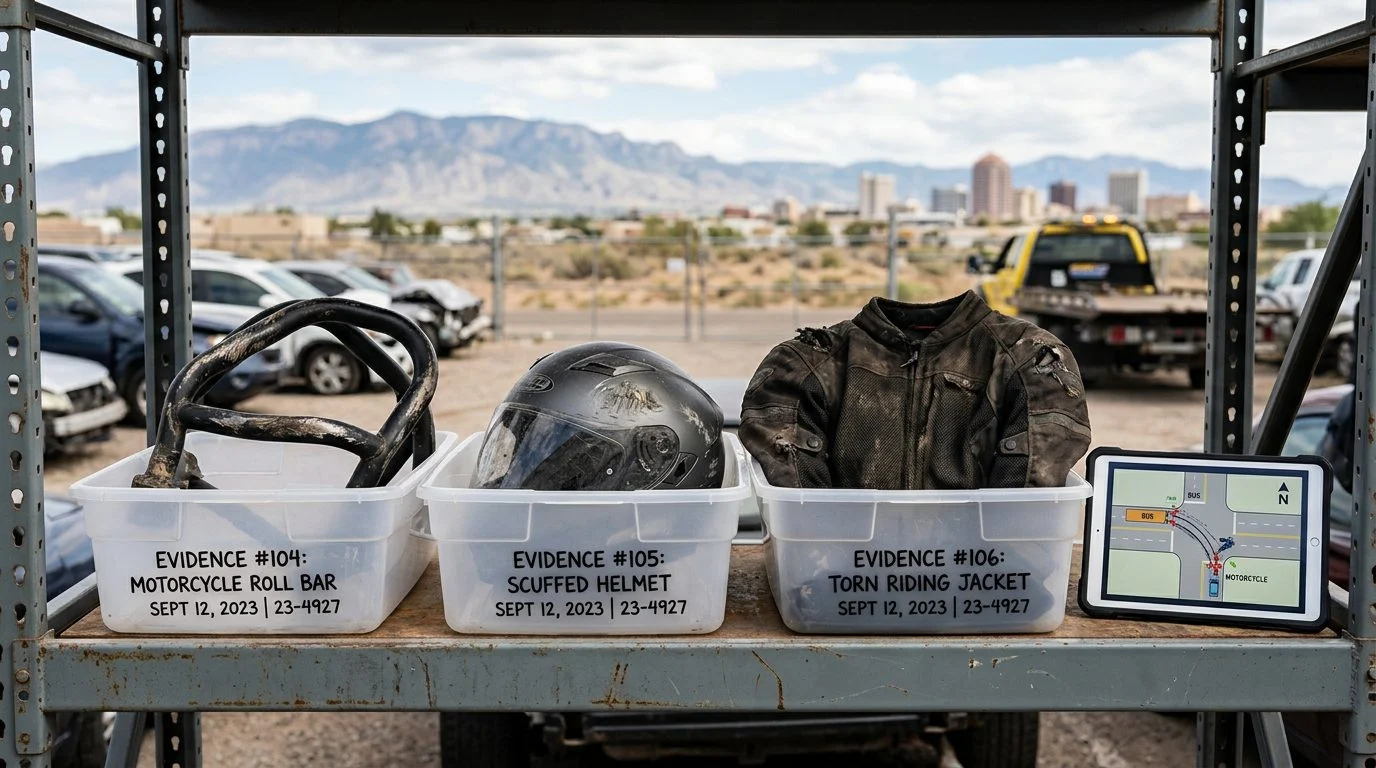
Spinal Cord Injury · Bus Accidents · Albuquerque
Injured in a Bus Accident? Talk With a Spinal Cord Injury Lawyer in Albuquerque
El Gringo Law represents people hurt in bus accidents across New Mexico, including Albuquerque and Bernalillo County. Your first consultation is free, confidential, and comes with no obligation to continue.
By Josh Wood · Published November 6, 2026
A spinal cord injury from a bus crash can change your work, your home and your family’s plans. A claim can seek payment for those losses, but the right answers start with a few key facts. El Gringo Law represents car accident victims in New Mexico, including Albuquerque and Bernalillo County. Here is how these claims usually work.
What Is a Spinal Cord Injury Bus Accident Claim?
A spinal cord injury bus accident claim seeks payment for harm to the spinal cord caused by a bus crash. The spinal cord carries messages between the brain and the body. When it is damaged, feeling or movement below the injury can be lost. The Christopher & Dana Reeve Foundation explains the causes and effects of this injury.
This page is for passengers, pedestrians, people in other vehicles, and families of someone who was paralyzed or killed. A spinal injury is far more serious than a sprain. It often needs imaging, neurology visits and long-term care. Spinal cord injuries fall within our catastrophic injuries and spinal cord injury practice areas.
If a bus crash left you or someone you love with a spinal cord injury, we can talk through your options in a free, confidential initial consultation. Talk it through with our team — the first consultation is free, confidential, and carries no obligation.
What Causes Bus Accidents in Albuquerque and Bernalillo County?
Bus crashes often come from driver fatigue, distraction, mechanical failure, or unsafe turns and lane changes. Federal rules limit how long passenger-carrying drivers may work. Under 49 CFR 395.5, a carrier may not require a driver to drive more than 10 hours after 8 consecutive hours off duty.
Another federal rule, 49 CFR 392.3, bars a driver from operating a commercial vehicle when fatigue, illness or any other cause makes driving unsafe. Schedules, dispatch logs and driver records can show whether these rules were followed.
Bus loading rules matter too. Under 49 CFR 392.62, baggage must be stowed so occupants are protected from falling or shifting items.
What Is the Difference Between Complete and Incomplete Spinal Cord Injuries?
A complete injury means no function below the level of injury. An incomplete injury means some function remains. The Christopher & Dana Reeve Foundation describes this difference.
Symptoms can change over weeks or months, so the medical record matters. Early imaging, neurology notes and consistent treatment records become key evidence. Some symptoms show up after the crash. Tell your doctor about every change, and keep copies of your records.
What Damages Can You Pursue After a Bus Crash?
Damages are money for losses caused by the crash. They can include past and future medical care, rehabilitation, equipment, home changes, lost income and pain and suffering. A spinal injury can reduce the ability to work, so future lost income often matters.
Family members may have their own claims. Under New Mexico law, loss of consortium damages belong to the family member in a close relationship with the injured or deceased person, as Thompson v. City of Albuquerque explains. In a wrongful death case, the claim is brought for the family’s losses.
Every case is different, and past results do not mean a similar outcome will follow.
How Is Fault Proven in a Bus Crash Case?
Fault is proven by showing that a defendant owed a duty, breached it, and caused harm. Under Herrera v. Quality Pontiac, the breach must be a proximate cause of the damages. A proximate cause need not be the only cause.
Your own share of fault does not bar recovery in New Mexico. Under UJI 13-2218 NMRA, the jury sets each person’s percentage, and your damages are reduced by your percentage. Under NMSA § 41-3A-1, in any cause of action to which the doctrine of comparative fault applies, joint and several liability for two or more wrongdoers whose conduct proximately caused a plaintiff’s injury is abolished, except as otherwise provided, and their liability is several.
If a public transit agency or government employee runs the bus, shorter deadlines apply. Under NMSA § 41-4-16: A. Every person who claims damages from the state or any local public body under the Tort Claims Act shall cause to be presented to the risk management division for claims against the state, the mayor of the municipality for claims against the municipality, the superintendent of the school district for claims against the school district, the county clerk of a county for claims against the county, or to the administrative head of any other local public body for claims against such local public body, within ninety days after an occurrence giving rise to a claim for which immunity has been waived under the Tort Claims Act, a written notice stating the time, place and circumstances of the loss or injury. B. No suit or action for which immunity has been waived under the Tort Claims Act shall be maintained and no court shall have jurisdiction to consider any suit or action against the state or any local public body unless notice has been given as required by this section, or unless the governmental entity had actual notice of the occurrence. The time for giving notice does not include the time, not exceeding ninety days, during which the injured person is incapacitated from giving the notice by reason of injury. C. When a claim for which immunity has been waived under the Tort Claims Act is one for wrongful death, the required notice may be presented by, or on behalf of, the personal representative of the deceased person or any person claiming benefits of the proceeds of a wrongful death action, or the consular officer of a foreign country of which the deceased was a citizen, within six months after the date of the occurrence of the injury which resulted in the death; but if the person for whose death the claim is made has presented a notice that would have been sufficient had he lived, an action for wrongful death may be brought without any additional notice. Under § 41-4-15, actions against a governmental entity or a public employee for torts are barred unless commenced within two years after the date of the occurrence, except that a minor under the full age of seven years has until his ninth birthday to file.
How Does the Process Work From First Call to Resolution?
The process starts with a free, confidential initial consultation, with no obligation to continue. Here is what usually follows:
- Step 1: Consultation. You share the crash details, medical concerns and insurance information.
- Step 2: Intake. We help gather the crash report, medical records and bus company information.
- Step 3: Investigation. Preservation letters ask the bus operator and insurers to keep video, logs and maintenance records.
- Step 4: Demand and negotiation. We present the claim and respond to the other side’s position.
- Filing suit when needed.
Not sure what your next step is?
Talk it through with our team — the first consultation is free, confidential, and carries no obligation.
Why Work With El Gringo Law?
El Gringo Law handles personal injury matters, including car accidents, trucking accidents, catastrophic injuries and spinal cord injuries. Josh Wood is licensed in New Mexico and Arizona and is responsible for this page’s content. Our team supports intake, records requests and client communication.
We explain timelines, decisions and next steps in plain language. Every case is different, and past results do not mean a similar outcome will follow.
Questions People Ask About Bus Accident Spinal Cord Claims
Do I need proof the driver was at fault before I call?
No. The consultation is where the facts get reviewed.
Can I still call if I don’t know whether my injury is complete?
Yes. The medical record is reviewed as part of the case.
What if a public agency operated the bus?
Shorter notice rules can apply, so tell us who operated the bus as soon as possible.
How soon should I act?
Early steps help preserve video, logs and records, so reach out promptly.
Talk With El Gringo Law About Your Bus Crash
If a bus crash left you with a spinal injury, you’re facing medical appointments, bills and hard questions about who is responsible. You don’t have to sort those out alone. Send your details through the contact form and our team will follow up.
How We Can Help
Focus on Serious Injuries
Spinal cord injuries, catastrophic injuries, amputations, and burns can change every part of your life. Our team focuses on cases where the stakes are this high.
Medical Records Reviewed
Your medical record is reviewed as part of the case so the full picture of your injury is considered, including injuries that may still be developing.
Serving Albuquerque and New Mexico
We work with people in Albuquerque, Bernalillo County, Santa Fe, Las Cruces, Rio Rancho, Taos, Farmington, and surrounding communities.
Plain-Language Answers
We explain your options in clear terms, so you can make decisions with the facts in front of you.
Responsible Lawyer
Josh Wood is the lawyer responsible for this page. He is licensed in New Mexico and Arizona.
Keep Track of Your Care
Get medical evaluation promptly after a bus accident, even if symptoms seem mild at first. Keep copies of discharge papers, bills, therapy notes, and any letters from insurers, and write down what happened while you still remember it.
What Happens After You Reach Out
1. Tell Us What Happened
Call or submit our contact form. You can share the basics of your accident and your injuries at your own pace.
2. We Review the Facts
We look at the accident, your medical care, and the records you have, and we identify the people and entities that may be involved.
3. You Decide the Next Step
We explain what we see and what options may be available. The free consultation carries no obligation to continue.