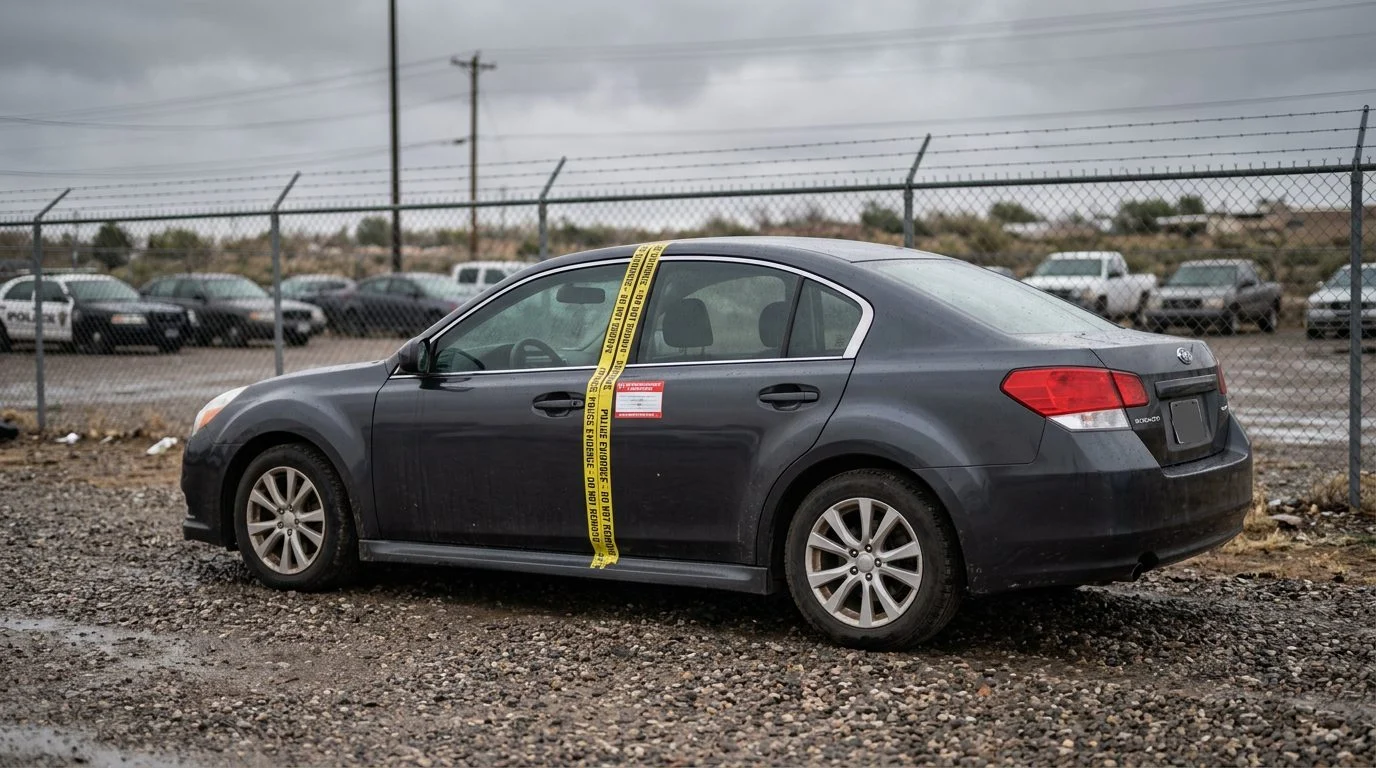
Car Accidents & Wrongful Death · New Mexico
Can You Sue the Family of a Drunk Driver? Start With the Facts.
A free, confidential first consultation with no obligation to continue. El Gringo Law helps New Mexico families understand their options after an impaired-driving crash.
By Josh Wood · Published October 31, 2026
Short answer: Can you sue the family of a drunk driver?
Usually, the answer is no. A relative can be part of a claim, though, when that relative’s own conduct helped cause the crash.
The driver who was impaired made the choice to drive. Whenever the death of a person is caused by the wrongful act, neglect or default of another, even under circumstances that amount to a felony, the person who, or the corporation which, would have been liable if death had not ensued shall be liable to an action for damages, notwithstanding the death of the person injured, provided the act, neglect or default would have entitled the injured person to maintain an action and recover damages had death not ensued (NMSA § 41-2-1). That rule looks at what each person did.
Whether anyone else can be held responsible depends on the facts. Who owned the car, who lent it, and what each person knew before the crash all matter. This page walks through the main questions so you can see what the facts may show.
If an impaired driver hurt or killed someone in your family, our team can talk through the crash facts with you, including who owned or lent the vehicle. Talk it through with our team — the first consultation is free, confidential, and carries no obligation.
Why a family relationship alone usually does not create liability
Civil liability turns on conduct. A negligence claim generally requires a duty owed to the injured person, a breach of that duty, and a breach that was a proximate cause of the harm (Herrera v. Quality Pontiac). A proximate cause does not have to be the only cause. It also does not have to be the last or nearest one.
That point matters after a drunk driving crash. The driver’s impairment can be one cause of the harm. Another person’s conduct can also be a cause, if the facts support it. For the broader picture, see our wrongful death claims in New Mexico page.
When a family member may share responsibility
A family member may share responsibility when their own conduct helped cause the crash. One route is negligent entrustment. That means lending or giving a vehicle to someone the owner knew, or should have known, was unfit to drive.
New Mexico law sets out what a plaintiff must show. The owner must have entrusted its vehicle to the driver. The owner must have known or should have known the driver was incompetent. That incompetence must have caused the injury (DeMatteo v. Simon).
Each element turns on facts. Did the owner hand over the keys? What did the owner know about the driver’s drinking? Was there an earlier warning sign, such as a prior incident? The answers shape whether the claim fits the law.
Other conduct may also count, and it is reviewed case by case. A relative who knew about the impairment and still let the driver take the car is one example. How the car was made available to the driver is a separate question. Ownership and permission are different facts, and both should be documented.
Other parties who may be examined after an alcohol-related crash
Some claims are brought against businesses that sold or served alcohol. New Mexico limits these claims, and whether one fits depends on the facts. A dram shop claim is a claim against a licensed business that served alcohol to the person who later caused harm.
Under New Mexico’s alcohol liability statute, NMSA § 41-11-1, a licensee’s civil liability for a breach of NMSA 1978, Section 60-7A-16 is limited to narrow cases, and a licensee may also be civilly liable for the negligent violation of the minor-sale provisions in Sections 60-7B-1 and 60-7B-1.1. The licensee must have sold or served alcohol to a person who was intoxicated. It must have been reasonably apparent that the person was intoxicated. The licensee must also have known from the circumstances that the person was intoxicated (NMSA 1978, § 41-11-1).
The same section sets a dollar cap. Under Subsection I of NMSA § 41-11-1, liability arising under this section is limited to $50,000 for bodily injury to or death of one person in each transaction or occurrence or, subject to that limitation for one person, $100,000 for bodily injury to or death of two or more persons in each transaction or occurrence, and $20,000 for property damage in each transaction or occurrence. A person who was served while intoxicated can recover only if the licensee acted with gross negligence and reckless disregard for that person’s safety.
The statute also covers social hosts. A person who gave alcohol to a guest in a social setting is not liable for the guest’s intoxication unless the alcohol was provided recklessly. Under New Mexico law, a person who gratuitously provided alcoholic beverages to a guest in a social setting may not be held liable in damages to any person for bodily injury, death or property damage arising from the guest’s intoxication unless the alcoholic beverages were provided recklessly in disregard of the rights of others, including the social guest. If the driver was working, an employer may also be examined, depending on the facts. For a personal vehicle used on the way to and from work, whether the employer may be vicariously liable depends on the facts of the case and the applicable law.
Wrongful death and injury claims after a drunk driving crash
A wrongful death claim is for the family of someone who died. An injury claim is for a person who survived. Both depend on the facts of the crash and the harm that followed.
Every action under the wrongful death statute shall be brought by and in the name of the personal representative of the deceased person (NMSA § 41-2-3). The action must be brought within three years after the cause of action accrues. For these claims, accrual of the cause of action is as of the date of death (NMSA § 41-2-2).
In such an action, the jury may also have regard to the mitigating or aggravating circumstances attending the wrongful act, neglect or default (NMSA § 41-2-3). The statute also sets an order for distributing any judgment among surviving family members. Loss of consortium damages are addressed in Thompson v. City of Albuquerque.
A person who survived an impaired driver’s crash may also have a claim. A passenger hurt by an impaired driver may have one too. Medical care, lost income, and the lasting effects of the injury often shape the claim’s value. Records and the specific facts matter as well.
Proof, insurance, and why evidence is time-sensitive
Evidence about impairment and the crash often decides how a claim is proven. Police reports, blood alcohol results, witness statements, photos, and vehicle data are common examples.
New Mexico makes it unlawful to drive under the influence of intoxicating liquor. It is unlawful for a person to drive a vehicle in New Mexico if the person has an alcohol concentration of eight one hundredths or more in the person’s blood or breath within three hours of driving, and the concentration results from alcohol consumed before or while driving (NMSA § 66-8-102).
Some evidence can be lost or overwritten over time. Early review helps protect what is still available. Records tied to the car, the driver, and the scene are worth collecting while they exist.
Many claims against a person are paid through liability insurance. Under New Mexico law, no owner shall permit the operation of an uninsured motor vehicle, or a motor vehicle for which evidence of financial responsibility is not currently valid, on the streets or highways of New Mexico unless the vehicle is specifically exempted from the Mandatory Financial Responsibility Act (NMSA § 66-5-205). Policy limits and any other coverage can affect what is available, so the policies involved should be reviewed. Evidence that a person had insurance is generally not admissible to prove negligence, though a court may admit it for another purpose (Rule 11-411 NMRA).
No one can know how a claim will turn out from the crash alone. Proving a claim takes records, facts, and time.
Not sure what your next step is?
Talk it through with our team — the first consultation is free, confidential, and carries no obligation.
Talk with our team about your family’s situation
Whether anyone besides the driver can be held responsible depends on the facts of your crash. Many families are working through medical care, funeral plans, and calls from insurance companies at the same time.
Can a passenger sue a drunk driver in New Mexico?
A passenger hurt by an impaired driver may have a claim. Its value depends on the injuries and the facts of the crash.
How long do I have to file a wrongful death lawsuit in New Mexico?
An action under the wrongful death statute must be brought within three years after the cause of action accrues, which is as of the date of death (NMSA § 41-2-2).
Can a bar be sued after a drunk driving crash?
Some claims are brought against licensed businesses, but New Mexico limits them. Whether one fits depends on the facts (NMSA 1978, § 41-11-1).
What is negligent entrustment?
It is lending a vehicle to someone the owner knew or should have known was unfit to drive, when that unfitness causes injury.
Josh Wood, a lawyer with El Gringo Law, is responsible for this page’s content. Josh is licensed in New Mexico and Arizona. Our initial consultation is free and confidential, with no obligation to continue. To talk through your crash, use the contact form, start a chat on our website, or call our office.
What to Expect When You Reach Out
Free first consultation
Your initial consultation is free, confidential, and carries no obligation to continue.
A confidential conversation
Share the details of the crash or loss privately with our team.
Focused on New Mexico
We represent people in Santa Fe, Rio Rancho, Las Cruces, Bernalillo and Sandoval Counties, Taos, Farmington, and across the state.
Reach us your way
Call the firm, submit a contact form, or start a chat to begin.
Gather What You Already Have
Keep the police report number, photos, medical records, and any bills or letters from insurers. Bring them to your consultation so we can review the facts with you.
Who May Be Involved in an Impaired-Driving Claim
The impaired driver
The driver who caused the crash is often the starting point for any injury or wrongful death review.
Others connected to the crash
Depending on the facts, other people or businesses may have played a role. Whether they can be held responsible is decided case by case.
The driver's family
Families often ask whether relatives of the driver can be held responsible. The answer depends on the specific facts, and we review them with you during a free consultation.
Your family after a loss
When a loved one has died, surviving family members often have many questions. We listen first and explain what we see in your situation.