Lost a Loved One? Understand Your Options Under New Mexico Law
Clear answers for families weighing a civil claim while a criminal case may be unresolved, or may never be brought.
By Josh Wood · Published November 9, 2026
No, you do not need a criminal conviction to file a wrongful death lawsuit in New Mexico. The civil claim asks a different question: did another party’s wrongful act, neglect or default cause the death? Families often ask this while charges are still undecided, or after no one has been charged at all.
No, a Criminal Conviction Is Not Required Before Filing
No conviction is needed to bring the claim. New Mexico’s wrongful death statute covers a death caused by another’s wrongful act, neglect or default, even when the circumstances amount in law to a felony. NMSA 1978, § 41-2-1 The key question is whether the injured person could have sued had they lived.
The civil case rests on its own evidence. Under Herrera v. Quality Pontiac, a negligence claim generally requires a duty, a breach of that duty, and a breach that was a proximate cause and cause in fact of the damages.
If your family is waiting on a charging decision after a fatal crash, we can talk through what your rights may be right now. Talk it through with our team — the first consultation is free, confidential, and carries no obligation.

How the Civil and Criminal Cases Differ
The criminal case is brought by the government, and it addresses a crime and its punishment. The wrongful death case is brought by the representative of the person who died, and it seeks money for the family’s losses.
Because the parties and procedures differ, the two cases run on separate tracks. A result in one does not automatically decide the other. Each case has to be proven on its own record, with its own evidence and witnesses.
The damages rules differ too. A jury may award compensatory and exemplary damages. It considers the pecuniary injury to the surviving family and the mitigating or aggravating circumstances of the wrongful act. NMSA 1978, § 41-2-3 sets out how the proceeds of a wrongful death judgment are distributed among the deceased person’s surviving family members.
How a Criminal Case Record Can Help a Civil Claim
A criminal file can give a civil claim useful facts, but it does not replace the civil proof. Police reports, witness accounts and official findings can point to what happened and where to look next.
Police accident reports need caution. New Mexico law says accident reports are for confidential use by the state, and no accident report shall be used as evidence in a civil or criminal trial arising out of an accident, with some exceptions. NMSA 1978, § 66-7-213 Families should not assume a report will prove fault on its own.
Evidence can also disappear. Liability for intentional spoliation of evidence does not require a filed complaint or even express notice that one will be filed. Torres v. El Paso Electric Intentional destruction of evidence can create liability, so preserving what exists matters early.
Why Families Should Not Wait on a Criminal Case
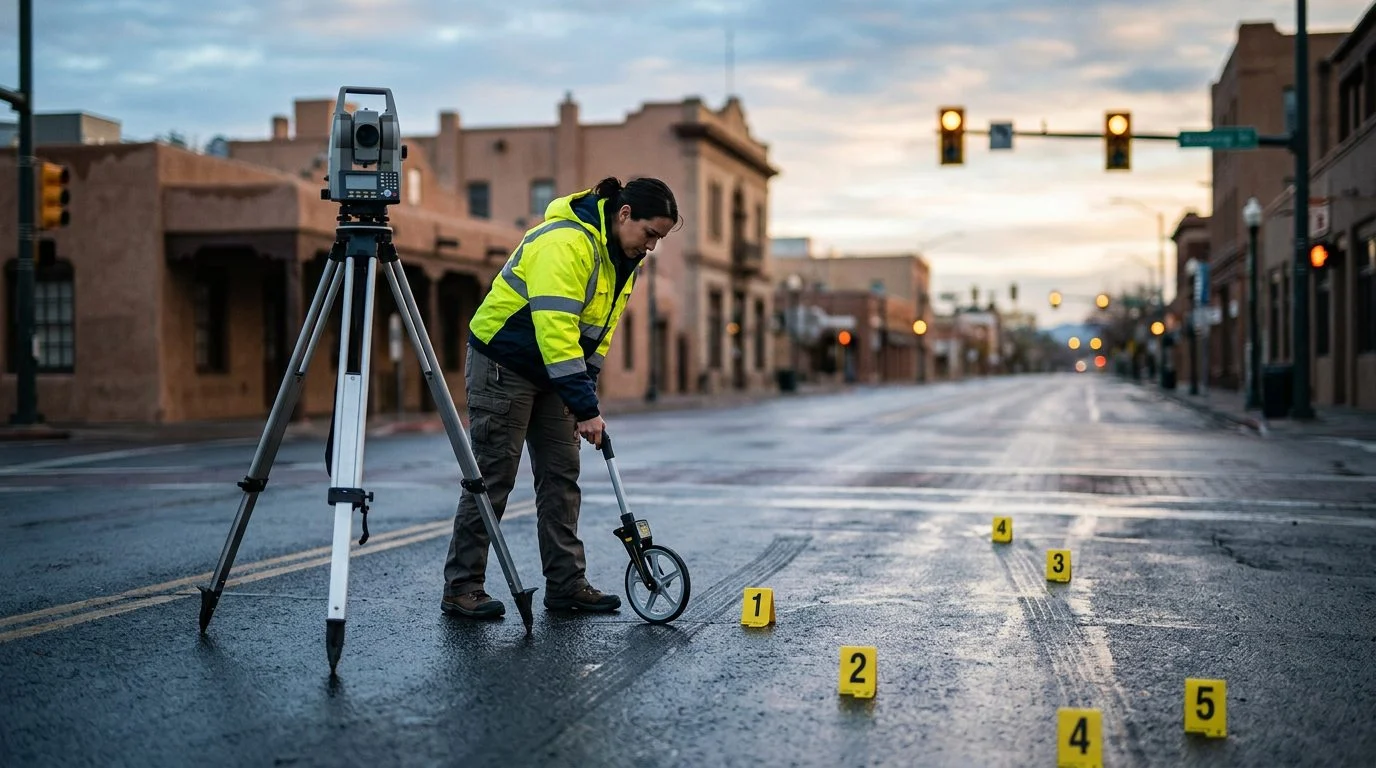
Waiting on a criminal case can cost time that evidence does not wait for. Vehicle data, surveillance video and business records are held by others and can be overwritten or discarded. Witness memories fade, and phone numbers change.
Deadlines run on their own schedule. A wrongful death action must be brought within three years after the cause of action accrues, and it accrues as of the date of death (NMSA 1978, § 41-2-2 — three years from the date of death). NMSA 1978, § 41-2-2 Wrongful death actions brought under this statute must be filed within three years after the cause of action accrues, which is the date of death (NMSA 1978, § 41-2-2 — three years from the date of death). Under NMSA 1978, § 41-4-15, actions against a governmental entity or a public employee for torts are forever barred unless commenced within two years after the date of the occurrence resulting in loss, injury or death, except that a minor under the full age of seven years has until his ninth birthday to file. This subsection applies to all persons regardless of minority or other legal disability. Under NMSA 1978, § 41-4-16, every person who claims damages from the state or any local public body under the Tort Claims Act must present a written notice stating the time, place and circumstances of the loss or injury to the risk management division for claims against the state, the mayor of the municipality for claims against the municipality, the superintendent of the school district for claims against the school district, the county clerk of a county for claims against the county, or the administrative head of any other local public body for claims against that body, within ninety days after an occurrence giving rise to a claim for which immunity has been waived under the Tort Claims Act, and the time for giving notice does not include the time, not exceeding ninety days, during which the injured person is incapacitated from giving the notice by reason of injury; for a wrongful death claim, the notice may be presented by, or on behalf of, the personal representative of the deceased person, any person claiming benefits of the proceeds of a wrongful death action, or the consular officer of a foreign country of which the deceased was a citizen, within six months after the date of the occurrence of the injury which resulted in the death. No suit may be maintained without that notice unless the governmental entity had actual notice of the occurrence. For a wrongful death claim for which immunity has been waived under the Tort Claims Act, the required notice may be presented within six months after the date of the occurrence of the injury which resulted in the death.
Asking about your rights early lets you understand these deadlines while the criminal process moves at its own pace.
Who Can Bring a Wrongful Death Claim in New Mexico
A wrongful death action is brought by the personal representative of the person who died. The action is filed in that representative’s name. NMSA 1978, § 41-2-3 Clarifying who will act for the estate is an early step, whether or not there is a will.
Under the statute, proceeds of a judgment are not liable for the deceased’s debts if the person who died left a spouse, child, parent, brother, sister or grandchild. They are distributed to named family members, beginning with a surviving spouse or children. NMSA 1978, § 41-2-3
A close family member may also have a loss of consortium claim of their own. Those damages belong to that family member, not to the injured person or the estate. Thompson v. City of Albuquerque
Common Situations Where the Criminal Question Comes Up
Criminal questions come up most often after fatal car and truck crashes, assaults on property, and premises incidents. Police may investigate, file charges, or decide not to. A crash involving an impaired or distracted driver can lead to criminal charges and a civil claim at the same time.
In a trucking crash, the criminal file and the civil claim may involve different parties, from the driver to the company. A claim against a vehicle owner may rely on negligent entrustment. That requires proof that the owner entrusted the vehicle to the driver, knew or should have known the driver was incompetent, and that the incompetence caused the injury. DeMatteo v. Simon
When a death happens on a property or during an assault there, questions about security, maintenance or supervision may matter. Whether a civil claim exists depends on the facts of the incident and the evidence available.
Not sure what your next step is?
Talk it through with our team — the first consultation is free, confidential, and carries no obligation.

Talk With Our Team About Your Family’s Situation
If you are waiting on a charging decision, you can ask about your family’s rights now. Our team can review the facts of your loss and explain what they may mean for a possible wrongful death claim. Josh Wood is the responsible lawyer for this page, and he is licensed in New Mexico and Arizona. The first consultation is free, confidential, and carries no obligation to continue. You can reach us through our contact form.
Frequently Asked Questions
Can a wrongful death lawsuit be filed if no one was charged?
Yes. New Mexico’s statute covers deaths caused by wrongful acts, neglect or default that would have entitled the injured person to maintain an action and recover damages had death not ensued, even when the circumstances amount in law to a felony.
How long do I have to file?
A wrongful death action must generally be brought within three years after the date of death (NMSA 1978, § 41-2-2 — three years from the date of death). NMSA 1978, § 41-2-2
Who files the claim?
The personal representative of the person who died brings the action in that representative’s name.
Why families talk with El Gringo Law
Free first consultation
Your initial consultation is free, confidential, and comes with no obligation to continue.
Private conversations
Share what happened in a confidential setting so you can understand your situation before deciding anything.
Plain-language answers
We explain the process in clear terms, including questions about criminal cases and civil claims.
Reach out on your terms
Call, send a contact form, or start a chat. Contact is always at your request.
Questions are worth raising early
A criminal case and a civil wrongful death claim are separate matters. Talking through the facts with a lawyer can help you see how the two may relate to your family's situation.
Topics families often ask us about
Criminal charges and civil claims
Understand how a criminal investigation, charges, or a lack of charges may or may not affect a civil wrongful death case.
Gathering the facts
Learn which records, reports, and details are often important when reviewing how a loss occurred.
Who may be involved
Learn how drivers, property owners, employers, and security providers can come into a wrongful death review.
What to bring to a consultation
Bring any reports, letters, photos, and notes you have. Our team will tell you what else may help.
Have questions about a wrongful death in New Mexico?
Speak with Josh Wood at El Gringo Law about your free, confidential consultation, with no obligation to continue.