Wrongful Death | New Mexico
No Criminal Conviction? Talk With El Gringo Law About Your Family's Options
Plain answers to the questions grieving families ask, and a free, confidential first consultation to start the conversation.
By Josh Wood · Published November 11, 2026
Someone you love has died, and the criminal side of the story may still be unclear. You want to know whether a civil lawsuit is still possible.
It is. A criminal conviction is not required for a wrongful death case in New Mexico. The civil claim asks a different question than a criminal case does: who caused the death, and what the family may recover.
No Conviction Is Needed to Bring a New Mexico Wrongful Death Claim
A conviction is not a condition of a wrongful death claim in New Mexico. The state’s wrongful death statute says the person who would have been liable, had the death not happened, can be sued for damages. That rule applies even when the death happened under circumstances that amount in law to a felony (NMSA 1978, § 41-2-1).
So the civil question is narrower than the criminal one. It asks whether another person’s wrongful act, neglect or default caused the death, and whether that act would have entitled the injured person to maintain an action and recover damages had the death not happened. It also asks what damages the law allows the family to recover. It does not ask whether a prosecutor filed charges or whether a jury convicted anyone.
Families ask this question for different reasons. Sometimes no charge was ever filed. Sometimes a case is still open. Sometimes a prosecutor chose not to act. In each situation, the civil claim is a separate question that deserves its own review.
For a broader look at how these claims work, read our wrongful death lawsuit overview.
If you're trying to sort this out for someone you lost, you don't have to work through it alone. Talk it through with our team — the first consultation is free, confidential, and carries no obligation.
Criminal Cases and Civil Wrongful Death Cases Are Separate
A criminal case is brought by the state. A civil wrongful death case is brought by and in the name of the personal representative of the deceased person. The two tracks have different parties, different goals, and different steps.
In a criminal case, the state decides whether to file charges. The case can end in a conviction or an acquittal. A conviction can bring penalties, such as jail or prison time.
A civil case starts differently. A wrongful death action is brought by the personal representative appointed by the district court for that purpose (Rule 1-017(B) NMRA). The action is brought “by and in the name of” that representative (NMSA 1978, § 41-2-3). The family does not need the state to bring charges first.
The same statute also sets who receives a judgment. If the deceased person left a spouse, child, parent, brother, sister or grandchild, the proceeds are not liable for the deceased person’s debts. The statute lists recipients in a fixed order. A surviving spouse and children or grandchildren come first in that list. Parents and siblings follow in specific situations.
What a Civil Wrongful Death Claim Has to Show
A negligence-based civil claim generally requires a duty, a breach of that duty, and a cause of the harm. Herrera v. Quality Pontiac states these elements for New Mexico negligence claims. The breach is typically measured by reasonable care.
Causation has its own test. A proximate cause is one that, in a natural and continuous sequence, produces the injury. Without it, the injury would not have occurred. It need not be the only cause, the last cause, or the nearest one. Many fatal crashes involve more than one contributing factor, so this test matters.
Damages are also set by statute. A jury may award compensatory and exemplary damages. It considers the pecuniary injury to the people entitled to the judgment, along with the mitigating or aggravating circumstances of the wrongful act (NMSA 1978, § 41-2-3).
In practice, a civil case is built from two things. One is how the death happened. The other is the losses the family has suffered. The criminal side can supply facts, but it is not the whole story.
What Happens If No One Was Charged or the Case Was Dismissed
A decision not to file charges does not, by itself, end a civil wrongful death claim. The statute ties liability to the wrongful act, not to a conviction (NMSA 1978, § 41-2-1).
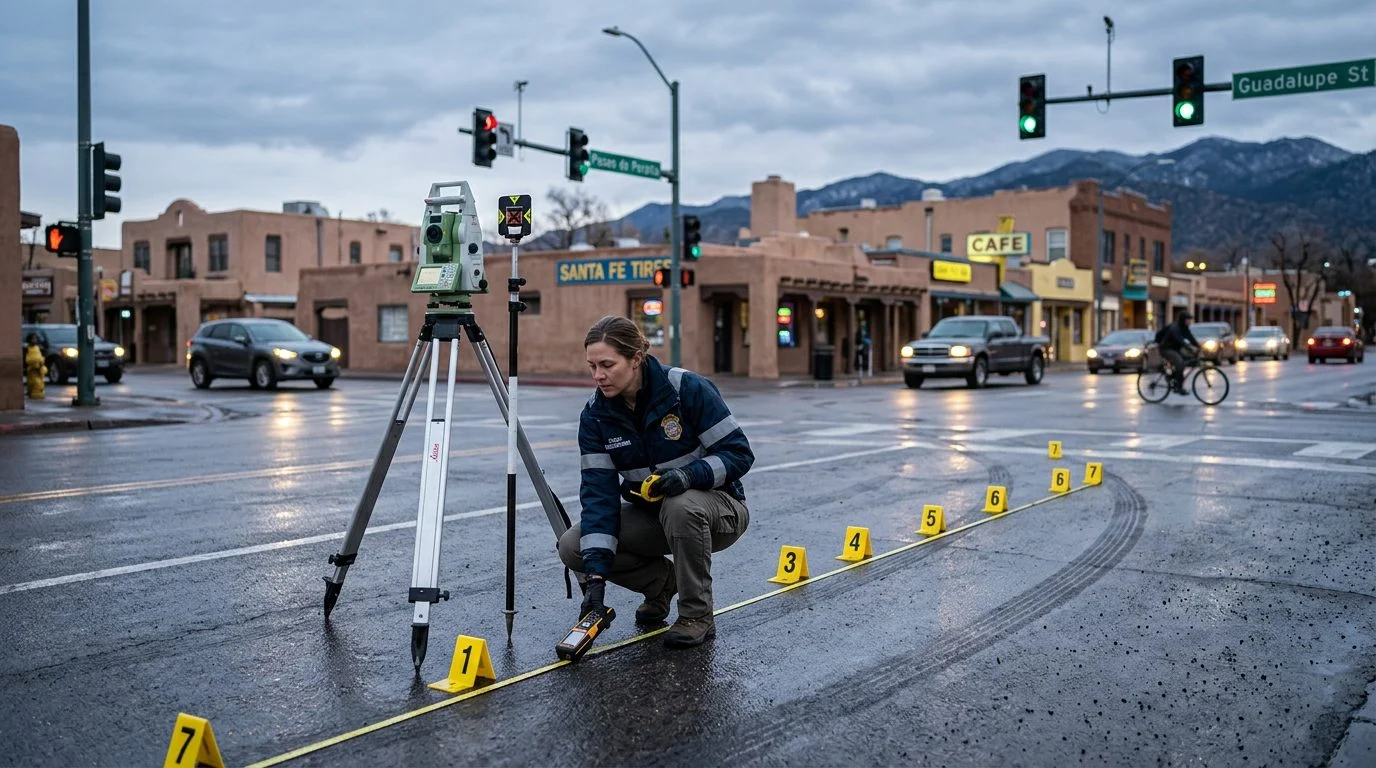
Investigation records still matter for what they show about the crash. Police and crash reports can describe the scene, the vehicles, and the sequence of events. New Mexico limits how those reports are used, though. Under NMSA 1978, § 66-7-213(B), with the exceptions stated in that section, no accident report may be used as evidence in a civil or criminal trial arising out of an accident. A report is a source of facts to check, not a substitute for proof.
Evidence can also disappear. Intentional destruction of evidence can create liability in New Mexico. A family can ask a lawyer early which records matter and how to pursue them.
How a Criminal Case Can Still Matter
A criminal case can matter to a civil claim, but it is not a required first step. Testimony, findings, and records from a criminal case may help a civil case. They can help the family understand what happened.
The civil case runs on its own track. Civil discovery is a separate process with its own steps. A pending criminal case can affect timing, the availability of certain witnesses, and access to some records. Families should ask early how a criminal case could affect the civil side.
Relying on a criminal case alone to explain the civil claim can leave important gaps. A driver who fails to stop after a crash can face a criminal charge. Under NMSA 1978, § 66-7-201(B), failing to stop or comply with the required steps, where an accident results in great bodily harm or death, is a fourth-degree felony. That charge is a criminal matter. The civil claim turns on causation and damages.
Deadlines and Why Timing Matters
A New Mexico wrongful death action must be brought within three years after the cause of action accrues (NMSA 1978, § 41-2-2 — three years from the date of death). The cause of action accrues as of the date of death (NMSA 1978, § 41-2-2).
That clock starts on the date of death. It does not start when a charge is filed or when a criminal case closes. One common mistake is assuming the civil deadline will follow the criminal case. For more detail, see our wrongful death deadline guide.
Timing also affects evidence. Vehicle data, surveillance video, and witness memories can change or disappear over time. Claims against a government entity or employee follow separate notice rules and can have shorter timelines. A crash involving a government vehicle or employee needs an early look at timing.
Not sure what your next step is?
Talk it through with our team — the first consultation is free, confidential, and carries no obligation.
Talk Through Your Situation With Our Team
Yes, a family can talk through a possible claim before deciding anything. You may be handling a death, an investigation, and a hard choice all at once. You may be doing it for a family member who cannot act right now. If no charge was filed, a case is still pending, or a prosecutor has not decided, the questions are real and time matters.
If you’re trying to sort this out for someone you lost, you don’t have to work through it alone. El Gringo Law offers a free, confidential initial consultation with no obligation to continue. Josh Wood, licensed in New Mexico and Arizona, is the responsible lawyer for this content. You can reach the firm at elgringolaw.com or through the contact form.
Frequently Asked Questions
Can a family sue for wrongful death if no one was charged?
Yes. New Mexico’s wrongful death statute does not make a criminal conviction a condition of the civil claim.
What is the deadline to file?
The statute says three years after the cause of action accrues, and it accrues on the date of death (NMSA 1978, § 41-2-2 — three years from the date of death).
Who brings the lawsuit?
The personal representative appointed by the district court brings the wrongful death action.
How We Work With Families
Clear, Honest Conversations
We explain the process in plain language so you know what to expect before you decide anything.
Support for Grieving Families
Our team understands that a loss is more than a legal matter, and we treat every family with patience and respect.
Careful Review of Your Records
We look at the facts, reports and records of your loss to understand what happened and who may be involved.
Help in English or Spanish
Consultations are available in English and Spanish, so you can speak in the language that feels most comfortable.
Don't Wait to Gather Information
Records, reports and witness contact details can become harder to obtain over time. Bring what you have to your consultation, even if you are not sure it matters yet.
What to Bring to Your Free Consultation
Death Certificate
A copy, if one has been issued, helps us confirm basic details about the loss.
Accident or Incident Reports
Police, fire or other official reports connected to the death, if you have them.
Medical and Hospital Records
Records of treatment, emergency care or the final hospital stay can clarify what happened.
Names and Contact Details
Witnesses, employers or others who were present or who knew the person who died.