Fatal Crash Insurance Adjuster Calls in New Mexico
An Insurance Adjuster Is Calling After a Fatal Crash? Talk to El Gringo Law First.
Serving families in Santa Fe, Albuquerque and Bernalillo County, Rio Rancho, Sandoval County, Las Cruces, Taos and Farmington. Your free, confidential first consultation comes with no obligation to continue.
By Josh Wood · Published November 8, 2026
In general, a family can take time before giving a detailed account of a fatal crash to the other driver’s insurance adjuster. A short call to acknowledge the death is different from a recorded interview about how the crash happened.
Short answer: should your family talk to the adjuster right away?
The family doesn’t need to decide anything on the first call. Losing someone in a crash is hard, and grief can make it difficult to think clearly.
Calls can come within days, and they often feel urgent. A caller may sound kind and patient, and may ask for “just a few details.” Those details can quickly turn into a recorded interview.
A brief call might cover only the basics: who is calling, the claim number, and when the family can expect a reply. Many families take a simpler path. They give the adjuster their name, the deceased person’s name, and a way to reach them. Then they ask that future requests come in writing and take time to think. Both steps keep the family in control of its pace.
If an adjuster has called your family since your loved one died in a crash, you can reach out to talk through what happened and what comes next. Talk it through with our team — the first consultation is free, confidential, and carries no obligation.

Whose interests the adjuster protects
An insurance adjuster works for the insurance company. The company’s job is to manage what it pays on a claim.
That doesn’t make the adjuster unkind. It does mean the adjuster represents the insurer, not your family.
Anything you say can be written down, recorded, and used to judge fault, injuries, or the value of the claim. A friendly voice doesn’t change whose side the adjuster is on. Many families are surprised by how warm a call can sound while still serving the insurer.
Settlement talks have their own rules. Under New Mexico’s Rule 11-408 NMRA, evidence of compromise offers and talks generally can’t be used to prove or disprove a disputed claim, with listed exceptions. That rule limits how those talks can be used in court. The family still decides what to say.
Recorded statements and the questions adjusters often ask
A recorded statement is an interview the insurer records, often with questions about how the crash happened. Adjusters often ask about the timeline, where the deceased person was going, what they were doing before the crash, prior health problems, and work or income.
Casual answers can cause trouble later. Words like “I think” or a guess about speed can be quoted back to the family. A family does not need to guess about speed or distraction.
Family members who were not in the vehicle often don’t know the facts. Say so plainly: “I wasn’t there, so I can’t say how it happened.” That honest answer protects everyone. You can also ask for written questions instead of a live recording.
How to reply calmly while the family decides
Ask for the adjuster’s name, company, phone number, claim number, and written contact information. Then say the family will respond after it has reviewed the matter. That short reply is polite and clear.
Ask that future requests come in writing. A written request shows exactly what was asked and when. It also keeps the record clear for everyone if questions come up later.
Don’t sign releases, medical authorizations, or settlement papers until you understand what they cover. A release can affect what the family can pursue later. A medical authorization can open records you didn’t expect to share. Read every word, and take your time.
Records that shape a fatal crash claim
The police crash report is a key record. Under NMSA § 66-7-207, a law enforcement officer who investigates a motor vehicle accident of which a report must be made must forward a written report of the accident to the department of transportation within twenty-four hours after completing the investigation. Families can ask the investigating agency for a copy once it’s available.
Under NMSA § 66-7-213, no accident report shall be used as evidence in any trial, civil or criminal, arising out of an accident, except as otherwise provided in that section. Keep a copy regardless.
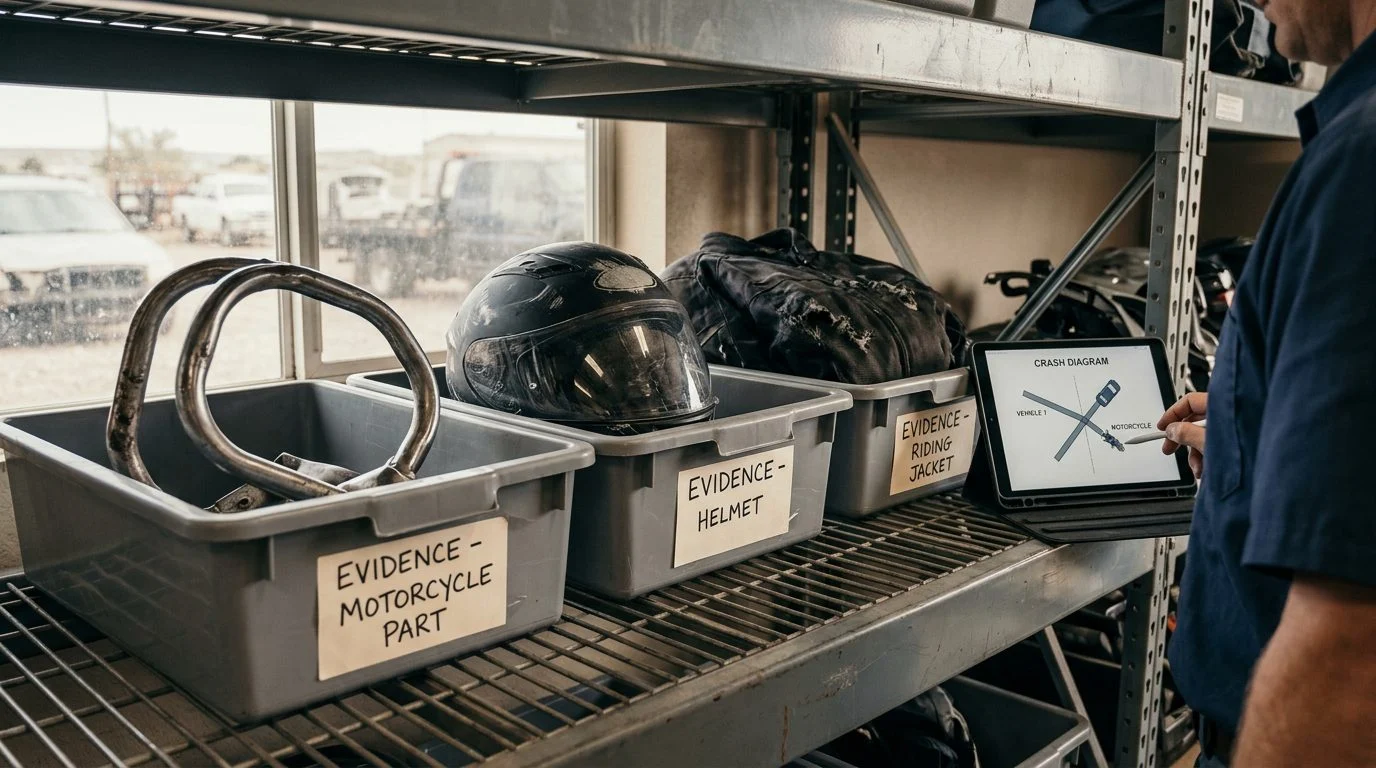
The autopsy report is another record that can describe the injuries. Medical bills and treatment records from before the death can show what the person was dealing with.
Keep copies of every letter, email, and voicemail from the insurer. Keep a contact log with dates, times, names, and what was said on each call.
Who can bring a wrongful death claim in New Mexico
Under NMSA § 41-2-1, when the death of a person is caused by the wrongful act, neglect or default of another, the person or corporation that would have been liable if death had not ensued shall be liable to an action for damages, notwithstanding the death of the person injured.
The action is brought by a personal representative. Rule 1-017 NMRA says the personal representative is appointed by the district court, and a petition to appoint may be filed before the action or with it.
Under NMSA § 41-2-3, the proceeds of any judgment obtained in such an action shall not be liable for any debt of the deceased, provided the decedent has left a spouse, child, father, mother, brother, sister or child or children of the deceased child, and the statute sets out how those proceeds are distributed to surviving relatives. The statute also sets an order for who receives them, starting with a surviving spouse and children.
Loss of consortium is a separate claim. Families with adult children or parents often ask who qualifies, and the answer depends on the family’s facts.
Not sure what your next step is?
Talk it through with our team — the first consultation is free, confidential, and carries no obligation.
Filing deadlines, early steps, and your next step
Under NMSA § 41-2-2, a wrongful death action must be brought within three years after the cause of action accrues, and the cause of action accrues as of the date of death (NMSA § 41-2-2 — three years from the date of death). Claims against a government entity are governed by the Tort Claims Act (NMSA § 41-4-4), under which a governmental entity and any public employee acting within the scope of duty are shielded by immunity from liability for any tort, except where the New Mexico Religious Freedom Restoration Act or Sections 41-4-5 through 41-4-12 NMSA 1978 waive it, with waiver limited to and governed by Sections 41-4-13 through 41-4-25 NMSA 1978, so confirm how any deadline applies to your situation.
Early steps protect the claim. Preserve records, keep a contact log, route insurer requests in writing, and don’t give statements without a plan.
Do I have to talk to the adjuster after a fatal crash?
In general, no one has to give a detailed recorded interview on the first call. A family can reply in writing and set its own pace.
How long does a family have to file a wrongful death claim in New Mexico?
Under § 41-2-2, the action generally must be brought within three years after the date of death (NMSA 1978, § 41-2-2 — three years from the date of death).
Who brings a wrongful death claim?
A personal representative appointed by the district court brings the action under § 41-2-3 and Rule 1-017.
If an adjuster has called your family since your loved one died in a crash, you can reach out to talk through what happened and what comes next. Your first consultation is free, confidential, and comes with no obligation to continue. Contact El Gringo Law through our contact form.
Responsible lawyer: Josh Wood, licensed in New Mexico and Arizona. Website: El Gringo Law contact page.
How We Can Help Your Family
We Answer the Questions Adjusters Ask
We explain what the insurance company is asking for and help you decide how and when to respond.
We Protect Your Position
Before you give a recorded statement or sign any release, we review what it could mean for your family's claim.
We Organize the Details
We help gather the crash report, medical records and insurance information so your family is not left sorting through paperwork alone.
We Keep Your Family Informed
Our team answers your calls, explains each step in plain language, and keeps you updated as your case moves forward.
Before You Speak With an Adjuster
Adjusters may call quickly and ask for a recorded statement. Think carefully before you answer detailed questions about the crash, your loved one or your finances. You can ask for time, ask that requests be made in writing, and ask us to speak with the insurer on your behalf.
Questions Families Ask Us Most
Do I have to talk to the adjuster right away?
Not necessarily. Many families choose to take time, reply in writing or have a lawyer handle contact with the insurer. Call us to talk through your options.
What if the adjuster offers a quick settlement?
Early offers are often made before the full impact of a loss is known. Bring any offer to us so we can review it with you before you decide.
What does the first consultation cover?
Your free, confidential first consultation is a chance to share what happened, ask questions and learn how El Gringo Law can help. You are under no obligation to continue.
How do I reach your team?
Use the contact form, start a chat or call El Gringo Law. Responsible attorney: Josh Wood, licensed in New Mexico and Arizona.